424B4: Prospectus [Rule 424(b)(4)]
Published on
Filed Pursuant to 424(b)(4)
Registration No. 333-297228
PROSPECTUS
43,478,261 Shares
Jersey Mike’s Subs Inc.
Class A Common Stock
$23.00 per share
This is the initial public offering of shares of Class A common stock of Jersey Mike’s Subs Inc. We are selling 13,782,609 shares of our Class A common stock and the selling stockholders identified in this prospectus are offering 29,695,652 shares of Class A common stock. Prior to this offering, there has been no public market for our common stock. Our Class A common stock has been approved for listing on the New York Stock Exchange (the “NYSE”) under the trading symbol “JMKE.”
Jersey Mike’s Subs Inc. will have two classes of common stock outstanding after this offering: Class A common stock and Class B common stock. Each share of Class A common stock and Class B common stock entitles its holder to one vote on all matters on which stockholders are entitled to vote generally. The Continuing Common Unitholders (as defined herein) will hold all of the issued and outstanding shares of Class B common stock, on a one-for-one basis with the number of Common Units (as defined herein) held by each such Continuing Common Unitholder. See “Description of Capital Stock.”
Jersey Mike’s Subs Inc. intends to use the proceeds (net of underwriting discounts and commissions) from the issuance of the 13,782,609 shares that it is selling in this offering to acquire an equivalent number of newly issued Common Units from Jersey Mike’s HoldCo, LLC (“Jersey Mike’s Holdings”), as described under “Organizational Structure—Offering Transactions,” which Jersey Mike’s Holdings will in turn use for the repayment of indebtedness and the remainder for general corporate purposes. We will not receive any proceeds from the sale of shares of Class A common stock by the selling stockholders (including any sales pursuant to the underwriters’ option to purchase additional shares from the selling stockholders). See “Use of Proceeds.”
After the completion of this offering, entities controlled by affiliates of Blackstone Inc. (“Blackstone” or “our Sponsor”) will hold a majority of the combined voting power of our shares eligible to vote for the election of our directors. As a result, we will be a “controlled company” within the meaning of the NYSE corporate governance standards. See “Management—Controlled Company Exception” and “Principal and Selling Stockholders.”
Investing in our Class A common stock involves risks. See “Risk Factors” beginning on page 29 to read about factors you should consider before buying shares of our Class A common stock.
Neither the Securities and Exchange Commission nor any other regulatory body has approved or disapproved of these securities or passed upon the accuracy or adequacy of this prospectus. Any representation to the contrary is a criminal offense.
|
|
Per Share |
|
|
Total |
|
||
Initial public offering price |
|
$ |
23.00 |
|
|
$ |
1,000,000,003 |
|
Underwriting discounts and commissions |
|
$ |
1.15 |
|
|
$ |
50,000,000 |
|
Proceeds, before expenses, to Jersey Mike’s Subs Inc. |
|
$ |
21.85 |
|
|
$ |
301,150,007 |
|
Proceeds, before expenses, to selling stockholders |
|
$ |
21.85 |
|
|
$ |
648,849,996 |
|
To the extent that the underwriters sell more than 43,478,261 shares of our Class A common stock, the underwriters have the option to purchase up to an additional 6,521,739 shares of our Class A common stock from certain of our pre-IPO owners (the “selling stockholders”) at the initial public offering price less the underwriting discounts and commissions, within 30 days from the date of this prospectus.
At our request, the underwriters have reserved up to 5% of the Class A common stock offered by this prospectus for sale, at the initial public offering price, to certain individuals associated with us and our shareholders. See “Underwriting (Conflicts of Interest)—Directed Share Program.”
The underwriters expect to deliver the shares of our Class A common stock against payment in New York, New York on or about July 31, 2026.
Global Coordinators and Joint Bookrunning Managers
Morgan Stanley |
Jefferies |
J.P. Morgan |
Co-Global Coordinators and Joint Bookrunning Managers
Barclays |
|
Guggenheim Securities |
Joint Bookrunning Managers
BofA Securities |
Goldman Sachs & Co. LLC |
Evercore ISI |
UBS Investment Bank |
Baird |
||
Wells Fargo Securities |
William Blair |
RBC Capital Markets |
Deutsche Bank Securities |
Wolfe | Nomura Alliance |
||
Piper Sandler |
Raymond James |
Stifel |
TD Securities |
BTIG |
||
Mizuho |
Societe Generale |
Truist Securities |
||||
Co-Managers
Blackstone Capital Markets |
PJT Partners |
Rabo Securities |
|||
Loop Capital Markets |
Tigress Financial Partners |
Academy Securities |
Drexel Hamilton |
||
Penserra Securities LLC |
Roberts & Ryan |
Telsey Advisory Group |
|||
The date of this prospectus is July 29, 2026.
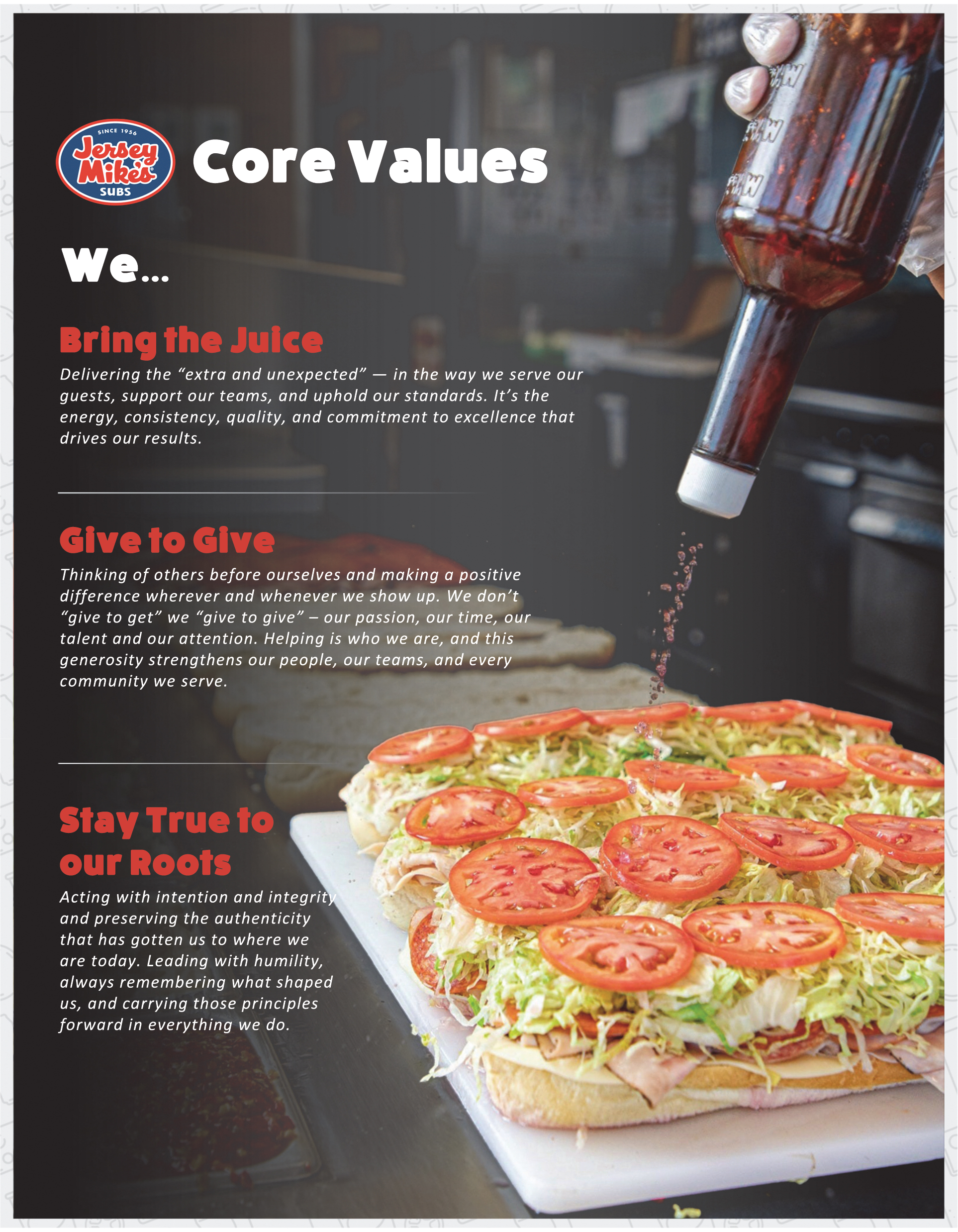
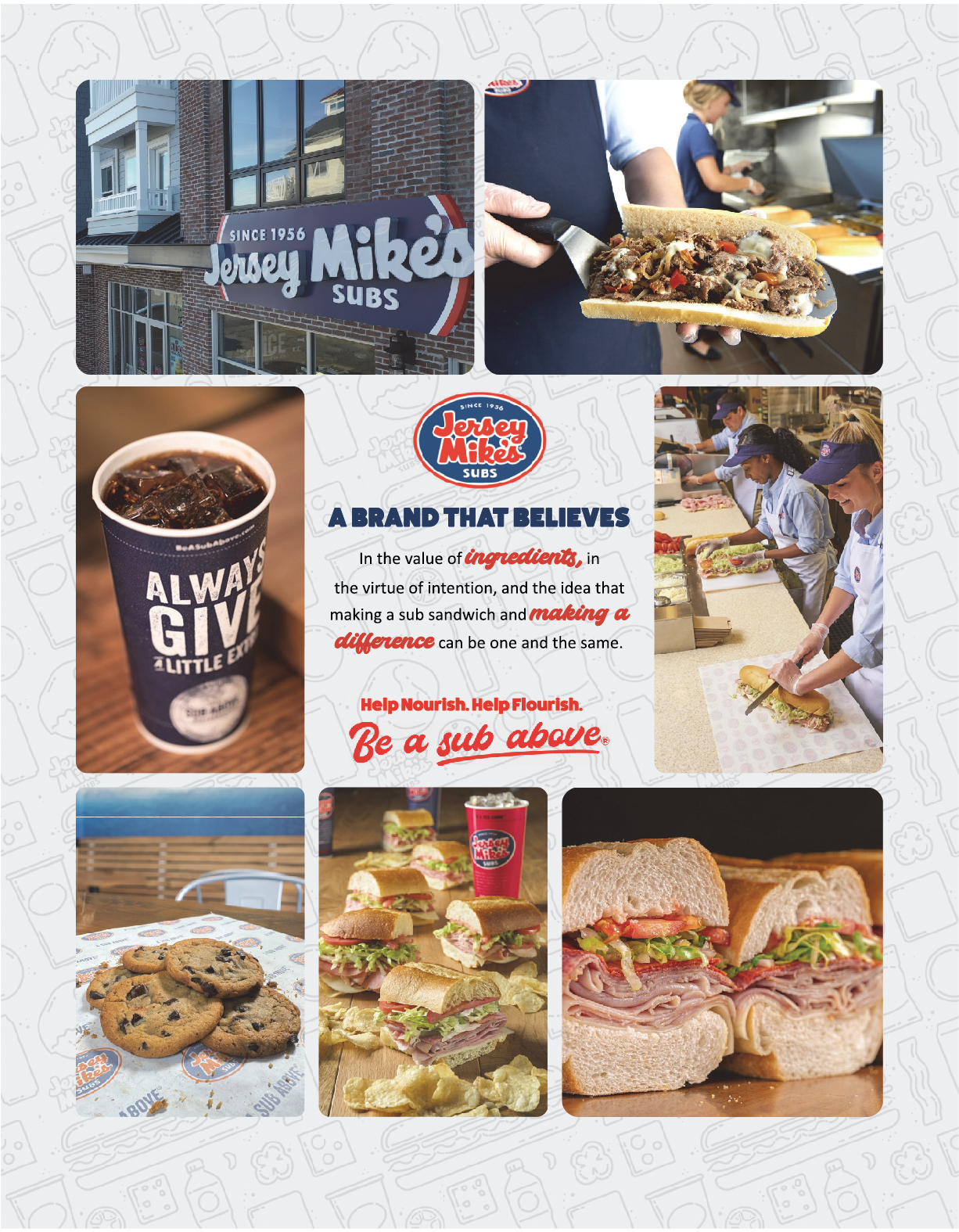
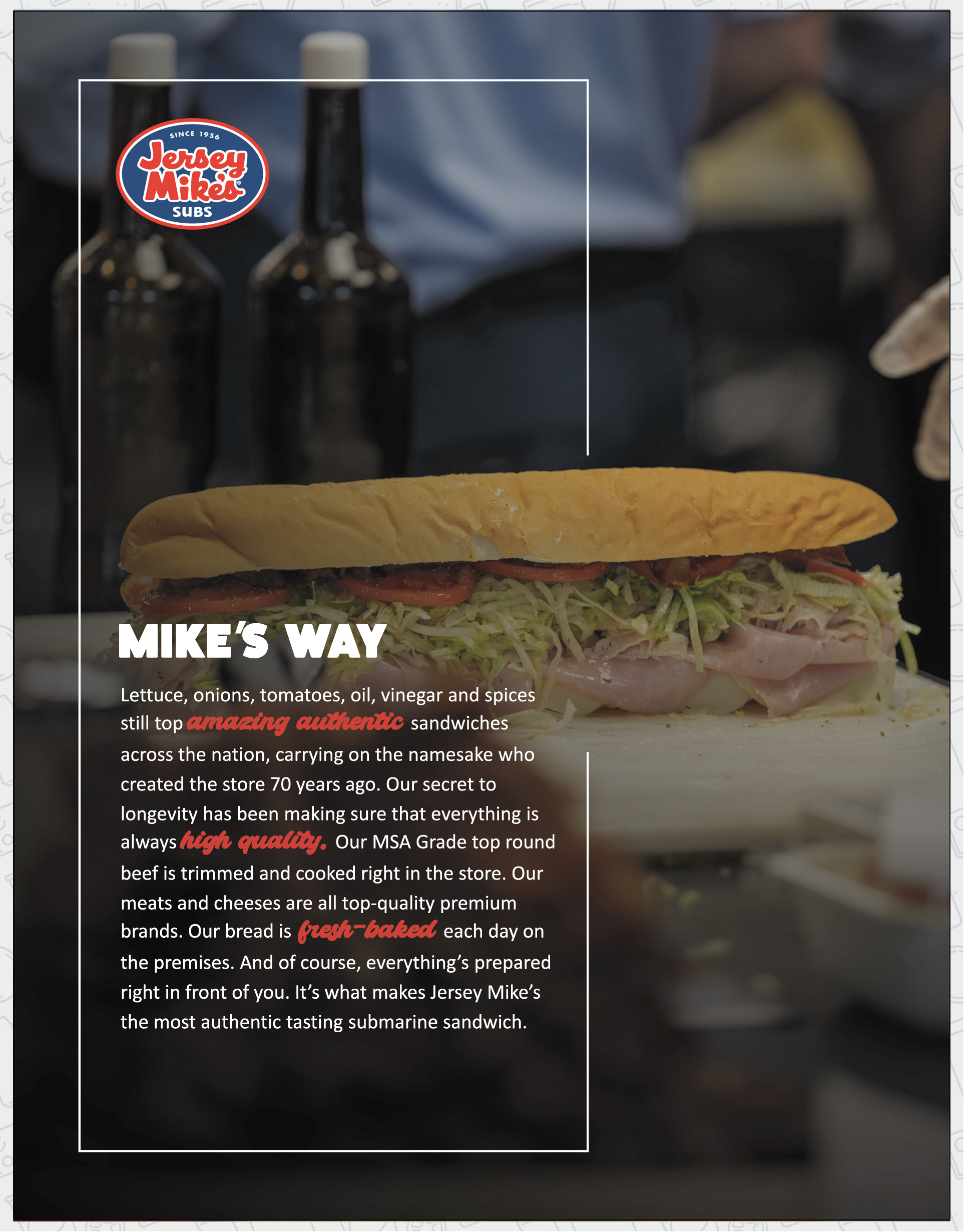
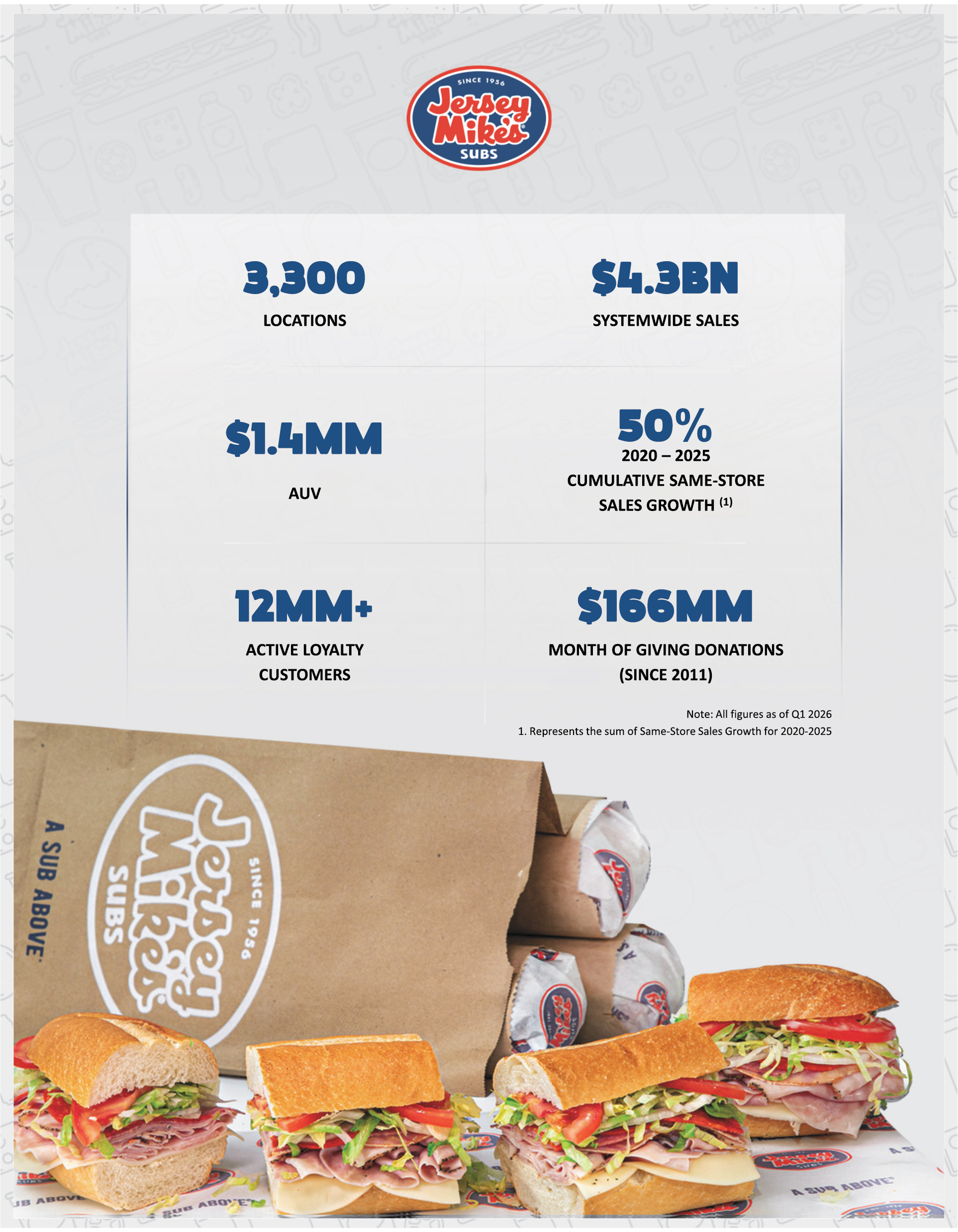
Table of Contents
Page
1 |
|
29 |
|
71 |
|
72 |
|
72 |
|
73 |
|
79 |
|
80 |
|
81 |
|
82 |
|
Unaudited Pro Forma Condensed Consolidated Financial Information |
84 |
Management’s Discussion and Analysis of Financial Condition and Results of Operations |
96 |
116 |
|
142 |
|
179 |
|
188 |
|
191 |
|
193 |
|
Certain U.S. Federal Income Tax Consequences to Non-U.S. Holders |
203 |
206 |
|
209 |
|
219 |
|
219 |
|
219 |
|
F-1 |
Neither we, the selling stockholders nor the underwriters have authorized anyone to provide you with information different from that contained in this prospectus, any amendment or supplement to this prospectus, or any free writing prospectus prepared by us or authorized to be provided on our behalf. Neither we, the selling stockholders nor the underwriters take any responsibility for, or can provide any assurance as to the reliability of, any information other than the information in this prospectus, any amendment or supplement to this prospectus, or any free writing prospectus prepared by us or authorized to be provided on our behalf. The information in this prospectus is accurate only as of the date of this prospectus, regardless of the time of delivery of this prospectus or any sale of shares of our Class A common stock. Our business, financial condition, results of operations, and prospects may have changed since that date.
We, the selling stockholders and the underwriters are offering to sell, and seeking offers to buy, shares of our Class A common stock only in jurisdictions where offers and sales are permitted. Neither we, the selling stockholders nor any of the underwriters have done anything that would permit this offering or possession or distribution of this prospectus in any jurisdiction where action for that purpose is required, other than in the United States. Persons outside of the United States who come into possession of this prospectus must inform themselves about, and observe any restrictions relating to, the offering of the shares of Class A common stock and the distribution of this prospectus outside of the United States.
Through and including August 23, 2026 (the 25th day after the date of this prospectus), all dealers effecting transactions in these securities, whether or not participating in this offering, may be required to deliver a prospectus. This is in addition to a dealer’s obligation to deliver a prospectus when acting as an underwriter and with respect to an unsold allotment or subscription.
i
About This Prospectus
Financial Statement Presentation
Following this offering, Jersey Mike’s Holdings will be the accounting predecessor of Jersey Mike’s Subs Inc. for financial reporting purposes. Immediately following this offering, Jersey Mike’s Subs Inc. will be a holding company, and its sole material assets will be its equity interests, held directly or indirectly through wholly owned subsidiaries, in Jersey Mike’s Holdings. As the managing member of Jersey Mike’s Holdings, Jersey Mike’s Subs Inc. will operate and control all of the business and affairs of Jersey Mike’s Holdings and, through Jersey Mike’s Holdings and its subsidiaries, conduct our business. The Reorganization Transactions (as defined herein) will be accounted for as a reorganization of entities under common control. As a result, the consolidated financial statements of Jersey Mike’s Subs Inc. will recognize the assets and liabilities received in the Reorganization Transactions at their historical carrying amounts, as reflected in the historical financial statements of Jersey Mike’s Holdings. Jersey Mike’s Subs Inc. will consolidate Jersey Mike’s Holdings on its consolidated financial statements and record a non-controlling interest related to the Units (as defined herein) held by the Continuing Unitholders who are the owners of Jersey Mike’s Holdings immediately prior to the Reorganization Transactions on its consolidated balance sheet and statement of operations. See “Organizational Structure.”
Jersey Mike’s Holdings was formed on January 7, 2025 primarily as a vehicle to effect the Sponsor Acquisition (as defined below) on January 16, 2025. As Jersey Mike’s Holdings did not have any previous operations, Jersey Mike’s Franchise Systems, LLC (“Jersey Mike’s Franchise Systems”) is viewed as the predecessor to Jersey Mike’s Holdings and its consolidated subsidiaries. Accordingly, this prospectus includes certain historical consolidated financial and other data for Jersey Mike’s Franchise Systems for periods prior to the completion of the Sponsor Acquisition. As a result of the Sponsor Acquisition, a new basis of accounting was created on January 16, 2025. Accordingly, the financial statements included elsewhere herein are separately presented for the periods before and after the application of the new basis of accounting. The financial statements of Jersey Mike’s Franchise Systems prior to the consummation of the Sponsor Acquisition on January 16, 2025, for the period from January 1, 2023 to January 15, 2025 (the “Predecessor Period”), reflect the financial position and operating results of Jersey Mike’s Franchise Systems (the “Predecessor”) prior to completing the Sponsor Acquisition. The period commencing on January 16, 2025 (the “Successor Period”), reflects the financial position and operating results of Jersey Mike’s Holdings and its consolidated subsidiaries (the “Successor”). Under generally accepted accounting principles in the United States (“GAAP”), we are required to present separately our operating results of the Predecessor Period ended January 15, 2025 and the Successor Period.
On December 12, 2025, we changed our fiscal year-end from December 31 to a 52-week fiscal calendar. We now operate on a 52-week fiscal calendar and our fiscal year ends on the last Sunday of such calendar year. Therefore, any references to fiscal year 2025 ended December 28, 2025, refer to the 52-week period. As a result of this 52-week fiscal calendar, a 53rd week must be added to our fiscal year every five or six years. In a 52-week year, all four quarters are comprised of 13 weeks. In a 53-week year, one extra week is added to the fourth quarter. Our fiscal year 2025 ended December 28, 2025 consisted of 52 weeks.
The historical financial information of Jersey Mike’s Subs Inc. has been included in this prospectus as of February 24, 2026, as it is a newly incorporated entity formed on that date, and March 29, 2026. The balance sheet has been prepared in accordance with accounting principles generally accepted in the United States of America. Separate statements of operations, comprehensive income, stockholders’ equity and cash flows have not been presented because there has been no business transactions or activities to date.
Certain monetary amounts, percentages, and other figures included in this prospectus have been subject to rounding adjustments. Percentage amounts included in this prospectus have been calculated, in some cases, not on the basis of such rounded figures, but on the basis of such amounts prior to rounding. For this reason, percentage amounts in this prospectus may vary from those obtained by performing the same calculations using the figures, on the face of our consolidated financial statements included elsewhere in this prospectus. Certain other amounts that appear in this prospectus may not sum due to rounding.
ii
Certain Definitions
As used in this prospectus, unless otherwise noted or the context requires otherwise:
iii
iv
Cash-on-Cash Returns, Average Store Sales-to-Investment Ratio and Store-level EBITDA referenced throughout this prospectus are based on information self-reported by our franchise owners and have not been independently verified.
Throughout this prospectus, we have included growth rates for certain metrics that compare pre-COVID periods to post-COVID periods. We believe the period from 2020-2022, which was materially impacted by the COVID-19 operating environment and related matters, is less meaningful in providing information about the trends of our business in a more normalized operating environment. See “Business—‘A Sub Above’—Charting Our Competitive Advantages—Selected Industry and Jersey Mike’s Metrics—Year-Over-Year Comparisons.”
Unless indicated otherwise, the information included in this prospectus assumes no exercise by the underwriters of their option to purchase up to an additional 6,521,739 shares of Class A common stock from the selling stockholders.
v



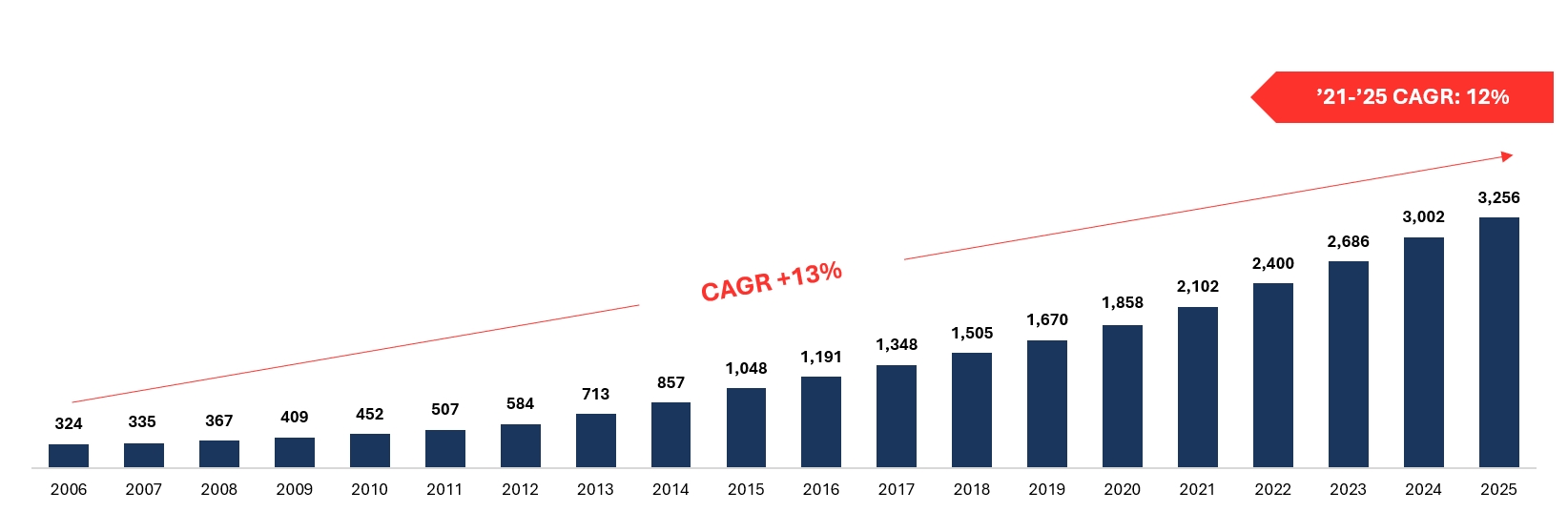
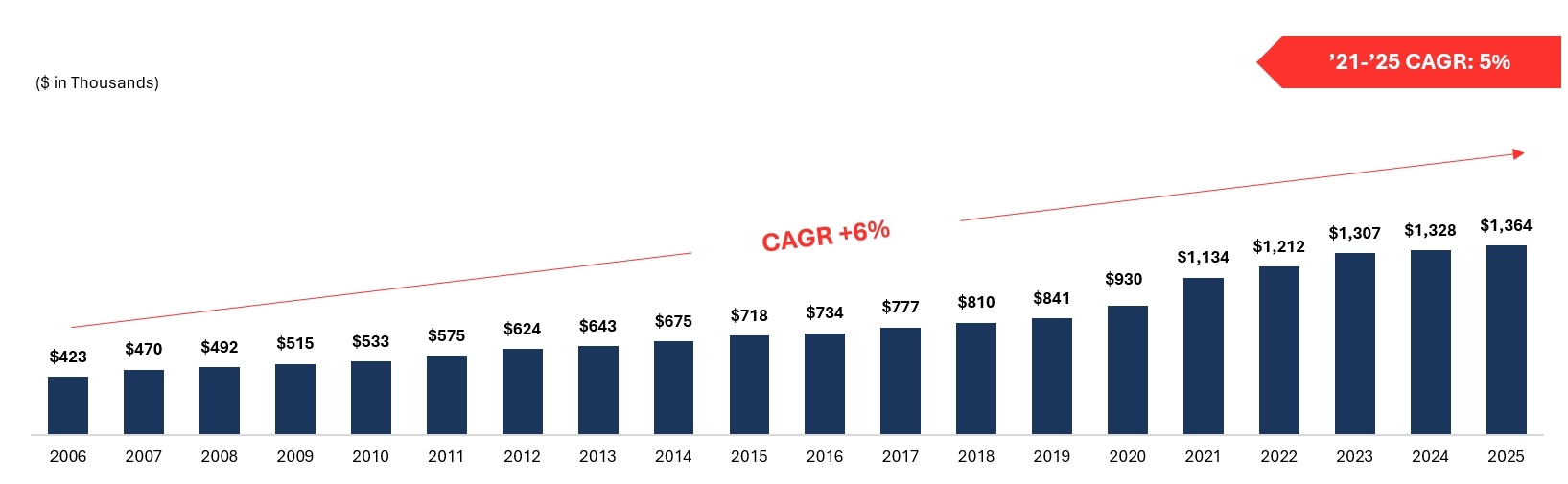
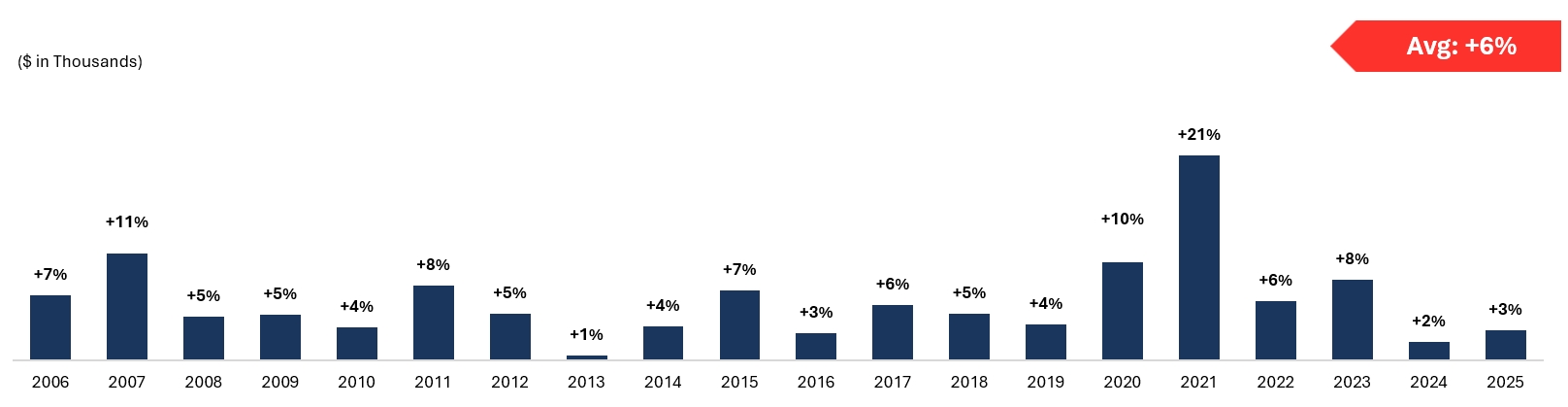
We believe our efficient operating platform, the strength of our brand, the quality of our product, and the depth of our franchise owner relationships position Jersey Mike’s for continued growth for years to come. The following charts illustrate the consistency and strength of our historical financial performance:

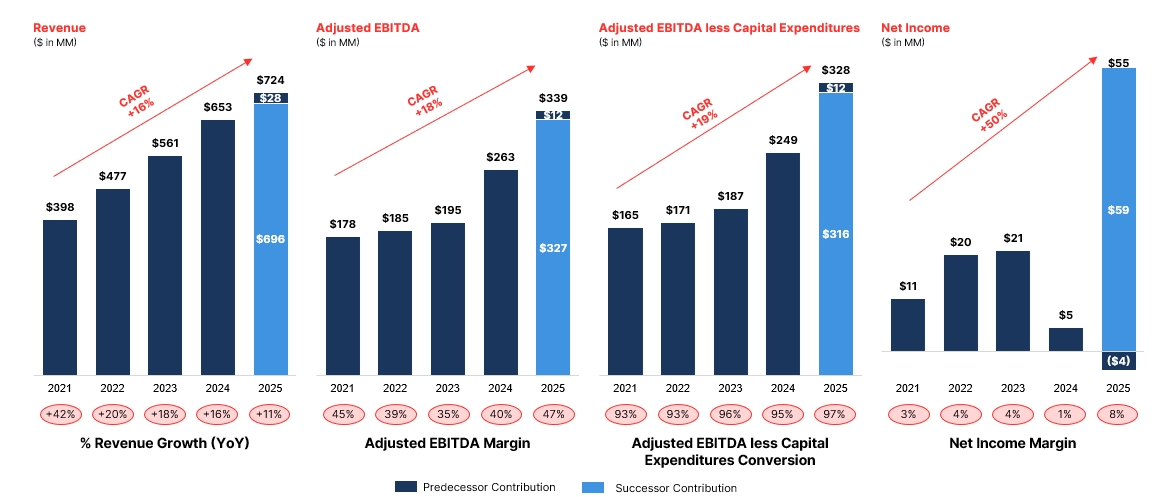
See the section titled “Management’s Discussion and Analysis of Financial Condition and Results of Operations—Non-GAAP Financial Measures” for additional information regarding our use of these metrics and reconciliations of Adjusted EBITDA, Adjusted EBITDA margin, Adjusted EBITDA less Capital Expenditures and Adjusted EBITDA less Capital Expenditures Conversion to the most directly comparable GAAP financial measures.


2



——————
3

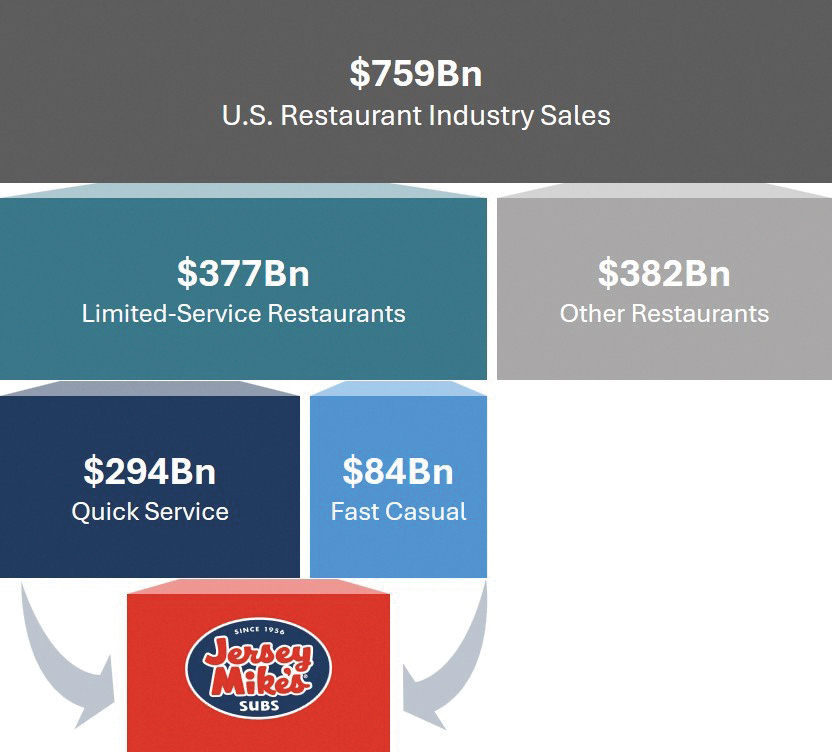
Jersey Mike’s competes in the large and growing limited-service restaurant market. As of 2025, this market in the U.S. is $377 billion in size and has grown at an approximate 6% compound annual growth rate (“CAGR”) since 2019, according to Technomic, Inc. The Company is well-positioned to capitalize on several favorable industry trends.
These trends have resulted in a strong growth trajectory with the market growing from approximately $52 billion in 2019 to $84 billion in 2025 representing a CAGR of 8.4%. Jersey Mike’s fast-casual positioning, with its commitment to premium ingredients, menu customization, digital accessibility, and a strong culture of service, aligns directly with these consumer preferences, supporting expectations of sustained growth and continued market share gains from both the fast-casual and quick service segments in the U.S. and around the world.
4

Our Dedication to Authentic, High-Quality Subs
Jersey Mike’s is a brand that believes in the value of the highest-quality ingredients, the virtue of intention, and the idea that making a sub sandwich and making a difference can be one and the same. We believe that a Sub Above is one that’s measured in more than inches or seconds ‘til served. We carefully consider every aspect of what we do – every slice, every sandwich, every store. We proof, score, and bake our bread fresh every morning. We hand cut fresh vegetables daily in every store. We slice deli meats and premium cheeses fresh to order. We finish subs with our classic “Mike’s Way” preparation: fresh onions, crisp lettuce, juicy tomatoes, a sprinkling of the Juice – our signature blend of red wine vinegar and oil – and the perfect amount of seasoning. And then there’s the aroma and crackling of sizzling meats on our flattop grills, heating up the love for Jersey Mike’s. Our delicious hot subs are made with fresh-grilled steak and chicken as well as freshly cooked bacon.
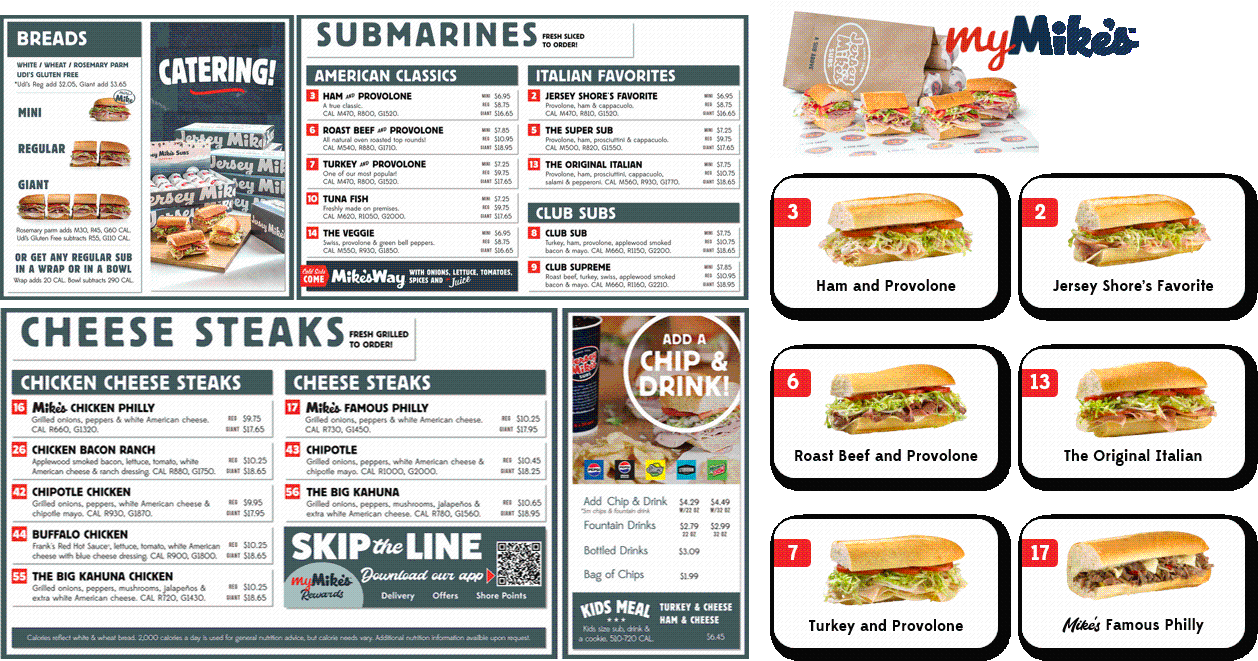
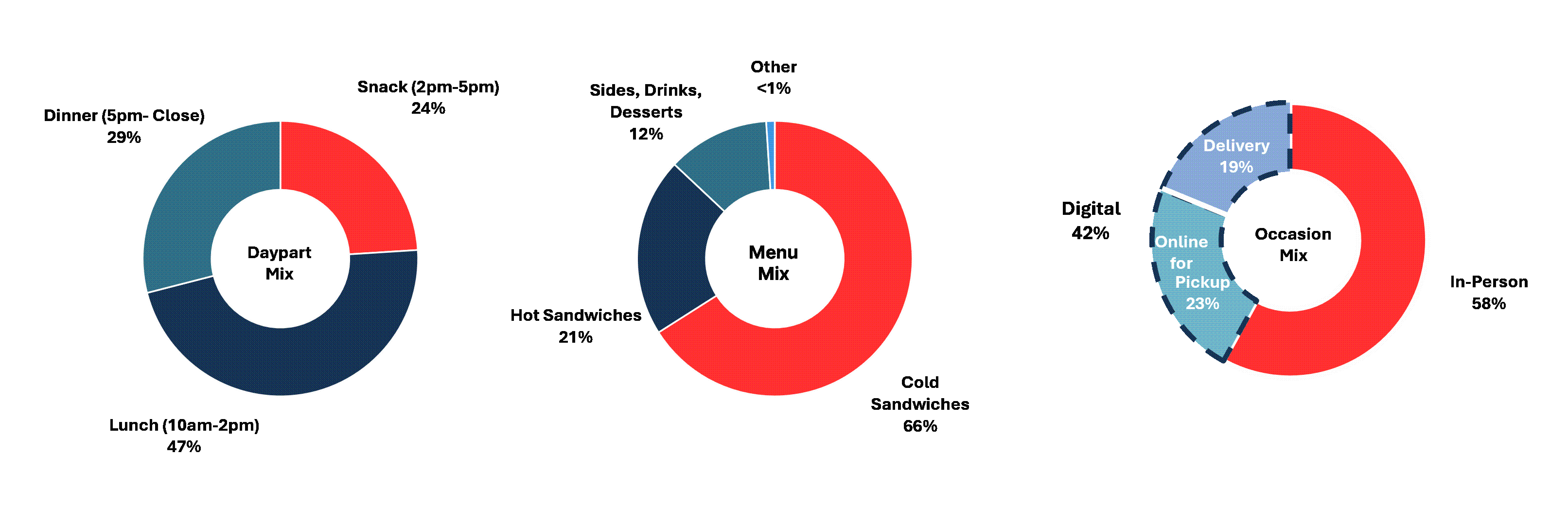
We believe our diverse menu offers something for everyone on every occasion. Guests can choose from a wide variety of cold and hot subs on white, wheat, rosemary parmesan, or gluten-free bread – or opt for wraps or our signature, low-carb bowl. We feature our iconic cold subs such as the #2 (Jersey Shore’s Favorite) and #13 (The Original Italian), alongside hot grilled favorites like the #17 (Famous Philly Cheesesteak) and #26 (Chicken Bacon Ranch). Through our broad assortment of breads and toppings, customers can customize their sandwiches to their individual preference, supporting a balanced mix of occasions across lunch, dinner, and off-premise as shown in the charts below (presented for Fiscal 2025):
5

Our product quality, skilled preparation, and menu breadth combine to create a differentiated, craveable offering that fosters an enthusiastic fan base and positions Jersey Mike’s as a leader in premium submarine sandwiches.
We Give to Give – Community First Culture

Jersey Mike’s has cultivated a community-first culture centered on service and integrity. Since 1956, we have embraced the idea that great food and meaningful impact go hand in hand, built on the highest-quality ingredients, authentic relationships, and a commitment to giving back to the communities we serve. Each new store we open partners with a local charity, embedding community engagement into every market we enter from day one. We don’t give to get, we give to give: Our passion, our time, our talent, and our attention…we always have and always will.
Our commitment to giving is embedded in our day-to-day operations, with franchise owners and the Company supporting local and national charities throughout the year. These efforts intensify each March, when our system comes together for our annual Month of Giving, rallying customers and communities in support of charitable partners across the U.S. The month builds to our Day of Giving, held on the last Wednesday of March, when 100% of sales from participating stores are donated. From 2011 to April 2026, Jersey Mike’s has raised more than $166 million through the Month of Giving.
6
A Powerful Marketing Engine Driving Brand Awareness and Customer Loyalty
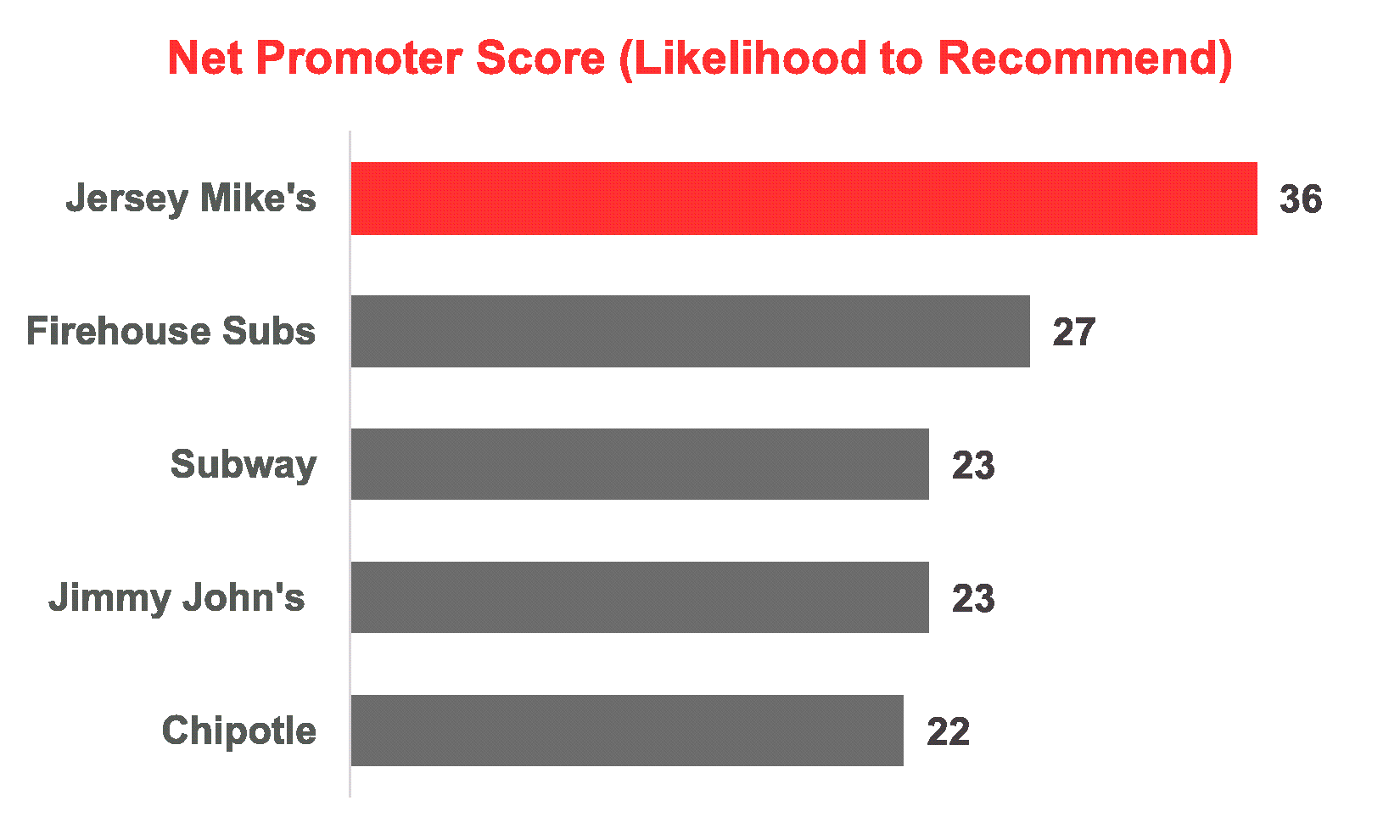
Jersey Mike’s has built one of the most recognized brands in fast casual. Our brand benefits from a $200+ million annual advertising fund and robust marketing platform that drives awareness, frequency and loyalty at scale. Our aided brand awareness exceeded 90% in 2025 – a reflection of sustained national campaigns that feature brand ambassadors like Danny DeVito and Eli Manning, strategic partnerships, and our designation as “the ‘Official Sub Sandwich Partner’ of the NFL”. This brand strength is reinforced by a best-in-class Net Promoter Score of 36, underscoring high customer satisfaction and strong word-of-mouth advocacy.
In June 2026, in our first year of inclusion in the American Customer Satisfaction Index (ACSI) Restaurant and Food Delivery Study, we debuted as the highest-rated quick-service restaurant in the United States, with a score of 84 out of 100. In doing so, we became the first new brand to lead the ACSI's quick-service restaurant category in more than a decade, surpassing Chick-fil-A, which had ranked at the top of the category for the prior 11 years. The ACSI recognized us for food freshness, menu variety and value, and noted that we have maintained quality while rapidly scaling our restaurant footprint. In an environment where consumers are becoming more selective about where they spend their restaurant dollars, the ACSI noted that brands delivering a consistently strong guest experience are increasingly differentiating themselves, underscoring the strength of our customer value proposition and operating model.
Our MyMike’s loyalty program grew to over 12.5 million active members in 2025, up from approximately 7.9 million in 2021. Together, our marketing scale, brand awareness and loyal customer base create a durable competitive advantage that is difficult to replicate and designed to compound over time.
7
A Proven, Portable Concept with Compelling Unit Economics
Jersey Mike’s has demonstrated a proven, highly-portable business model, with 3,256 stores across all 50 states and a systemwide AUV of approximately $1.4 million in Fiscal 2025. Our strong brand and compelling unit economics have supported consistent performance across a broad set of markets and formats.
Our AUVs are consistent across regions, reflecting broad consumer appeal. Our brand performs well across multiple formats, from in-line and end-cap retail locations to non-traditional venues like airports and college campuses. Our flexible operating model has delivered 20 consecutive years of positive Same-Store Sales Growth, demonstrating the durability and scalability of the brand.

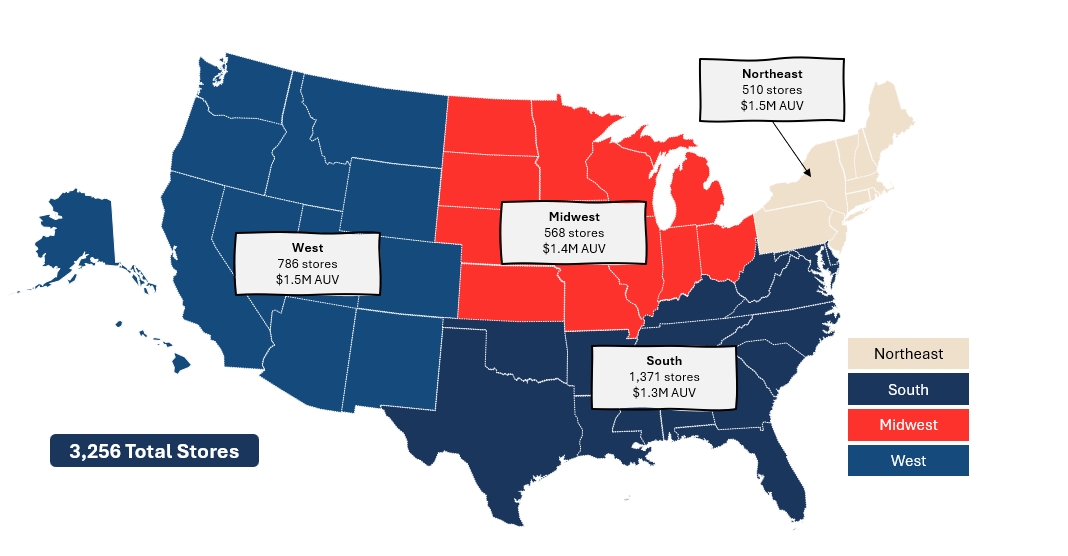
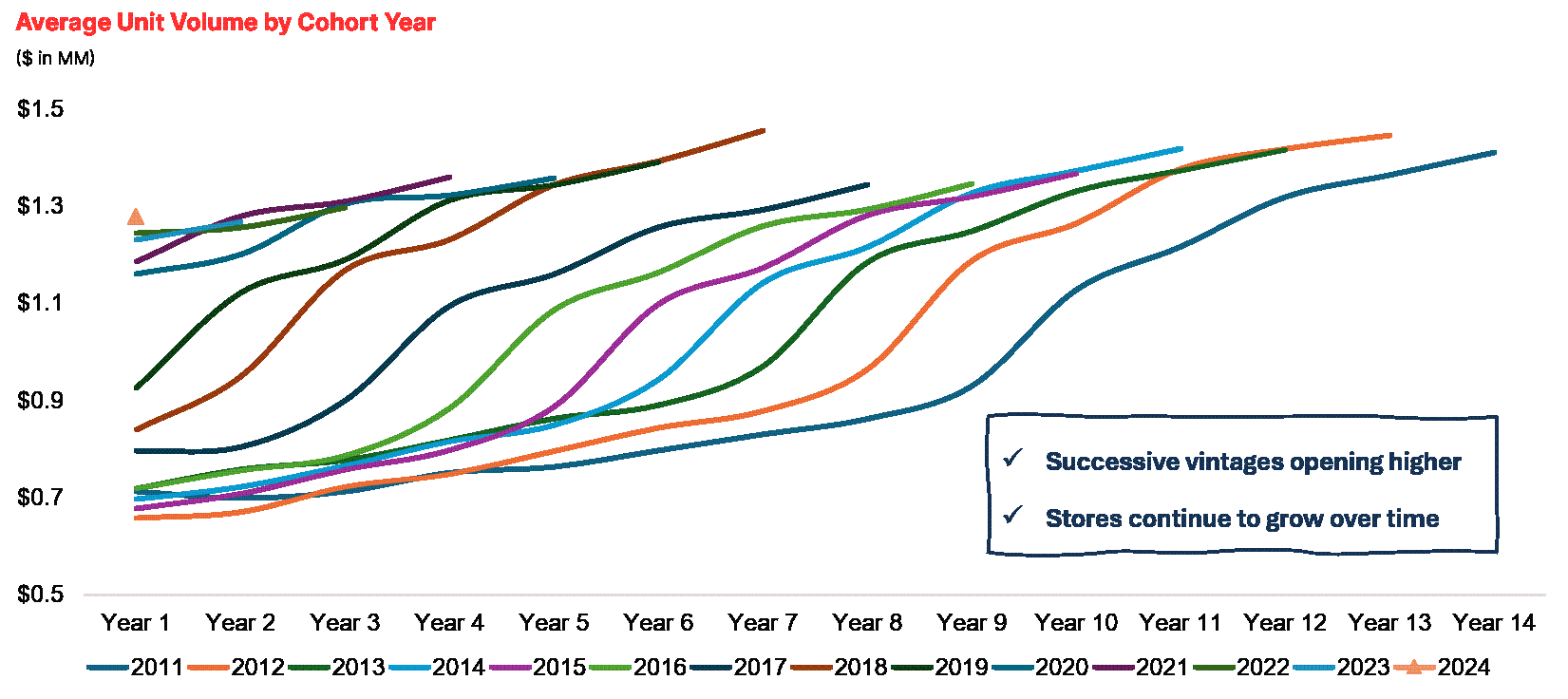
Our franchise owners have enjoyed consistently improving unit economics. As illustrated in the chart below, over the past 14 years, new store cohorts have performed in line with or above prior cohorts, demonstrating sustained consumer demand, increasing brand awareness, and low market saturation.
Our franchise owners benefit from a compelling and well-defined economic model. In 2025, our Average Store Sales-to-Investment Ratio was 2.6x, with Cash-on-Cash Returns of approximately 42%. We believe these compare favorably to other investment opportunities our franchise owners may evaluate. The strength of our economic model rests in the combination of a $1.4 million AUV, a 16% Store-level Margin (after royalties and advertising fees), and a low average Build Cost of approximately $515,000. Our ability to build “in-line” and
8
“end-cap” locations, historically averaging ~1,500 square feet (with new builds targeted at 1,200-1,400 square feet), contributes to a lower Build Cost relative to many peers, particularly those reliant on higher-cost, drive-thru formats.
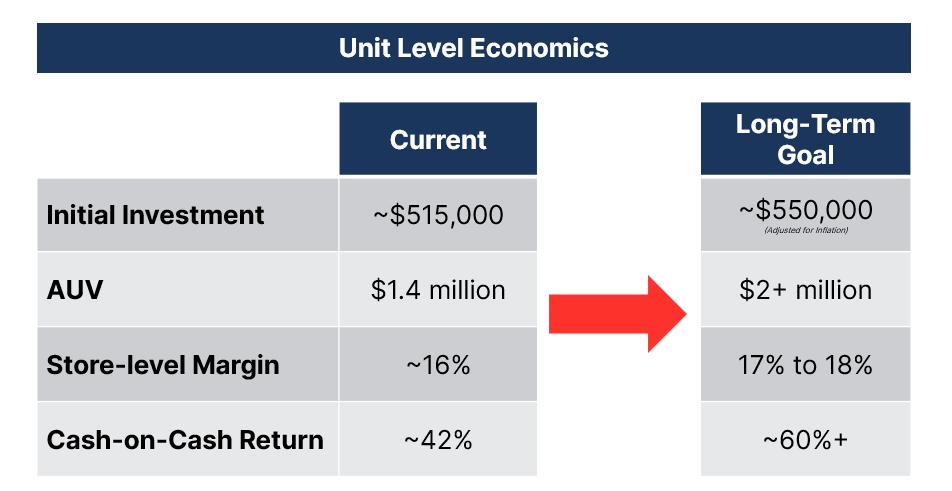
Our unit economics have demonstrated the potential for even higher returns through a combination of increased AUVs and operating leverage. A growing portion of our system is already operating at higher AUV levels, with over 6% of stores delivering AUVs above $2.0 million in 2025, up from less than 1% in 2019. In addition, our initial units in Canada have generated annualized average weekly sales of $1.6 million, outperforming our U.S. average. As these initiatives are implemented and AUVs expand, we aim to achieve increased margin flowthrough and franchise owner Cash-on-Cash Returns to increase to ~60% or better.
Committed and Diverse Franchise Owner Base
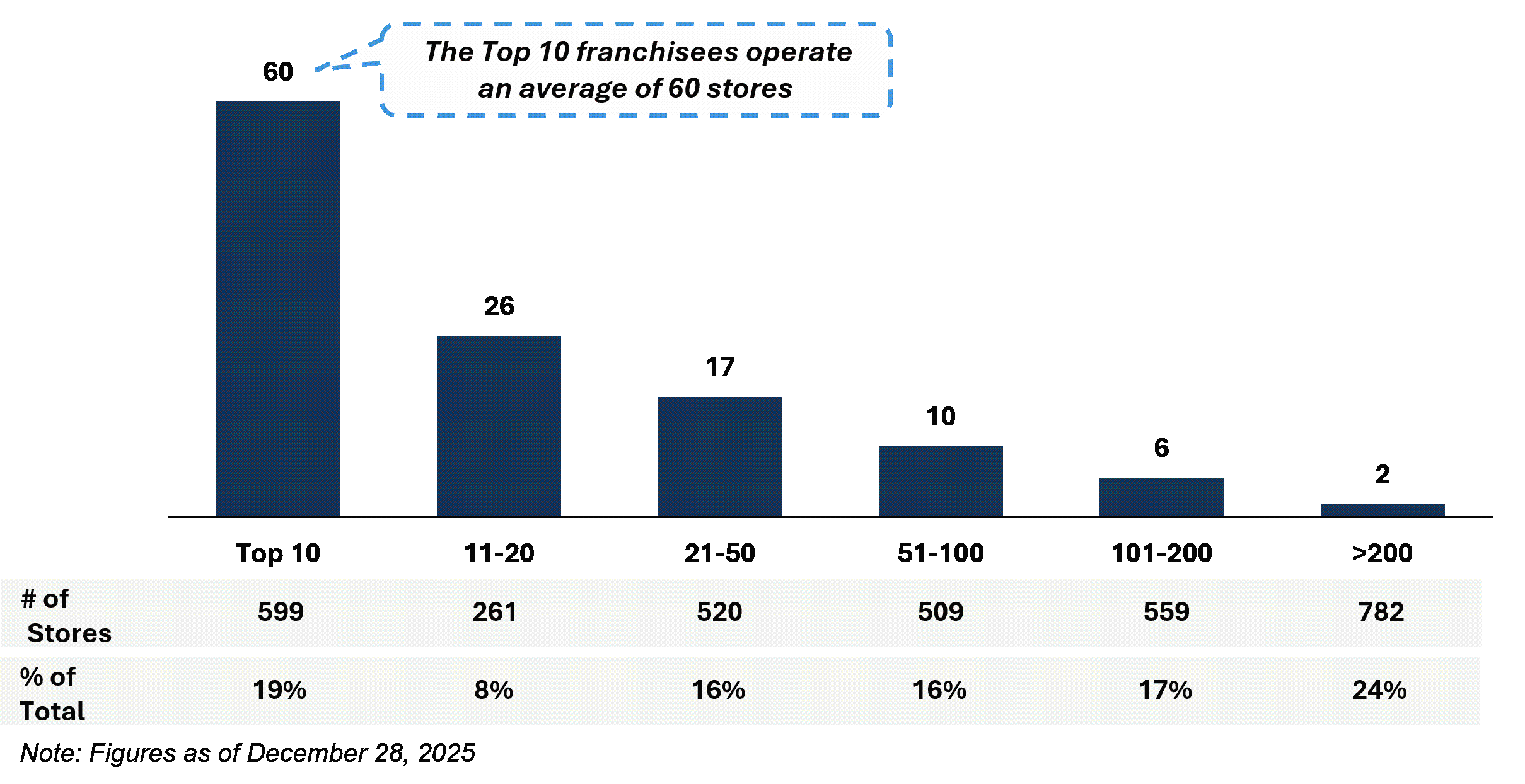
Jersey Mike’s benefits from a diverse franchise owner base comprised of both large multi-store operators and smaller, single‑store franchise owners who are deeply invested in their local communities. As of December 28, 2025, the system included more than 630 unique franchise owners of which approximately 80 franchise owners operate 10 or more stores, while more than 330 franchise owners operate only one or two stores, resulting in a highly diversified ownership base with no meaningful reliance on any single operator. The largest franchise owner operates 91 stores, representing approximately 3% of total system stores as of December 28, 2025. Strong demand from existing franchise owners, alongside continued interest from new franchise owners, reflects deep confidence in the brand, the durability of the operating model, and the significant white space that exists across the U.S. and internationally.
9
Our franchise owners execute an Area Development Agreement (“ADA”) that gives them the right to develop a specified number of stores in a protected area on a pre-determined timeline, as well as a separate franchise agreement for each restaurant opened. Our franchise agreement typically provides for an initial term of 10 years, with a 10-year renewal option subject to the satisfaction of certain conditions. While our standard agreements are revised periodically and terms may vary, our latest agreements include an ADA fee of $10,000 along with an initial franchise fee of $20,000 per store opened in accordance with the ADA. Additionally, franchise owners are required to pay a continuing royalty fee of 6.5% of gross receipts. Our standard agreements also mandate a total advertising fund contribution equal to 5.0% of gross receipts, which is reinvested for the benefit and growth of the system.
Asset-Light Model Generates Strong CASH FLOW
Jersey Mike’s operates a proven, highly-franchised, asset-light business model that generates stable, diversified, and high-margin cash flows. In combination with our strong unit-level economics, our asset-light business model enables ongoing system expansion with minimal franchisor capital, low working capital requirements, and limited maintenance capital expenditures. Furthermore, we benefit from the resilience of a diverse and unconcentrated franchise owner base, which provides relative stability across economic cycles. In 2025, we generated approximately $55 million of Net income and $328 million of Adjusted EBITDA less Capital Expenditures converting from Adjusted EBITDA at a rate of approximately 97%. Corporate capital expenditures requirements remain low, and strong net income and Adjusted EBITDA margins of approximately 8% and 47%, respectively, underscore the efficiency of our performance. See the section titled “Management’s Discussion and Analysis of Financial Condition and Results of Operations—Non-GAAP Financial Measures” for additional information regarding our use of these metrics and reconciliations of Adjusted EBITDA less Capital Expenditures, Adjusted EBITDA and Adjusted EBITDA margin to the most directly comparable GAAP financial measures.
A Mission-Driven Management Team with a Proven Track Record
Jersey Mike’s is led by Chief Executive Officer Charlie Morrison, who previously served as CEO of Wingstop for approximately 10 years. He is supported by Chief Financial Officer Michele Allen, a seasoned public company CFO who brings over 25 years of hospitality and franchising experience; President and Chief Operating Officer Stacy Peterson, who has a track record of scaling high-growth concepts including at Wingstop as Chief Revenue & Technology Officer and Chief Digital & Technology Officer, and most recently, at Jeni’s Splendid Ice Creams, where she served as CEO; and President, International and Global Development Officer Andrew Skehan, who brings over two decades of global franchise leadership, including six years as President of International at Popeyes and previously President of North America at Krispy Kreme.
Rounding out the leadership team, Chief Information Officer Scott Scherer has spent more than two decades with Jersey Mike’s and led the buildout of the company’s proprietary, fully-integrated technology platform; Chief People Officer Betsy Mercado brings 27 years of experience leading people strategy, culture, and organizational development at scale, most recently at Flynn Group; General Counsel Scott McLester brings decades of legal expertise spanning major public companies and high-growth franchise systems; SVP of Finance Corey Horsch brings deep restaurant finance expertise having previously served as CFO at Sonic Drive-In; U.S. Chief Development Officer Brian Sommers has over 25 years of experience with Jersey Mike’s, rising from field operations to head of U.S. franchise development; and Matt Warren as SVP of Marketing brings over 15 years of experience with digital marketing spanning across Dutch Bros Coffee, Wingstop, Panera and Domino’s Pizza.
Together, this team combines institutional knowledge of the Jersey Mike’s brand with best-in-class functional expertise—positioning the company to execute its growth strategy and deliver long-term value for franchise owners and all stakeholders.

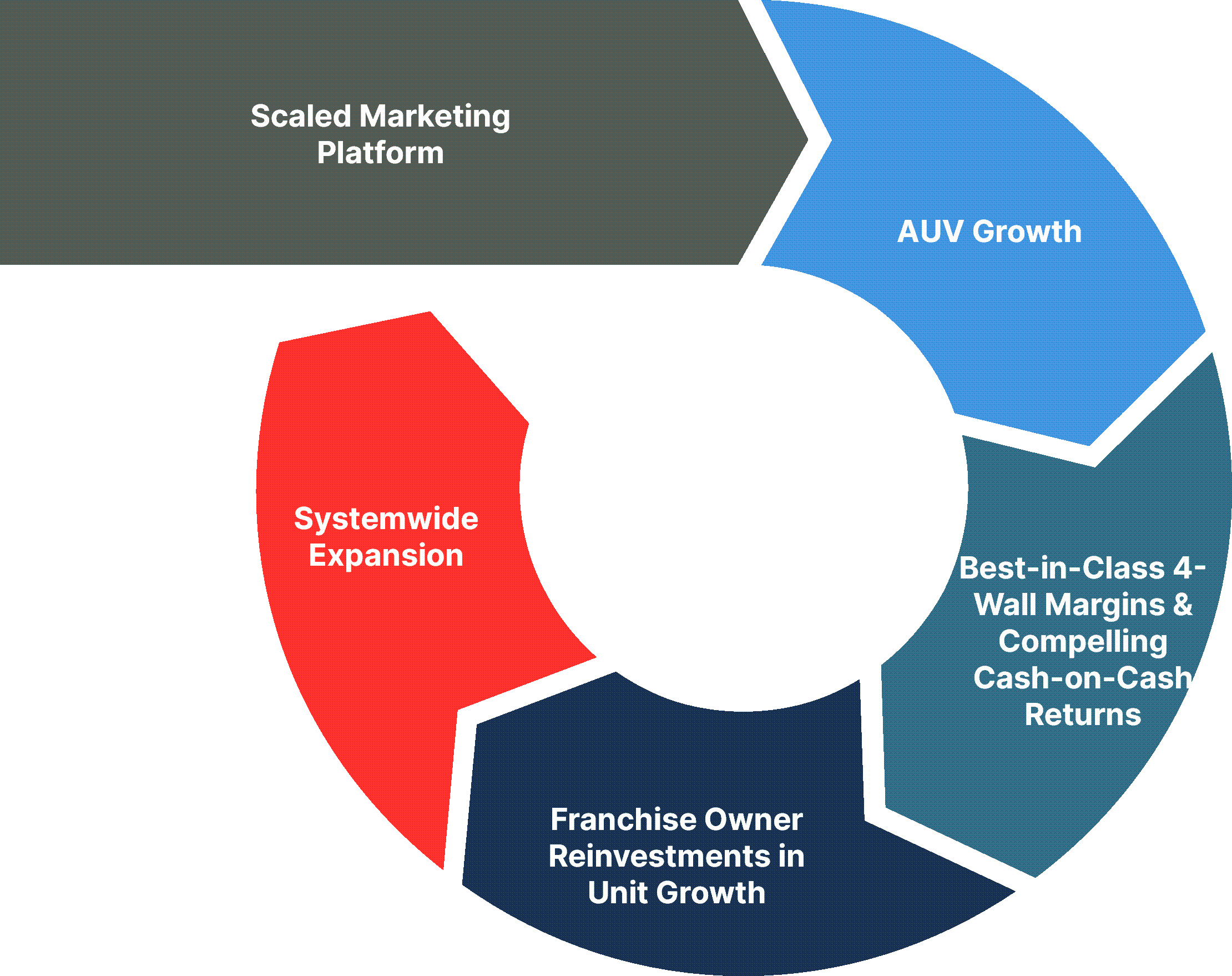
Jersey Mike’s growth is driven by a self-reinforcing model rooted in strong unit-level economics and sustained consumer demand. Our high-quality, craveable subs and strong brand awareness support category-leading AUVs, which translate into attractive returns for franchise owners. These economics drive continued franchise owner interest and investment, supporting disciplined domestic expansion while extending the brand into large, underpenetrated international markets.
10
We employ an asset-light, 99%-franchised business model that generates high operating margins that requires minimal capital expenditures, which facilitates strong cash flow generation. As we execute the growth strategies below, we expect to continue growing revenues, earnings and cash flows.
Expand Our System
We believe we have a significant opportunity to grow our store footprint in the U.S. and internationally through increased penetration in both existing and new markets. Our highly portable, profitable, and capital-efficient store model continues to generate strong franchise owner demand and drive store growth. We believe significant whitespace remains in the U.S., with the opportunity to open approximately 7,500 stores, based on benchmark store density levels achieved in our most penetrated domestic market. We believe we also have a meaningful international expansion opportunity, with the potential to eventually grow to approximately 15,000 stores globally over the long term, supported by the international growth experience of comparable restaurant brands.

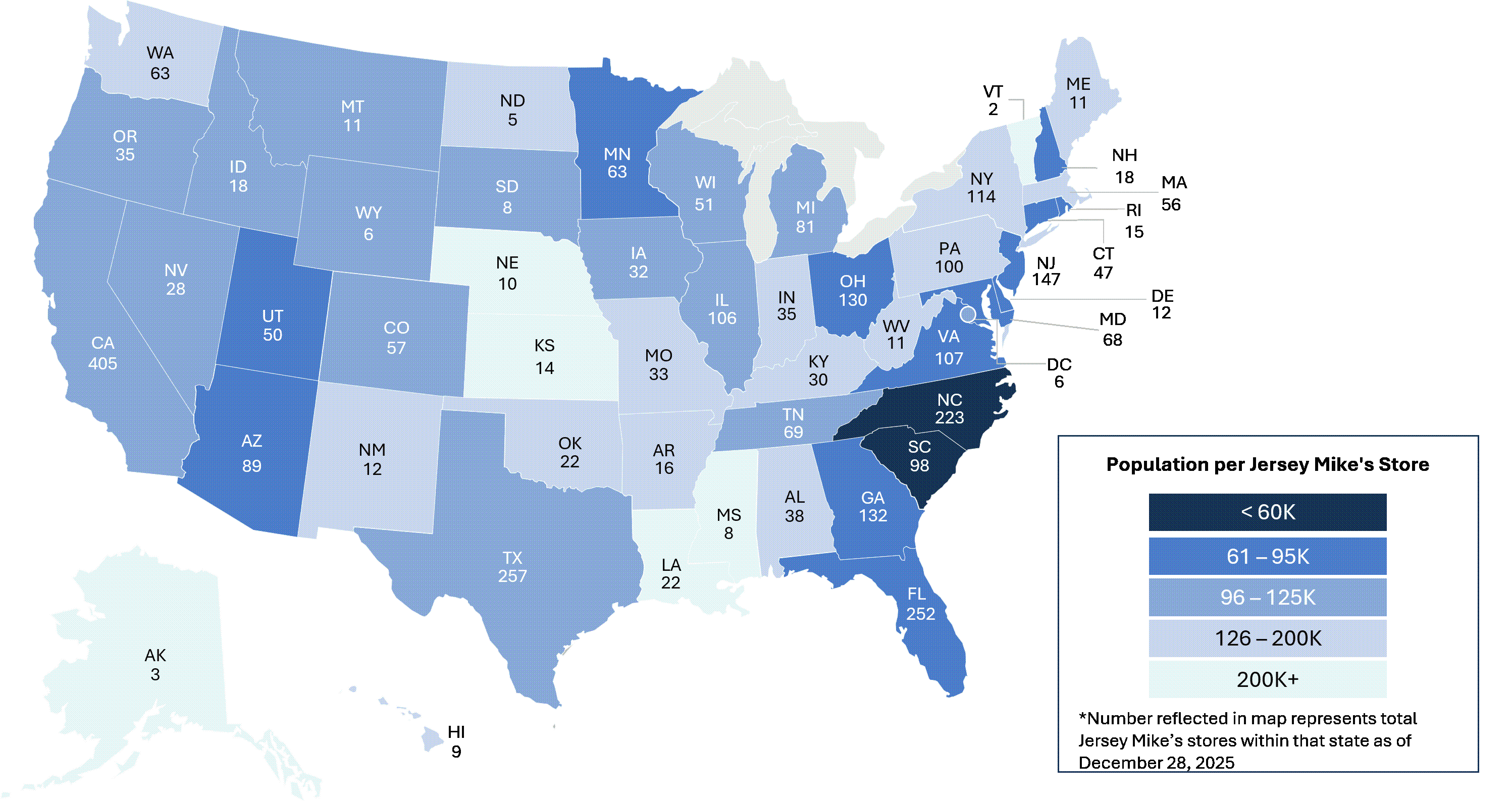
We support franchise owner expansion through a rigorous, cross-functional approach to site selection, prioritizing opportunities based on market potential, profitability and ongoing assessments of growth in both new and existing markets. We leverage data-driven insights, local broker expertise, landlord relationships, and market intelligence to identify prime locations, supported by detailed demographic and trade area analysis, traffic pattern evaluation, competition assessment and cash-on-cash return analyses. Within this framework, we target high-visibility inline or end-cap locations in first-ring retail centers.
11
Grow Same-Store Sales
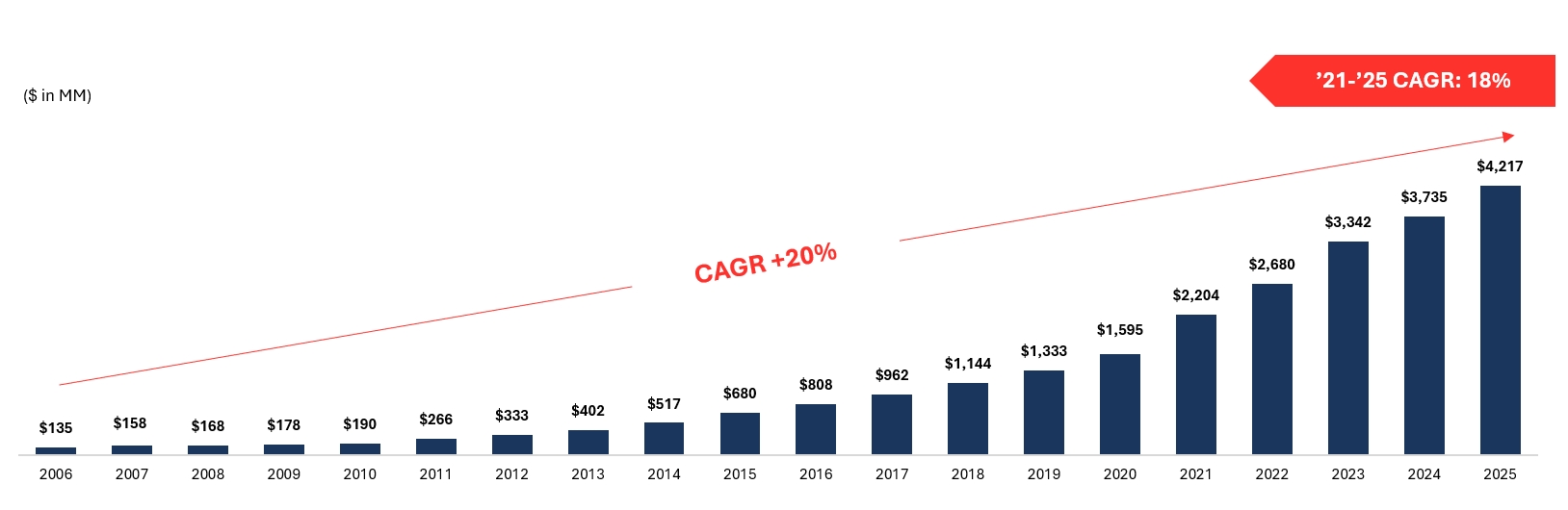
Our operations are purpose-built to support continued AUV expansion via higher opening volumes and sustained Same-Store Sales Growth. Jersey Mike’s has grown AUVs every year since 2006, reaching $1.4 million in Fiscal 2025 representing a 6% CAGR since 2006. Kitchen workflows, labor models, and technology infrastructure are already designed to handle meaningfully higher volumes with no material changes to operations or efficiency. One of the key factors driving AUV Growth is Same-Store Sales Growth, which was 8.4% in 2023, 2.0% in 2024, and 3.2% in 2025. 2023 Same-Store Sales Growth was impacted by price increases related to inflation. In the second half of 2022 and early 2023, we recommended non-routine price increases to our franchisees to offset increases in their cost of goods sold, which contributed to a 4% increase in the average transaction price in 2023 versus 2022.
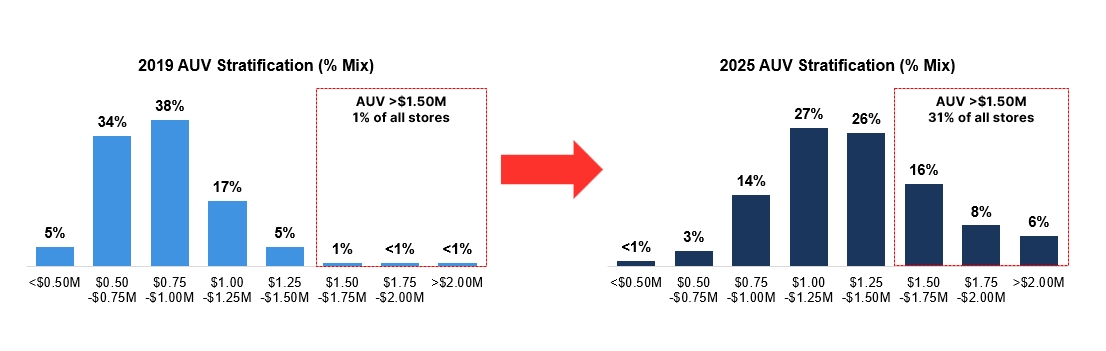
A growing number of stores – representing approximately 6% of the system as of December 28, 2025 – have already achieved volumes of $2.0 million or higher, demonstrating that our store model is proven at significantly higher volume levels and gives us confidence in our long-term AUV goal. We are confident in our ability to drive continued Same-Store Sales Growth and AUV expansion, supported by the following strategies:
12

Immediately following this offering, Jersey Mike’s Subs Inc. will be a holding company, and its sole material assets will be its equity interests, held directly or indirectly through wholly owned subsidiaries, in Jersey Mike’s Holdings. As the managing member of Jersey Mike’s Holdings, Jersey Mike’s Subs Inc. will operate and control all of the business and affairs of Jersey Mike’s Holdings and, through Jersey Mike’s Holdings and its subsidiaries, conduct our business. Prior to the completion of this offering:
For a description of the vesting and other terms of the Incentive Units received by Continuing Incentive Unitholders upon conversion of their Class B Units see “Management—Narrative Disclosure to Summary Compensation Table and Grants of Plan-Based Awards Table.”
Subject to certain restrictions, pursuant to the terms of the amended and restated limited liability company agreement of Jersey Mike’s Holdings, the holders of vested Incentive Units will have the right to convert their vested Incentive Units into a number of Common Units of Jersey Mike’s Holdings as a function of the “spread value” of such vested Incentive Units, i.e. the amount by which the market value of a Common Unit (based on the public trading price of a share of Class A common stock) exceeds the applicable participation threshold of such Incentive Unit. The applicable participation threshold is subject to customary anti-dilution adjustments. Common Units received upon conversion will be exchangeable on a one-for-one basis for shares of Class A common stock of Jersey Mike’s Subs Inc. in accordance with the terms of the exchange agreement. An unvested Incentive Unit will not be exchangeable unless and until such Incentive Unit vests. See “Certain Relationships and Related Person Transactions—Jersey Mike’s Holdings Amended and Restated Limited Liability Company Agreement.”
13
We and the Continuing Unitholders will also enter into an exchange agreement under which they (or certain permitted transferees) will have the right (subject to the terms of the exchange agreement) to exchange their Common Units (including Common Units issued upon conversion of vested Incentive Units) for shares of our Class A common stock on a one-for-one basis, subject to customary conversion rate adjustments for stock splits, stock dividends and reclassifications, except that in certain circumstances, the Company may elect to settle such exchanges with the cash proceeds of a concurrent primary issuance of an equivalent number of shares of Class A common stock. Upon the settlement of any exchange, an equivalent number of shares of Class B common stock held by each such Continuing Unitholder will be automatically transferred to us and cancelled and retired. For a description of the amended and restated limited liability company agreement of Jersey Mike’s Holdings and the exchange agreement, please read “Organizational Structure” and “Certain Relationships and Related Person Transactions.”
The Continuing Common Unitholders will hold all of the initially outstanding shares of our Class B common stock, and, upon conversion of vested Incentive Units for Common Units, the converting holders will also receive an equivalent number of shares of Class B common stock. The shares of Class B common stock will have no economic rights but will entitle each holder to one vote for each share held of record on all matters to be voted on by stockholders generally, with the number of shares of Class B common stock held by each Continuing Unitholder being equal to the number of Common Units held by each such Continuing Unitholder. If at any time the ratio at which Common Units are exchangeable for shares of Class A common stock of Jersey Mike’s Subs Inc. changes from one-for-one as described under “Certain Relationships and Related Person Transactions—Exchange Agreement,” the number of votes to which Class B common stockholders are entitled will be adjusted accordingly. Holders of shares of our Class B common stock will vote together with holders of our Class A common stock as a single class on all matters on which stockholders are entitled to vote generally, except as otherwise required by law.
Prior to the completion of this offering, Jersey Mike’s Subs Inc. will enter into a tax receivable agreement with certain of the pre-IPO owners that provides for the payment by Jersey Mike’s Subs Inc. to such pre-IPO owners of 90% of certain tax benefits, if any, that Jersey Mike’s Subs Inc. actually realizes, or is deemed to realize (calculated using certain assumptions), as a result of (i) Jersey Mike’s Subs Inc.’s allocable share of existing tax basis in certain Jersey Mike’s Holdings’ assets acquired in this offering, (ii) increases in Jersey Mike’s Subs Inc.’s allocable share of existing tax basis and tax basis adjustments to certain tangible and intangible assets of Jersey Mike’s Holdings as a result of sales or exchanges of Common Units (including Common Units issued upon conversion of vested Incentive Units), (iii) Jersey Mike’s Subs Inc.’s utilization of certain tax attributes (including any existing tax basis) of certain entities that are taxable as corporations for U.S. federal income tax purposes through which the Pre-IPO Stockholders hold their interests in Jersey Mike’s Holdings prior to the Offering Transactions (the “Blocker Companies”), which Jersey Mike’s Subs Inc. acquires in connection with this offering as described under “Organizational Structure—Blocker Transfers,” and (iv) certain other tax benefits related to entering into the tax receivable agreement, including tax benefits attributable to payments under the tax receivable agreement. This payment obligation is an obligation of Jersey Mike’s Subs Inc. and not of Jersey Mike’s Holdings. The term of the tax receivable agreement will continue until all such tax benefits have been utilized or expired, unless Jersey Mike’s Subs Inc. exercises its right to terminate the tax receivable agreement early, certain changes of control occur (as described in more detail below), upon a breach by Jersey Mike’s Subs Inc. of a material obligation under the tax receivable agreement, or upon certain events of insolvency, in which case all obligations generally will be accelerated and due as if Jersey Mike’s Subs Inc. had exercised its right to terminate the tax receivable agreement. The payment to be made upon an early termination of the tax receivable agreement will generally equal the present value of payments to be made under the tax receivable agreement using certain assumptions. Payments under the tax receivable agreement are not conditioned upon continued ownership of us by the pre-IPO owners. Assuming: (i) a price of $23.00 per share of our Class A common stock; (ii) a constant U.S. federal, state, and local corporate income tax rate of 24.8%; (iii) that we will have sufficient taxable income to fully utilize the tax benefits; and (iv) no material changes in tax law, if the Continuing Unitholders were to exchange all of the Common Units that they will hold immediately following this offering, and, assuming all Incentive Units are converted to Common Units and subsequently exchanged for shares of Class A common stock at the initial public offering price of $23.00 per share of Class A common stock, we estimate that we would, as a result of the Reorganization Transactions, the Offering Transactions and such hypothetical exchange, record a deferred tax asset of approximately $503 million and that the aggregate non-current liability we would record based on our estimate of the aggregate amount that Jersey Mike’s Subs Inc. would pay under the tax receivable agreement is approximately $2,084 million. These amounts are estimates and have been prepared for informational purposes only. The actual amount of deferred tax assets and related non-current liabilities that we will recognize as a result of any such future exchanges will differ based on, among other things: (i) the amount and timing of future exchanges of Common Units by Continuing Unitholders, and the extent to which such exchanges are taxable; (ii) the price per share of our Class A common stock at the time of the exchanges; (iii) the amount and timing of future income against which to offset the tax benefits; and (iv) the tax rates then in effect. See “Certain Relationships and Related Person Transactions—Tax Receivable Agreement.”
14
Our post-offering organizational structure, as described above, is commonly referred to as an umbrella partnership-C-corporation (“UP-C”) structure. This organizational structure will allow the Continuing Unitholders to retain their equity ownership in Jersey Mike’s Holdings, an entity that is classified as a partnership for U.S. federal income tax purposes, in the form of Common Units. Investors in this offering and the Pre-IPO Stockholders will, by contrast, hold their equity ownership in Jersey Mike’s Subs Inc., a Delaware corporation that is a domestic corporation for U.S. federal income tax purposes, in the form of shares of Class A common stock. We believe that the Continuing Unitholders generally find it advantageous to continue to hold their equity interests in an entity that is not taxable as a corporation for U.S. federal income tax purposes. We do not believe that our UP-C organizational structure will give rise to any significant business or strategic benefit or detriment to Jersey Mike’s Subs Inc. and its consolidated subsidiaries. See “Risk Factors—Risks Related to Our Organizational Structure.”
The Reorganization Transactions will be accounted for as a reorganization of entities under common control. As a result, the consolidated financial statements of Jersey Mike’s Subs Inc. will recognize the assets and liabilities received in the Reorganization Transactions at their historical carrying amounts, as reflected in the historical consolidated financial statements of Jersey Mike’s Holdings. Jersey Mike’s Subs Inc. will consolidate Jersey Mike’s Holdings in its consolidated financial statements and record a non-controlling interest related to the Common Units held by the Continuing Unitholders on its consolidated balance sheet and statement of operations.
The simplified diagram below depicts our organizational structure immediately following this offering. For additional detail, see “Organizational Structure.”
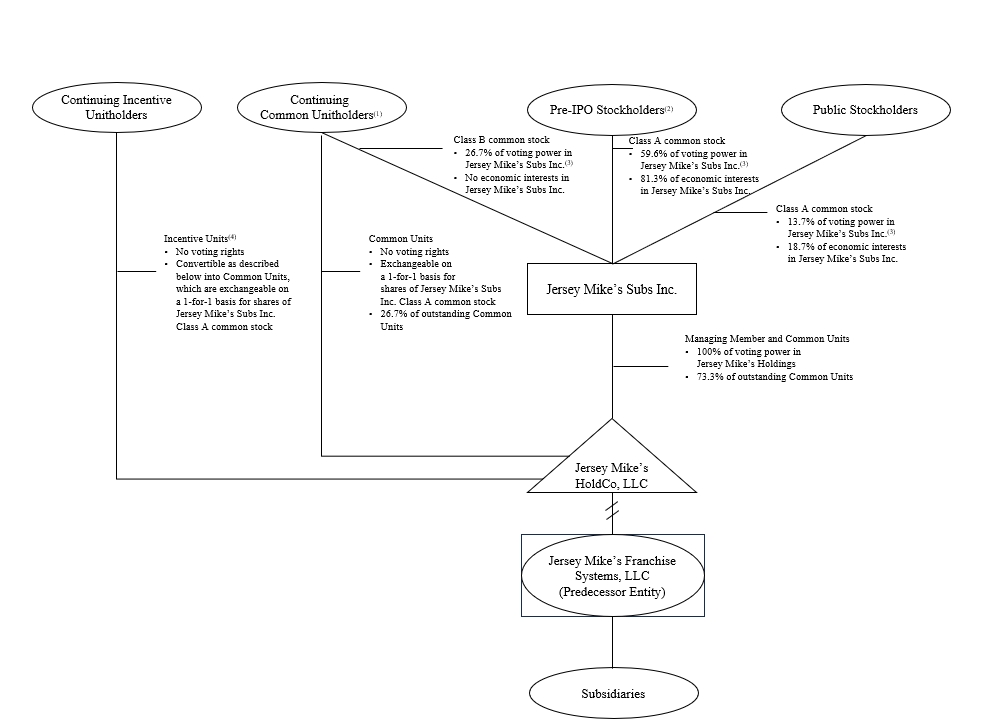
Note: Certain intermediate holding companies that are not material to this offering have been omitted from the structure chart.
15
Our Sponsor
Blackstone is the world’s largest alternative asset manager. Blackstone seeks to deliver compelling returns for institutional and individual investors by strengthening the companies in which the firm invests. Blackstone’s $1.3 trillion in assets under management include global investment strategies focused on real estate, private equity, credit, infrastructure, life sciences, growth equity, secondaries and hedge funds.
After the completion of this offering, our Sponsor will hold a majority of the combined voting power of our shares eligible to vote for the election of our directors. As a result, we will be a “controlled company” within the meaning of the NYSE corporate governance standards, and accordingly, we may elect not to comply with certain corporate governance standards, including the requirements (1) that a majority of our board of directors consist of independent directors, (2) that our board of directors have a compensation committee that is comprised entirely of independent directors with a written charter addressing the committee’s purpose and responsibilities, and (3) that our board of directors have a nominating and governance committee that is comprised entirely of independent directors with a written charter addressing the committee’s purpose and responsibilities. Accordingly, you will not have the same protections afforded to stockholders of companies that are subject to all of these corporate governance requirements. In the event that we cease to be a “controlled company” and our Class A common stock continues to be listed on the NYSE, we will be required to comply with these provisions within the applicable transition periods.
We intend to enter into a stockholders agreement with our Sponsor in connection with this offering. Among other things, this agreement will grant our Sponsor the right to designate an agreed number of individuals to our board of directors. Jersey Mike’s Subs Inc. has been advised by our Sponsor that at the time of the offering, our Sponsor intends to designate three directors (Mr. Staub, Mr. Kestnbaum and Mr. Rinker) to our board of directors. See “Certain Relationships and Related Person Transactions—Stockholders Agreement” for a description of this agreement.
Investment Risks
An investment in shares of our Class A common stock involves substantial risks and uncertainties that may materially adversely affect our business, financial condition, and results of operations and cash flows. Some of the more significant challenges and risks relating to an investment in our company include, among other things, the following:
parties’ with which we have business relationships (collectively, “Third-Party Providers”) inability or
failure to execute a comprehensive business continuity plan following a disaster or force majeure event
could have a material adverse impact on our business.
16
Before you invest in our Class A common stock, you should carefully consider all of the information in this prospectus, including matters set forth under the heading “Risk Factors.”
Corporate Information
Jersey Mike’s Subs Inc. was incorporated in Delaware on February 24, 2026. Our principal executive offices are located at 1 Commvault Way, S300, Tinton Falls, NJ 07724, and our telephone number is (732) 223-4044. We maintain a website at www.jerseymikes.com. The reference to our website is intended to be an inactive textual reference only. The information contained on, or that can be accessed through, our website is not part of this prospectus.
17
Recent Developments
The data presented below reflects our preliminary estimated unaudited financial results and key performance measures for the thirteen and twenty-six weeks ended June 28, 2026, based upon information available to us as of the date of this prospectus. This data is not a comprehensive statement of our financial results for the thirteen and twenty-six weeks ended June 28, 2026.
While we currently expect our results for the thirteen and twenty-six weeks ended June 28, 2026 to be within the ranges set forth below, the review of our financial statements as of, and for the thirteen and twenty-six weeks ended, June 28, 2026 has not been completed. During the course of the preparation of these unaudited financial statements and related notes and the completion of the review, additional adjustments to the preliminary estimated financial information presented below may be identified. Our independent registered public accounting firm, Deloitte & Touche LLP, has not audited, reviewed, compiled or performed any procedures with respect to preliminary financial data presented below and, accordingly, Deloitte & Touche LLP does not express an opinion or any other form of assurance with respect thereto.
During the thirteen weeks ended June 28, 2026, we achieved same-store sales growth of 2.3%, primarily reflecting accelerating transaction growth throughout the quarter driven by our digital marketing initiatives and strong performance from our chicken salad limited time offer. Traffic growth in June 2026 exceeded that of the prior two months. Combined with 8.1% Net Store Growth, systemwide sales grew 10.0% in the thirteen weeks ended June 28, 2026.
|
|
|
|
|||||||||||||
|
|
Thirteen Weeks Ended |
|
|
Twenty-Six Weeks Ended |
|
||||||||||
|
|
June 28, 2026 |
June 29, 2025 |
|
|
June 28, 2026 |
June 29, 2025 |
|
||||||||
|
|
Preliminary Estimated |
Actual |
|
|
Preliminary Estimated |
Actual |
|
||||||||
Systemwide sales (in millions) |
$ |
|
1,210 |
|
$ |
1,101 |
|
$ |
2,307 |
|
$ |
|
2,111 |
|
||
Same-store sales growth |
|
|
2.3 |
% |
|
|
3.6 |
% |
|
|
2.0 |
% |
|
|
4.2 |
% |
Digital sales percentage |
|
|
43 |
% |
|
|
41 |
% |
|
|
44 |
% |
|
|
42 |
% |
Average unit volume (AUV, in thousands) |
$ |
1,376 |
|
$ |
1,354 |
|
$ |
1,376 |
|
$ |
|
1,354 |
|
|||
Net store growth |
|
|
8.1 |
% |
|
|
10.0 |
% |
|
|
8.1 |
% |
|
|
10.0 |
% |
New store openings (gross) |
|
|
83 |
|
|
|
73 |
|
|
130 |
|
|
|
132 |
|
|
Total stores (end of period) |
|
3,378 |
|
|
|
3,124 |
|
|
3,378 |
|
|
|
3,124 |
|
||
|
|
(Unaudited) |
|
||||||||||||||||||||||||||
|
|
Successor |
|
|
|
Predecessor |
|
||||||||||||||||||||||
|
|
Thirteen Weeks Ended |
|
|
Twenty-Six |
|
|
Period from |
|
|
|
Period from |
|
||||||||||||||||
|
|
June 28, 2026 |
|
|
June 29, 2025 |
|
|
June 28, 2026 |
|
|
June 29, 2025 |
|
|
|
January 15, 2025 |
|
|||||||||||||
|
|
Preliminary Estimated |
|
|
Actual |
|
|
Preliminary Estimated |
|
|
Actual |
|
|
|
Actual |
|
|||||||||||||
|
|
Low |
|
|
High |
|
|
|
|
|
Low |
|
|
High |
|
|
|
|
|
|
|
|
|||||||
(in millions) |
|
|
|
|
|
|
|
|
|
|
|||||||||||||||||||
Revenue |
|
$ |
202 |
|
|
$ |
214 |
|
|
$ |
189 |
|
|
$ |
387 |
|
|
$ |
399 |
|
|
$ |
328 |
|
|
|
$ |
28 |
|
Net income (loss) |
|
$ |
36 |
|
|
$ |
38 |
|
|
$ |
59 |
|
|
$ |
12 |
|
|
$ |
14 |
|
|
$ |
73 |
|
|
|
$ |
(4 |
) |
Adjusted EBITDA |
|
$ |
111 |
|
|
$ |
117 |
|
|
$ |
107 |
|
|
$ |
195 |
|
|
$ |
201 |
|
|
$ |
163 |
|
|
|
$ |
12 |
|
During the thirteen weeks ended June 28, 2026, the expected increase in revenue was driven by Net Store Growth of 8.1% and Same-Store Sales Growth of 2.3%. The expected decrease in net income was driven primarily by incremental Area Director buyouts. Adjusted EBITDA includes an estimated $3 million of advertising fund underspend (advertising revenues in excess of advertising expenses) in the second quarter of 2026 compared to $13 million in the prior-year quarter. Absent this advertising fund timing difference, estimated Adjusted EBITDA would have grown 18% year-over-year, reflecting our revenue growth and $8 million in lower expenses related to our prior area director program as a result of our transition to an internally staffed franchise support model.
18
During the twenty-six weeks ended June 28, 2026, the expected increase in revenue was driven by Net Store Growth of 8.1% and Same-Store Sales Growth of 2.0%. The expected decrease in net income was driven primarily by incremental Area Director buyouts. Adjusted EBITDA includes an estimated $7 million of advertising fund overspend (advertising expenses in excess of advertising revenues) in the first half of 2026 compared to $8 million of advertising fund underspend in the first half of 2025. Absent this advertising fund timing difference, estimated Adjusted EBITDA would have grown 23% year-over-year, reflecting our revenue growth and $14 million in lower expenses related to our prior area director program as a result of our transition to an internally staffed franchise support model.
We use a number of operational and other metrics in order to evaluate performance and make decisions about our business. See “Management’s Discussion and Analysis of Financial Condition and Results of Operations—Key Performance Measures” for additional information regarding our use of these metrics.
The following table sets forth a reconciliation of net income (loss) to Adjusted EBITDA for the periods indicated. Adjusted EBITDA is not a measure that is required to be disclosed by U.S. generally accepted accounting principles (“GAAP”) and should not be considered in isolation, or as a substitute for our results as reported under GAAP. See “Management’s Discussion and Analysis of Financial Condition and Results of Operations—Non-GAAP Financial Measures” for a discussion on how we define and calculate Adjusted EBITDA and a discussion of why we believe this measure is important to an understanding of our business, financial condition and results of operations.
|
|
(Unaudited) |
|
||||||||||||||||||||||||||
|
|
Successor |
|
|
|
Predecessor |
|
||||||||||||||||||||||
|
|
Thirteen Weeks Ended |
|
|
Twenty-Six |
|
|
Period from |
|
|
|
Period from |
|
||||||||||||||||
|
|
June 28, 2026 |
|
|
June 29, 2025 |
|
|
June 28, 2026 |
|
|
June 29, 2025 |
|
|
|
January 15, 2025 |
|
|||||||||||||
|
|
Preliminary Estimated |
|
|
Actual |
|
|
Preliminary Estimated |
|
|
Actual |
|
|
|
Actual |
|
|||||||||||||
|
|
Low |
|
|
High |
|
|
|
|
|
Low |
|
|
High |
|
|
|
|
|
|
|
|
|||||||
(in millions) |
|
|
|
|
|
|
|
|
|
|
|
|
|
|
|
|
|
|
|
|
|
|
|||||||
Net income (loss) |
|
$ |
36 |
|
|
$ |
38 |
|
|
$ |
59 |
|
|
$ |
12 |
|
|
$ |
14 |
|
|
$ |
73 |
|
|
|
$ |
(4 |
) |
Add back: |
|
|
|
|
|
|
|
|
|
|
|
|
|
|
|
|
|
|
|
|
|
|
|||||||
Interest income |
|
|
(1 |
) |
|
|
(2 |
) |
|
|
(2 |
) |
|
|
(2 |
) |
|
|
(3 |
) |
|
|
(5 |
) |
|
|
|
(1 |
) |
Interest expense |
|
|
30 |
|
|
32 |
|
|
|
24 |
|
|
60 |
|
|
62 |
|
|
|
42 |
|
|
|
|
5 |
|
|||
Loss of extinguishment of debt |
|
|
— |
|
|
|
— |
|
|
|
— |
|
|
7 |
|
|
7 |
|
|
|
— |
|
|
|
|
— |
|
||
Gain on sale of company-owned stores |
|
|
(14 |
) |
|
|
(14 |
) |
|
|
— |
|
|
|
(14 |
) |
|
|
(14 |
) |
|
|
— |
|
|
|
|
— |
|
Depreciation and amortization |
|
24 |
|
|
25 |
|
|
|
25 |
|
|
50 |
|
|
51 |
|
|
|
46 |
|
|
|
|
— |
|
||||
Equity-based compensation expense(a) |
|
|
3 |
|
|
|
3 |
|
|
|
— |
|
|
6 |
|
|
6 |
|
|
|
— |
|
|
|
|
— |
|
||
Acquisition-related expenses(b) |
|
|
— |
|
|
|
— |
|
|
|
— |
|
|
|
— |
|
|
|
— |
|
|
|
— |
|
|
|
|
1 |
|
IPO-related expenses(c) |
|
7 |
|
|
7 |
|
|
|
— |
|
|
13 |
|
|
13 |
|
|
|
— |
|
|
|
|
— |
|
||||
Founder-related discretionary expenses(d) |
|
1 |
|
|
1 |
|
|
|
— |
|
|
1 |
|
|
1 |
|
|
|
— |
|
|
|
|
11 |
|
||||
Area Director buyouts(e) |
|
19 |
|
|
21 |
|
|
|
— |
|
|
51 |
|
|
53 |
|
|
|
4 |
|
|
|
|
— |
|
||||
Corporate transition and other expenses(f) |
|
6 |
|
|
6 |
|
|
|
1 |
|
|
11 |
|
|
11 |
|
|
|
3 |
|
|
|
|
— |
|
||||
Adjusted EBITDA |
|
$ |
111 |
|
|
$ |
117 |
|
|
$ |
107 |
|
|
$ |
195 |
|
|
$ |
201 |
|
|
$ |
163 |
|
|
|
$ |
12 |
|
19
20
The Offering
Class A common stock offered by Jersey Mike’s Subs Inc. |
|
13,782,609 shares. |
Class A common stock offered by the selling stockholders |
|
29,695,652 shares. |
Option to purchase additional shares of Class A common stock from the selling stockholders |
|
The selling stockholders have granted the underwriters an option for a period of 30 days to purchase up to 6,521,739 additional shares of Class A common stock from the selling stockholders. |
Class A common stock outstanding, after giving effect to this offering |
|
232,834,177 shares (or 234,282,329 shares if the underwriters exercise in full their option to purchase additional shares of Class A common stock). |
Class A common stock outstanding after this offering, assuming exchange of all Common Units held by the Continuing Common Unitholders |
|
317,638,900 shares. |
Class B common stock outstanding, after giving effect to this offering |
|
84,804,723 shares, all of which will be held by the Continuing Common Unitholders (or 83,356,571 shares if the underwriters exercise in full their option to purchase additional shares of Class A common stock). |
Voting power held by investors in this offering, after giving effect to this offering |
|
13.7% (or 15.7% if the underwriters exercise in full their option to purchase additional shares of Class A common stock). |
Voting power held by our pre-IPO owners, after giving effect to this offering |
|
86.3% (or 84.3% if the underwriters exercise in full their option to purchase additional shares of Class A common stock). |
Use of proceeds |
|
We estimate that the proceeds to Jersey Mike’s Subs Inc. from the issuance of the 13,782,609 shares that it is selling in this offering, after deducting estimated underwriting discounts and commissions, will be approximately $301 million. |
|
|
Jersey Mike’s Subs Inc. intends to use these net proceeds to acquire an equivalent number of newly issued Common Units from Jersey Mike’s Holdings, as described under “Organizational Structure—Offering Transactions,” which Jersey Mike’s Holdings will in turn use $295 million to repay a portion of the outstanding indebtedness under the Series 2026-1 Notes and the remainder for general corporate purposes. The Company estimates offering expenses (excluding underwriting discounts and commissions) will be approximately $23 million, of which $11 million has been paid and an accrual for estimated unpaid offering expenses of approximately $12 million is reflected on Jersey Mike’s Subs Inc.’s Unaudited Pro Forma Condensed Consolidated Balance Sheet as of March 29, 2026.
We will not receive any proceeds from the sale of shares of Class A common stock by the selling stockholders (including any sales pursuant to the underwriters’ option to purchase additional shares from the selling stockholders).
|
Voting rights |
|
Each share of our Class A common stock and Class B common stock entitles its holder to one vote on all matters to be voted on by stockholders generally. |
|
|
The Continuing Common Unitholders will hold all of the initially outstanding shares of our Class B common stock and, upon conversion of |
21
|
|
vested Incentive Units for Common Units, the converting holders will also receive an equivalent number of shares of Class B common stock. The shares of Class B common stock will have no economic rights but will entitle each holder to one vote for each share held of record on all matters to be voted on by stockholders generally, with the number of shares of Class B common stock held by each Continuing Unitholder being equal to the number of Common Units held by each such Continuing Unitholder. If at any time the ratio at which Common Units are exchangeable for shares of our Class A common stock changes from one-for-one as described under “Certain Relationships and Related Person Transactions—Exchange Agreement,” the number of votes to which Class B common stockholders are entitled will be adjusted accordingly. Holders of shares of our Class B common stock will vote together with holders of our Class A common stock as a single class on all matters on which stockholders are entitled to vote generally, except as otherwise required by law. See “Description of Capital Stock—Common Stock—Class B Common Stock.” |
Dividend policy |
|
We have no current plans to pay dividends on our Class A common stock following this offering. The declaration, amount, and payment of any future dividends will be at the sole discretion of our board of directors and will depend on general economic and business conditions; our financial condition and operating results; our available cash; current and anticipated cash needs; capital requirements; contractual, legal, tax, and regulatory restrictions and implications on the payment of dividends by us to our stockholders or by our subsidiaries (including Jersey Mike’s Holdings) to us; and such other factors as our board of directors may deem relevant. Holders of Class B common stock are not entitled to any dividends (other than dividends payable in the form of additional shares of Class B common stock or rights to acquire such shares). |
|
|
Jersey Mike’s Subs Inc. is a holding company and has no material assets other than its equity interests held directly or indirectly through wholly owned subsidiaries in Jersey Mike’s Holdings. We intend to cause Jersey Mike’s Holdings to make distributions to us in an amount sufficient to cover cash dividends, if any, declared by us. If Jersey Mike’s Holdings makes such distributions to Jersey Mike’s Subs Inc., the other holders of Common Units and any participating Incentive Units (as described below) will be entitled to receive equivalent pro rata distributions. Incentive Units initially will not be entitled to receive distributions (other than tax distributions) until holders of Common Units have received a minimum return as provided in the amended and restated limited liability company agreement of Jersey Mike’s Holdings. However, Incentive Units will have the benefit of adjustment provisions that will reduce the participation threshold for distributions in respect of which they do not participate until there is no participation threshold, at and after which time the Incentive Units would participate pro rata with distributions on Common Units. The adjustment to the participation threshold of an Incentive Unit for distributions in respect of which such Incentive Unit does not participate will be factored into calculating the number of Common Units the holder of vested Incentive Units would receive upon conversion of a vested Incentive Unit for a Common Unit. |
22
|
|
Under the terms of the amended and restated limited liability company agreement, Jersey Mike’s Holdings is obligated to make tax distributions to holders of Common Units (including Jersey Mike’s Subs Inc.) at certain assumed tax rates. See “Risk Factors—Risks Related to Our Organizational Structure—Jersey Mike’s Subs Inc. is a holding company and its only material assets after completion of this offering will be its equity interests, held directly or indirectly through wholly owned subsidiaries, in Jersey Mike’s Holdings, and it is accordingly dependent upon distributions from Jersey Mike’s Holdings to pay taxes, make payments under the tax receivable agreement, and pay any dividends.” |
Exchange rights of holders of Common Units and Incentive Units |
|
Prior to this offering, we will enter into an exchange agreement with the Continuing Unitholders so that they may, after the completion of this offering (subject to the terms of the exchange agreement), exchange their Common Units (including Common Units issued upon conversion of vested Incentive Units) for shares of Class A common stock of Jersey Mike’s Subs Inc. on a one-for-one basis, subject to customary conversion rate adjustments for stock splits, stock dividends and reclassifications, except that in certain circumstances, the Company may elect to settle such exchanges with the cash proceeds of a concurrent primary issuance of an equivalent number of shares of Class A common stock. Upon the settlement of any exchange, an equivalent number of shares of Class B common stock held by each such Continuing Unitholder will be automatically transferred to us and cancelled and retired. See “Certain Relationships and Related Person Transactions—Exchange Agreement.” Subject to certain restrictions, pursuant to the terms of the amended and restated limited liability company agreement of Jersey Mike’s Holdings, the holders of vested Incentive Units will have the right to convert their vested Incentive Units into a number of Common Units of Jersey Mike’s Holdings as a function of the “spread value” of such vested Incentive Units, i.e. the amount by which the market value of a Common Unit (based on the public trading price of a share of Class A common stock) exceeds the applicable participation threshold of such Incentive Unit. The applicable participation threshold is subject to customary anti-dilution adjustments. Common Units received upon conversion will be exchangeable on a one-for-one basis for shares of Class A common stock of Jersey Mike’s Subs Inc. in accordance with the terms of the exchange agreement. An unvested Incentive Unit will not be exchangeable unless and until such Incentive Unit vests. See “Certain Relationships and Related Person Transactions—Jersey Mike’s Holdings Amended and Restated Limited Liability Company Agreement.” |
Controlled company |
|
Upon the closing of this offering, our Sponsor will beneficially own approximately 76.5% of the combined voting power of our shares eligible to vote in the election of our directors (or 74.5% if the underwriters exercise in full their option to purchase additional shares of Class A common stock). As a result, we will be a “controlled company” under NYSE rules. As a controlled company, we qualify for exemptions from certain corporate governance requirements of the NYSE. |
Conflicts of Interest |
|
Because certain affiliates of Blackstone Securities Partners L.P., an underwriter in this offering, (i) own in excess of 10% of our issued and outstanding common stock and (ii) will receive proceeds from the sale of shares of Class A common stock in this offering by the selling stockholders and will receive at least 5% of the net proceeds of this offering, Blackstone Securities Partners L.P. is deemed to have a “conflict of interest” under Rule |
23
|
|
5121 of the Financial Industry Regulatory Authority, Inc. (“FINRA”). Accordingly, this offering is being made in compliance with the requirements of FINRA Rule 5121. Pursuant to that rule, the appointment of a “qualified independent underwriter” is not required in connection with this offering. In accordance with FINRA Rule 5121(c), no sales of the shares of our common stock in this offering will be made to any discretionary account over which Blackstone Securities Partners L.P. exercises discretion without the prior specific written approval of the account holder. See “Underwriting (Conflicts of Interest).” |
Tax receivable agreement |
|
Prior to the completion of this offering, Jersey Mike’s Subs Inc. will enter into a tax receivable agreement with certain of the pre-IPO owners that provides for the payment by Jersey Mike’s Subs Inc. to such pre-IPO owners of 90% of certain tax benefits, if any, that Jersey Mike’s Subs Inc. actually realizes, or is deemed to realize (calculated using certain assumptions), as a result of (i) Jersey Mike’s Subs Inc.’s allocable share of existing tax basis in certain Jersey Mike’s Holdings’ assets acquired in this offering, (ii) increases in Jersey Mike’s Subs Inc.’s allocable share of existing tax basis and tax basis adjustments to certain tangible and intangible assets of Jersey Mike’s Holdings as a result of sales or exchanges of Common Units (including Common Units issued upon conversion of vested Incentive Units) in connection with or after this offering, (iii) Jersey Mike’s Subs Inc.’s utilization of certain tax attributes (including any existing tax basis) of the Blocker Companies, which Jersey Mike’s Subs Inc. acquires in connection with this offering as described under “Organizational Structure—Blocker Transfers,” and (iv) certain other tax benefits related to entering into the tax receivable agreement, including tax benefits attributable to payments under the tax receivable agreement. Sales or exchanges of Common Units (including Common Units issued upon conversion of vested Incentive Units) are expected to result in increases in the tax basis of the assets of Jersey Mike’s Holdings. The existing tax basis, increases in existing tax basis and tax basis adjustments generated over time may increase (for tax purposes) depreciation and amortization deductions available to Jersey Mike’s Subs Inc. for tax purposes and, therefore, may reduce the amount of U.S. federal, state and local tax that Jersey Mike’s Subs Inc. would otherwise be required to pay in the future. Actual tax benefits realized by Jersey Mike’s Subs Inc. may differ from tax benefits calculated under the tax receivable agreement as a result of the use of certain assumptions in the tax receivable agreement, including the use of an assumed weighted-average state and local income tax rate to calculate tax benefits. This payment obligation is an obligation of Jersey Mike’s Subs Inc. and not of Jersey Mike’s Holdings. See “Certain Relationships and Related Person Transactions—Tax Receivable Agreement.” |
Directed share program |
|
At our request, the underwriters have reserved for sale, at the initial public offering price, up to 5% of the Class A common stock being offered for sale, to our directors, officers, employees, business associates and related persons. We will offer these shares to the extent permitted under applicable regulations. Any directors and officers buying shares of Class A common stock through the directed share program will be subject to a 180-day lock-up period with respect to such shares. The number of shares of Class A common stock available for sale to the general public in this offering will be reduced to the extent that such persons purchase such reserved shares. Any reserved shares not purchased will be offered by the underwriters to the general public on the same terms as the other shares of Class A common stock. See “Underwriting (Conflicts of Interest)—Directed Share Program.” |
24
Risk factors |
|
See “Risk Factors” for a discussion of risks you should carefully consider before deciding to invest in our Class A common stock. |
Certain U.S. federal income tax consequences to non-U.S. holders |
|
For a discussion of certain U.S. federal income tax consequences that may be relevant to non-U.S. stockholders, see “Certain U.S. Federal Income Tax Consequences to Non-U.S. Holders.” |
Proposed trading symbol |
|
“JMKE.” |
In this prospectus, unless otherwise indicated, the number of shares of Class A common stock and Class B common stock outstanding and the other information based thereon assumes no exercise by the underwriters of their option to purchase additional shares of Class A common stock from the selling stockholders and does not reflect:
See “Management—Compensation Arrangements to be Adopted in Connection with this Offering—Omnibus Incentive Plan,” “Management—Compensation Arrangements to be Adopted in Connection with this Offering—Employee Stock Purchase Plan,” “Management—Compensation Arrangements to be Adopted in Connection with this Offering—Treatment of Existing Equity Interests,” and “Management—Compensation Arrangements to be Adopted in Connection with this Offering—Equity Awards.”
25
Summary Historical and Pro Forma Condensed Consolidated Financial and Other Data
The following table sets forth summary historical consolidated financial and other data for Jersey Mike’s Holdings and its subsidiaries and the summary pro forma condensed consolidated financial and other data for Jersey Mike’s Subs Inc. for the periods and at the dates indicated. Immediately following this offering, Jersey Mike’s Subs Inc. will be a holding company, and its sole material assets will be its equity interests, held directly or indirectly through wholly owned subsidiaries, in Jersey Mike’s Holdings. As the managing member of Jersey Mike’s Holdings, Jersey Mike’s Subs Inc. will operate and control all of the business and affairs of Jersey Mike’s Holdings and, through Jersey Mike’s Holdings and its subsidiaries, conduct our business. The Reorganization Transactions will be accounted for as a reorganization of entities under common control. As a result, the consolidated financial statements of Jersey Mike’s Subs Inc. will recognize the assets and liabilities received in the Reorganization Transactions at their historical carrying amounts, as reflected in the historical financial statements of Jersey Mike’s Holdings. Jersey Mike’s Subs Inc. will consolidate Jersey Mike’s Holdings in its consolidated financial statements and record a non-controlling interest related to the Common Units held by our Continuing Unitholders on its consolidated balance sheet and consolidated statement of operations.
On January 16, 2025, our Sponsor acquired a majority interest in Jersey Mike’s Holdings and its consolidated subsidiaries. As a result of the Sponsor Acquisition, a new basis of accounting was created on January 16, 2025. Periods prior to January 16, 2025 reflect the financial statements of Jersey Mike’s Holdings prior to the Sponsor Acquisition, referred to herein as the Predecessor period. Periods subsequent to January 16, 2025, reflect the financial statements of Jersey Mike’s Holdings after the Sponsor Acquisition, referred to herein as the Successor period. Jersey Mike’s Holdings’ assets and liabilities were adjusted to fair value on the closing date of the Sponsor Acquisition.
The summary consolidated statements of operations data and statements of cash flows data presented below for the thirteen weeks ended March 29, 2026 (successor), the period from January 16 to March 30, 2025 (successor), the period from January 16 to December 28, 2025 (successor), and the summary consolidated balance sheet data presented below as of March 29, 2026 (successor) and December 28, 2025 (successor) have been derived from the consolidated financial statements of Jersey Mike’s Holdings included elsewhere in this prospectus. The summary consolidated statements of operations data and statements of cash flows data presented below for the period from January 1 to January 15, 2025 (predecessor), the years ended December 31, 2024 and 2023 (predecessor) and the summary consolidated balance sheet data presented below as of December 31, 2024 (predecessor) have been derived from the consolidated financial statements of Jersey Mike’s Franchise Systems included elsewhere in this prospectus.
The summary historical consolidated financial and other data of Jersey Mike’s Subs Inc. has not been presented because Jersey Mike’s Subs Inc. is a newly incorporated entity, has had no business transactions or activities to date and had no assets or liabilities during the periods presented in this section.
The unaudited condensed consolidated financial statements have been prepared on the same basis as the audited consolidated financial statements and, in our opinion, have included all adjustments, which include only normal recurring adjustments, necessary to present fairly in all material respects our financial position and results of operations. The results for any interim period are not necessarily indicative of the results that may be expected for the full year. Historical results are not necessarily indicative of the results expected for any future period. You should read the summary historical consolidated financial data below, together with the consolidated financial statements and related notes thereto included elsewhere in this prospectus, as well as “Organizational Structure,” “Unaudited Pro Forma Condensed Consolidated Financial Information,” “Management’s Discussion and Analysis of Financial Condition and Results of Operations,” “Description of Certain Indebtedness” and the other information included elsewhere in this prospectus.
26
The summary unaudited pro forma condensed consolidated financial data of Jersey Mike’s Subs Inc. presented below has been derived from our unaudited pro forma condensed consolidated financial statements included elsewhere in this prospectus. The summary unaudited pro forma condensed financial information gives effect to the transactions described under “Unaudited Pro Forma Condensed Consolidated Financial Information,” including the sale by us of 43,478,261 shares of Class A common stock in this offering at the initial public offering price of $23.00 per share and the application of the proceeds therefrom as described in “Use of Proceeds” as if they had occurred as of and for the periods specified therein. The following summary unaudited consolidated pro forma condensed financial information is presented for illustrative purposes only and is not necessarily indicative of the operating results or financial position that would have occurred if the relevant transactions had been consummated on the dates indicated, nor is it indicative of future operating results or financial position. See “Unaudited Pro Forma Condensed Consolidated Financial Information.”
On December 12, 2025, we changed our fiscal year-end from December 31 to a 52-week fiscal calendar. We now operate on a 52-week fiscal calendar and our fiscal year ends on the last Sunday of such calendar year. Therefore, any references to fiscal year 2025 refers to the 52-week period ended December 28, 2025. Prior-period operating results were not adjusted and remain presented on a calendar basis. While the shift affects comparability of fiscal quarters and the annual period for the year ending December 28, 2025, the impact is not material. As a result of this 52-week fiscal calendar, a 53rd week must be added to our fiscal year every five or six years. In a 52-week year, all four quarters are comprised of 13 weeks. In a 53-week year, one extra week is added to the fourth quarter. Our fiscal year 2025 ended December 28, 2025 consisted of 52 weeks. Due to the fiscal year change, the years ended December 28, 2025, December 31, 2024 and December 31, 2023 contained 362 days (comprised of 347 days in the Successor period and 15 days in the Predecessor period), 366 days and 365 days, respectively.
|
|
Successor |
|
|
|
|
|
|
Predecessor |
|
|||||||||||||||||||||||
|
|
Unaudited |
|
|
Unaudited |
|
|
Audited Historical |
|
||||||||||||||||||||||||
(in millions) |
|
Thirteen Weeks Ended |
|
|
Year Ended |
|
|
Thirteen Weeks |
|
|
Period from |
|
|
Period from |
|
|
|
Period from |
|
|
Year Ended |
|
|
Year Ended |
|
||||||||
Summary Statements of Operations Data: |
|
|
|
|
|
|
|
|
|
|
|
|
|
|
|
|
|
|
|
|
|
|
|
|
|
||||||||
Revenue: |
|
|
|
|
|
|
|
|
|
|
|
|
|
|
|
|
|
|
|
|
|
|
|
|
|
||||||||
Royalties and other revenues |
|
$ |
122 |
|
|
$ |
483 |
|
|
$ |
122 |
|
|
$ |
92 |
|
|
$ |
464 |
|
|
|
$ |
19 |
|
|
$ |
434 |
|
|
$ |
371 |
|
Advertising fees |
|
51 |
|
|
203 |
|
|
51 |
|
|
|
40 |
|
|
|
196 |
|
|
|
|
7 |
|
|
|
183 |
|
|
|
160 |
|
|||
Company-owned stores sales |
|
12 |
|
|
38 |
|
|
12 |
|
|
7 |
|
|
|
36 |
|
|
|
|
2 |
|
|
|
36 |
|
|
|
30 |
|
||||
Total revenues |
|
$ |
185 |
|
|
$ |
724 |
|
|
$ |
185 |
|
|
$ |
139 |
|
|
$ |
696 |
|
|
|
$ |
28 |
|
|
$ |
653 |
|
|
$ |
561 |
|
Operating expenses: |
|
|
|
|
|
|
|
|
|
|
|
|
|
|
|
|
|
|
|
|
|
|
|
|
|
||||||||
Selling, general and administrative expense |
|
86 |
|
|
305 |
|
|
78 |
|
|
39 |
|
|
|
214 |
|
|
|
|
19 |
|
|
|
349 |
|
|
|
262 |
|
||||
Advertising expenses |
|
61 |
|
|
215 |
|
|
61 |
|
|
44 |
|
|
|
207 |
|
|
|
|
8 |
|
|
|
220 |
|
|
|
208 |
|
||||
Depreciation and amortization |
|
26 |
|
|
100 |
|
|
26 |
|
|
21 |
|
|
|
96 |
|
|
|
|
— |
|
|
|
10 |
|
|
|
10 |
|
||||
Company-owned stores expense |
|
8 |
|
|
29 |
|
|
8 |
|
|
6 |
|
|
|
28 |
|
|
|
|
1 |
|
|
|
30 |
|
|
|
24 |
|
||||
Total operating expenses |
|
181 |
|
|
649 |
|
|
173 |
|
|
110 |
|
|
|
545 |
|
|
|
|
28 |
|
|
|
609 |
|
|
|
504 |
|
||||
Operating income |
|
4 |
|
|
75 |
|
|
12 |
|
|
29 |
|
|
|
151 |
|
|
|
|
— |
|
|
|
44 |
|
|
|
57 |
|
||||
Other income (expense): |
|
|
|
|
|
|
|
|
|
|
|
|
|
|
|
|
|
|
|
|
|
|
|
|
|
||||||||
Interest income |
|
|
(1 |
) |
|
|
(10 |
) |
|
|
(1 |
) |
|
|
(3 |
) |
|
|
(9 |
) |
|
|
|
(1 |
) |
|
|
(5 |
) |
|
|
(6 |
) |
Interest expense |
|
28 |
|
|
104 |
|
|
30 |
|
|
18 |
|
|
|
99 |
|
|
|
|
5 |
|
|
|
43 |
|
|
|
41 |
|
||||
Other expense, net |
|
13 |
|
|
1 |
|
|
7 |
|
|
|
— |
|
|
|
1 |
|
|
|
|
— |
|
|
|
— |
|
|
|
— |
|
|||
Income (loss) before income tax expense |
|
|
(36 |
) |
|
|
(20 |
) |
|
|
(24 |
) |
|
|
14 |
|
|
|
60 |
|
|
|
|
(4 |
) |
|
|
6 |
|
|
|
22 |
|
Income tax expense (benefit) |
|
|
(6 |
) |
|
11 |
|
|
|
— |
|
|
|
— |
|
|
|
1 |
|
|
|
|
— |
|
|
|
1 |
|
|
|
1 |
|
|
Net income (loss) |
|
$ |
(30 |
) |
|
$ |
(31 |
) |
|
$ |
(24 |
) |
|
$ |
14 |
|
|
$ |
59 |
|
|
|
$ |
(4 |
) |
|
$ |
5 |
|
|
$ |
21 |
|
Net earnings (loss) attributable to non-controlling interests |
|
|
(9 |
) |
|
|
(5 |
) |
|
|
— |
|
|
|
— |
|
|
|
— |
|
|
|
|
— |
|
|
|
— |
|
|
|
— |
|
Net earnings (loss) attributable to Jersey Mike's Subs Inc. |
|
|
(21 |
) |
|
|
(26 |
) |
|
|
— |
|
|
|
— |
|
|
|
— |
|
|
|
|
— |
|
|
|
— |
|
|
|
— |
|
|
|
Successor |
|
|
|
Predecessor |
|
||||||||||
|
|
Unaudited |
|
|
Unaudited Historical |
|
|
Historical |
|
|
|
Historical |
|
||||
(in millions) |
|
As of |
|
|
As of |
|
|
As of |
|
|
|
As of |
|
||||
Summary Balance Sheet Data: |
|
|
|
|
|
|
|
|
|
|
|
|
|
||||
Cash and cash equivalents |
|
$ |
232 |
|
|
$ |
232 |
|
|
$ |
215 |
|
|
|
$ |
811 |
|
Working capital |
|
108 |
|
|
|
111 |
|
|
|
154 |
|
|
|
|
768 |
|
|
Total assets |
|
|
8,462 |
|
|
|
8,211 |
|
|
|
8,181 |
|
|
|
|
1,044 |
|
Current portion of long-term debt |
|
|
19 |
|
|
|
22 |
|
|
|
22 |
|
|
|
|
19 |
|
Long-term debt, net current portion |
|
|
1,791 |
|
|
|
2,077 |
|
|
|
2,062 |
|
|
|
|
1,752 |
|
27
|
|
Successor |
|
|
|
Predecessor |
|
||||||||||||||||||
|
|
Unaudited |
|
|
Audited Historical |
|
|||||||||||||||||||
(in millions) |
|
Thirteen Weeks |
|
|
Period from |
|
|
Period from |
|
|
|
Period from |
|
|
Year Ended |
|
|
Year Ended |
|
||||||
Summary Statements of Cash Flows Data: |
|
|
|
|
|
|
|
|
|
|
|
|
|
|
|
|
|
|
|
||||||
Net cash provided by (used in) operating activities |
|
$ |
86 |
|
|
$ |
(309 |
) |
|
$ |
(210 |
) |
|
|
$ |
— |
|
|
$ |
38 |
|
|
$ |
67 |
|
Purchases of Property and equipment and Intangible assets |
|
|
— |
|
|
|
(1 |
) |
|
|
(11 |
) |
|
|
|
— |
|
|
|
(55 |
) |
|
|
(8 |
) |
|
|
Successor |
|
|
|
Predecessor |
|
||||||||||||||||||
|
|
Unaudited |
|
||||||||||||||||||||||
($ in millions) |
|
Thirteen Weeks |
|
|
Period from |
|
|
Period from |
|
|
|
Period from |
|
|
Year Ended |
|
|
Year Ended |
|
||||||
Other Financial and Operating Data(1): |
|
|
|
|
|
|
|
|
|
|
|
|
|
|
|
|
|
|
|
||||||
Adjusted EBITDA(2) |
|
$ |
84 |
|
|
$ |
56 |
|
|
$ |
327 |
|
|
|
$ |
12 |
|
|
$ |
263 |
|
|
$ |
195 |
|
Adjusted EBITDA margin(2) |
|
|
45 |
% |
|
|
40 |
% |
|
|
47 |
% |
|
|
|
43 |
% |
|
|
40 |
% |
|
|
35 |
% |
Adjusted EBITDA less Capital Expenditures(2)(3) |
|
$ |
83 |
|
|
$ |
54 |
|
|
$ |
316 |
|
|
|
$ |
12 |
|
|
$ |
249 |
|
|
$ |
187 |
|
Adjusted EBITDA less Capital Expenditures Conversion(2)(3) |
|
|
99 |
% |
|
|
96 |
% |
|
|
97 |
% |
|
|
|
100 |
% |
|
|
95 |
% |
|
|
96 |
% |
|
|
Thirteen Weeks |
|
|
Year Ended |
|
|
Year Ended |
|
|
Year Ended |
|
||||
Systemwide sales (in millions) |
|
$ |
1,097 |
|
|
$ |
4,217 |
|
|
$ |
3,735 |
|
|
$ |
3,342 |
|
Same-store sales growth |
|
|
1.7 |
% |
|
|
3.2 |
% |
|
|
2.0 |
% |
|
|
8.4 |
% |
Digital sales percentage |
|
|
44 |
% |
|
|
42 |
% |
|
|
40 |
% |
|
|
38 |
% |
Average unit volume (AUV, in thousands) |
|
$ |
1,368 |
|
|
$ |
1,364 |
|
|
$ |
1,328 |
|
|
$ |
1,307 |
|
Net store growth |
|
|
8.1 |
% |
|
|
8.5 |
% |
|
|
11.8 |
% |
|
|
11.9 |
% |
New store openings (gross) |
|
|
47 |
|
|
|
267 |
|
|
|
323 |
|
|
|
298 |
|
Total stores (end of period) |
|
|
3,300 |
|
|
|
3,256 |
|
|
|
3,002 |
|
|
|
2,686 |
|
28
Risk Factors
Investing in our Class A common stock involves a high degree of risk. You should carefully consider the risks and uncertainties described below and the other information set forth in this prospectus before deciding to invest in shares of our common stock. If any of the following risks actually occur, our business, results of operation, financial condition, cash flows, and prospects may be materially adversely affected. Additional risks and uncertainties not presently known to us or that we currently deem immaterial may also materially and adversely affect our business, results of operations, and financial condition. In such case, the trading price of our Class A common stock could decline and you may lose all or part of your investment. The risks discussed below also include forward-looking statements, and our actual results may differ substantially from those discussed in these forward-looking statements. See “Forward-Looking Statements” in this prospectus. References to past events are provided by way of example only and are not intended to be a complete listing or a representation as to whether or not such factors have occurred in the past.
Risks Related to Our Business, Industry and Operations
We operate in a highly competitive industry.
The restaurant industry is highly competitive with respect to, among other things, food quality and presentation, taste preferences, functional benefits, food variety, nutritional value, ingredients, convenience, price, brand reputation, brand loyalty, digital engagement, service, value, promotional activities, and location. We face significant competition from national, regional, and locally-owned restaurants, including limited-service restaurants, particularly within the fast-casual dining and traditional fast-food categories, which offer in-store, carry-out, delivery, and/or catering services. We also compete with grocery stores, convenience stores, meal subscription services, and delivery kitchens, especially those that target customers who seek high-quality food. Further, as we continue to innovate on our digital strategy and offer more ways to reach our customers through digital channels, such as the Jersey Mike’s mobile applications, social media and the Jersey Mike’s website, we expect to face increasing competition from food delivery services, which promote a wide variety of restaurant options on their websites and loyalty programs.
Some of our competitors have a more established market presence than we have, and may have better locations, greater name recognition and resources than we do. As a result, these competitors may be better positioned to attract customers by investing more in advertising, endorsements, sponsorships, and social media. If our competitors increase spending on marketing, advertising and promotion, or should the cost of advertising increase or our advertising funds decrease for any reason (including reduced sales, implementation of reduced spending strategies, or a decrease in the percentage contribution to the marketing funds for any reason), our results of operations could be materially adversely affected.
Our larger competitors may also be able to take advantage of greater economies of scale than we can and may be better able to increase prices to reflect cost pressures and increase their marketing and promotional activity, including through discount strategies. Our competitors may also be able to identify and adapt to changes in customer preferences more quickly than we can due to their resources and scale. Changes in customers’ tastes, nutritional and dietary trends, government nutritional guidelines, methods of ordering, and number and location of competing stores often affect the restaurant industry. If we are unable to successfully compete, our systemwide sales volume and/or pricing may be subject to downward pressure and we may not be able to increase, or sustain, our growth rate or revenue or maintain profitability.
Further, as we expand our geographic presence and develop our digital channels, we anticipate facing increased competition for channel access. Our competitors will likely grow in number as the sandwich food category grows, and we may face the risk that new or existing competitors will mimic our business model, menu offerings, marketing strategies, and overall concept.
Any of the above competitive factors may materially adversely affect our business, financial condition, and results of operations.
29
Food safety and packaging issues, food-borne illness concerns and public health concerns may harm our business.
We and our franchise owners handle high-risk foods, such as uncooked meats and produce in Jersey Mike’s stores. We and our franchise owners freshly prepare most of our menu items in-store, and food safety issues (such as food-borne illness and food contamination outbreaks) may occur in the future. Although food safety policies and procedures have been instituted in each Jersey Mike’s store, incidents may result from store personnel’s failure to comply with such policies and procedures; contamination, adulteration, misbranding, recalls or other food safety issues with fresh ingredients or other products provided by third-party suppliers, such as meat and produce that is sliced or prepared in Jersey Mike’s stores and other products offered for sale in stores; and for other reasons beyond our and our franchise owners’ control. If any Jersey Mike’s stores temporarily close, or recall or dispose of products that are suspected or known to be contaminated, misbranded or adulterated, we may be subject to inspection by U.S. federal, state, local and foreign public health authorities or be impacted by associated negative publicity, and our business, financial condition and results of operations and our brand and reputation could be negatively impacted. Public concern over food-borne illnesses linked to meat, produce, and other food products may also cause fear about the consumption of meat, produce, and other food products, and could cause customers to consume less of such products, which could negatively impact our business, financial condition and results of operations. Increased compliance costs due to changed regulations or public health emergencies, such as local outbreaks of communicable diseases, could adversely affect store operations.
Food safety issues may be caused by a variety of factors, many of which are out of our control. For example, these incidents may occur when customers or other individuals, including employees, enter a Jersey Mike’s store while ill and contaminate ingredients, surfaces, or other individuals. These incidents may also occur if store employees do not follow proper sanitation, hygiene, food safety, and other policies and procedures, if store employees do not follow beyond use dates for products, time and temperature controls and other safety measures, or if the equipment used to store ingredients and food products is not properly maintained, malfunctions, or experiences other issues that result in food being stored improperly, including at the wrong temperature. Despite our efforts and the efforts of our franchise owners, it is possible that ingredients, such as meat, produce, or other food or beverage items will not be properly maintained or cultivated throughout the supply and delivery chain. Our third-party distributors and suppliers may not fully comply with applicable food safety regulations and standards and our or their own food safety programs, and these third parties could cause food-borne illness incidents. Any food safety issue arising from a distributor or supplier will likely affect multiple stores rather than a single store. The risk of food safety issues is also increased with respect to catering orders and orders delivered through third-party delivery service providers, as we and our franchise owners often have limited or no control over how the food is delivered, maintained in the course of delivery or served. In addition, Jersey Mike’s stores and third-party distributors are subject to review and examination by local, state, federal and foreign authorities, which may result in temporary or permanent closures. Such closures may negatively impact results and damage our reputation and brand.
Food and beverage items produced at Jersey Mike’s stores and our third-party manufacturers’ facilities are vulnerable to spoilage, contamination, misbranding, adulteration, and food safety issues. Although we require our franchise owners to follow processes and systems designed to ensure compliance with applicable food safety regulations and standards, we cannot guarantee that the products that are delivered to or produced at Jersey Mike’s stores will not be recalled, for example due to possible human error or disease-causing bacteria or pathogens. Furthermore, while our third-party manufacturers must also comply with our food safety standards, we do not have control over their cultivation, manufacturing and packaging processes. The occurrence of food-borne illnesses or food safety issues could result in a temporary supply disruption, recalls, adverse publicity, complaints, litigation, and adversely affect the price and availability of affected ingredients.
In addition, we have limited control over the handling procedures of our suppliers and distributors that ship food to Jersey Mike’s stores. From time to time, we may need to recall or withdraw some or all of our products if they become, or may or are suspected to have become, damaged, contaminated, adulterated, or misbranded, whether caused by us, our franchise owners, or someone in our supply chain. For example, we have previously conducted a voluntary product withdrawal of pepper ham supplied by one of our suppliers. A recall or withdrawal could result in destruction of food ingredients and inventory, negative publicity, litigation, temporary or permanent store or facility closings for us or our third-party suppliers and contract manufacturers, supply chain interruption, substantial costs of compliance or remediation, fines, and increased scrutiny by U.S. federal, state, local, and foreign regulatory agencies. New scientific discoveries regarding food safety and food manufacturing may bring additional risks and latent liability. If consumption of any food causes or is alleged to cause injury or illness, we may be subject to litigation and may incur litigation costs and become liable for monetary damages as a result of a judgment against us or our franchise owners, or fines by U.S. federal, state, local, and foreign regulatory agencies.
30
The protocols and procedures that we have in place to respond to food safety and food packaging incidents and the public statements we make in response to such incidents may not be sufficient to address the potential impact to the safety of Jersey Mike’s customers and our reputation. Furthermore, any food safety or food packaging incident, whether actual or perceived, could result in negative publicity and public speculation and adversely impact our brand, reputation, and sales. This risk is exacerbated by the fact that social media enables negative publicity, whether or not accurate, to be rapidly disseminated before there is any meaningful opportunity to investigate, respond to and address an issue. In addition, any food safety or food packaging incident that occurs, including those that occur solely at a competitor’s store, or at one of our or our suppliers’ facilities, could result in negative publicity about the restaurant industry generally or with respect to our products, which could in turn have an adverse effect on our business even if Jersey Mike’s stores are not subject to such a food safety incident, or, for example, even if Jersey Mike’s stores disposed of the recalled food product prior to consumption by any customers, and there was no cross contamination at our or our franchise owners’ stores. In addition, the health, safety and environmental risks of per- and polyfluoroalkyl substances and glyphosate in food products have been the subject of increased consumer and regulatory scrutiny and litigation involving others in the restaurant industry.
Our stated Cash-on-Cash Returns, Average Store Sales-to-Investment Ratio and Store-level EBITDA and Store-level Margin may not be indicative of future results of any new franchise restaurant.
Build Costs, AUVs, store-level operating costs, Store-level EBITDA and Store-level Margin of any new restaurant may differ from average levels experienced by our franchise owners in prior periods due to a variety of factors, and these differences may be material. Accordingly, our stated Cash-on-Cash Returns, Average Store Sales-to-Investment Ratio and Store-level EBITDA and Store-level Margin may not be indicative of future results of any new franchise restaurant. Cash-on-Cash Returns, Average Store Sales-to-Investment Ratio and Store-level EBITDA figures are based on information self-reported by our franchise owners and have not been independently verified. In addition, estimated initial Build Costs and store-level operating costs are based on information self-reported by our franchise owners and have not been verified by us. Furthermore, performance of new restaurants is impacted by a range of risks and uncertainties beyond our franchise owners’ control.
Unexpected events have impacted and may in the future impact our business, financial condition and results of operations.
The occurrence of one or more unexpected events, including war, military actions, acts of terrorism, epidemics and pandemics, fires, tornadoes, tsunamis, hurricanes, earthquakes, floods, and other forms of severe weather (including those caused or exacerbated by climate change), natural or man-made disasters, civil unrest, financial and social instability, workplace violence, cyberattacks and other data security incidents, or other events that lead to avoidance of public places or restrictions on public gatherings in Jersey Mike’s stores, particularly if located in regions where we have significant operations in the United States or in other countries in which we operate, or in which our suppliers are located, have affected and could in the future affect our operations and financial performance. Such events could affect our and our franchise owners’ customer traffic, sales and operating costs and/or cause complete or partial closure of one or more of our suppliers or distributors, cause temporary or long-term disruption or inoperability of our information technology systems (including those of our Third-Party Providers and our proprietary digital platform), temporary or long-term disruptions in our delivery channel or the supply of products from suppliers, and disruption and delay in the transport of products, any of which may have a material adverse effect on our business, financial condition, and results of operations. Existing insurance coverage may not provide protection from all of these risks and costs that may arise from such events, including product liability and recalls.
In addition, our operations could be disrupted if any employees at our or our franchise owners’ stores had or were suspected of having avian flu, swine flu, Escherichia coli (E. coli) or other food-borne illnesses, or other highly communicable illnesses such as hepatitis A or norovirus, since this could require us or our franchise owners to operate with a reduced number of employees who are not ill or temporarily close stores and facilities or take other measures determined by us or local governmental authorities, such as departments of public health.
31
Furthermore, other viruses may be transmitted through human contact, and the risk or perceived risk of contracting viruses could cause employees or customers to avoid gathering in public, which could adversely affect store customer traffic or the ability to adequately staff stores. We could also be adversely affected if government authorities impose mandatory or voluntary closures, impose restrictions on operations of stores, or restrict the import or export of products, or if suppliers issue recalls of products.
Our and our franchise owners’ Third-Party Providers’ inability or failure to execute a comprehensive business continuity plan following a disaster or force majeure event could have a material adverse impact on our business.
Our operations depend upon our and our franchise owners’ Third-Party Providers’ ability to protect our critical information technology equipment and systems against physical theft and damage from power loss, cybersecurity attacks and other data security incidents, improper or unauthorized usage by employees or others, telecommunications failures or other catastrophic events, such as fires, earthquakes, tornadoes and hurricanes, climate change, widespread power outages caused by severe storms, as well as from internal and external threats, and other disruptive problems or incidents. Any damage, failure, or breach of our or our franchise owners’ Third-Party Providers’ information systems that causes an interruption in our operations could have a material adverse effect on our business and subject us to litigation or actions by regulatory authorities as well as other harms such as reputational damage. For more information, see “—We and our franchise owners rely on information technology systems to process transactions and manage our business, and a disruption or a failure of such systems or issues with our key technology providers or technology could harm our ability to effectively manage our business and/or result in the loss of customers.” If we, our franchise owners or Third-Party Providers are unable to fully implement a disaster recovery plan, we may experience delays in recovery of data, inability to perform vital corporate functions, tardiness in required reporting and compliance, failures to adequately support field operations, and other breakdowns in normal communication and operating procedures that could have a material adverse effect on our financial condition, results of operation, and exposure to administrative and other legal claims. In addition, these threats are constantly evolving, which increases the difficulty of accurately and timely predicting, planning for and protecting against the threat. As a result, our disaster recovery procedures and business continuity plans may not adequately address all threats we face or protect us from loss and other harms.
Growth of our franchise business is dependent to a large extent on new store openings, which may be affected by factors beyond our control.
Our growth plan includes a combination of opening new franchised stores and increasing same store sales. Our existing management systems, financial and management controls and information systems may not be adequate to support our planned expansion. Our ability to manage our growth effectively will require us to continue to enhance these systems, procedures and controls and to locate, hire, train and retain management personnel. We may not be able to respond on a timely basis to all of the changing demands that our planned expansion will impose on management and on our existing infrastructure or be able to hire or retain the necessary management personnel.
Our results of operations are significantly dependent on the operational and financial success of our franchise owners. We receive royalties, franchise fees and contributions to advertising funds from our franchise owners. Growth in royalties and contributions is dependent largely on new franchise store openings. Numerous factors beyond our control may affect franchised store openings, which in turn could hurt our business, financial condition and results of operations. We and our franchise owners may not be able to open planned new stores on a timely basis, if at all, given the uncertainty of numerous factors, including the availability of potential store sites, demographics, traffic patterns, available financing and construction.
The number and timing of new stores opened during any given period may be negatively impacted by a number of factors including, without limitation:
32
If we and our franchise owners are unable to expand in existing markets or penetrate new markets, our and our franchise owners’ ability to increase revenues and profitability may be harmed. In addition, we and our franchise owners continue to improve existing stores through remodels, upgrades, and regular upkeep. If the costs associated with such remodels, upgrades, or regular upkeep are higher than anticipated, stores are closed for remodeling for longer periods than planned, or remodeled stores do not perform as expected, we and our franchise owners may not realize our and their projected return on investment, which could have a material negative effect on our business, financial condition and results of operations.
Our success depends in significant part on the future performance of existing and new franchised stores, and we are subject to a variety of additional risks associated with our franchise owners.
As of December 28, 2025, approximately 99% of Jersey Mike’s stores were operated by franchise owners. As a result, a substantial portion of our revenue comes from royalties generated by our franchised stores. Accordingly, our franchise owners are contractually obligated to operate their stores in accordance with the operations, safety, and health standards set forth in our franchise agreements and applicable laws. While we will attempt to properly train and support all of our franchise owners, franchise owners are independent third parties whom we do not control. The franchise owners own, operate, and oversee the daily operations of their stores. Accordingly, we are reliant on the performance of our franchise owners in successfully operating their stores and paying royalties to us on a timely basis. Our franchise system subjects us to a number of risks, any one of which may impact our ability to collect royalty payments from our franchise owners, harm the goodwill associated with our franchise, and materially adversely affect our business and results of operations.
Our franchise owners are an integral part of our business. We may be unable to successfully implement our growth strategy without the participation of our franchise owners and the adherence by our franchise owners to brand standards. Our franchise owners may fail to focus on the fundamentals of store operations, such as quality, service, and cleanliness, which would have a negative impact on our success and/or adversely impact the goodwill associated with our franchise program. In addition, our franchise owners may fail to renovate their existing stores or support our marketing initiatives, which could materially adversely affect their sales trends, average weekly sales, and results of operations, thereby impacting our royalty revenue. Although we provide frequent training opportunities to our franchise owners to support consistency across the franchise system, there may be differences in the quality of operations at our franchised stores that impact the profitability of those franchised stores. Also, the failure of our franchise owners to adequately engage in succession planning may affect their store operations and development of new stores, which in turn could hurt our business, financial condition and results of operations.
In addition, franchise owners may not have access to the financial or management resources that they need to open the stores contemplated by their area development agreements and franchise agreements or be able to find suitable sites on which to develop them, or they may elect to cease development for other reasons. Franchise owners may not be able to negotiate acceptable lease or purchase terms for the sites, obtain the necessary permits and governmental approvals or meet construction schedules. Any of these problems could slow our growth from franchise operations and reduce our revenues from franchise fees and royalties. Additionally, financing from banks and other financial institutions may not always be available to franchise owners to construct and open new franchised stores. The lack of adequate financing could adversely affect the number and rate of new store openings by our franchise owners and adversely affect our revenues from franchise fees and royalties.
33
In addition, there is no guarantee that we will maintain the ability to attract, retain or motivate our franchise owners and if our franchise owners fail to renew their franchise agreements or breach the terms of their franchise agreements, our royalty revenue may decrease. The standard term of our franchise agreement is ten years. Upon expiration of the initial ten-year term, a franchise owner may renew the franchise agreement for an additional successive term of ten years, so long as the franchise owner meets certain conditions of the franchise agreement. If a franchise owner is unable to satisfy the required renewal conditions when seeking to renew their franchise agreement, or the franchise owner chooses not to renew the franchise agreement, we may be unable to find a new franchise owner to replace such lost revenues. Further, franchise owners are required to conform to specified product quality standards and specifications pursuant to their franchise agreements in order to protect our brand and to optimize franchised store performance. Under the franchise agreements, franchise owners agree to purchase food and beverage items, ingredients or supplies only from sources approved by us and franchise owner may breach this and the standards set forth in their respective franchise agreements. Further, the federal government and some states have laws, regulation, and guidance regarding the offer and sale of franchises that require disclosure of specified information to franchise owners. The laws, regulation, and guidance are subject to change and can limit fees we charge to franchise owners and certain states may restrict our ability to terminate or decline to renew a franchise. All of the foregoing could have a negative impact, which could materially and adversely affect our business, financial condition, and results of operations.
The actual or perceived failure of our franchise owners to comply with applicable laws and contractual requirements could negatively impact our reputation, results of operations or ability to hire or retain employees. For example, our franchise owners are solely responsible for making their own hiring, firing and disciplinary decisions, scheduling hours and establishing compensation for their employees. Furthermore, if any of our key franchise owners were to become insolvent or otherwise was unable or unwilling to pay us royalties, advertising fees or other amounts owed, our business, financial condition, and results of operations could be adversely affected. In a franchise owner bankruptcy, the bankruptcy trustee may reject its franchise agreements under the applicable bankruptcy code, in which case there would be no further royalty payments from such franchise owner. The amount of the proceeds, if any, that may ultimately be recovered in a bankruptcy proceeding of such franchise owner may not be sufficient to satisfy a damage claim resulting from such rejection.
We and our franchise owners may be unable to secure and renew desirable store locations to maintain and grow our business.
The success of any store depends in substantial part on its location. Neighborhood or economic conditions where Jersey Mike’s stores are located could decline in the future as demographic patterns change, resulting in potentially reduced sales in those locations. Our sales and growth strategies may be adversely affected if we or our franchise owners cannot obtain and renew desirable locations for stores at reasonable prices due to, among other things, higher than anticipated acquisition, construction, development or remodel costs, difficulty negotiating leases with acceptable terms, delays or cancellation of new site developments by developers, land use or zoning restrictions, or challenges in securing required governmental permits. Competition for store locations can be intense and other restaurant companies may be able to use their size and financial resources to negotiate more favorable lease terms, priority or exclusivity with landlords and developers. If sales trends or economic conditions worsen for franchise owners, their financial results may deteriorate, which could result in, among other things, store closures, delayed or reduced payments to us of amounts owed under their franchise agreements, advertising contributions, rents and, delayed or reduced payments to us or our affiliates for inventory and supplies.
There are risks associated with our increasing dependence on digital commerce and delivery platforms to maintain and grow sales.
Customers are increasingly using our proprietary e-commerce website and web and/or mobile applications. Customers also increasingly utilize alternative methods of digital ordering and delivery technology, including mobile applications owned by third-party delivery aggregators and third-party developers and payment processors, to order, pay for and have products delivered. As a result, we and our franchise owners are increasingly reliant on digital ordering and payment as a sales channel and our and our franchise owners’ business and growth prospects could be negatively impacted if we and they are unable to successfully execute or maintain our consumer-facing digital initiatives, such as delivery, curbside pick-up and mobile carryout, or are otherwise unable to effectively adapt to developments associated with alternative methods of delivery, including advances in digital ordering and delivery technology, autonomous vehicle delivery, and changes in consumer behavior resulting from these developments. Further, the Jersey Mike’s web and/or mobile applications and online ordering system could be interrupted by power loss, technological failures or user errors, and be subject to cybersecurity attacks and other data security incidents, as well as other forms of sabotage, which could adversely impact store sales and brand image.
34
If the third-party delivery aggregators, including marketplace and delivery as a service, cease or curtail their operations, fail to maintain sufficient labor force to satisfy demand, provide poor customer service, materially change fees or their terms, access or visibility to products, or give greater priority or promotions to our competitors, our business may be negatively impacted. In addition, third-party delivery services typically charge stores a per order fee, and as such utilizing third-party delivery services may not be as profitable as sales directly to our customers, and may also introduce food safety, quality and customer satisfaction risks outside of our control. The third-party delivery business is also the subject of increased scrutiny from regulators, which may result in additional costs and expenses that the third-party delivery businesses and aggregators may seek to pass through to participating stores or otherwise adversely impact such stores. These third-party digital ordering and payment platforms used in connection with Jersey Mike’s stores also could be damaged or interrupted by power loss, technological failures, user errors, cybersecurity attacks and other data security incidents, other forms of sabotage, inclement weather or natural disasters and have experienced, and may continue to experience, interruptions limiting or delaying customers’ ability to order through such platforms and potentially making customers less inclined to return to such platforms. Additionally, our delivery partners may use customer data for Jersey Mike’s orders placed on their platforms to encourage such customers to order from other stores who may be our competitors.
If we do not continue to grow our digital business, it may be difficult for us to achieve our planned sales growth. As the digital space around us continues to evolve, our technology needs to evolve concurrently to remain competitive with the industry. If we do not maintain our digital systems, including the Jersey Mike’s web and/or mobile applications and online ordering system, which are competitive within the industry, our digital business may be adversely affected and could impact store sales. We are also subject to general business regulations and laws as well as federal and state regulations and laws specifically governing the Internet, mobile devices, personal information, and e-commerce that are constantly evolving. Existing and future laws and regulations, or changes thereto, may impede the growth of the Internet, mobile devices, e-commerce, or other online services, and increase the cost of providing online services, require us to change our business practices, or raise compliance costs or other costs of doing business.
If we fail to identify, recruit and contract with a sufficient number of qualified franchise owners, our ability to open new franchised stores and increase our revenue could be materially adversely affected.
The opening of additional franchised stores depends, in part, upon the availability of prospective franchise owners who meet our criteria. We may not be able to identify, recruit or contract with suitable franchise owners in our target markets on a timely basis or at all. Although we have developed criteria to evaluate and screen prospective franchise owners, our franchise owners may not ultimately have the business acumen or be able to access the financial or management resources that they need to open and successfully operate the stores contemplated by their agreements with us. Existing franchise owners may elect to cease store development for other reasons and applicable franchise laws may limit our ability to terminate or modify these franchise agreements. If any of these situations occur, our growth may be slower than anticipated, which could materially adversely affect our ability to increase our revenue and materially adversely affect our business, financial condition and results of operations.
Also, the number of new franchised stores that actually open in the future may differ materially from the number of signed commitments from existing and new franchise owners. The historic conversion rate of signed commitments to new franchised stores may not be indicative of the conversion rates we will experience in the future, and the total number of new franchised stores actually opened in the future may differ materially from the number of signed commitments disclosed at any point in time.
The inability to expand in accordance with our plans or to manage the risks associated with our growth could have a material adverse effect on our business, financial condition and results of operations.
35
Our expansion into new and in existing markets may present increased risks.
New stores may be located in markets where there may be limited or no market recognition of our brand. Those markets may have competitive conditions, consumer tastes and discretionary spending patterns that are different from those in our existing markets, and we may encounter well-established competitors with substantially greater financial resources than we do. As a result, those new stores may be less successful than stores in our existing markets.
We may need to build brand awareness in new markets through greater investments in advertising and promotional activity than we originally planned, which could negatively impact the profitability in such new markets. Our franchise owners may find it more difficult in new markets to hire, motivate and keep qualified employees. In addition, we may have difficulty finding reliable suppliers or distributors or ones that can provide us and franchise owners, either initially or over time, with adequate supplies of ingredients meeting our quality standards. Stores opened in new markets may also have lower average store sales than stores opened in existing markets and may take longer to, or fail to, grow and reach expected sales and profit levels. Additionally, new markets may have higher rents and labor costs. These factors could negatively impact store unit economics and overall profitability. See “—Our expansion into international markets exposes us to a number of risks that may differ in each country where we have stores.”
We also intend to continue opening new franchised stores in our existing markets as a core part of our growth strategy. As a result, the opening of a new franchised store in or near markets in which franchised or company-owned stores already exist could adversely affect the sales of existing franchised or company-owned stores.
Changes in the control of our franchise owners may impair the success of franchised stores or result in the termination of a franchise owner’s right to operate its franchised store.
In the event of the death or disability of a franchise owner (if a natural person) or a principal of a franchise owner entity, the executors and representatives of the franchise owner or franchise owner principal, as the case may be, are generally permitted to transfer the relevant franchise agreement to a successor franchise owner approved by us. There is, however, no assurance that any such successor would be found or, if found, would be able to perform the former franchise owner’s obligations under such franchise agreement or successfully operate its franchised store. In the event that an acceptable successor franchise owner is not located and approved within the time period designated in the franchise agreement, the franchise owner would be in default under its franchise agreement and, among other things, the franchise owner’s right to operate its franchised store could be terminated. If a successor franchise owner is not found, or the successor franchise owner that is found is not as successful in operating the franchised store as the then-deceased franchise owner or franchise owner principal, this could adversely affect store sales, which in turn may have a material effect on our business, financial condition and results of operations.
New stores may not be profitable and may negatively affect sales at our existing locations.
Although we and our franchise owners institute certain operating and financial performance targets for new stores, these new stores may not meet these targets or may take longer than anticipated to do so. Historically, labor and operating costs associated with a newly opened store are sometimes materially greater in the first six months of operations, both in aggregate dollars and as a percentage of revenue. New stores often take a period of time to reach planned operating efficiency, due to costs and challenges associated with identifying, hiring, training, and retaining qualified employees, including managers, and instilling and enforcing our brand standards. Any new stores that are opened may not be profitable or achieve operating results similar to existing stores on a similar timeframe or at all. If new stores do not perform as planned, our business, financial condition, and results of operations could be harmed.
In addition, the opening of new stores in or near markets in which a store is already located could adversely affect sales at existing stores, particularly in markets in which we have a high concentration of stores. Existing stores within a market could also make it more difficult to build a customer base for a new store in the same market. While we have engaged and will continue to implement strategies to open new stores that are not expected to materially affect sales at existing stores, it is possible that new stores may cannibalize sales at existing stores, which could adversely affect our and our franchise owners’ profitability.
36
Our expansion into international markets exposes us to a number of risks that may differ in each country where we have stores.
As of December 28, 2025, we have stores in the United States and Canada and plan to accelerate our growth internationally. For example, on December 31, 2025, we entered into a Master Franchise and Operation Agreement providing for the development of a minimum of 300 stores to be opened in the United Kingdom and Ireland. Expansion in international markets may be affected by local economic, market, and cultural conditions. Our business, financial condition and results of operations may be adversely affected if the global markets in which our franchised stores compete are affected by changes in political, economic, or other factors. These factors, over which neither our franchise owners nor we have control, may include:
Our international expansion efforts may require considerable management time as well as start-up expenses for market development before any significant revenues and earnings are generated. Negotiated incentives or discounts provided in connection with the opening of new markets may result in lower cash flows and profits than existing international markets. Operations in new foreign markets may achieve low margins or may be unprofitable, and expansion in existing markets may be affected by local economic and market conditions. Therefore, as we continue to expand internationally, we or our franchise owners may not experience the operating margins we expect, we may experience a delay in or loss of royalty income, our results of operations and growth may be negatively impacted, and our common stock price may decline. In addition, we have entered, and may in the future enter, into agreements or arrangements with third-party area representatives, area developers, and/or master franchisees that may provide exclusive rights to develop or open Jersey Mike’s stores in a particular territory. Our performance and success in these territories will depend on the performance and success of third parties, which is outside our control, and may negatively impact our results of operations and growth.
37
We are vulnerable to changes in consumer preferences and regulation of consumer eating and consumption habits that could harm our business, financial condition, and results of operations.
Consumer preferences and eating habits often change rapidly and without warning, moving from one trend to another among many products or concepts. We depend on some of these trends, including the trend regarding away-from-home or take-out dining. Consumer preferences towards away-from-home and take-out dining or certain food products might shift as a result of, among other things, new information, attitudes regarding diet and health concerns, adoption of pharmaceuticals that suppress appetite such as GLP-1’s, or dietary trends related to cholesterol, carbohydrate, fat and salt content of certain food items, including sandwiches, in favor of foods that are perceived as healthier. In addition, some of our products contain allergens such as egg, milk, fish, and sesame, as well as sugar, sodium, and sulphites, the health effects of which are the subject of public and regulatory scrutiny, and the consumption of which may be or have been associated with a variety of adverse health effects. A change in consumer preferences away from our offerings would have a material adverse effect on our business, financial condition, and results of operations. Negative publicity over, or increased costs relating to, the health aspects of, or animal welfare or other social or environmental concerns related to, the food items we sell may adversely affect demand for our menu items and could have a material adverse effect on traffic, sales and results of operations.
If our customers perceive our menu items to contain unhealthy caloric, sugar, sodium, or fat content, or negatively perceived ingredients, our results of operations could be adversely affected. We provide nutrient information to customers in accordance with regulations, including nutrient analyses, laboratory analyses, and nutrition facts labels, and if the information used to substantiate the nutrient information on our menus and menu boards is inaccurate, we may be subject to reputational damage, false advertising claims, enforcement actions from federal, state, local, and foreign regulators, penalties, civil actions, and litigation. The success of Jersey Mike’s store operations depends, in part, upon our ability to effectively respond to changes in consumer preferences and eating habits, negative publicity and consumer health and disclosure regulations and to adapt our menu offerings to fit the dietary needs, preferences and eating habits of our customers without sacrificing quality or flavor. To the extent we are unable to respond with appropriate changes to our menu offerings, it could materially adversely affect customer traffic and our results of operations. Furthermore, any change in our menu could result in a decrease in existing customer traffic.
We may not be able to adequately obtain, maintain, protect or enforce our rights in our intellectual property and other proprietary rights.
Our success depends in part on our ability to obtain, maintain, protect and enforce our intellectual property and other proprietary rights. We rely on a combination of trademark, trade secret, and copyright laws, as well as contractual rights, such as confidentiality, invention assignment, license and other intellectual property agreements, to protect our intellectual property and other proprietary rights. However, these laws, procedures and agreements provide only limited protection and may not be adequate to protect any of our intellectual property or other proprietary rights from being challenged, invalidated, circumvented, infringed, diluted, misappropriated or otherwise violated. The obtainment, maintenance, protection and enforcement of our intellectual property and other proprietary rights may require the expenditure of significant financial, managerial and operational resources. For example, efforts to monitor the infringement, misappropriation or other violation of our intellectual property or other proprietary rights by third parties are difficult, expensive, and time-consuming, and there can be no assurance that we will be able to prevent third parties from infringing, misappropriating or otherwise violating our intellectual property or other proprietary rights or detect such activity in a timely manner or at all. We have in the past instituted, and may from time to time in the future be required to institute, litigation or other proceedings to enforce our trademarks and other intellectual property and proprietary rights. Such litigation or other proceedings could result in substantial costs, or the diversion of resources and attention of our management, and could negatively affect our sales, profitability, and prospects regardless of whether we are able to successfully enforce our rights.
Our intellectual property and other proprietary rights are material to the conduct of our business and our trademark portfolio is particularly significant as our brand recognition is one of our key differentiating factors from our competitors. The success of our business depends in part on our ability to use our trademarks, service marks, and other intellectual property and proprietary rights, including our name and logos and the unique character, atmosphere, and ambiance of Jersey Mike’s stores, to increase brand awareness and further develop our brand reputation in the market. However, our competitors may develop similar offerings, including menu items and concepts, and there can be no assurance that our intellectual property and other proprietary rights will be sufficient to distinguish our products or services from those of our competitors and/or provide us with a competitive advantage.
38
Further, the steps we have taken to protect our intellectual property and other proprietary rights in the United States and other jurisdictions may not be adequate or effective. For example, we have registered and applied to register trademarks and other intellectual property in the United States and other jurisdictions, but we cannot guarantee that our trademark applications will be approved and mature into registrations or that we will otherwise obtain adequate trademark protection. In addition, our competitors or other third parties may file for registrations of or otherwise use trademarks and branding similar or identical to ours, and we may not be able to adequately prevent such practices or successfully challenge such third-party rights, which could harm the value of our business, result in the abandonment, dilution, or invalidity of trademarks associated with our business, prevent us from being able to use these trademarks to develop brand recognition, require us to expend financial resources to license or acquire such rights and adversely affect our results of operations, financial condition or prospects. Also, third parties may oppose and successfully challenge the validity, scope and/or enforceability of our trademark and other intellectual property and proprietary rights. In the event that our trademarks are successfully opposed, challenged, circumvented or declared generic, we could be forced to rebrand our products or services, which could result in loss of brand recognition, and could require us to devote substantial resources to developing, advertising and marketing new brands that may not ultimately be successful.
In addition, any success we have had registering and protecting our intellectual property in the United States and certain other jurisdictions does not guarantee that we will have similar success in other jurisdictions. As we expand our operations outside the United States, our exposure to unauthorized use of our intellectual property and other proprietary rights may increase, and the failure to obtain, maintain, protect and enforce our intellectual property and other proprietary rights in such other jurisdictions could adversely affect our business, results of operations, and financial condition. Further, effective intellectual property protection may not be available in every jurisdiction in which we currently, or may in the future, conduct business and the laws of some jurisdictions may not protect intellectual property and other proprietary rights to the same extent as the laws of the United States. We do not have identical or analogous intellectual property protection in all jurisdictions, which could risk freedom to operate in certain jurisdictions if we were to expand. We may need to expend additional resources to obtain, maintain, protect or enforce our intellectual property or other proprietary rights domestically or internationally, which could adversely affect our business, results of operations and financial condition.
We also rely on trade secret protection for certain aspects of our business, including our recipes and formulations, operations manuals and proprietary in-house point-of-sale (“POS”) platform. Trade secret protection is risky and uncertain, and the disclosure or independent discovery or development of our proprietary recipes, formulations, operations manuals and POS platform could have a material adverse impact on our business and results of operations. Trade secrets are protected only as long as they remain secret and reasonable efforts are made to maintain their confidentiality. We seek to protect these trade secrets and other confidential information through trade secret laws and contractual arrangements, including invention assignment and confidentiality agreements with our employees, contractors, franchise owners and other third parties, as well as other reasonable actions, such as the use of physical and technological security measures. While we maintain a policy requiring our employees and others to enter into agreements to protect our intellectual property and other proprietary rights, we cannot guarantee that such agreements are sufficient to protect our intellectual property or other proprietary rights, or that all parties who have access to our trade secrets or other proprietary information have executed an invention assignment or confidentiality agreement with us. Further, we cannot guarantee that any executed agreements or physical or technological security measures will not be breached or that any of our efforts designed to safeguard our trade secrets and other confidential information will be effective in controlling access to, and use and distribution of, our intellectual property and other proprietary, confidential, or sensitive information, or that we will have adequate remedies in the event of a breach. Moreover, we rely on our franchise owners to adequately protect our trade secrets and other confidential information. If our trade secrets, or other intellectual property or proprietary rights are infringed, misappropriated, disclosed (intentionally or inadvertently), copied, or otherwise violated, or independently developed or reverse-engineered by third parties, including competitors, we may lose our competitive advantage with no adequate remedy. Enforcing a claim that a party illegally disclosed or misappropriated a trade secret is difficult, expensive, and time-consuming, and the outcome is unpredictable. In addition, if third parties lawfully obtain or independently develop our trade secrets or other proprietary, confidential or sensitive information, we would not have legal recourse (including the assertion of trade secret rights) to prevent such third parties from using such trade secrets or information to compete with us. Failing to protect and maintain the secrecy of our trade secrets or other proprietary, confidential or sensitive information for any reason could adversely affect our business, results of operations, and financial condition.
39
Our efforts to obtain, maintain, protect and enforce our intellectual property or other proprietary rights may be met with defenses, counterclaims, and countersuits attacking the ownership, scope, validity and enforceability of our intellectual property or other proprietary rights. An adverse determination of any litigation or other proceedings could put our intellectual property or other proprietary rights at risk of being invalidated, deemed unenforceable or reduced in scope and there is a risk that some of our proprietary, confidential or sensitive information could be compromised by discovery during intellectual property litigation. Our inability to protect our intellectual property or other proprietary rights against infringement, misappropriation or other violations, as well as any costly litigation or diversion of our management’s attention and resources, could allow competitors to develop and commercialize services or products similar to ours and thereby reduce demand for our offerings, delay future sales and introductions of new products, result in our substituting inferior or more costly technologies into our business, or injure our reputation.
Our growth depends in part on the success of our strategic relationships with third parties and our ability to integrate with third-party software.
The success of our growth depends, in part, on our ability to integrate third-party software and other technology, including third-party delivery services such as Uber Eats, DoorDash, GrubHub and other food delivery services into our platforms (including mobile applications and POS system). The growth of our business will continue to depend on third-party relationships, including relationships with digital service providers, ordering service providers, aggregators, digital agencies, payment processors, marketing technology providers, and other partners. Identifying, negotiating, and documenting relationships with third parties, in a manner compliant with applicable laws and regulations, and integrating third-party software and technology requires significant time and resources, and Third-Party Providers may make material changes to their businesses, solutions, or services that could be detrimental to or otherwise adversely affect our business. If any of these third parties terminate their relationship with us or refuse to renew their agreement with us on commercially reasonable terms, we would need to find an alternative provider and may not be able to secure similar terms or replace such provider in an acceptable time frame.
Such third-party software and technology, and the terms on which they are offered, are constantly evolving, and we may not be able to maintain or modify our platform to ensure compatibility with such third-party offerings, which could cause our platforms to not operate as efficiently or effectively as such platforms have previously operated, or may cause other issues. Moreover, we cannot be certain that such software and technology do not infringe, misappropriate or otherwise violate the intellectual property or other proprietary rights of others, or that our suppliers and licensors have sufficient rights in or to such software and technology, or intellectual property or other proprietary rights therein, in all jurisdictions in which we may operate. If we are unable to obtain, maintain, protect or enforce our rights to any of this software or technology, including if we are unable to continue to obtain the software or technology or enter into new agreements on commercially reasonable terms, we may be forced to redesign our technology or acquire or develop alternate software or technology (which may require significant time and effort, be of lower quality or performance standards or ultimately not be successful) and our ability to provide or develop our offerings containing that software or technology could be adversely affected, which could adversely affect our business, financial condition, results of operations, and prospects.
Our reliance on third parties, including our franchise owners and other licensees, may negatively impact our ability to protect our intellectual property or other proprietary rights.
We cannot guarantee that franchise owners or other third parties with licenses to use our intellectual property and other proprietary rights will not take actions that may harm the value of our intellectual property or other proprietary rights, including the Jersey Mike’s brand. We license certain intellectual property and other proprietary rights to our franchise owners, product suppliers, manufacturers, distributors, advertisers and other third parties. Although we monitor and restrict third-party activities through our contracts and license agreements, third parties, including our franchise owners and other licensees, may use, refer to, or make statements about the Jersey Mike’s brand that do not make proper use of our trademark, service marks or required designations, that improperly alter trademarks, service marks, or branding, or that are critical of the Jersey Mike’s brands or place the Jersey Mike’s brand in a context that may tarnish its reputation. Moreover, unauthorized third parties may conduct business using our intellectual property or other proprietary rights to take advantage of the goodwill of the Jersey Mike’s brand, resulting in consumer confusion or dilution. Any reduction of our goodwill, consumer confusion, or dilution is likely to impact sales, and could materially and adversely impact our business and operating results.
40
We have been, and may in the future be, subject to claims that we violated certain third-party intellectual property or other proprietary rights.
Third parties have in the past asserted, and may in the future assert, that we infringe, misappropriate, or otherwise violate their intellectual property or other proprietary rights. We cannot guarantee that we have not, do not, or will not infringe, misappropriate, or otherwise violate the intellectual property or other proprietary rights of others. Any claim against us relating to intellectual property or other proprietary rights, with or without merit, could be time-consuming, expensive to settle or litigate, and could divert the attention of our management, even if we were ultimately successful. Litigation regarding intellectual property and other proprietary rights is inherently uncertain due to the complex issues involved, and we may not be successful in defending ourselves in such matters. Any claims successfully brought against us could subject us to significant liability for damages or other fees, including treble damages if we are found to have willfully infringed certain types of intellectual property rights, and we may be required to stop using brands, products, technology, or other intellectual property or proprietary rights alleged to be in violation of a third-party’s rights in one or more jurisdictions where we do business. We also may be required to seek a license for third-party intellectual property or enter into a settlement or coexistence agreement that may limit our rights or the scope of our business operations in some way. A license may not be available, or the license may require us to submit to unreasonable terms, including requiring us to pay significant royalties, which could increase our operating expenses. We may also be required to develop alternative non-infringing branding or products, which could require significant time and expense, and may ultimately be unsuccessful. If we cannot license or develop replacements for any allegedly infringing aspect of our business, we could be forced to limit our products or services and may be unable to compete effectively. Any of these results could adversely affect our business, financial condition, and results of operations.
Our use of open source software could compromise the proprietary nature of our software and could expose us to other legal liabilities and technological risks.
Certain of our technologies, such as our POS platform, utilize or incorporate open source software, and we may incorporate open source software in the future, which, in some instances, may subject us to certain unfavorable conditions. For example, certain open source licenses may give rise to requirements to disclose or license our proprietary source code, or make available any derivative works or modifications of the open source software code, on unfavorable terms or at no cost. While we have implemented policies relating to our use of open source software that are designed to mitigate such risks, we cannot guarantee that we use open source software in a manner that is consistent with such policies.
Furthermore, there are many types of open source licenses, many of which have not been interpreted or adjudicated by U.S. or other courts and these licenses could be construed in a manner that could impose unanticipated conditions or restrictions on our ability to commercialize our products and services. As such, our use of open source software could subject us to significant legal expense, damages and obligations to comply with onerous conditions or restrictions on the use of our proprietary software and we could be required to seek licenses from third parties and pay royalties in order to continue using the open source software necessary to operate our business, or be required to discontinue use of or re-engineer our software.
In addition, the use of open source software may entail greater technical and legal risks than those associated with the use of third-party commercial software, as open source software is generally provided on an “as-is” basis and the public availability of such software may make it easier for others to compromise our platform. Open-source licensors generally do not provide support, warranties, indemnification or other contractual protections regarding infringement claims, security and other vulnerabilities or the quality of the software code. We cannot ensure that the authors of such open source software will implement or push updates to address security risks or will not abandon further development and maintenance.
Any of the foregoing could prevent the deployment or impair the functionality of our software, delay the introduction of new technological capabilities, result in a failure of our technologies, subject us to cyberattacks and other data security incidents or subject us to significant legal expenses and damages, any of which could have an adverse impact on our business, results of operations and financial condition.
41
We and our franchise owners rely on information technology systems to process transactions and manage our business, and a disruption or a failure of such systems or issues with our key technology providers or technology could harm our ability to effectively manage our business and/or result in the loss of customers.
Network and information technology systems, including POS and payment processing systems, web and/or mobile applications, technologies supporting our digital business, technologies that manage our supply chain, and technologies that facilitate collection of cash, payment of obligations, marketing initiatives, employee engagement and payroll processing, and various other processes and procedures, are integral to our business. For example, we utilize various computer systems, including our enterprise reporting system, by which our franchise owners report their weekly sales and pay their corresponding royalty fees. This system is critical to our ability to accurately track sales and compute and receive royalties due from our franchise owners. Our ability to effectively manage our business and coordinate the procurement, distribution and sale of our products depends significantly on the availability, reliability, and security of our network and information technology systems.
We have also contracted with Third-Party Providers, and as a result, we are reliant on those Third-Party Providers to implement protective measures that ensure the security and availability of their systems. While we have policies, procedures, and systems in place designed to manage third-party cybersecurity risks, such policies, procedures and systems may not be sufficient to address all potential failures or risks associated with third-party systems. Because we do not control our Third-Party Providers, other than through our contractual relationships, our ability to monitor the system and information security of our Third-Party Providers may be very limited. Further, in the event of a cyberattack or other data security incident of a Third-Party Provider’s information technology system, we may not receive timely notice of, or sufficient information about, the attack or other incident, or be able to exert any meaningful control of or influence over how and when the attack or other incident is addressed. If our Third-Party Providers experience a data security incident or other type of interruption, or fail to protect their information technology systems on which we rely, our information systems may become inaccessible and access to our data and other business information may be impacted, which could materially disrupt our operations and create liability and reputational damage. Further, our contractual protections with Third-Party Providers may not be sufficient to adequately protect us from any liabilities or losses imposed by any actual or perceived cyberattack or other data security incident, and we may be unable to enforce any such contractual protections. The inability of us or our Third-Party Providers to address third-party cybersecurity risks, or a breakdown in the relationship with such Third-Party Providers, could have an adverse impact on our business, results of operations, and financial condition.
Our operations depend upon our and our Third-Party Providers’ abilities to protect our and their computer equipment and information technology systems against damage from cyberattacks and other data security incidents, including physical theft, fire, military or political conflicts, natural disasters, power loss, computer, network, system and telecommunications failures or other catastrophic events, viruses, worms, software bugs or other vulnerabilities, ransomware, malware, insider malfeasance, fraud, human or technological error, social engineering (including phishing) and other disruptive problems or other incidents. We and our Third-Party Providers face numerous and evolving cybersecurity risks from diverse threat actors, such as state-sponsored organizations, opportunistic hackers, and hacktivists, that threaten the confidentiality, integrity, and availability of our and our Third-Party Providers’ information technology systems. The scope and severity of these cybersecurity risks have increased due to the continued evolution and sophistication of tools and techniques used to conduct cyberattacks and other data security incidents, including AI Technologies and potentially quantum computing, that may be capable of circumventing cybersecurity controls, evading detection, and removing forensic evidence. Further, such tools and techniques, as well as the sources and targets of such cyberattacks and other data security incidents, change frequently and are often not recognized until such attacks are launched or have been ongoing for a period of time. All of the foregoing factors may limit our and our Third-Party Providers’ ability to identify, investigate, remediate and recover from the effects of cyberattacks and other data security incidents in a timely manner, or at all. Some of our systems are not fully redundant and our disaster recovery planning and business interruption insurance may not be sufficient for all eventualities. Any damage, failure or other incident relating to our information technology systems or network infrastructure that causes an interruption in our operations could have a material adverse effect on our business and subject us to litigation or actions by regulatory authorities. In addition, such events could result in a need for costly repair, upgrade or replacement of systems, or a decrease in, or in the collection of, royalties paid to us by our franchise owners. To the extent that any cyberattack or other data security incident, or any failure of our disaster recovery and business continuity plans, were to result in damage to our information technology systems, including our web and/or mobile applications, or the unauthorized access to, or use or disclosure of personal, confidential, sensitive or other regulated
42
information, we could be subject to claims from affected customers for monetary recourse or other remedies for their losses or otherwise incur liability which could materially affect the operation of our business, our financial condition, and results of operations. For further information, see “—Our and our franchise owners’ Third-Party Providers’ inability or failure to execute a comprehensive business continuity plan following a disaster or force majeure event could have a material adverse impact on our business.” and “—Any actual or perceived cyberattacks or other data security incidents with respect to our or our Third-Party Providers’ operations, systems or applications, including the Jersey Mike’s mobile applications, or resulting in the unauthorized access to or improper loss, use or disclosure of personal, confidential, sensitive or other regulated information, may adversely affect our business.”
We cannot be certain that our existing or future insurance coverage will be adequate for such liabilities, that insurance will continue to be available to us on commercially reasonable terms, or at all, or that any insurer will not deny coverage as to any future claim. Any of the foregoing could adversely affect our reputation, brand, business, financial condition, results of operations, and prospects.
Any actual or perceived cyberattacks or other data security incidents with respect to our or our Third-Party Providers’ operations, systems or applications, including the Jersey Mike’s mobile applications, or resulting in the unauthorized access to or improper loss, use or disclosure of personal, confidential, sensitive or other regulated information, may adversely affect our business.
In the ordinary course of our business, we and our Third-Party Providers on our behalf collect, use, store, retain, adapt, alter, disclose, transfer, transmit, protect and otherwise process (collectively, “Process”) personal information (which may also be referred to as “personal data”, “personally identifiable information” or similar terms) of actual and prospective customers, business contacts, employees, franchise owners and others, and other confidential, sensitive or regulated information, including credit and debit card numbers. Our ability to effectively manage our business depends on the proper function, availability and security of our and our Third-Party Providers’ information technology systems and the secure Processing of such information.
As with many other large retail businesses, we and our Third-Party Providers have been, and likely will continue to be, the target of attempts to compromise our information technology systems and data, including those that result in loss of, or unauthorized use of or access to, personal, confidential, sensitive, or other regulated information. While we continue to make significant investments to protect against cyberattacks and other data security incidents, including physical and technological security measures, employee training, and third-party services designed to protect our personal, confidential, sensitive, or other regulated information, the measures that we and our Third-Party Providers have implemented may not be effective. For further information on cybersecurity risks, see “—We and our franchise owners rely on information technology systems to process transactions and manage our business, and a disruption or a failure of such systems or issues with our key technology providers or technology could harm our ability to effectively manage our business and/or result in the loss of customers.”
Any cyberattack or other data security incident, including any resulting in the unauthorized access to or improper loss, use or disclosure of personal, confidential, sensitive or other regulated information could result in widespread negative publicity, damage to our reputation, a loss of customers or business partners, disruption of our business, diversion of management attention, costly investigations and remediation efforts, notification requirements and/or legal liabilities, including legal claims or proceedings, regulatory enforcement actions, civil or criminal penalties, fines, liability under data privacy and cybersecurity laws, regulations and other obligations, breach of contract claims, and additional reporting requirements. Additionally, defending against claims or litigation based on any actual or perceived cyberattacks or other data security incidents, including those resulting in unauthorized access to or improper loss, use or disclosure of personal, confidential, sensitive or other regulated information, regardless of their merit, could be costly and divert management’s attention. Any of the foregoing could adversely affect our reputation, brand, business, financial condition, results of operations, cash flows, and prospects. For further information, see “—Our or our Third-Party Providers’ actual or perceived failure to comply with complex and evolving laws and regulations and other legal obligations relating to privacy, data protection, cybersecurity, email and telephone marketing and/or the Processing of personal information could adversely affect our business, financial condition, results of operations, cash flows, and prospects.”
43
Our or our Third-Party Providers’ actual or perceived failure to comply with complex and evolving laws and regulations and other legal obligations relating to privacy, data protection, cybersecurity, email and telephone marketing and/or the Processing of personal information could adversely affect our business, financial condition, results of operations, cash flows, and prospects.
There are numerous U.S. federal, state, local, and foreign laws, regulations and other legal obligations regarding privacy, data protection, cybersecurity and email and telephone marketing that govern the Processing of personal information and other types of information. We and our Third-Party Providers Process significant amounts of personal, confidential, sensitive and other regulated information relating to our actual and prospective customers, business contacts, employees, franchise owners and others, which subjects us to complex and evolving global laws, regulations, and other legal obligations.
While we strive to comply with applicable laws, regulations and other legal obligations, we may at times fail to do so or be alleged to have failed to do so. At the U.S. federal level, we are subject to, among other laws and regulations, the rules and regulations promulgated under the authority of the U.S. Federal Trade Commission (“FTC”) which regulates unfair or deceptive acts or practices. If our public statements about our Processing of personal information—whether made through our privacy policies, information provided on our website, press statements, or otherwise—are alleged to be deceptive, unfair, or misrepresentative of our actual practices, we may be subject to potential government investigations and enforcement actions, including by the FTC or relevant state attorneys general. There is also discussion from time to time in the U.S. Congress of a new comprehensive federal data privacy law to which we may become subject, if enacted, which may add additional complexity, conflicting requirements, additional restrictions, and potential legal risk. At the U.S. state level, we are subject to various regulations and other legal obligations such as consumer protection statutes and comprehensive privacy laws such as the California Consumer Privacy Act (as amended by the California Privacy Rights Act, the “CCPA”). The CCPA broadly defines personal information, and gives California residents expanded privacy rights and protections, such as the right to request deletion of personal information collected about them and the right to opt out of the sharing or sale of personal information and provides for civil penalties and statutory damages for certain violations. Many other states have enacted comprehensive consumer privacy laws that impose obligations on covered businesses and provide individuals certain rights with respect to their personal information. Additionally, foreign laws and regulations such as the EU and UK versions of the General Data Protection Regulation, Canada’s Personal Information Protection and Electronic Documents Act (“PIPEDA”), and various provincial laws in Canada may apply to our current and future business operations and activities offered to non-U.S. residents. The expansion of our business into new jurisdictions could impose additional requirements with respect to the Processing of data and could limit our marketing activities or otherwise impose changes to our business operations. The existence of comprehensive privacy laws and regulations in various jurisdictions will make our compliance obligations more complex and costly and may increase the likelihood that we may be subject to enforcement actions or otherwise incur liability for non-compliance. In addition to the foregoing laws and regulations, we are also subject to related industry standards, including the standards and technology currently used for transmission and approval of electronic payment transactions are determined and controlled by the payment card industry, known as the PCI DSS. If we, our franchise owners or Third-Party Providers fail to comply with these standards or if a third party circumvents our data security measures or those of our franchise owners or Third-Party Providers, we, our franchise owners or Third-Party Providers could be exposed to litigation, liability, reputational harm, fines from the payment card companies and increased costs, which could impact our results of operations.
Moreover, if we suffer a cyberattack or other data security incident impacting personal information, there may be obligations to notify government authorities or data subjects, which may divert our time and effort and entail substantial expense and other liabilities. Each of the 50 U.S. states and the District of Columbia requires companies to provide notice under certain circumstances to consumers whose personal information has been impacted as a result of a data breach. Additionally, we may be required to disclose personal information pursuant to demands from individuals, regulators, government agencies, and law enforcement agencies in various jurisdictions with conflicting privacy and security laws and regulations, which could result in a breach of privacy and data protection policies, notices, rules, court orders, laws and regulations.
44
Additionally, we rely on a variety of marketing techniques to engage customers, including email, text messages, social media marketing and postal mailings, and we are subject to various laws and regulations that govern such marketing and advertising practices conducted by telephone, email, mobile devices and the internet that are applicable to our business. These laws include the Telephone Consumer Protection Act (the “TCPA”), its state law equivalents, and the Controlling the Assault of Non‑Solicited Pornography and Marketing Act (the “CAN-SPAM Act”). The TCPA places certain consumer consent requirements and other restrictions on communications with consumers by calls, faxes, and text messages. The CAN-SPAM Act requires providing an opt-out mechanism in connection with the transmission of commercial emails for receiving future commercial emails from the sender.
We are also subject to evolving U.S. federal and state and foreign laws and regulations regarding the use of third-party cookies, pixels, and other methods of online tracking, which regulate the level of consumer notice and consent required before a company can employ cookies, pixels, or other electronic tracking tools or the use of data gathered with such tools. Some of our data Processing practices may be challenged under wiretapping laws, if we obtain consumer information from third parties through various methods, including chatbot and session replay providers, or via third-party marketing cookies, pixels or similar technology. Recently, these practices have been subject to increased challenges by class action plaintiffs, as a number of recent lawsuits have pled claims under such privacy legislation alleging wiretapping, eavesdropping, recording and invasion of privacy through the use of marketing pixels, analytics software, session replay technology, voice recording (including the recording of calls from franchise owners and customers), and live chat functionality. Such demands could allow for the recovery of statutory damages on a per violation basis, which could be significant depending on the volume of data and the number of violations.
The scope of laws and regulations governing privacy, data protection, cybersecurity, email and telephone marketing and/or the Processing of personal information is expanding and evolving, subject to differing interpretations, may be inconsistent among jurisdictions, or conflict with other rules or legal obligations. Because the interpretation and application of such laws and regulations are uncertain, it is possible that they may be interpreted and applied in a manner that is inconsistent with our existing data Processing practices or the features of our products or platforms. Compliance with current and future laws, regulations and other legal obligations, including any amendments thereto, governing privacy, data protection, cybersecurity, email and telephone marketing and/or the Processing of personal information requires, and may in the future require, significant time, resources, and expense, as will the effort to monitor whether additional changes to our business practices and our backend configuration are needed, all of which may increase operating costs, delay or impede the development of new products or limit our ability to operate or expand our business. While we strive to comply with current and emerging privacy laws, regulations and other legal obligations, there is no assurance that our compliance efforts will be adequate, and regulatory authorities may interpret or apply these laws and regulations in ways that were not previously known to us or that differ from our own interpretation and application. Any actual or perceived failure by us or our Third-Party Providers to address or comply with these laws, regulations or other legal obligations, could expose us to regulatory scrutiny, investigations, proceedings or actions against us by governmental entities or others, legal liability, fines and penalties, judgments, result in loss of consumer confidence, erosion of consumer trust, reputational harm or negative publicity, require us to change our business practices or modify our solutions or features, increase the costs and complexity of compliance, and result in other business, financial and operational impacts.
We may not be able to manage our supply chain and distributor agreements effectively, which may adversely affect store operations.
There is risk in our ability to effectively scale production and processing and effectively manage our supply chain requirements and distributor agreements. As we continue to grow our business, if we or our franchise owners are unable to obtain the desired amount of ingredients from these suppliers, we may be forced to modify menu offerings or our recipes, manage ingredient shortages or outages at certain locations or across stores, or obtain ingredients from different suppliers that may be at a higher cost or may be of a lower quality than original ingredients. Any of these changes could result in changes to the food taste and quality of products sold at stores and could be less appealing to our customers, and any increase in costs could have an adverse impact on our and our franchise owners’ profitability and store operations.
45
We must accurately forecast demand for each of our menu offerings to ensure that our partners have adequate available manufacturing capacity, supply and distribution of meat, produce, and other products to our franchised stores. Our forecasts are based on multiple assumptions, which may cause our estimates to be inaccurate and affect our ability to obtain adequate manufacturing capacity and quantities from our distributors, suppliers, and manufacturing partners in order to meet demand, which could prevent us from meeting customer demand and harm our brand and our business. When we launch a new product, our initial assumptions on demand for such product may need to be refined as we see how our customers respond.
We must also continuously monitor our inventory against forecasted demand. If we underestimate demand, we and our franchise owners risk having inadequate supplies. On the other hand, if we and our franchise owners have too much food inventory on hand, it may reach or near its expiration date and become unusable. If we and our franchise owners are unable to manage supply chains effectively, our and our franchise owners’ operating costs could increase and our and our franchise owners profit margins could decrease.
Interruptions in the supply of products to franchised and company-owned stores and our reliance on third parties could have an adverse effect on our business, financial condition, and results of operations.
In order to maintain quality-control standards and consistency among stores, our franchise agreements obligate our franchise owners to obtain food and other supplies from pre-approved distributors and suppliers. While our supplier relationships were more concentrated historically, we have established and continue to establish relationships with additional regional and/or secondary suppliers for a number of our products. In this regard, a group of suppliers and our distributors provide us and our franchise owners with meat, produce, other food products, beverages, food packaging materials, and paper goods, and the distribution of such products to our stores. In addition, pursuant to our supplier programs with certain major food and beverage suppliers and distributors, we receive payments based on the dollar volume of food and beverage purchases and cases delivered, which are generally correlated with franchised store sales. We and our franchise owners bear risks associated with the timeliness, solvency, reputation, labor relations, freight costs, price of raw materials, and compliance with health and safety standards of each supplier and distributors. We have little control over such suppliers or distributors. Disruptions in these relationships may reduce franchised and company-owned store sales and, in the case of reduced franchise owner sales, our royalty income. Overall difficulty of suppliers meeting store product demand, interruptions in the supply chain, obstacles or delays in the process of renegotiating or renewing agreements with preferred suppliers or distributors, financial difficulties experienced by suppliers or distributors, or the deficiency, lack, or poor quality of alternative suppliers or distributors could adversely impact franchised and company-owned store sales, which could materially adversely affect our business, financial condition, and operating results and, in the case of reduced franchise owner sales, would reduce our royalty revenue. In addition, our focus on a limited menu could make these consequences more severe. Finally, if we are unable to successfully extend, renew or replace supplier programs on terms as favorable as existing arrangements our business, financial condition, and results of operations could be materially adversely affected.
Although we believe that alternative supply and distribution are available, we may not be able to easily locate replacement suppliers or distributors who provide ingredients or products that meet our high-quality standards. Any failure to timely replace or engage suppliers or distributors who meet our specifications has in the past and could again increase our and our franchise owners’ expenses, cause delays in deliveries of food and other products, and cause food and item shortages for production and at stores. A shortage at a store could, in turn, cause such store to remove items from its menu. If that were to happen, affected stores could experience significant reductions in sales during the shortage and thereafter, if customers change their dining habits as a result. Alternatively, if we are required to lower or otherwise change our specifications in order to obtain sufficient supply, it could impact the taste and quality of the food, which could in turn impact demand for such food and offerings. Our focus on key food products would make the consequences of a shortage of such product, or a change in the quality of our products, more severe. In addition, we cannot guarantee that we will be able to identify or negotiate with alternative suppliers or distributors on terms that are commercially reasonable to us.
46
Moreover, given that we do not control the businesses of our suppliers and distributors, our efforts to specify and monitor the standards under which they perform may not be successful. Certain food items are perishable and/or may be contaminated, adulterated or misbranded, and we and our franchise owners have limited control over whether these items will be delivered to us in appropriate condition for use in our stores. We and our franchise owners may not detect any such contamination, adulteration or misbranding, particularly contamination with microbiological pathogens, such as E.coli, Salmonella, and Listeria. Indemnification obligations from our suppliers and distributors in such circumstances may be limited and, to the extent our suppliers and distributors are obligated to indemnify us, we could still incur losses if our suppliers are unable or refuse to satisfy such indemnification obligations to us. If any of our distributors or suppliers perform inadequately, or our distribution or supply relationships are disrupted for any reason, our and our franchise owners’ business, financial condition, and results of operations could be materially adversely affected.
Our use of AI Technologies in our business may result in financial and reputational harm or otherwise result in liability.
We are beginning to use AI Technologies in our business. As with many innovations, our use of AI Technologies presents additional risks and challenges that could affect its adoption and therefore our business. AI Technologies are complex and rapidly evolving, as is the regulatory landscape that governs them. The full extent of current or future risks related to AI Technologies is not possible to predict and we may not be able to anticipate, prevent, mitigate or remediate all of the potential risks, challenges or impacts of such changes. Our efforts to integrate AI Technologies into our business may result in additional costs, unintended consequences, or other complications. For example, the models underlying the AI Technologies that we develop or use may be: incorrectly designed or implemented; trained or reliant on incomplete, inadequate, inaccurate, biased or otherwise poor quality data, or on data to which we and/or the providers of such data do not have sufficient rights or otherwise have not implemented sufficient legal compliance measures (including with respect to the Processing and protection of such data); used without sufficient oversight and governance to ensure their responsible and ethical use; and/or adversely impacted by unforeseen defects, technical challenges, cybersecurity threats or material performance issues. Additionally, there may also be uncertainty around the ownership, validity and enforceability of our rights in intellectual property that is created in connection with our use, development, and deployment of AI Technologies or that is input into AI Technologies by our employees or agents. Reliance on Third-Party Providers for the development and maintenance of any AI Technologies, as well as Third-Party Providers who use AI Technologies in connection with our business, could also increase our risk of exposure to the foregoing because we have little or no insight into the third-party content and materials used to train such AI Technologies or the third-party measures to address the foregoing risks. Any of the foregoing factors could adversely affect our and our franchise owners’ business, financial condition, and results of operations.
The emergence of new laws or regulations, or changes to existing laws or regulations, or their interpretation or implementation, could impede our use of AI Technologies and may make it more difficult to operate our business. Additionally, the rapid evolution and increased adoption of AI Technologies and our obligations to comply with emerging laws and regulations may increase scrutiny from or actions by regulators, consumer groups or other third parties, increase the scope of regulation or government restrictions applicable to our business, or subject our business to increased risks of litigation or other claims alleging violation of intellectual property, privacy or other rights, harm to individuals or the violation of laws, regulations or contractual obligations. Such new or enhanced governmental or regulatory scrutiny, litigation or other claims may adversely affect our business, financial condition, and results of operations.
In light of the increased public interest and technological advancements in AI Technologies and other similar technologies, our delay in efficiently incorporating such technologies into our business at the same pace or as effectively as our competitors may result in our competitors obtaining significant competitive advantages over us, such that our competitiveness could be materially and adversely impacted and result in the deterioration of our financial performance. There also may be real or perceived social harm, unfairness, or other outcomes that undermine public confidence in the use and deployment of AI Technologies, which may result in the loss of customers or otherwise adversely affect our business. Incorporating AI Technologies into our business may prove to be unsuccessful, require substantial resources to be expended, divert the attention of our management, or may otherwise adversely impact our reputation or the performance of our products or services. Any of the foregoing factors could adversely affect our business, financial condition, and results of operations.
47
Economic factors and customer behavior trends, which are uncertain and largely beyond our control, may adversely affect customers’ behavior and our ability to maintain or increase sales at Jersey Mike’s stores.
The restaurant industry depends on customers’ discretionary spending, which is affected by macroeconomic conditions that are beyond our control, such as depressed economic activity, recessionary economic cycles, inflation, customers’ income levels, financial market volatility, investment losses, reduced access to credit, increased levels of unemployment, slow or stagnant pace of economic growth, increased energy costs, interest rates, social unrest, political dynamics, and other economic factors that may negatively affect the restaurant industry. A deterioration in economic conditions could adversely impact consumer demand and our financial results in future periods.
Customers’ preferences tend to shift to lower-cost alternatives during recessionary periods and other periods in which disposable income is adversely affected. Therefore, sales volumes in Jersey Mike’s stores could decline if customers choose to reduce the amount they spend on meals or choose to dine out less frequently. If negative economic conditions persist for a prolonged period or become pervasive, customers’ changes to their discretionary spending behavior that would otherwise be transitory, including the frequency with which they dine out, may become permanent, which could have a material adverse effect on our business, financial condition, and results of operations.
Changes in food and supply costs could materially adversely affect our results of operations.
Increases in food costs and other commodities could have an adverse impact on our business, financial condition and results of operations. There are no established fixed price markets for meats and other food products and supplies such as packaging, food preparation, cleaning, and other products. As a result, our franchise owners are subject to prevailing market conditions and remain susceptible to volatility in food and supply costs. Although we employ various mechanisms to mitigate commodity pricing volatility, material increases in the prices of the ingredients most critical to our menu could adversely affect our operating results. Commodity costs may increase due to factors beyond our control, including, but not limited to, war, military actions, seasonal fluctuations, inclement weather conditions, energy costs, feed prices, diseases that affect livestock or produce, foodborne illnesses, contamination, labor shortages, industry demand, food safety concerns, and product recalls. Our franchise owners may not be able to adjust prices or make other operational adjustments to sufficiently offset the impact without negatively impacting consumer demand, which in turn could negatively impact our royalties.
We and our franchise owners may face increases in labor costs, labor shortages, and difficulties in identifying, hiring, training, motivating, and retaining the right employees.
Our and our franchise owners’ success depends on our and their ability to identify, hire, train, motivate, and retain our and their respective employees who understand and appreciate our culture and are able to effectively represent the Jersey Mike’s brand. Franchise owners’ employees are not our employees. If we and our franchise owners are unable to identify, hire, train, motivate, and retain our and their respective employees, store operations may be negatively impacted and our expansion into new markets could be delayed. The restaurant industry generally has a high turnover rate for various reasons including unionization, rising labor costs and legislation. We continue to take, and expect our franchise owners to continue to take, a number of steps in order to manage turnover; however, we cannot be certain that these efforts will be effective in managing turnover rates. Furthermore, if our and/or our franchise owners’ employees decide to and successfully unionize, this could result in an increase in labor and other costs, and disruptions to store operations, as well as impact the speed at which we can make changes to the franchise program. In addition, our and our franchise owners’ responses to any union organizing efforts could negatively impact how the Jersey Mike’s brand is perceived and have adverse effects on our business and expose us and our franchise owners to legal risk.
The market for qualified talent is competitive, and we and our franchise owners must provide increasingly attractive wages, benefits, and workplace conditions to retain qualified employees, particularly with respect to store managerial positions for which the pool of qualified candidates can be small. Increases in wage and benefits costs, including as a result of increases in minimum wages and other governmental regulations affecting labor costs, have in the past and may in the future significantly increase our and our franchise owners’ labor costs and operating expenses and make it more difficult to fully staff our and our franchise owners’ stores. From time to time, legislative proposals are made to increase the minimum wage at the U.S. federal, state, and local levels, such as California Assembly Bill No. 1228, which was signed into law in September 2023 and which increases the state’s minimum wage and creates
48
a Fast Food Council to set minimum wages and recommend regulations to address working conditions and other matters in the broadly defined fast food industry. Any wage increases and/or expansion of benefits mandates will have a particularly significant impact on our and our franchise owners’ labor costs. In addition, our suppliers, distributors, and franchise owners may be similarly impacted by wage and benefit cost inflation, and many have or will increase their prices for goods and services in order to offset their increasing labor costs.
Furthermore, precise workforce planning has become more complex for us and our franchise owners to maintain appropriate staffing and to hire and train new staff. In particular, several jurisdictions in which there are Jersey Mike’s stores, including New York City, have implemented “Fair Workweek” legislation, which requires fast food employers to provide employees with specified notice in scheduling changes and pay premiums for changes made to employees’ schedules, among other requirements. The regulations are often complex to administer and have evolved over time and may continue to do so. Furthermore, similar legislation may be enacted in other jurisdictions in which there are Jersey Mike’s stores now or in the future. Such regulatory structures have in the past and may in the future, result in increased costs, both in terms of ongoing compliance and resolution of alleged violations.
If we and our franchise owners fail to hire, motivate, and retain our and their respective employees, experience higher labor costs, and/or fail to appropriately plan workforce supply and demand for any of the reasons described above, our and our franchise owner’s ability to open new stores and grow sales at existing stores may be adversely affected.
Our success depends on our ability to attract, develop, and retain our management team and key employees.
Our success depends largely upon the continued service of our executive leadership team and other key management personnel. Members of our leadership team, both individually and as a group, play an integral role in the development and growth of our company. We also rely on our leadership team in setting our strategic direction, spearheading innovation, operating our business, managing vendor relationships, identifying, recruiting, and training key personnel, identifying expansion opportunities, arranging necessary financing, and leading general and administrative functions. From time to time, there may be changes in our senior management team, which could disrupt our business. Moreover, the replacement of one or more of our leadership team or other key management personnel could involve significant time and expense and may significantly delay or prevent the achievement of our business objectives. In addition, we may not be able to find suitable individuals to replace such personnel on a timely basis or without incurring increased costs, or at all. If we are unable to attract, hire, retain, and incentivize sufficiently experienced and capable management personnel, our business and financial results may suffer.
Damage to our reputation could negatively impact our business, financial condition, and results of operations.
We believe we have built our reputation on high quality food, value, and service, and we must protect and grow the value of our brand to continue to be successful in the future. Any incident that erodes consumer affinity for our brand could significantly reduce its value and damage our business. For example, our brand value could suffer, and our business could be adversely affected if customers perceive a reduction in the quality and safety of our food, value, or service or otherwise believe we have failed to deliver a consistently positive experience. Our brand value may also suffer if customers experience a foodborne or other illness that they believe is the result of consuming food at Jersey Mike’s stores, regardless of whether the illness was, in fact, caused by consuming food sold by Jersey Mike’s. We may also be adversely affected by customers’ experiences with third-party delivery from Jersey Mike’s stores.
We may be adversely affected by news reports or other negative publicity regarding us, our brand, any spokesperson (e.g., Danny DeVito or Eli Manning), our suppliers or vendors, or franchise owners, regardless of their accuracy or any real or perceived connection to our food, stores or brand, regarding food quality issues, public health concerns, illness, safety, injury, cyberattacks and other data security incidents (including with respect to confidential customer or employee information), employee related claims relating to alleged employment discrimination, wage and hour violations, labor standards or health care and benefit issues, public health department inspections and food safety rating and grading of Jersey Mike’s stores, or government or industry findings concerning Jersey Mike’s stores, stores operated by other food service providers, or others across the food industry supply chain. The risks associated with such negative publicity cannot be eliminated or completely mitigated and may materially affect our business, financial condition, and results of operations.
49
The availability of information on social media platforms is virtually immediate as is its impact. Many social media platforms immediately publish the content their subscribers and participants can post, often without filters or checks on accuracy of the content posted. The opportunity for dissemination of information, including proprietary or inaccurate information, is seemingly limitless and readily available. Information posted may be averse to our interests and may be inaccurate, each of which may harm our performance, prospects, brand, or business. The harm may be immediate without affording us an opportunity for redress or correction. Other risks of social media use include the association with controversial celebrities or influencers. The perception of our social media campaigns, or the inappropriate or illegal use of social media by our influencers, customers, our franchise owners, or employees, may materially adversely affect our reputation, business, financial condition, and results of operations.
Our inability or failure to utilize, recognize, respond to, and effectively manage the immediacy of social media could have a material adverse effect on our business.
Social media and internet-based communication or review platforms give individual users immediate access to a broad audience. These platforms can also facilitate rapid dissemination of negative publicity, such as negative customer or employee experiences. Adverse publicity, regardless of its accuracy, concerning Jersey Mike’s stores and our brand, may be shared on such platforms at any time and have the potential to quickly reach a wide audience. The availability of information on social media platforms is virtually immediate as is its impact. The opportunity for dissemination of information, including inaccurate information, is seemingly limitless and readily available. The resulting harm to our reputation from negative publicity on social media may be immediate, without affording us an opportunity to correct or otherwise respond to the information or circumstance that is the subject of such publicity. Such platforms also could be used for dissemination of confidential or proprietary information, such as trade secrets, thus comprising valuable company assets. It is challenging to monitor and anticipate developments on social media in order to effectively and timely respond and our failure to do so, or to do so successfully, may have a material adverse effect on our business, financial condition, and results of operations.
However, social media platforms are a rapidly evolving and important marketing tool, which we utilize to help us engage with existing customers and potential customers. As the landscape of social media platforms develops, we must maintain our presence on existing platforms and establish a presence on emerging platforms. Many of our competitors are expanding their use of social media. Our continued success will depend on our ability to continuously innovate, evolve and develop our social media strategies to best maintain broad appeal with customers, brand relevance, and effectively compete with our peers, and we may not do so effectively. In addition, a ban of a social media platform, such as TikTok, on which we, and social media influencers that we partner with, have acquired significant followers, may adversely affect our ability to engage with customers and promote our brand.
There are a variety of additional factors associated with our use of social media that may harm our business and result in negative publicity, including the possibility of improper disclosure of proprietary information, exposure of personally identifiable information of employees or customers, the failure by us, employees or our franchise owners’ to comply with applicable law and regulations, any inappropriate use of social media platforms by our franchise owners, our employees and/or franchise owners’ employees, or influencers, as well as fraud, hoaxes, or malicious dissemination of false information. Such inappropriate use of social media could lead to litigation or result in negative publicity that could damage our reputation.
Our marketing programs may not be successful.
We intend to continue to invest in marketing efforts that we believe will attract and retain customers. These initiatives may not be successful, resulting in expenses incurred without the benefit of higher revenues. Additionally, if these initiatives are not successful, we may engage in additional promotional activities to attract and retain customers, including our membership rewards program and buy-one get-one offers and other offers for free or discounted food, and any such additional promotional activities could adversely impact our results of operations.
We also plan to continue to emphasize mobile and other digital ordering, delivery and pick-up orders, and catering. These efforts may not succeed to the degree we expect or may result in unexpected operational challenges that adversely impact our costs. We may also seek to introduce new menu items that may not generate the level of sales we expect. Additionally, some of our competitors have greater financial resources, which enable them to spend significantly more on marketing and advertising than we are able to. Should our competitors increase spending on marketing and advertising, or our marketing funds decrease for any reason, or should our advertising and promotions be less effective than our competitors, there could be a material adverse effect on our business, results of operations and financial condition.
50
Our business activities subject us and our franchise owners to litigation risks that could subject us to significant money damages and other remedies or increase our and our franchise owners’ litigation expense.
We and our franchise owners are, from time to time, the subject of, or potentially the subject of, complaints or litigation, including customer claims, class-action lawsuits, personal-injury claims, product liability claims, food safety and marketing claims, environmental, health, and safety claims, intellectual property claims, employee claims regarding workplace matters such as wage-related or workforce scheduling claims, allegations of improper termination, harassment, discrimination and claims related to violations of laws, such as the Americans with Disabilities Act of 1990, religious freedom laws, the Fair Labor Standards Act, other employment-related laws, the Occupational Safety and Health Act, the Employee Retirement Income Security Act of 1974, as amended, and advertising laws. As a publicly traded company, we may also be subject to claims regarding our securities. Each of these claims may increase our and our franchise owners’ costs, limit the funds of our franchise owners available to make royalty payments and reduce the execution of new franchise agreements. Litigation against a franchise owner or its affiliates by third parties or regulatory agencies, whether in the ordinary course of business or otherwise, may also include claims against us by virtue of our franchisor/franchise owner relationship with the defendant-franchise owner, whether under vicarious liability, joint employer, or other theories. For additional information, see “Business—Environmental, Health and Safety Regulation.”
We may also be subject to claims that our advertising is deceptive, false misleading and unfair. Competitors, regulatory authorities, self-regulatory authorities or customers may assert that advertising or marketing by us or our franchise owners is deceptive, false, misleading, or unfair. Additionally, franchise owners could assert that our advertising or marketing of our franchises is deceptive, false, misleading, or unfair. Any claim challenging our advertising as deceptive, false, misleading, or unfair, with or without merit, could be time-consuming, expensive to litigate, and could divert the attention of our management team, even if we were ultimately successful. Litigation related to advertising is inherently uncertain due to the complex issues it raises with regard to consumer perception and alleged harm to the competitor, consumer, or franchise owner. Any claims successfully brought against us could subject us to significant liability for damages, and we may be required to discontinue or modify our advertising and marketing materials, including, without limitation on our website, media platforms, social media, in-store displays, and product packaging, causing significant expense and disruption to our business. Such liability could also result in changes to our advertising and marketing that increase costs or reduces the effectiveness or profitability of our advertising and marketing campaigns. Additionally, disputes related to our advertising or marketing practices could cause reputational harm.
Regardless of whether any claim brought against us or a franchise owner in the future is valid or whether we or they are liable, the outcome of litigation is inherently uncertain and such a claim could be expensive to defend and may divert time, money and other valuable resources away from our or their operations and, thereby, hurt our business. We may also have contractual obligations to third parties for costs they incur in connection with such litigation. In addition, the ability of a defendant-franchise owner to make royalty payments in the event of such claims may be decreased and adverse publicity resulting from such allegations may materially adversely affect us and the Jersey Mike’s brand, regardless of whether these allegations are valid or whether we or they are liable. Our international business may be subject to additional risks related to litigation, including difficulties in enforcement of contractual obligations governed by foreign law due to differing interpretations of rights and obligations, compliance with multiple and potentially conflicting laws, new and potentially untested laws and judicial systems, and reduced or diminished protection of intellectual property. A substantial judgment against us could materially adversely affect our business, financial condition, and results of operations. Insurance may not be available at all or in sufficient amounts to cover any liabilities with respect to any of these or other matters, or we may not have obtained insurance coverage for particular situations. A substantial judgment, or judgment or other liability in excess of our or our franchise owners’ available insurance coverage, resulting from claims could materially adversely affect our business, financial condition, and results of operations.
Changes to current law with respect to the assignment of liabilities in the franchise business model could materially and adversely affect our profitability.
One of the legal foundations fundamental to the franchise business model has been that, absent special circumstances, a franchisor is generally not responsible for the acts, omissions or liabilities of its franchise owners. In recent years, established law has been challenged and questioned by the plaintiffs’ bar and certain regulators, and the outcome of these challenges and new regulatory positions remains unknown. If these challenges and/or new positions are successful in altering currently settled law, it could significantly change the relationship between us and our franchise owners and the way we and other franchisors conduct business and adversely impact our profitability.
51
For example, a determination that we are a joint employer with our franchise owners or that our franchise owners are part of one unified system with joint and several liability under the National Labor Relations Act, statutes administered by the U.S. Equal Employment Opportunity Commission (the “EEOC”), U.S. Occupational Safety and Health Administration (“OSHA”) regulations and other areas of labor and employment law could subject us, along with our franchise owners, to liability for the unfair labor practices, wage-and-hour law violations, employment discrimination law violations, OSHA regulation violations and other employment-related liabilities of one or more of our franchise owners. Furthermore, any such change in law would create an increased likelihood that certain franchise networks would be required to employ unionized labor, which could impact franchisors like us through, among other things, increased labor costs and difficulty in attracting new franchise owners. In addition, if these changes were to be expanded outside of the employment context, we could be held liable for other claims against our franchise owners. If such changes occur, our operating expenses may increase as a result of required modifications to our business practices, increased litigation, governmental investigations or proceedings, administrative enforcement actions, fines, penalties and civil liability, which could materially and adversely affect our results of operations.
We may engage in litigation or arbitration with our franchise owners or be subject to investigations or litigation related to our franchise owners.
Although we believe we generally enjoy a positive business relationship with our franchise owners, the nature of the franchisor-franchise owner relationship may give rise to litigation or arbitration with our franchise owners. In the ordinary course of business, we are the subject of complaints or litigation from franchise owners, which may be related to alleged breaches of contract or wrongful termination under the franchise arrangements. We may also engage in future litigation or arbitration with franchise owners to enforce the terms of our franchise agreements and compliance with our brand standards as determined necessary to protect the Jersey Mike’s brand, the consistency of products and the customer experience, or to enforce our contractual indemnification rights if we are brought into a dispute involving a third-party due to the franchise owner’s or its employees’ alleged acts or omissions. We are also subject to the rules and regulations of the FTC and various state and provincial laws regulating the offer and sale of franchises. Regulators also take actions to enforce laws governing franchises and could investigate or litigate our franchise sales practices. In addition, we may be subject to claims by our franchise owners relating to our Franchise Disclosure Document (“FDD”) and the franchise sales process, including claims based on financial information in our FDD. Engaging in litigation, arbitration, or regulatory inquiries, even if claims or inquiries are not meritorious, may be costly and time-consuming and may distract management and materially adversely affect our relationships with franchise owners and our ability to attract new franchise owners. The outcome of litigation is inherently uncertain and any negative outcome of these or any other claims could materially adversely affect our results of operations as well as our ability to expand our franchise system and may damage our reputation and brand. Furthermore, existing and future franchise-related legislation could subject us to additional litigation risk in the event we terminate or fail to renew a franchise relationship. A substantial judgment, or judgment or other liability in excess of our available insurance coverage, resulting from claims could materially adversely affect our business, financial condition, and results of operations.
Legislation and regulations requiring the display and provision of nutritional information for our menu offerings, new dietary and nutrition guidelines from the U.S. government, and new information or attention to prior opinions and guidance, or adverse opinions about the health effects of consuming our menu offerings, could affect consumer preferences and negatively impact our results of operations.
Government regulation, dietary and nutrition guidelines, new information regarding changes in the health effects of consuming our menu offerings or changes to laws or the enactment of laws and regulations that impact the ingredients and nutritional content of our menu offerings, the types of food packaging and other materials that we offer or laws and regulations requiring us to disclose the nutritional content of our food offerings may impact our business.
52
Regulations may also continue to change as a result of new information and attitudes regarding diet and health. These changes may include regulations that impact the ingredients and nutritional content of our menu items. The U.S. federal government and a number of states, counties and cities, have enacted laws requiring multi-unit store operators to make certain nutritional information available to customers and/or legislation prohibiting the sales of certain types of ingredients in stores and packaged foods sold in such stores. The U.S. Food and Drug Administration (the “FDA”) also requires menus and menu boards for chain stores to include a succinct statement concerning suggested caloric intake (e.g., 2,000 calories a day is used for general nutrition advice, but calorie needs vary) and to provide additional written nutritional information upon request. In addition, the U.S. federal government and some states are considering regulations related to ultra-processed foods, including defining ultra-processed foods in a way that could negatively influence demand for our offerings or requiring warnings when certain ingredients appear in certain foods. Further, in January 2026, the U.S. federal government released new Dietary Guidelines for Americans, which advise Americans to avoid some foods that Jersey Mike’s stores offer. If consumers shift their eating habits away from products that we offer, such as chips, cookies, and processed meats, then such changes may result in decreased sales of certain products, reduced traffic to Jersey Mike’s stores, and may materially adversely affect our business, financial condition, and results of operations and cash flows.
Additionally, we may be required by governmental and regulatory authorities to limit the use of, or make disclosures regarding, any chemicals in our food packaging and other materials offered in Jersey Mike’s stores (e.g., paper straws) or we may decide to change our food packaging as a result of consumer preferences or concerns regarding any chemicals in our food packaging or other materials in Jersey Mike’s stores. If we are slow to respond to consumer demands for, or governmental or regulatory requirements for, such changes in food packaging and materials, we may experience an adverse effect on traffic, sales, and results of operations and be subject to regulatory actions.
The Patient Protection and Affordable Care Act (“PPACA”) establishes a uniform, federal requirement for certain stores to post certain nutritional information on their menus. Specifically, the PPACA amended the Federal Food, Drug and Cosmetic Act to require chain stores with 20 or more locations operating under the same name and offering substantially the same menus to publish the total number of calories of standard menu items on menus and menu boards, along with a statement that puts this calorie information in the context of a total daily calorie intake. The PPACA also requires covered stores to provide to consumers, upon request, a written summary of detailed nutritional information for each standard menu item, and to provide a statement on menus and menu boards about the availability of this information. In addition, a number of states, counties, and cities have enacted menu labeling laws imposing requirements for additional menu and food packaging disclosures, such as sodium content. An unfavorable report on, or reaction to, our menu ingredients, the size of our portions or the nutritional content of our menu items could negatively influence the demand for our offerings.
Leadership at the U.S. Department of Health and Human Services and the FDA, as well as the Make America Healthy Again movement, may pursue additional requirements for food offered in Jersey Mike’s stores or issue regulations or guidance that subjects the food industry to new requirements, including with respect to nutrition, chemicals, additives, and dyes. State regulators may also impose such additional requirements. Compliance with current and future laws and regulations regarding ingredients or components of our food, food packaging, and the nutritional content of our menu items may be costly and time-consuming. This is particularly the case if additional regulations are adopted at the state-level, as that would require us and our franchise owners to comply with a patchwork of regulations in contrast to a single set of federal regulations. Additionally, if consumer health regulations, consumer behaviors or consumer eating habits change significantly, we may be required to modify or discontinue certain menu items, and we may experience higher costs associated with the implementation of those changes. Additionally, some government authorities are increasing regulations regarding trans-fats, sodium, ultra-processed foods, which may require us to alter menu offerings or switch to higher cost ingredients or may hinder our ability to operate in certain markets. If we fail to comply with these laws or regulations, our business could experience a material adverse effect.
We cannot make any assurances regarding our ability to effectively respond to changes in consumer health perceptions or to adapt our menu offerings to trends in eating habits. We may also experience challenges in successfully implementing regulations and requirements, such as nutrient content disclosure requirements. The imposition of menu-labeling and other laws, regulations, and guidance aimed at reducing consumption of certain ingredients or the use of certain food packaging materials could have an adverse effect on our results of operations and financial position, as well as the restaurant industry in general.
53
We are subject to extensive laws and regulatory requirements, as well as third-party certifications for certain products, and failure to comply with, or changes in, these laws or regulations could have an adverse impact on our business.
Franchised and company-owned stores are subject to U.S. federal, state, and local licensing, regulation and inspection by health, sanitation, food, occupational safety, and other agencies, which are subject to change from time to time. License requirements include those relating to the preparation and sale of food and beverages as well as food safety requirements. In addition, the development and operation of stores depends to a significant extent on the selection and acquisition of suitable locations, which are subject to zoning, land use, environmental, health and safety and other laws, regulations and requirements. Difficulties or failure to maintain, obtain, renew or comply with the required licenses, permits, and approvals could adversely affect existing stores and delay or result in the decision to cancel the opening of new stores, which would adversely affect our business, financial condition, and results of operations. For additional information, see “Business—Environmental, Health and Safety Regulation.” Additionally, stores may lose the ability to operate or be required to undertake remedial measures and corrective actions if they are inspected by public health, sanitation or other officials and are not in compliance with U.S. federal, state local or foreign requirements.
Various U.S. federal, state, and local employment and labor laws and regulations govern our and our franchise owners’ relationships with our and our respective employees. These laws and regulations relate to, among other matters, overtime, wage and hour requirements, unemployment tax rates, workers’ compensation rates, mandatory health benefits, healthcare laws, immigration status, and other wage and benefit requirements. Complying with these laws and regulations subjects us and franchise owners to substantial expense and non-compliance could expose us and franchise owners to significant liabilities. We and our franchise owners have incurred, and may in the future incur, legal costs to defend against, and have suffered losses from, these and similar cases. While the amount of losses and costs incurred to date for such matters has not had a material adverse impact on our financial results or results of operations, the amount of any future losses or costs could be significant.
We are also subject to the rules and regulations of the FTC and various state and provincial laws regulating the offer and sale of franchises. See “Business—Franchise Regulations” for additional information. In addition, our operations and those of our franchise owners are subject to various U.S. federal, state, and local laws and regulations, including the following:
54
All of these regulations impose obligations on us and our franchise owners, and any increase in our and our franchise owners’ obligations thereunder could increase costs of doing business and require us to make changes to our business model. Compliance with U.S. federal, state, and local laws and regulations, and new laws or changes in these laws, or regulations that impose additional requirements, can be costly (some or all of which costs may not be covered by insurance) and require significant expenditures, resources and attention from our senior management. Any failure, or perceived failure, to comply with laws or regulations could result in, among other things, revocation of required licenses, civil and criminal liability to us, our franchise owners or our and their personnel, higher employee turnover, and negative publicity, and could expose us and franchise owners to litigation, or governmental investigations, or proceedings, which could have a material adverse effect on our business, financial condition, and results of operations.
In addition, we are subject to the requirements of independent third-party certification organizations for certain of our products, such as certification of certain of our bread and dessert products as gluten free, to differentiate our products from others, and must comply with the requirements of such organizations or certification authorities in order to label our products as certified. If food or other products that we or our suppliers advertise with certain claims have claims that are not, in fact, accurate claims, then we may be subject to reputational damage, litigation and other proceedings, and enforcement actions from governmental and regulatory authorities, among other actions.
Increasing interest, expectations and evolving requirements with respect to social, governance and environmental sustainability matters and sustainable business practices could expose us to numerous risks and adversely affect our brand, business and operating results.
Many investors, members of the public and governmental and nongovernmental authorities, are focused on social, governance and environmental sustainability matters, such as climate change, greenhouse gas (“GHG”) emissions, packaging and waste, human rights, diversity, sustainable supply chain practices, animal health and welfare, deforestation, land, energy and water use and other corporate responsibility matters. In addition, we and our franchise owners are and may become subject to additional or changing rules, laws, and regulations and consumer or investor expectations with respect to social, governance and environmental sustainability matters, including in foreign jurisdictions as we expand internationally. In responses to such interest, expectations and/or requirements, we may establish goals, commitments or targets, take actions to meet such goals, commitments or targets, and/or provide disclosure related to these matters.
There may be times where actual outcomes vary from those aimed for or expected and sometimes challenges or changes in circumstances may delay or block progress. These goals or commitments could be difficult and expensive to implement and the technologies needed to implement them may not be cost effective and may not advance at a sufficient pace. We may be criticized for the accuracy, adequacy or completeness of disclosures and we are not able to mandate compliance by our franchise owners with any goals, commitments or targets that we may set. Further, goals, commitments or targets may be based on standards for measuring progress that are still developing, internal controls and processes that continue to evolve, assumptions that are subject to change, and other risks and uncertainties, many of which are outside of our control. Even if we achieve goals, commitments or targets that we may set, we may not realize all or any of the benefits that we expected at the time they were established. If our progress, outcomes, or disclosure related to any goals, commitments or targets that we may set do not meet stakeholder expectations, consumer and investor trust in our brand may suffer, which could diminish the value of our brand and adversely affect our business.
Furthermore, we are subject to a variety of sustainability-related rules and regulations promulgated by a number of governmental, regulatory, and self-regulatory organizations. Sustainability-related rules and regulations continue to evolve in scope and complexity, and the increase in costs to comply with such evolving rules and regulations, as well as any risk of non-compliance, could adversely impact our business, financial condition, and results of operations. For example, several states in the U.S. have enacted legislation to reduce single use packaging, utensils, and smallware and/or to establish extended producer responsibility programs, which are designed to transfer the cost of disposal to manufacturers or distributors of such products. In addition, certain federal and state regulators have proposed, passed or implemented new laws or regulations relating to sustainability or supply chain-related matters, which have resulted in or are likely to result in increased general, legal and administrative expenses and increased management time and attention spent complying with such regulations or laws. For example, California’s Climate Corporate Data Accountability Act and Climate-Related Financial Risk Act (SB 253 and SB 261), require the disclosure of GHG emissions and management of climate-based financial risk. SB 253 and SB 261 are currently subject to ongoing legal
55
challenge, and SB 261 is currently stayed. Other states have advanced or are considering similar legislation. In addition to the cost associated with the increased administrative and legal burden of complying with any such regulations, any failure or perceived failure to adequately meet our regulatory obligations could negatively impact our company.
Differing views of social, governance and environmental sustainability issues may also increase the risk that any goals, commitments or targets that we set and actions taken to achieve such initiatives could be viewed unfavorably by investors, activist groups, current and potential customers, employees, and other stakeholders. A growing number of U.S. states have enacted or proposed “anti-ESG” or “anti-diversity, equity, and inclusion” policies, legislation or initiatives, and have engaged in related litigation regarding sustainability matters. Such outcomes could negatively impact our business, financial condition, results of operations, and cash flows. In addition, some third parties may object to the scope or nature of any social, governance and environmental sustainability initiatives we undertake, which could give rise to criticism, governmental action or negative consumer sentiment that could adversely affect us and our brand value.
Risks Related to Our Indebtedness
The terms of our Securitization Notes through certain of our wholly-owned subsidiaries include restrictive terms, and our failure to comply with any of these terms could result in a default, which would have a material adverse effect on our business and prospects.
Jersey Mike’s Funding, LLC, a limited-purpose, bankruptcy-remote, wholly owned indirect subsidiary of the Company, is the master issuer (the “Master Issuer”) of the Securitization Notes. The Securitization Notes are secured by a security interest in substantially all of the assets of the Master Issuer and certain other limited-purpose, bankruptcy-remote, wholly-owned indirect subsidiaries of the Company that act as guarantors (collectively, the “Securitization Entities”), subject to certain limitations as set forth in the indenture governing the Securitization Notes (the “Indenture”) and the related guarantee and collateral agreement. The assets of the Securitization Entities include substantially all of the revenue-generating assets of the Company and its subsidiaries other than the company-owned stores, which principally consist of franchise-related agreements, intellectual property and license agreements for the use of intellectual property.
The Securitization Notes contain a number of covenants, with the most significant financial covenant being a debt service coverage calculation. These covenants limit our ability and the ability of certain of our subsidiaries to, among other things: incur additional indebtedness; alter the business we conduct; make certain changes to the composition of our management team; and make other restrictive payments beyond specified levels; create or permit liens; dispose of certain assets; make certain investments; engage in certain transactions with affiliates; and consolidate, merge or transfer all or substantially all of our assets.
The Securitization Notes also require us to maintain specified financial ratios. Our ability to meet these financial ratios can be affected by events beyond our control, and we may not satisfy such a test. A breach of these covenants could result in a rapid amortization event or default under the Securitization Notes. If amounts owed under the Securitization Notes are accelerated because of a default and we are unable to pay such amounts, the investors may have the right to assume control of substantially all of the securitized assets. If a rapid amortization event occurs under the Indenture (including, without limitation, upon an event of default under the Indenture or the failure to repay the Securitization Notes at the end of the applicable term), the funds available to us would be reduced or eliminated, which would in turn reduce our ability to operate or grow our business and materially adversely affect our financial condition or results of operations.
If we are unable to refinance or repay amounts under the Securitization Notes prior to the expiration of the applicable term, our cash flow would be directed to the repayment of the Securitization Notes and, other than management fees sufficient to cover minimal selling, general and administrative expenses, would not be available for operating our business. No assurance can be given that any refinancing or additional financing will be possible when needed or that we will be able to negotiate acceptable terms. In addition, our access to capital is affected by prevailing conditions in the financial and capital markets and other factors beyond our control. There can be no assurance that market conditions will be favorable at the times that we require new or additional financing.
56
Our indebtedness could adversely affect our ability to raise additional capital to fund our operations, limit our ability to react to changes in the economy or our industry, expose us to interest rate risk upon refinancing and prevent us from meeting our debt obligations.
As of March 29, 2026, we had $2.1 billion in outstanding fixed rate debt. Our indebtedness could have adverse consequences, including:
In connection with the transfer of a contingent consideration liability related to the Sponsor Acquisition, we are subject to an earn-out arrangement providing for a maximum payment of $250 million after Jersey Mike's stores operational worldwide reach 4,000 locations or upon a change in control event. The contingent consideration liability was initially recorded by Submarine Buyer LLC at its estimated fair value of $210 million using a probability-weighted analysis of expected payments. The earn-out is now expected to be paid by Jersey Mike’s Holdings subsequent to the IPO date.
Successful execution of our business strategy is dependent in part upon our ability to manage our capital structure to reduce or maintain low interest expense and enhance cash flow generation. In recent fiscal years, we have incurred increased interest expense as a result of increases in total debt and interest rates upon refinancing. If debt continues to increase and/or the interest rate on debt increases, it would adversely impact our results from operations and operating cash flow.
We may be unable to generate sufficient cash flow to satisfy our significant debt service obligations, which would materially adversely affect our financial condition and results of operations.
Our ability to make principal and interest payments on and to refinance our indebtedness will depend on our ability to generate cash in the future, which, to a certain extent, is subject to general economic, financial, competitive, legislative, regulatory, and other factors that are beyond our control. After completion of this offering, in addition to making such principal and interest payments on indebtedness, our principal uses of liquidity will also include taxes and payments under the tax receivable agreement. If our business does not generate sufficient cash flow from operations, in the amounts projected or at all, or if future borrowings are not available to us under our variable funding notes in amounts sufficient to fund our other liquidity needs, our financial condition and results of operations may be materially adversely affected. If we cannot generate sufficient cash flow from operations to make scheduled principal amortization and interest payments on our debt obligations in the future, we may need to refinance all or a portion of our indebtedness on or before maturity, sell assets, delay capital expenditures or seek additional equity investments. If we do refinance or restructure all or a portion of our indebtedness on or before maturity, we may not be able to do so on commercially reasonable terms, or at all. Our ability to refinance or restructure our debt will depend on the condition of the capital markets and our financial condition at such time. See “—The terms of our Securitization Notes through certain of our wholly-owned subsidiaries include restrictive terms, and our failure to comply with any of these terms could result in a default, which would have a material adverse effect on our business and prospects.”
Risks Related to Our Organizational Structure
Jersey Mike’s Subs Inc. is a holding company and its only material assets after completion of this offering will be its equity interests, held directly or indirectly through wholly owned subsidiaries, in Jersey Mike’s Holdings, and it
57
is accordingly dependent upon distributions from Jersey Mike’s Holdings to pay taxes, make payments under the tax receivable agreement, and pay any dividends.
Jersey Mike’s Subs Inc. will be a holding company and after completion of this offering will have no material assets other than its ownership of equity interests, held directly or indirectly through wholly owned subsidiaries, in Jersey Mike’s Holdings. Jersey Mike’s Subs Inc. will have no independent means of generating revenue and intends to cause Jersey Mike’s Holdings to make distributions to its holders of Common Units, including Jersey Mike’s Subs Inc. and the Continuing Unitholders, in an amount sufficient to cover all applicable taxes at assumed tax rates, payments under the tax receivable agreement, and dividends, if any, declared by it. Deterioration in the financial condition, earnings, or cash flow of Jersey Mike’s Holdings and its subsidiaries for any reason could limit or impair their ability to pay such distributions. Additionally, to the extent that Jersey Mike’s Subs Inc. needs funds, and Jersey Mike’s Holdings is restricted from making such distributions under applicable law or regulation or under the terms of its financing arrangements, or is otherwise unable to provide such funds, such restriction could materially adversely affect Jersey Mike’s Subs Inc.’s liquidity and financial condition. There can be no assurance that Jersey Mike’s Holdings will generate sufficient cash flow to distribute funds to us or that applicable state law and contractual restrictions, including negative covenants in any applicable debt instruments, will permit such distributions. Jersey Mike’s Holdings is currently subject to debt instruments or other agreements that restrict its ability to make distributions to us, which may in turn affect Jersey Mike’s Holdings’ ability to pay distributions to us and thereby adversely affect our cash flows.
Jersey Mike’s Holdings will continue to be treated as a partnership for U.S. federal income tax purposes and, as such, generally will not be subject to any entity-level U.S. federal income tax. Instead, taxable income will be allocated to holders of Common Units (including Jersey Mike’s Subs Inc.). Accordingly, Jersey Mike’s Subs Inc. will be required to pay income taxes on its allocable share of any net taxable income of Jersey Mike’s Holdings. Liability may be imputed for adjustments to a partnership’s tax return to the partnership itself in certain circumstances, absent an election to the contrary. Jersey Mike’s Holdings may be subject to material liabilities pursuant to this legislation and related guidance if, for example, its calculations of taxable income are incorrect. In addition, the income taxes on Jersey Mike’s Subs Inc.’s allocable share of Jersey Mike’s Holdings’ net taxable income will increase over time as the Continuing Unitholders exchange their Common Units (including Common Units issued upon conversion of vested Incentive Units) for shares of Class A common stock. Such increase in Jersey Mike’s Subs Inc.’s tax expenses may have a material adverse effect on our business, results of operations, and financial condition.
Under the terms of the amended and restated limited liability company agreement, Jersey Mike’s Holdings is obligated to make tax distributions to holders of Common Units (including Jersey Mike’s Subs Inc.) at certain assumed tax rates. These tax distributions in certain periods are likely to exceed Jersey Mike’s Subs Inc.’s tax liabilities and obligations to make payments under the tax receivable agreement. To the extent that we do not distribute such excess cash as dividends on our Class A common stock or otherwise undertake ameliorative actions between Common Units and shares of Class A common stock and instead, for example, hold such cash balances, our Continuing Unitholders (other than Jersey Mike’s Subs Inc.) may benefit from any value attributable to such cash balances as a result of their ownership of Class A common stock following a sale or exchange of their Common Units (including Common Units issued upon conversion of vested Incentive Units) for shares of Class A common stock, notwithstanding that such Continuing Unitholders may previously have participated as holders of Common Units in distributions by Jersey Mike’s Holdings that resulted in such excess cash balances at Jersey Mike’s Subs Inc.
Our board of directors, in its sole discretion, will make any determination from time to time with respect to the use of any such excess cash so accumulated, which may include, among other uses, funding repurchases of Class A common stock; acquiring additional Common Units at a per unit price determined by reference to the market value of the Class A common stock; paying dividends, which may include special dividends, on its Class A common stock; or any combination of the foregoing. Although we expect that our board of directors will take commercially reasonable measures to mitigate such excess cash benefit to the Continuing Unitholders, we will have no obligation to distribute such cash (or other available cash other than any declared dividend) to our stockholders or take any such ameliorative actions. See “Certain Relationships and Related Person Transactions—Jersey Mike’s Holdings Amended and Restated Limited Liability Company Agreement.”
Payments of dividends, if any, will be at the discretion of our board of directors after taking into account various factors, including our business, operating results and financial condition, current and anticipated cash needs, plans for expansion and any legal or contractual limitations on our ability to pay dividends. Amounts available to us to pay
58
dividends may be limited by the terms of our Securitization Notes, and any financing arrangement that we enter into in the future may include restrictive covenants that limit our ability to pay dividends.
Our tax receivable agreement confers benefits upon certain of our pre-IPO owners.
Our tax receivable agreement confers benefits upon certain of our pre-IPO owners. Prior to the completion of this offering, Jersey Mike’s Subs Inc. will enter into a tax receivable agreement with certain of the pre-IPO owners that provides for the payment by Jersey Mike’s Subs Inc. to such pre-IPO owners of 90% of certain tax benefits, if any, that Jersey Mike’s Subs Inc. actually realizes, or is deemed to realize (calculated using certain assumptions), as a result of (i) Jersey Mike’s Subs Inc.’s allocable share of existing tax basis in certain Jersey Mike’s Holdings’ assets acquired in this offering, (ii) increases in Jersey Mike’s Subs Inc.’s allocable share of existing tax basis and tax basis adjustments to certain tangible and intangible assets of Jersey Mike’s Holdings as a result of sales or exchanges of Common Units (including Common Units issued upon conversion of vested Incentive Units) in connection with or after this offering, (iii) Jersey Mike’s Subs Inc.’s utilization of certain tax attributes (including any existing tax basis) of the Blocker Companies, which Jersey Mike’s Subs Inc. acquires in connection with this offering, and (iv) certain other tax benefits related to entering into the tax receivable agreement, including tax benefits attributable to payments under the tax receivable agreement. The existing tax basis, increases in existing tax basis, and the tax basis adjustments generated over time may increase (for tax purposes) depreciation and amortization deductions available to Jersey Mike’s Subs Inc. and, therefore, may reduce the amount of tax that Jersey Mike’s Subs Inc. would otherwise be required to pay in the future. It is possible that the U.S. Internal Revenue Service (the “IRS”) may challenge all or part of the validity of such tax basis or other tax attributes covered by the tax receivable agreement, and a court could sustain such a challenge. Actual tax benefits realized by Jersey Mike’s Subs Inc. may differ from tax benefits calculated under the tax receivable agreement as a result of the use of certain assumptions in the tax receivable agreement, including the use of an assumed weighted-average state and local income tax rate to calculate tax benefits.
The payment obligation under the tax receivable agreement is an obligation of Jersey Mike’s Subs Inc. and not of Jersey Mike’s Holdings. The term of the tax receivable agreement will continue until all such tax benefits have been utilized or expired unless Jersey Mike’s Subs Inc. exercises its right to terminate the tax receivable agreement early, certain changes of control occur, upon a breach by Jersey Mike’s Subs Inc. of a material obligation under the tax receivable agreement, or upon certain events of insolvency, in which case all obligations generally will be accelerated and due as if Jersey Mike’s Subs Inc. had exercised its right to terminate the tax receivable agreement. The payment to be made upon an early termination of the tax receivable agreement will generally equal the present value of payments to be made under the tax receivable agreement using certain assumptions. Payments under the tax receivable agreement are not conditioned upon continued ownership of us by the pre-IPO owners. While the amount of existing tax basis and anticipated tax basis adjustments and utilization of tax attributes, as well as the amount and timing of any payments under the tax receivable agreement, will vary depending upon a number of factors, we expect the payments that Jersey Mike’s Subs Inc. may make under the tax receivable agreement will be substantial. Assuming: (i) a price of $23.00 per share of our Class A common stock; (ii) a constant U.S. federal, state, and local corporate income tax rate of 24.8%; (iii) that we will have sufficient taxable income to fully utilize the tax benefits; and (iv) no material changes in tax law, if the Continuing Unitholders were to exchange all of the Common Units that they will hold immediately following this offering, and assuming all Incentive Units are converted to Common Units and subsequently exchanged for shares of Class A common stock at the initial public offering price of $23.00 per share of Class A common stock, we estimate that we would, as a result of the Reorganization Transactions, the Offering Transactions and such hypothetical exchange, record a deferred tax asset of approximately $503 million and that the aggregate non-current liability we would record based on our estimate of the aggregate amount that Jersey Mike’s Subs Inc. would pay under the tax receivable agreement is approximately $2,084 million. These amounts are estimates and have been prepared for informational purposes only. The actual amount of deferred tax assets and related non-current liabilities that we will recognize as a result of any such future exchanges will differ based on, among other things: (i) the amount and timing of future exchanges of Common Units (including Common Units issued upon conversion of vested Incentive Units) by Continuing Unitholders, and the extent to which such exchanges are taxable; (ii) the price per share of our Class A common stock at the time of the exchanges; (iii) the amount and timing of future income against which to offset the tax benefits; and (iv) the tax rates then in effect. See “Certain Relationships and Related Person Transactions—Tax Receivable Agreement.”
59
In certain cases, payments under the tax receivable agreement may be accelerated and/or significantly exceed the actual benefits Jersey Mike’s Subs Inc. realizes in respect of the tax attributes subject to the tax receivable agreement.
Jersey Mike’s Subs Inc.’s payment obligations under the tax receivable agreement will be accelerated in the event of certain changes of control, upon a breach by Jersey Mike’s Subs Inc. of a material obligation under the tax receivable agreement, upon certain events of insolvency, or if Jersey Mike’s Subs Inc. elects to terminate the tax receivable agreement early. The accelerated payments required in such circumstances will be calculated by reference to the present value (at a discount rate equal to the lesser of (i) 6.5% per annum and (ii) one year SOFR (or its successor rate) plus 100 basis points) of all future payments that holders of Common Units (including Common Units issued or that would have been issued upon conversion of vested Incentive Units) or other recipients would have been entitled to receive under the tax receivable agreement, and such accelerated payments and any other future payments under the tax receivable agreement will utilize certain valuation assumptions, including that Jersey Mike’s Subs Inc. will have sufficient taxable income to fully utilize the deductions arising from the increased tax deductions and tax basis and other benefits related to entering into the tax receivable agreement, that Jersey Mike’s Subs Inc. will have sufficient taxable income to fully utilize any remaining net operating losses subject to the tax receivable agreement on a straight line basis over the shorter of the statutory expiration period for such net operating losses or the five-year period after the early termination or change of control, and that any Common Units that have not been exchanged are deemed exchanged for the market value of the shares of Class A common stock at the time of acceleration. In addition, recipients of payments under the tax receivable agreement will not reimburse us for any payments previously made under the tax receivable agreement if the tax attributes or Jersey Mike’s Subs Inc.’s utilization of tax attributes underlying the relevant tax receivable agreement payment are successfully challenged by the IRS (although any such detriment would be taken into account as an offset against future payments due to the relevant recipient under the tax receivable agreement). Jersey Mike’s Subs Inc.’s ability to achieve benefits from any existing tax basis, tax basis adjustments, or other tax attributes, and the payments to be made under the tax receivable agreement, will depend upon a number of factors, including the timing and amount of our future income. As a result, even in the absence of a change of control or an election to terminate the tax receivable agreement early, payments under the tax receivable agreement could be in excess of 90% of Jersey Mike’s Subs Inc.’s actual cash tax benefits.
Accordingly, it is possible that the actual cash tax benefits realized by Jersey Mike’s Subs Inc. may be significantly less than the corresponding tax receivable agreement payments. It is also possible that payments under the tax receivable agreement may be made years in advance of the actual realization, if any, of the anticipated future tax benefits. Furthermore, the distribution payments from Jersey Mike’s Holdings may be less than the required payments under the tax receivable agreement and/or Jersey Mike’s Holdings may not have available cash to make its pro rata share of distributions. There may be a material negative effect on our liquidity if the payments under the tax receivable agreement exceed the actual cash tax benefits that Jersey Mike’s Subs Inc. realizes in respect of the tax attributes subject to the tax receivable agreement and/or if distributions to Jersey Mike’s Subs Inc. by Jersey Mike’s Holdings are not sufficient to permit Jersey Mike’s Subs Inc. to make payments under the tax receivable agreement after it has paid taxes and other expenses. Based upon certain assumptions described in greater detail below under “Certain Relationships and Related Person Transactions—Tax Receivable Agreement,” we estimate that if Jersey Mike’s Subs Inc. were to exercise its termination right immediately following this offering, the aggregate amount of the early termination payments required under the tax receivable agreement would be approximately $1,444 million. The foregoing number is merely an estimate and the actual payments could differ materially. We may need to seek to raise additional capital, incur indebtedness, or take other measures to finance payments under the tax receivable agreement to the extent our cash resources are insufficient to meet our obligations under the tax receivable agreement as a result of timing discrepancies, insufficient distributions from Jersey Mike’s Holdings, lack of liquidity in Jersey Mike’s Holdings, or otherwise, and these obligations could have the effect of delaying, deferring, or preventing certain mergers, asset sales, other forms of business combinations, or other changes of control. See “Certain Relationships and Related Person Transactions—Tax Receivable Agreement.”
60
The acceleration of payments under the tax receivable agreement in the case of certain changes of control or other events may impair our ability to consummate change of control transactions or negatively impact the value received by owners of our Class A common stock.
In the event of certain changes of control, certain material breaches of the tax receivable agreement by Jersey Mike’s Subs Inc., or an insolvency event, payments under the tax receivable agreement will be accelerated and may significantly exceed the actual benefits Jersey Mike’s Subs Inc. realizes in respect of the tax attributes subject to the tax receivable agreement. We expect that the payments that we may make under the tax receivable agreement in the event of a change of control will be substantial. As a result, our accelerated payment obligations and/or the assumptions adopted under the tax receivable agreement in the case of a change of control may impair our ability to consummate change of control transactions or negatively impact the value received by owners of our Class A common stock in a change of control transaction.
Risks Related to this Offering and Ownership of our Class A Common Stock
Our Sponsor controls us, and its interests may conflict with ours or yours in the future.
Immediately following this offering and the application of net proceeds therefrom, our Sponsor will beneficially own approximately 76.5% of the combined voting power of our shares eligible to vote in the election of our directors (or 74.5% if the underwriters exercise in full their option to purchase additional shares of Class A common stock). Moreover, our Sponsor, will have the right to designate individuals to our board in accordance with the stockholders agreement we intend to enter into in connection with this offering. See “Certain Relationships and Related Person Transactions—Stockholders Agreement.” Even when our Sponsor ceases to own shares of our stock representing a majority of the combined voting power, if our Sponsor continues to own a significant percentage of our stock, it will still be able to significantly influence the composition of our board of directors and the approval of actions requiring stockholder approval through its voting power. Accordingly, for such period of time, our Sponsor will have significant influence with respect to our management, business plans, and policies, including the appointment and removal of our officers. In particular, if our Sponsor continues to own a significant percentage of our stock, our Sponsor may be able to prevent a change of control of our company or a change in the composition of our board of directors and could preclude any unsolicited acquisition of our company. The concentration of ownership could deprive you of an opportunity to receive a premium for your shares of Class A common stock as part of a sale of our company and ultimately might affect the market price of our Class A common stock.
In addition, immediately following this offering and the application of the net proceeds therefrom, the Continuing Common Unitholders (which include certain interests held by our Sponsor) will own 26.7% of the Common Units (or 26.2% if the underwriters exercise in full their option to purchase additional shares of Class A common stock). Because they hold their ownership interest in our business directly in Jersey Mike’s Holdings, rather than through Jersey Mike’s Subs Inc., the Continuing Common Unitholders may have conflicting interests with holders of shares of our Class A common stock. For example, if Jersey Mike’s Holdings makes distributions to Jersey Mike’s Subs Inc., the Continuing Common Unitholders and participating Continuing Incentive Unitholders (as described below) will also be entitled to receive such distributions pro rata in accordance with the percentages of their respective Common Units or Incentive Units, as applicable, in Jersey Mike’s Holdings and their preferences as to the timing and amount of any such distributions may differ from those of our public stockholders. Incentive Units initially will not be entitled to receive distributions (other than tax distributions) until holders of Common Units have received a minimum return as provided in the amended and restated limited liability company agreement of Jersey Mike’s Holdings. However, to the extent there are distributions in respect of which Incentive Units do not participate, Incentive Units will have the benefit of antidilutive adjustment provisions that will reduce the participation threshold for distributions in respect of which they do not participate until there is no participation threshold, at and after which time the Incentive Units would participate pro rata with distributions on Common Units. The antidilutive adjustment to the participation threshold of an Incentive Unit for distributions in respect of which such Incentive Unit does not participate will have the effect of increasing the number of Common Units the holder of vested Incentive Units would receive upon conversion of a vested Incentive Unit for a Common Unit. The participation of Incentive Units in distributions or, to the extent there are distributions in respect of which Incentive Units do not participate, the benefit of the adjustment provisions that reduce the participation threshold, would be dilutive to Jersey Mike’s Subs Inc.’s economic interest in Jersey Mike’s Holdings. See “—You may be diluted by the future issuance of additional Class A common stock or Common Units in connection with our incentive plans, acquisitions or otherwise.” and “Organizational Structure—Reclassification and Amendment and Restatement of the Limited Liability Company Agreement of Jersey Mike’s Holdings” and “Certain Relationships and Related Person Transactions—Jersey Mike’s Holdings Amended and Restated Limited Liability Company Agreement.”
61
The pre-IPO owners may also have different tax positions from Jersey Mike’s Subs Inc., which could influence their decisions regarding whether and when to dispose of assets, especially in light of the existence of the tax receivable agreement that we will enter into in connection with this offering, and whether and when to incur new or refinance existing indebtedness, and whether and when Jersey Mike’s Subs Inc. should terminate the tax receivable agreement and accelerate its obligations thereunder. In addition, the structuring of future transactions may take into consideration our pre-IPO owners’ tax or other considerations even where no similar benefit would accrue to us. See “Certain Relationships and Related Person Transactions—Tax Receivable Agreement.”
Our amended and restated certificate of incorporation will not limit the ability of our Principal Stockholders to compete with us, and they may have investments in businesses whose interests conflict with ours.
Our Principal Stockholders and their respective affiliates engage in a broad spectrum of activities, including investments in businesses that may compete with us. In the ordinary course of their business activities, our Principal Stockholders and their respective affiliates may engage in activities where their interests conflict with our interests or those of our stockholders. Our amended and restated certificate of incorporation provides that we will renounce any interest or expectancy that we would otherwise have in, and the right to be offered to participate in, any business opportunity that from time to time may be presented to our Principal Stockholders, subject to limited exceptions, or any of their respective affiliates, or any of our directors who are not employed by us (including any non-employee director who serves as one of our officers in both their director and officer capacities) or their affiliates. See “Description of Capital Stock—Conflicts of Interest.” Our Principal Stockholders and their respective affiliates also may pursue acquisition opportunities that may be complementary to our business, and, as a result, those acquisition opportunities may not be available to us. In addition, our Principal Stockholders may have an interest in our pursuing acquisitions, divestitures, and other transactions that, in their judgment, could enhance their investment, even though such transactions might involve risks to us and our stockholders.
Upon the listing of our shares on the NYSE, we will be a “controlled company” within the meaning of the rules of the NYSE and, as a result, will qualify for exemptions from certain corporate governance requirements. If we rely on such exemptions in the future, you will not have the same protections afforded to stockholders of companies that are subject to such requirements.
After the completion of this offering, our Sponsor will beneficially own approximately 76.5% of the combined voting power of our shares eligible to vote for the election of our directors (or 74.5% if the underwriters exercise in full their option to purchase additional shares of Class A common stock). As a result, we will be a “controlled company” within the meaning of the NYSE corporate governance standards. Under these corporate governance standards, a company of which more than 50% of the voting power for the election of directors is held by an individual, group or another company is a “controlled company” and may elect not to comply with certain corporate governance requirements. For example, controlled companies:
Accordingly, you will not have the same protections afforded to stockholders of companies that are subject to all of the corporate governance requirements of the NYSE. Our status as a controlled company could make our Class A common stock less attractive to some investors or otherwise harm our stock price.
62
We will incur increased costs and become subject to additional regulations and requirements as a result of becoming a public company, which could lower our profits, make it more difficult to run our business, or divert management’s attention from our business.
As a public company, we will be required to commit significant resources and management time and attention to the requirements of being a public company, which will cause us to incur significant legal, accounting, and other expenses that we have not incurred as a private company, including costs associated with public company reporting requirements. We also will incur costs associated with the Sarbanes-Oxley Act of 2002 (the “Sarbanes-Oxley Act”) and related rules implemented by the Securities and Exchange Commission (the “SEC”) and NYSE, and compliance with these requirements will place significant demands on our legal, accounting, and finance staff and on our financial and information systems. In addition, we might not be successful in implementing these requirements. The expenses incurred by public companies generally for reporting and corporate governance purposes have been increasing. We expect these rules and regulations to increase our legal and financial compliance costs and to make some activities more time-consuming and costly, although we are currently unable to estimate these costs with any degree of certainty. These laws and regulations also could make it more difficult or costly for us to obtain certain types of insurance, including director and officer liability insurance, and we may be forced to accept reduced policy limits and coverage or incur substantially higher costs to obtain the same or similar coverage. These laws and regulations could also make it more difficult for us to attract and retain qualified persons to serve on our board of directors, our board committees, or as our executive officers. Furthermore, if we are unable to satisfy our obligations as a public company, we could be subject to delisting of our Class A common stock, fines, sanctions, and other regulatory action and potentially civil litigation.
Failure to comply with requirements to design, implement, and maintain effective internal controls could have a material adverse effect on our business and stock price.
As a public company, we will be subject to the reporting requirements of the Securities Exchange Act of 1934, as amended (the “Exchange Act”) and the Sarbanes-Oxley Act. Complying with the requirements of these rules and regulations will continue to increase our legal, accounting, and financial compliance costs, make some activities more difficult, time-consuming, and costly and could place significant strain on our personnel, systems, and resources. As a private company, we are not currently required to comply with the SEC rules that implement Section 404 of the Sarbanes-Oxley Act, and we are therefore not required to make a formal assessment of the effectiveness of our internal control over financial reporting for that purpose. As a public company, we will be required, pursuant to Section 404(a), to provide an annual management report on the effectiveness of our internal control over financial reporting commencing with our second annual report following the completion of this offering. This assessment will need to include disclosure of any material weaknesses identified by our management in our internal control over financial reporting. The rules governing the standards that must be met for our management to assess our internal control over financial reporting are complex and require significant documentation, testing, and possible remediation. Additionally, our independent registered public accounting firm will be required, pursuant to Section 404(b), to attest to the effectiveness of our internal control over financial reporting on an annual basis, beginning with our second annual report.
The process of designing and implementing effective internal controls is a continuous effort that requires us to anticipate and react to changes in our business and economic and regulatory environments and to expend significant resources to maintain a system of internal controls that is adequate to satisfy our reporting obligations as a public company. If we are unable to establish or maintain appropriate internal financial reporting controls and procedures, it could cause us to fail to meet our reporting obligations on a timely basis, result in material misstatements in our consolidated financial statements, and harm our results of operations.
During the evaluation and testing process of our internal controls, if we identify one or more material weaknesses in our internal control over financial reporting, we will be unable to certify that our internal control over financial reporting is effective. Any failure to maintain effective disclosure controls and internal control over financial reporting could severely inhibit our ability to accurately report our financial condition or results of operations. If we are unable to conclude that our internal control over financial reporting is effective, or if management or our independent registered public accounting firm determines we have a material weakness in our internal control over financial reporting, we could lose investor confidence in the accuracy and completeness of our financial reports, the market price of our common stock could decline, and we could be subject to sanctions or investigations by the SEC or other regulatory authorities or civil litigation. Failure to remedy any material weakness in our internal control over financial reporting, or to implement or maintain other effective control systems required of public companies, could also restrict our future access to the capital markets.
63
Our disclosure controls and procedures may not prevent or detect all errors or acts of fraud.
Upon the closing of this offering, we will become subject to the periodic reporting requirements of the Exchange Act. We designed our disclosure controls and procedures to provide reasonable assurance that information we must disclose in reports we file or submit under the Exchange Act is accumulated and communicated to management, and recorded, processed, summarized, and reported within the time periods specified by the rules and forms of the SEC. We believe that any disclosure controls and procedures, no matter how well conceived and operated, can provide only reasonable, not absolute, assurance that the objectives of the control system are met. These inherent limitations include the realities that judgments in decision-making can be faulty and that breakdowns can occur due to simple error or mistake.
If securities or industry analysts do not publish research or reports about our business, or if they downgrade their recommendations regarding our Class A common stock, our stock price and trading volume could decline.
The trading market for our Class A common stock will be influenced by the research and reports that industry or securities analysts publish about us or our business. If any of the analysts who cover us downgrade our Class A common stock or publish inaccurate or unfavorable research about our business, our Class A common stock price may decline. If analysts cease coverage of us or fail to regularly publish reports on us, we could lose visibility in the financial markets, which in turn could cause our Class A common stock price or trading volume to decline and our Class A common stock to be less liquid.
There has been no prior market for our Class A common stock and an active trading market for our Class A common stock may never develop or be sustained, which may cause shares of our Class A common stock to trade at a discount from their initial offering price and make it difficult to sell the shares of Class A common stock you purchase.
Prior to this offering, there has not been a public trading market for shares of our Class A common stock. The initial public offering price per share of Class A common stock will be determined by agreement among us, the selling stockholders and the representatives of the underwriters and may not be indicative of the price at which shares of our Class A common stock will trade in the public market after this offering. If you purchase shares of our Class A common stock, you may not be able to resell those shares at or above the initial public offering price. We cannot predict the extent to which investor interest in the Company will lead to the development of an active trading market on the NYSE or how liquid that market might become. An active public market for our Class A common stock may not develop or be sustained after the offering. If an active public market does not develop or is not sustained, it may be difficult for you to sell your shares of Class A common stock at a price that is attractive to you, or at all. The market price of our Class A common stock may decline below the initial public offering price.
We cannot predict the impact our dual class structure may have on the market price of our Class A common stock.
Each share of our Class A common stock and Class B common stock entitles its holder to one vote on all matters to be voted on by the stockholders generally. We cannot predict whether our dual class structure will result in a lower or more volatile market price of our Class A common stock, in adverse publicity, or other adverse consequences. Certain index providers have in the past announced restrictions on including companies with multiple class share structures in certain of their indices. Given the sustained flow of investment funds into passive strategies that seek to track certain indices, exclusion from stock indices would likely preclude investment by many of these funds and could make our Class A common stock less attractive to other investors. As a result, the market price of our Class A common stock could be materially adversely affected.
The market price of shares of our Class A common stock may be volatile or may decline regardless of our operating performance, which could cause the value of your investment to decline.
Even if a trading market develops, the market price of our Class A common stock may be highly volatile and could be subject to wide fluctuations. Securities markets worldwide experience significant price and volume fluctuations. This market volatility, as well as general economic, market or political conditions, could reduce the market price of shares of our Class A common stock, regardless of our operating performance. In addition, our operating results could be below the expectations of public market analysts and investors due to a number of potential
64
factors, including variations in our quarterly operating results or dividends, if any, to stockholders, additions or departures of key management personnel, failure to meet analysts’ earnings estimates, publication of research reports about our industry, litigation and government investigations, changes or proposed changes in laws or regulations or differing interpretations or enforcement thereof affecting our business, adverse market reaction to any indebtedness we may incur or securities we may issue in the future, changes in market valuations of similar companies or speculation in the press or investment community, announcements by our competitors of significant contracts, acquisitions, dispositions, strategic partnerships, joint ventures, or capital commitments, adverse publicity about the industries we participate in or individual scandals, and in response the market price of shares of our Class A common stock could decrease significantly. You may be unable to resell your shares of Class A common stock at or above the initial public offering price.
Stock markets and the price of our Class A common stock may experience extreme price and volume fluctuations. In the past, following periods of volatility in the overall market and the market price of a company’s securities, securities class action litigation has often been instituted against these companies. This litigation, if instituted against us, could result in substantial costs and a diversion of our management’s attention and resources, even if the claims asserted lack merit.
Because we have no current plans to pay dividends on our Class A common stock, you may not receive any return on your investment unless you sell your Class A common stock for a price greater than that which you paid for it.
We have no current plans to pay dividends on our Class A common stock following this offering. The declaration, amount and payment of any future dividends on shares of our Class A common stock will be at the sole discretion of our board of directors subject to capital availability, applicable laws, and compliance with contractual restrictions and covenants in the agreements governing our current and future indebtedness, as well as our amended and restated certificate of incorporation. Our board of directors may take into account general and economic conditions, our financial condition and operating results, our available cash, current and anticipated cash needs, capital requirements, contractual, legal, tax, and regulatory restrictions and implications on the payment of dividends by us to our stockholders or by our subsidiaries to us, and such other factors as our board of directors may deem relevant. As a result, you may not receive any return on an investment in our Class A common stock unless you sell your shares of our Class A common stock for a price greater than that which you paid for it.
Investors in this offering will suffer immediate and substantial dilution.
The initial public offering price per share of Class A common stock will be substantially higher than our pro forma net tangible book value per share immediately after this offering. As a result, you will pay a price per share of Class A common stock that substantially exceeds the per share book value of our tangible assets after subtracting our liabilities. In addition, you will pay more for your shares of Class A common stock than the amounts paid for the Common Units by the pre-IPO owners. See “Dilution.”
You may be diluted by the future issuance of additional Class A common stock or Common Units in connection with our incentive plans, acquisitions or otherwise.
After this offering we will have 9,767,165,823 shares of Class A common stock authorized but unissued, including 84,804,723 shares of Class A common stock issuable upon exchange of Common Units that will be held by the Continuing Common Unitholders (or 83,356,571 shares if the underwriters exercise in full their options to purchase additional shares of our Class A common stock) and shares of Class A common stock issuable upon the vesting and exchange of 13,624,121 Incentive Units, as described in “Organizational Structure—Reclassification and Amendment and Restatement of the Limited Liability Company Agreement of Jersey Mike’s Holdings” and “Certain Relationships and Related Person Transactions—Jersey Mike’s Holdings Amended and Restated Limited Liability Company Agreement.” At the time of this offering, 491,202 shares of Class A common stock would be issuable upon the vesting and exchange of an equivalent number of Common Units into which 3,461,366 Incentive Units held by the Continuing Incentive Unitholders may be converted, which units have a weighted average per unit participation threshold of $19.74 (assuming such Incentive Units are converted to Common Units and based on the initial public offering price of $23.00 per share). Our amended and restated certificate of incorporation authorizes us to issue these shares of Class A common stock and options, rights, warrants and appreciation rights relating to Class A common stock for the consideration and on the terms and conditions established by our board of directors in its sole discretion,
65
whether in connection with acquisitions or otherwise. Similarly, the amended and restated limited liability company agreement of Jersey Mike’s Holdings permits Jersey Mike’s Holdings to issue an unlimited number of additional membership interests of Jersey Mike’s Holdings with designations, preferences, rights, powers and duties that are different from, and may be senior to, those applicable to the Common Units, and which may be exchangeable for shares of our Class A common stock. Additionally, we have reserved an aggregate of 10,000,000 shares of Class A common stock for issuance under our Omnibus Incentive Plan. Any Class A common stock that we issue, including under our Omnibus Incentive Plan, or other equity incentive plans that we may adopt in the future, would dilute the percentage ownership held by the investors who purchase Class A common stock in this offering. There are also 3,500,000 shares of Class A common stock reserved for issuance under our ESPP. Any Class A common stock that we issue, including under our ESPP, or other equity incentive plans that we may adopt in the future, would dilute the percentage ownership held by the investors who purchase Class A common stock in this offering. See “Dilution.”
We may issue preferred stock whose terms could materially adversely affect the voting power or value of our Class A common stock.
Our amended and restated certificate of incorporation will authorize us to issue, without the approval of our stockholders, one or more series of preferred stock having such designations, preferences, limitations and relative rights, including preferences over our Class A common stock respecting dividends and distributions, as our board of directors may determine. The terms of one or more series of preferred stock could adversely impact the voting power or value of our Class A common stock. For example, we might grant holders of preferred stock the right to elect some number of our directors in all events or on the happening of specified events or the right to veto specified transactions. Similarly, the repurchase or redemption rights or liquidation preferences we might assign to holders of preferred stock could affect the residual value of the Class A common stock.
If we or our pre-IPO owners sell additional shares of our Class A common stock after this offering or are perceived by the public markets as intending to sell them, the market price of our Class A common stock could decline.
The sale of substantial amounts of shares of our Class A common stock in the public market, or the perception that such sales could occur, could harm the prevailing market price of shares of our Class A common stock. These sales, or the possibility that these sales may occur, also might make it more difficult for us to sell shares of our Class A common stock in the future at a time and at a price that we deem appropriate. Upon completion of this offering, we will have a total of 232,834,177 shares of our Class A common stock outstanding, or 234,282,329 shares if the underwriters exercise in full their option to purchase additional shares of our Class A common stock. All of the shares of our Class A common stock sold in this offering will be freely tradable without restriction or further registration under the Securities Act, by persons other than our “affiliates,” as that term is defined under Rule 144 of the Securities Act. See “Shares Eligible for Future Sale.”
In addition, we and the Continuing Unitholders will enter into an exchange agreement under which they (or certain permitted transferees) may (subject to the terms of the exchange agreement) exchange their Common Units (including Common Units issued upon conversion of vested Incentive Units) for shares of our Class A common stock on a one-for-one basis, subject to customary conversion rate adjustments for stock splits, stock dividends and reclassifications, except that in certain circumstances, the Company may elect to settle such exchanges with the cash proceeds of a concurrent primary issuance of an equivalent number of shares of Class A common stock. Upon the settlement of any exchange, an equivalent number of shares of Class B common stock held by each such Continuing Unitholder will be automatically transferred to us and cancelled and retired. Upon completion of this offering (subject to the terms of the exchange agreement), an aggregate of 84,804,723 Common Units (or 83,356,571 Common Units if the underwriters exercise in full their option to purchase additional shares of our Class A common stock) may be exchanged for shares of our Class A common stock. Any shares we issue upon exchange of Common Units will be “restricted securities” as defined in Rule 144 and may not be sold in the absence of registration under the Securities Act unless an exemption from registration is available, including the exemptions contained in Rule 144. Under applicable SEC guidance, we believe that for purposes of Rule 144 the holding period in such shares will generally include the holding period in the corresponding Common Units exchanged. We, our directors, executive officers, and holders of substantially all of our outstanding Common Units immediately prior to this offering have agreed, subject to certain exceptions, not to dispose of or hedge any shares of our Class A common stock (including shares issued upon exchange of Common Units) or securities convertible into or exchangeable for shares of our Class A common stock for 180 days from the date of this prospectus, except with the prior written consent of any two representatives
66
of the underwriters. See “Underwriting (Conflicts of Interest).” As a result of the registration rights agreement, however, all of these shares of our Class A common stock (including shares issued upon exchange of Common Units) may be eligible for future sale without restriction, subject to applicable lock-up arrangements. See “Shares Eligible for Future Sale—Registration Rights” and “Certain Relationships and Related Person Transactions—Registration Rights Agreement.”
Subject to certain limitations and exceptions, pursuant to the terms of the amended and restated limited liability company agreement of Jersey Mike’s Holdings, the Continuing Incentive Unitholders will have the right to convert their vested Incentive Units of Jersey Mike’s Holdings, as described in “Organizational Structure—Reclassification and Amendment and Restatement of the Limited Liability Company Agreement of Jersey Mike’s Holdings” and “Certain Relationships and Related Person Transactions—Jersey Mike’s Holdings Amended and Restated Limited Liability Company Agreement.” Common Units received upon conversion will be exchangeable on a one-for-one basis for shares of Class A common stock of Jersey Mike’s Subs Inc. in accordance with the terms of the exchange agreement. At the time of this offering, 491,202 shares of Class A common stock would be issuable upon the vesting and exchange of an equivalent number of Common Units into which 3,461,366 Incentive Units held by the Continuing Incentive Unitholders may be converted, which units have a weighted average per unit participation threshold of $19.74 (assuming such Incentive Units are converted to Common Units and based on the initial public offering price of $23.00 per share). In the event that the price of our Class A common stock increases, the number of Common Units a holder of vested Incentive Units would receive upon conversion of such Incentive Units would increase. See “Certain Relationships and Related Person Transactions—Jersey Mike’s Holdings Amended and Restated Limited Liability Company Agreement.” The delivery of shares of Class A common stock upon exchange of Common Units received in conversion of Incentive Units will be registered on one or more registration statements on Form S-8, as described below.
Upon the expiration of the lock-up agreements described above, all of such shares will be eligible for resale in the public market, subject, in the case of shares held by our affiliates, to volume, manner of sale and other limitations under Rule 144. We expect that certain of our Principal Stockholders will continue to be considered affiliates following the expiration of the lock-up period based on their expected share ownership and their board nomination rights. Certain of our other stockholders may also be considered affiliates at that time. However, subject to the expiration or waiver of the 180-day lock-up period, the holders of these shares of Class A common stock will have the right, subject to certain exceptions and conditions, to require us to register their shares of Class A common stock under the Securities Act, and they will have the right to participate in future registrations of securities by us. Registration of any of these outstanding shares of Class A common stock would result in such shares becoming freely tradable without compliance with Rule 144 upon effectiveness of the registration statement. See “Shares Eligible for Future Sale.”
Our Sponsor may pledge, hypothecate, or grant security interests in any or all of the shares of Class A common stock, shares of Class B common stock and Common Units held by it pursuant to a margin loan agreement. We and our subsidiaries will have no obligations (other than certain administrative obligations) with respect to any such margin loan agreement. Any such margin loan agreement would contain customary default provisions, as well as customary adjustment rights by lenders, required prepayment in the event the trading price of our Class A common stock declines below certain thresholds, and other customary terms. Under any such margin loan agreement, if the price of our Class A common stock declines to certain levels, absent a repayment of the applicable margin loan, the applicable borrower may be required to provide additional collateral. For instance, any such margin loan could be subject to a “margin call” by the lenders if, among other events, the loan-to-value (“LTV”) exceeds a certain threshold. In the event of a default under such financing, including, without limitation, the failure to maintain a required LTV or for the borrower to satisfy certain payments required under any such margin loan, the lenders may foreclose upon any and all of the pledged securities if the applicable borrower fails to cure such default. In such case, the lenders may sell the shares of Class A common stock (including shares issued upon exchange of Common Units) they obtain by foreclosure in the open market, or any pledged securities in privately negotiated transactions. The lock-up agreement entered into by our Sponsor with the underwriters does not restrict pledges, charges, hypothecations or granting a security interest in our shares by our Sponsor, the foreclosure by lenders in accordance with the terms of the documentation governing such financing or the sale of our shares by the lenders following any such foreclosure. In addition, from time to time, the borrowers may consider it advisable to sell shares of Class A common stock (including shares issued upon exchange of Common Units) in order to finance the prepayment or repayment of such financings, which number of shares of Class A common stock may, individually or in the aggregate, be significant. Any such event could cause our stock price to significantly decline, increase the number of shares of outstanding Class A common stock and/or reduce the percentage of Class A common stock or Class B common stock beneficially owned by our Sponsor or cause a change in control of us or cause us to no longer be a “controlled company” within the
67
meaning of the corporate governance standards of the NYSE. See “Management—Controlled Company Exception.” Any such event could have a material and adverse effect on our business, results of operations, access to equity capital and the trading price of our Class A common stock, or otherwise materially and adversely impact your investment.
We intend to file one or more registration statements on Form S-8 under the Securities Act to register shares of our Class A common stock or securities convertible into or exchangeable for shares of our Class A common stock issued pursuant to our Omnibus Incentive Plan and our ESPP. Any such Form S-8 registration statements will automatically become effective upon filing. Accordingly, shares registered under such registration statements will be available for sale in the open market.
At our request, the underwriters have reserved for sale, at the initial public offering price, up to 5% of the Class A common stock being offered for sale, to our directors, officers, employees, business associates and related persons. Any directors and officers buying shares of Class A common stock through the directed share program will be subject to a 180-day lock-up period with respect to such shares. Future sales of such shares may cause the price of our shares of common stock to be reduced or become more volatile. See “Underwriting (Conflicts of Interest)—Directed Share Program.”
In the future, we may also issue our securities in connection with investments or acquisitions. The number of shares of our Class A common stock issued in connection with an investment or acquisition could constitute a material portion of our then outstanding shares of Class A common stock. As the lock-up period or other restrictions on resale end, the market price of our shares of common stock could drop significantly if the holders of these restricted shares sell them or are perceived by the market as intending to sell them. These factors could also make it more difficult for us to raise additional funds through future offerings of our Class A common stock or other securities or to use our Class A common stock as consideration for acquisitions of other businesses, investments, or other corporate purposes.
Anti-takeover provisions in our organizational documents and Delaware law might discourage or delay acquisition attempts for us that you might consider favorable.
Our amended and restated certificate of incorporation and amended and restated bylaws that will become effective immediately prior to the consummation of this offering will contain provisions that may make the merger or acquisition of our company more difficult without the approval of our board of directors. Among other things, these provisions:
68
We have elected not to be governed by Section 203 of the General Corporation Law of the State of Delaware (the “DGCL”), which is Delaware’s anti-takeover statute that, subject to certain exceptions and approvals, restricts “business combinations,” including specified mergers, asset sales, stock sales and other transactions, between a corporation and its subsidiaries, on the one hand, and any interested stockholder (generally defined to mean a person who, together with such person’s affiliates and associates, owns 15% or more of the outstanding voting stock of the corporation), on the other, for a three-year period following the time the person became an interested stockholder. However, our amended and restated certificate of incorporation contains similar provisions providing that we may not engage in certain “business combinations” with any “interested stockholder” for a three-year period following the time that the stockholder became an interested stockholder, unless the transaction fits within an enumerated exception, such as board approval of the business combination or the transaction that resulted in a person becoming an interested stockholder prior to the time such person became an interested stockholder. Our amended and restated certificate of incorporation provides that our Sponsor and its affiliates, and any of its respective direct or indirect transferees, and any group as to which such persons are a party, do not constitute “interested stockholders” for purposes of this provision. See “Description of Capital Stock—Anti-Takeover Effects of Our Amended and Restated Certificate of Incorporation and Amended and Restated Bylaws and Certain Provisions of Delaware Law—Business Combinations.” These anti-takeover provisions and other provisions under Delaware law could discourage, delay, or prevent a transaction involving a change in control of our company, including actions that our stockholders may deem advantageous, or negatively affect the trading price of our Class A common stock. These provisions could also discourage proxy contests and make it more difficult for you and other stockholders to elect directors of your choosing and to cause us to take other corporate actions you desire. For further discussion of these and other such anti-takeover provisions, see “Description of Capital Stock—Anti‑Takeover Effects of Our Amended and Restated Certificate of Incorporation and Amended and Restated Bylaws and Certain Provisions of Delaware Law.”
Our amended and restated certificate of incorporation will designate the Court of Chancery of the State of Delaware or the federal district courts of the United States of America, as applicable, as the sole and exclusive forum for certain types of actions and proceedings that may be initiated by our stockholders, which could limit our stockholders’ ability to obtain a favorable judicial forum for disputes with the Company or the Company’s directors, officers, or other employees.
Our amended and restated certificate of incorporation will provide that, unless we consent to the selection of an alternative forum, the Court of Chancery of the State of Delaware will, to the fullest extent permitted by law, be the sole and exclusive forum for: (i) any derivative action or proceeding brought on our behalf (other than causes of action subject to the Federal Forum Provision as described below); (ii) any action asserting a breach of fiduciary duty owed by any current or former director, officer, stockholder or employee of the company to the company or our stockholders; (iii) any action asserting a claim against us arising under the DGCL, our amended and restated certificate of incorporation or our bylaws or as to which the DGCL confers jurisdiction on the Court of Chancery of the State of Delaware; or (iv) any action asserting a claim against us that is governed by the internal affairs doctrine.
Our amended and restated certificate of incorporation further will provide that, unless we consent in writing to the selection of an alternative forum, to the fullest extent permitted by law, the federal district courts of the United States of America will be the exclusive forum for the resolution of any cause of action, including any derivative action or proceeding brought on our behalf, arising under the federal securities laws of the United States, including, in each case, the applicable rules and regulations promulgated thereunder.
Any person or entity purchasing or otherwise acquiring any interest in any shares of our capital stock shall be deemed to have notice of and to have consented to the forum provision in our amended and restated certificate of incorporation. This choice-of-forum provision may limit a stockholder’s ability to bring a claim in a different judicial forum, including one that it may find favorable or convenient for a specified class of disputes with the Company or the Company’s directors, officers, other stockholders, or employees or result in increased costs for a stockholder to bring a claim, particularly if they do not reside in or near Delaware, each of which may discourage lawsuits against
69
us or our directors, officers, other stockholders, or employees. Alternatively, if a court were to find this provision of our amended and restated certificate of incorporation inapplicable or unenforceable with respect to one or more of the specified types of actions or proceedings, we may incur additional costs associated with resolving such matters in other jurisdictions, which could materially adversely affect our business, financial condition, and results of operations and result in a diversion of the time and resources of our management and board of directors.
While Section 22 of the Securities Act creates jurisdiction for U.S. federal and state courts over all claims brought to enforce any duty or liability created by the Securities Act or the rules and regulations thereunder, the Supreme Court of the State of Delaware has held that provisions vesting jurisdiction for the resolution of federal securities claims in U.S. federal (and not state) courts are facially valid under Delaware law. While there can be no assurance that U.S. federal or state courts will follow the holding of the Delaware Supreme Court or determine that the Federal Forum Provision should be enforced in a particular case, application of the Federal Forum Provision means that suits brought by our stockholders to enforce any duty or liability created by the Securities Act must be brought in U.S. federal court and cannot be brought in state court. Section 27 of the Exchange Act creates exclusive federal jurisdiction over all claims brought to enforce any duty or liability created by the Exchange Act or the rules and regulations thereunder. Accordingly, actions by our stockholders to enforce any duty or liability created by the Exchange Act or the rules and regulations thereunder must be brought in U.S. federal court. Our stockholders cannot waive, and will not be deemed to have waived, our compliance with the federal securities laws and the regulations promulgated thereunder. For the avoidance of doubt, the forum selection provision described above will not apply to any direct action to enforce rights under the Exchange Act or Securities Act.
We are subject to complex tax laws and changes in tax laws or in positions by the relevant tax authorities regarding the application, administration or interpretation of tax laws or regulations could adversely affect our business, financial condition and results of operations.
We are subject to income taxation at the U.S. federal level and, because of the scope of our operations, in certain states, municipalities and non-U.S. jurisdictions. In determining our tax liability in these jurisdictions, we monitor changes to the applicable tax laws and related regulations such as the One Big Beautiful Bill Act, enacted in the U.S. in July 2025. However, tax laws are complex and subject to subjective evaluations and interpretative decisions, and we cannot be certain that relevant tax authorities will agree with our interpretations of these laws and regulations or with the positions we have taken or intend to take. We may be subject in the future to tax audits or other proceedings aimed at addressing our compliance with direct and indirect taxes, and taxing authorities may seek to impose incremental, retroactive or new taxes on us. If our tax positions are challenged by relevant tax authorities, we could face burdensome and extended tax proceedings and the imposition of additional taxes, penalties and interest for late payment or the denial of tax benefits. Such proceedings could also require us to pay taxes that we currently do not collect or pay or increase the cost of our services to track and collect such taxes. In addition, jurisdictions in which we operate are actively considering significant changes to current tax law and changes in tax laws, or the interpretations thereof, could adversely affect our tax position, including our effective tax rate. Furthermore, significant judgment is required in determining our provision for income taxes and deferred tax assets and liabilities and our future effective tax rates could be subject to volatility or adversely affected by changes in the valuation of our deferred tax assets and liabilities, including the timing and amount of establishing or releasing any tax valuation allowances. The foregoing risks, as well as changes in the scope of our operations, including expansion to new geographies, could increase the amount of taxes to which we are subject, and could increase our effective tax rate, which could similarly adversely affect our business, financial condition and results of operations.
70
Forward-Looking Statements
This prospectus contains forward-looking statements that reflect our current views with respect to, among other things, our operations, our financial performance, and our industry. These forward-looking statements are included throughout this prospectus, including in the sections entitled “Summary,” “Risk Factors,” “Management’s Discussion and Analysis of Financial Condition and Results of Operations,” and “Business” and relate to matters such as our industry, business strategy, goals and expectations concerning our market position, future operations, margins, profitability, capital expenditures, liquidity and capital resources, and other financial and operating information. All statements other than those that are purely historical may be forward-looking statements. We may, in some cases, use words such as “anticipate,” “assume,” “believe,” “contemplate,” “continue,” “could,” “estimate,” “expect,” “foreseeable,” “intend,” “may,” “plan,” “potentially,” “predict,” “project,” “seek,” “should,” “target,” “will,” or “would,” or similar words or phrases that convey uncertainty of future events or outcomes, to identify forward-looking statements in this prospectus. Factors that may cause actual results to differ from expected results include those discussed under “Risk Factors” and elsewhere in this prospectus.
The forward-looking statements contained in this prospectus are based on management’s current expectations and are subject to uncertainty and changes in circumstances. Although we believe that the assumptions underlying the forward-looking statements are reasonable, we cannot guarantee future results, levels of activity, performance, or achievements. There are a number of factors, many of which are beyond our control, that could cause actual results to differ materially from the results anticipated by these forward-looking statements. For a more detailed discussion of these and other factors, see the information under the section “Risk Factors” herein and “Management’s Discussion and Analysis of Financial Condition and Results of Operations.” These factors should not be construed as exhaustive and should be read in conjunction with the other cautionary statements that are included in this prospectus. Should one or more of these risks or uncertainties materialize, or should any of our assumptions prove incorrect, our actual results may vary in material respects from those expressed or implied in these forward-looking statements.
The forward-looking statements included in this prospectus speak only as of the date of this prospectus or as of the date they are made, as applicable. Factors or events that could cause our actual results to differ may emerge from time to time, and it is not possible for us to predict all of them. We may not actually achieve the plans, intentions, or expectations disclosed in our forward-looking statements and you should not place undue reliance on our forward-looking statements. Our forward-looking statements do not reflect the potential impact of any future acquisitions, mergers, dispositions, joint ventures, investments, or other strategic transactions we may make. Except as otherwise required by law, we disclaim any intent or obligation to update any “forward-looking statement” made in this prospectus to reflect changed assumptions, the occurrence of unanticipated events, or changes to future operating results over time.
71
Market and Industry Data
This prospectus includes market and industry data and forecasts that we have derived from independent consultant reports, publicly available information, various industry publications, other published industry sources, including Technomic, Inc., and our internal data, surveys and estimates. Independent consultant reports, industry publications and other published industry sources generally indicate that the information contained therein was obtained from sources believed to be reliable.
Although we believe that these third-party sources are reliable, we do not guarantee the accuracy or completeness of this information, and neither we nor the underwriters have independently verified this information. Some market data and statistical information are also based on our good faith estimates, which are derived from management’s knowledge of our industry and such independent sources referred to above. Certain market, ranking and industry data included elsewhere in this prospectus, including the size of certain markets and our size or position and the positions of our competitors within these markets, including our services relative to our competitors, are based on estimates of our management. These estimates have been derived from our management’s knowledge and experience in the markets in which we operate, as well as information obtained from surveys and reports by market research firms, our customers, distributors, suppliers, trade and business organizations and other contacts in the markets in which we operate and have not been verified by independent sources.
Our internal data and estimates are based upon information obtained from trade and business organizations and other contacts in the markets in which we operate, internal surveys and our management’s understanding of industry conditions. Although we believe that such information is reliable, we have not had this information verified by any independent sources.
In addition, assumptions and estimates of our and our industry’s future performance are subject to a high degree of uncertainty and risk due to a variety of factors, including those described in “Risk Factors.” These and other factors could cause our future performance to differ materially from our assumptions and estimates. See “Forward-Looking Statements.” As a result, you should be aware that market, ranking, and other similar industry data included in this prospectus, and estimates and beliefs based on that data, may not be reliable. Neither we nor the underwriters can guarantee the accuracy or completeness of any such information contained in this prospectus.
Trademarks, Trade Names, Service Marks and Copyrights
We own or have the right to use various trademarks, trade names, service marks and copyrights used in connection with our business, including, but not limited to, JERSEY MIKE’S SUBS®, JERSEY MIKE’S®, JERSEY MIKE’S SUBS SINCE 1956®, A SUB ABOVE®, JERSEY MIKE’S DAY OF GIVING®, SHORE POINTS® and MIKE’S WAY®, which are protected under applicable intellectual property laws. All trademarks, trade names, service marks and copyrights referred to in this prospectus are the property of their respective owners. Our use or display of other parties’ trademarks, trade names, service marks or copyrights is not intended to imply, and should not be construed to imply, a relationship with, or endorsement or sponsorship of us by, these other parties. Solely for convenience, our trademarks, trade names, service marks, and copyrights referred to in this prospectus may appear without the ®, ™, SM or © symbols, but such references are not intended to indicate, in any way, that we will not assert, to the fullest extent permitted under applicable law, our rights or the right of the applicable licensor to such trademarks, trade names, service marks and copyrights.
72
Organizational Structure
Existing Organizational Structure
The diagram below depicts our current organizational structure.
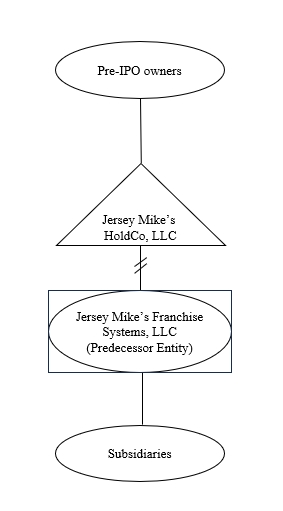
Note: Certain intermediate holding companies that are not material to this offering have been omitted from the structure chart.
Organizational Structure Following the Transactions
Immediately following this offering, Jersey Mike’s Subs Inc. will be a holding company, and its sole material assets will be its equity interests, held directly or indirectly through wholly owned subsidiaries, in Jersey Mike’s Holdings. As the managing member of Jersey Mike’s Holdings, Jersey Mike’s Subs Inc. will operate and control all of the business and affairs of Jersey Mike’s Holdings and, through Jersey Mike’s Holdings and its subsidiaries, conduct our business. The Reorganization Transactions will be accounted for as a reorganization of entities under common control. As a result, the consolidated financial statements of Jersey Mike’s Subs Inc. will recognize the assets and liabilities received in the Reorganization Transactions at their historical carrying amounts, as reflected in the historical consolidated financial statements of Jersey Mike’s Holdings, the accounting predecessor. Jersey Mike’s Subs Inc. will consolidate Jersey Mike’s Holdings in its consolidated financial statements and record a non-controlling interest related to the Common Units held by the Continuing Unitholders on its consolidated balance sheet and statement of income. As further described herein, prior to the completion of this offering:
73
For a description of the vesting and other terms of the Incentive Units received by Continuing Incentive Unitholders upon conversion of their Class B Units see “Management—Compensation Arrangements to be Adopted in Connection with this Offering—Omnibus Incentive Plan.”
Subject to certain restrictions, pursuant to the terms of the amended and restated limited liability company agreement of Jersey Mike’s Holdings, the holders of vested Incentive Units will have the right to convert their vested Incentive Units into a number of Common Units of Jersey Mike’s Holdings as a function of the “spread value” of such vested Incentive Units, i.e. the amount by which the market value of a Common Unit (based on the public trading price of a share of Class A common stock) exceeds the applicable participation threshold of such Incentive Unit. The applicable participation threshold is subject to customary anti-dilution adjustments. Common Units received upon conversion will be exchangeable on a one-for-one basis for shares of Class A common stock of Jersey Mike’s Subs Inc. in accordance with the terms of the exchange agreement. An unvested Incentive Unit will not be exchangeable unless and until such Incentive Unit vests. See “Certain Relationships and Related Person Transactions—Jersey Mike’s Holdings Amended and Restated Limited Liability Company Agreement.”
The Continuing Common Unitholders will hold all of the issued and outstanding shares of our Class B common stock and, upon conversion of vested Incentive Units for Common Units, the converting holders will also receive an equivalent number of shares of Class B common stock. The shares of Class B common stock will have no economic rights but will entitle each holder to one vote for each share held of record on all matters to be voted on by stockholders generally, with the number of shares of Class B common stock held by each Continuing Unitholder being equal to the number of Common Units held by each such Continuing Unitholder. If at any time the ratio at which Common Units are exchangeable for shares of Class A common stock of Jersey Mike’s Subs Inc. changes from one-for-one as described under “Certain Relationships and Related Person Transactions—Exchange Agreement,” the number of votes to which Class B common stockholders are entitled will be adjusted accordingly. Holders of shares of our Class B common stock will vote together with holders of our Class A common stock as a single class on all matters on which stockholders are entitled to vote generally, except as otherwise required by law.
Our post-offering organizational structure, as described above, is commonly referred to as an umbrella partnership-C-corporation (“UP-C”) structure. This organizational structure will allow the Continuing Unitholders to retain their equity ownership in Jersey Mike’s Holdings, an entity that is classified as a partnership for U.S. federal income tax purposes, in the form of Common Units. Investors in this offering and the Pre-IPO Stockholders will, by contrast, hold their equity ownership in Jersey Mike’s Subs Inc., a Delaware corporation that is a domestic corporation for U.S. federal income tax purposes, in the form of shares of Class A common stock. We believe that the Continuing Unitholders generally find it advantageous to continue to hold their equity interests in an entity that is not taxable as a corporation for U.S. federal income tax purposes. We do not believe that our UP-C organizational structure will give rise to any significant business or strategic benefit or detriment to Jersey Mike’s Subs Inc. and its consolidated subsidiaries. See “Risk Factors—Risks Related to Our Organizational Structure.”
74
The diagram below depicts our organizational structure immediately following this offering.
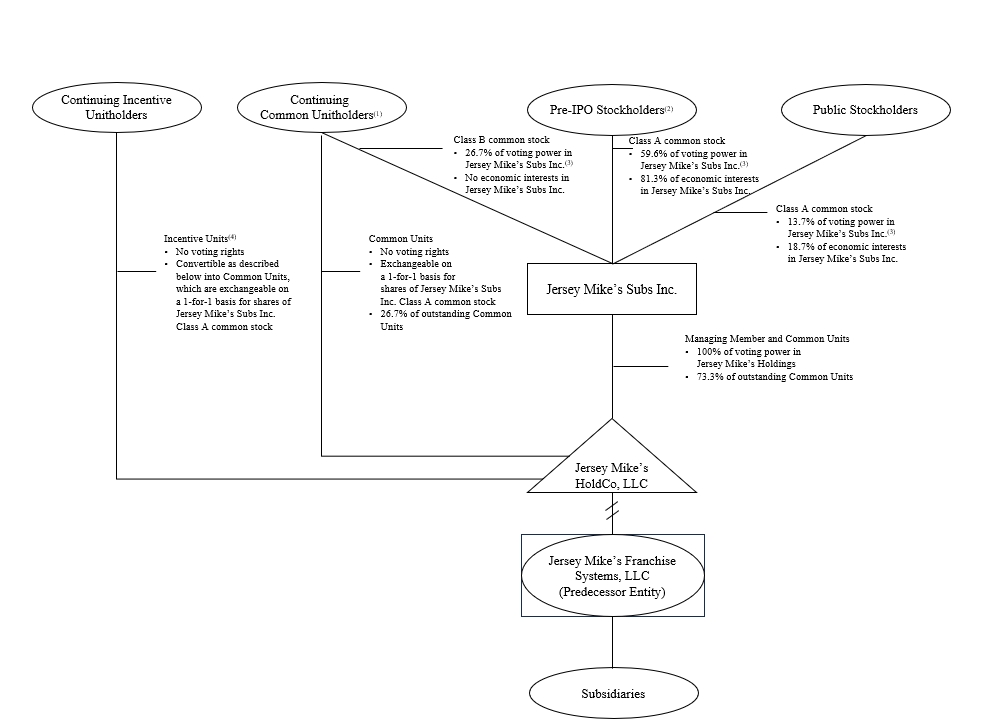
Note: Certain intermediate holding companies that are not material to this offering have been omitted from the structure chart.
Incorporation of Jersey Mike’s Subs Inc.
Jersey Mike’s Subs Inc. was incorporated as a Delaware corporation on February 24, 2026. Jersey Mike’s Subs Inc. has not engaged in any business or other activities except in connection with its formation and this offering. The amended and restated certificate of incorporation of Jersey Mike’s Subs Inc. authorizes two classes of common stock, Class A common stock and Class B common stock, each having the terms described in “Description of Capital Stock.”
Blocker Transfers
Prior to this offering, our Pre-IPO Stockholders hold their interests in Jersey Mike’s Holdings through Blocker Companies that are taxable as corporations for U.S. federal income tax purposes. At the time of this offering, we will
75
enter into certain restructuring transactions (such transactions, the “Blocker Transfers”) that will result in the Pre-IPO Stockholders acquiring 212,240,269 shares of newly issued Class A common stock in exchange for their ownership interests in the Blocker Companies and Jersey Mike’s Subs Inc. acquiring an equal number of Common Units held by the Blocker Companies. Each of the Blocker Companies will initially become a wholly owned subsidiary of Jersey Mike’s Subs Inc. and will either be merged into Jersey Mike’s Subs Inc. or will remain a wholly owned subsidiary that is part of the same consolidated group for U.S. federal income tax purposes.
Reclassification and Amendment and Restatement of the Limited Liability Company Agreement of Jersey Mike’s Holdings
Prior to the completion of this offering, the limited liability company agreement of Jersey Mike’s Holdings will be amended and restated to, among other things, modify its capital structure by reclassifying its outstanding Class A Units held by the Continuing Common Unitholders into a new class of limited liability company interests that we refer to as “Common Units” and reclassifying its outstanding Class B Units held by the Continuing Incentive Unitholders into a new class of limited liability company interests that we refer to as “Incentive Units.” We refer to this reclassification (the “Reclassification”) and amendment and restatement, together with the transactions described above under “—Blocker Transfers” and the entry into the exchange agreement and tax receivable agreement described below as the “Reorganization Transactions.” As a result of these transactions, our pre-IPO owners will hold their ownership interests directly in Jersey Mike’s Holdings (in the case of the Continuing Unitholders) or Jersey Mike’s Subs Inc. (in the case of the Pre-IPO Stockholders). Immediately following the Reorganization Transactions but prior to the other Offering Transactions described below, there will be 303,856,291 Common Units issued and outstanding.
Pursuant to the amended and restated limited liability company agreement of Jersey Mike’s Holdings, Jersey Mike’s Subs Inc. will become the managing member of Jersey Mike’s Holdings. Accordingly, Jersey Mike’s Subs Inc. will have the right to determine when distributions will be made to the holders of Common Units and the amount of any such distributions. If Jersey Mike’s Subs Inc., as the managing member, authorizes a distribution, such distribution will be made to the holders of Common Units and any participating Incentive Units (as described below) pro rata in accordance with the percentages of their respective Common Units or Incentive Units, as applicable, held. Incentive Units initially will not be entitled to receive distributions (other than tax distributions) until holders of Common Units have received a minimum return as provided in the amended and restated limited liability company agreement of Jersey Mike’s Holdings. However, Incentive Units will have the benefit of adjustment provisions that will reduce the participation threshold for distributions in respect of which they do not participate until there is no participation threshold, at and after which time the Incentive Units would participate pro rata with distributions on Common Units.
The Continuing Unitholders, including Jersey Mike’s Subs Inc., will incur U.S. federal, state, and local income taxes on their allocable share of any taxable income of Jersey Mike’s Holdings. Net profits and net losses of Jersey Mike’s Holdings will generally be allocated to its owners (including Jersey Mike’s Subs Inc.) pro rata in accordance with the percentages of their respective Common Units held, except as otherwise required by law. The amended and restated limited liability company agreement will provide for cash distributions to the Continuing Unitholders if Jersey Mike’s Subs Inc. determines that the taxable income of Jersey Mike’s Holdings will give rise to taxable income for such holders. In accordance with the amended and restated limited liability company agreement, we intend to cause Jersey Mike’s Holdings to make cash distributions to Continuing Unitholders, including us, for purposes of funding their tax obligations in respect of the income of Jersey Mike’s Holdings that is allocated to them. Generally, these tax distributions will be computed based on our estimate of the taxable income of Jersey Mike’s Holdings allocated to the Continuing Unitholder that receives the greatest proportionate allocation of income multiplied by an assumed tax rate equal to the highest effective marginal combined U.S. federal, state, and local income tax rate prescribed for an individual or corporation residing in New York, New York, whichever is higher. Tax distributions will be pro rata as among the Common Units. See “Certain Relationships and Related Person Transactions—Jersey Mike’s Holdings Amended and Restated Limited Liability Company Agreement.” Subject to certain restrictions, pursuant to the terms of the amended and restated limited liability company agreement of Jersey Mike’s Holdings, the holders of vested Incentive Units will have the right to convert their vested Incentive Units into a number of Common Units of Jersey Mike’s Holdings as a function of the “spread value” of such vested Incentive Units, i.e. the amount by which the market value of a Common Unit (based on the public trading price of a share of Class A common stock) exceeds the applicable participation threshold of such Incentive Unit. The applicable participation threshold is subject to customary anti-dilution adjustments. Common Units received upon conversion will be exchangeable on a one-for-one basis for shares of Class A common stock of Jersey Mike’s Subs Inc. in accordance with the terms of the exchange agreement. An unvested Incentive Unit will not be exchangeable unless and until such Incentive Unit vests. See
76
“Certain Relationships and Related Person Transactions—Jersey Mike’s Holdings Amended and Restated Limited Liability Company Agreement.”
Exchange Agreement
We and the Continuing Unitholders will enter into an exchange agreement at the time of this offering under which they (or certain permitted transferees thereof) may (subject to the terms of the exchange agreement) exchange their Common Units (including Common Units issued upon conversion of vested Incentive Units) for shares of our Class A common stock on a one-for-one basis, subject to customary conversion rate adjustments for stock splits, stock dividends and reclassifications, except that in certain circumstances, the Company may elect to settle such exchanges with the cash proceeds of a concurrent primary issuance of an equivalent number of shares of Class A common stock. Upon the settlement of any exchange, an equivalent number of shares of Class B common stock held by each such Continuing Unitholder will be automatically transferred to us and cancelled and retired. Class A common stock received by such Continuing Unitholder upon such exchanges during the applicable restricted periods described in “Shares Eligible for Future Sale—Lock-Up Agreements,” would be subject to the restrictions described in such section. As a holder exchanges Common Units for shares of Class A common stock, the number of Common Units held by Jersey Mike’s Subs Inc. is correspondingly increased as it acquires the exchanged Common Units. If at any time the ratio at which Common Units are exchangeable for shares of Class A common stock of Jersey Mike’s Subs Inc. changes from one-for-one as described under “Certain Relationships and Related Person Transactions—Exchange Agreement,” the number of votes to which Class B common stockholders are entitled will be adjusted accordingly. See “Certain Relationships and Related Person Transactions—Exchange Agreement.”
Tax Receivable Agreement
Prior to the completion of this offering, Jersey Mike’s Subs Inc. will enter into a tax receivable agreement with certain of the pre-IPO owners that provides for the payment by Jersey Mike’s Subs Inc. to such pre-IPO owners of 90% of certain tax benefits, if any, that Jersey Mike’s Subs Inc. actually realizes, or is deemed to realize (calculated using certain assumptions), as a result of (i) Jersey Mike’s Subs Inc.’s allocable share of existing tax basis in certain Jersey Mike’s Holdings’ assets acquired in this offering, (ii) increases in Jersey Mike’s Subs Inc.’s allocable share of existing tax basis and tax basis adjustments to certain tangible and intangible assets of Jersey Mike’s Holdings as a result of sales or exchanges of Common Units (including Common Units issued upon conversion of vested Incentive Units) in connection with or after this offering, (iii) Jersey Mike’s Subs Inc.’s utilization of certain tax attributes (including any existing tax basis) of the Blocker Companies, which Jersey Mike’s Subs Inc. acquires in connection with this offering, and (iv) certain other tax benefits related to entering into the tax receivable agreement, including tax benefits attributable to payments under the tax receivable agreement. Sales or exchanges of Common Units (including Common Units issued upon conversion of vested Incentive Units) are expected to result in increases in the tax basis of the assets of Jersey Mike’s Holdings. The existing tax basis, increases in existing tax basis, and the tax basis adjustments generated over time may increase (for tax purposes) depreciation and amortization deductions available to Jersey Mike’s Subs Inc. and, therefore, may reduce the amount of U.S. federal, state, and local tax that Jersey Mike’s Subs Inc. would otherwise be required to pay in the future. Actual tax benefits realized by Jersey Mike’s Subs Inc. may differ from tax benefits calculated under the tax receivable agreement as a result of the use of certain assumptions in the tax receivable agreement, including the use of an assumed weighted-average state and local income tax rate to calculate tax benefits. This payment obligation is an obligation of Jersey Mike’s Subs Inc. and not of Jersey Mike’s Holdings. See “Certain Relationships and Related Person Transactions—Tax Receivable Agreement.”
Offering Transactions
Jersey Mike’s Subs Inc. intends to use the proceeds (net of underwriting discounts and commissions) from the issuance of the 13,782,609 shares of Class A common stock that it is selling in this offering, which we estimate will be approximately $301 million, to acquire an equivalent number of newly issued Common Units from Jersey Mike’s Holdings. The issuance of such newly issued Common Units by Jersey Mike’s Holdings to Jersey Mike’s Subs Inc. will correspondingly dilute the ownership interests of the Continuing Common Unitholders in Jersey Mike’s Holdings. Jersey Mike’s Subs Inc. intends to cause Jersey Mike’s Holdings, in turn, to repay a portion of the outstanding indebtedness under the Series 2026-1 Notes and the remainder for general corporate purposes. See “Use of Proceeds.” In addition, Jersey Mike’s Subs Inc. will acquire outstanding Common Units from certain selling stockholders in exchange for an equivalent number of shares of our Class A common stock to be sold by such selling stockholders in this offering.
77
Accordingly, following this offering Jersey Mike’s Subs Inc. will directly or indirectly hold a number of Common Units that is equal to the number of shares of Class A common stock that it has issued, a relationship that we believe fosters transparency because it results in a single share of Class A common stock representing (albeit indirectly) the same percentage equity interest in Jersey Mike’s Holdings as a single Common Unit.
As a result of the transactions described herein:
78
Use of Proceeds
We estimate that the proceeds to Jersey Mike’s Subs Inc. from the issuance of the 13,782,609 shares that it is selling in this offering, at the initial public offering price of $23.00 per share, after deducting estimated underwriting discounts and commissions, will be approximately $301 million.
Jersey Mike’s Subs Inc. intends to use these net proceeds to acquire an equivalent number of newly issued Common Units from Jersey Mike’s Holdings, as described under “Organizational Structure—Offering Transactions,” which Jersey Mike’s Holdings will in turn use to repay a portion of the outstanding indebtedness under the Series 2026-1 Notes (as defined below) totaling approximately $295 million, and the remainder for general corporate purposes. The Company estimates offering expenses (excluding underwriting discounts and commissions) will be approximately $23 million, of which $11 million has been paid and an accrual for estimated unpaid offering expenses of approximately $12 million is reflected on Jersey Mike’s Subs Inc.’s Unaudited Pro Forma Condensed Consolidated Balance Sheet as of March 29, 2026. The Series 2026-1 Notes were issued in two tranches: $250 million Series 2026-1 4.952% Fixed Rate Senior Secured Notes, Class A-2-I (the “Series 2026-1 Class A-2-I Notes”) and $510 million Series 2026-1A 5.481% Fixed Rate Senior Secured Notes, Class A-2-II (the “Series 2026-1 Class A-2-II Notes” and, together with the Series 2026-1 Class A-2-I Notes, the “Series 2026-1 Notes”). Interest and principal are payable quarterly. The Series 2026 Notes have a final maturity date of February 2056. See “Description of Certain Indebtedness.” The proceeds of the Series 2026-1 Notes were used (i) to redeem any outstanding amounts under the Series 2019-1 Notes and the Series 2021-1 Class A-2-I Notes in full, (ii) to pay certain transaction related fees and expenses incurred in connection with the issuance of the Series 2026-1 Notes and (iii) for general corporate purposes, including a dividend to our Sponsor and debt repayment.
We will not receive any proceeds from the sale of shares of Class A common stock by the selling stockholders (including any sales pursuant to the underwriters’ option to purchase additional shares from the selling stockholders).
79
Dividend Policy
We have no current plans to pay dividends on our Class A common stock following this offering. The declaration, amount and payment of any future dividends on shares of Class A common stock will be at the sole discretion of our board of directors subject to capital availability, applicable laws, and compliance with contractual restrictions and covenants in the agreements governing our current and future indebtedness, as well as our amended and restated certificate of incorporation. We may reduce or discontinue entirely the payment of such dividends at any time. Our board of directors may take into account general and economic conditions, our financial condition and operating results, our available cash, current and anticipated cash needs, capital requirements, contractual, legal, tax, and regulatory restrictions and implications on the payment of dividends by us to our stockholders or by our subsidiaries to us, and such other factors as our board of directors may deem relevant. Our amended and restated certificate of incorporation will provide that holders of Class B common stock shall not be entitled to any dividends on their shares of Class B common stock (other than dividends payable in the form of additional shares of Class B common stock).
Jersey Mike’s Subs Inc. is a holding company and has no material assets other than its ownership of equity interests, held directly or indirectly through wholly owned subsidiaries, in Jersey Mike’s Holdings. We intend to cause Jersey Mike’s Holdings to make distributions to us in an amount sufficient to cover our taxes, expenses, and obligations under the tax receivable agreement as well as any cash dividends declared by us. If Jersey Mike’s Holdings makes such distributions to Jersey Mike’s Subs Inc., the other holders of Common Units or any participating Incentive Units (as described below) will also be entitled to receive distributions pro rata in accordance with the percentage of their respective Common Units or Incentive Units, as applicable, held. Incentive Units initially will not be entitled to receive distributions (other than tax distributions) until holders of Common Units have received a minimum return as provided in the amended and restated limited liability company agreement of Jersey Mike’s Holdings. However, Incentive Units will have the benefit of adjustment provisions that will reduce the participation threshold for distributions in respect of which they do not participate until there is no participation threshold, at and after which time the Incentive Units would participate pro rata with distributions on Common Units. The adjustment to the participation threshold of an Incentive Unit for distributions in respect of which such Incentive Unit does not participate will be factored into calculating the number of Common Units the holder of vested Incentive Units would receive upon conversion of a vested Incentive Unit for a Common Unit.
The amended and restated limited liability company agreement of Jersey Mike’s Holdings will provide that pro rata cash distributions be made to Continuing Unitholders (including Jersey Mike’s Subs Inc.) at certain assumed tax rates, which we refer to as “tax distributions.” Tax distributions will be pro rata as among the Common Units. See “Certain Relationships and Related Person Transactions—Jersey Mike’s Holdings Amended and Restated Limited Liability Company Agreement.” We anticipate that amounts received by Jersey Mike’s Subs Inc. in certain periods are likely to exceed Jersey Mike’s Subs Inc.’s actual tax liabilities and obligations to make payments under the tax receivable agreement. Our board of directors, in its sole discretion, will make any determination from time to time with respect to the use of any such excess cash so accumulated, which may include, among other uses, funding repurchases of Class A common stock; acquiring additional Common Units at a per unit price determined by reference to the market value of the Class A common stock; paying dividends, which may include special dividends, on its Class A common stock; or any combination of the foregoing. We also expect, if necessary, to undertake ameliorative actions, which may include pro rata or non-pro rata reclassifications, combinations, subdivisions or adjustments of outstanding Common Units, to maintain 1:1 parity between Common Units and shares of Class A common stock. See “Risk Factors—Risks Related to Our Organizational Structure—Jersey Mike’s Subs Inc. is a holding company and its only material assets after completion of this offering will be its equity interests, held directly or indirectly through wholly owned subsidiaries, in Jersey Mike’s Holdings, and it is accordingly dependent upon distributions from Jersey Mike’s Holdings to pay taxes, make payments under the tax receivable agreement, and pay any dividends.”
Amounts available to us to pay dividends may be limited by the terms of our Securitization Notes. See “Description of Certain Indebtedness.”
Any financing arrangements that we enter into in the future may include restrictive covenants that limit our ability to pay dividends. In addition, Jersey Mike’s Holdings is generally prohibited under Delaware law from making a distribution to a member to the extent that, at the time of the distribution, after giving effect to the distribution, liabilities of Jersey Mike’s Holdings (with certain exceptions) exceed the fair value of its assets. Subsidiaries of Jersey Mike’s Holdings are generally subject to similar legal limitations on their ability to make distributions to Jersey Mike’s Holdings.
80
Capitalization
The following table sets forth our consolidated cash and cash equivalents, restricted cash and cash equivalents and capitalization as of March 29, 2026:
Cash and cash equivalents are not components of our total capitalization. You should read this table together with the other information contained in this prospectus, including “Organizational Structure,” “Use of Proceeds,” “Unaudited Pro Forma Condensed Consolidated Financial Information,” “Management’s Discussion and Analysis of Financial Condition and Results of Operations,” and the historical financial statements and related notes thereto included elsewhere in this prospectus.
|
|
March 29, 2026 |
|
|||||
|
|
Unaudited |
|
|||||
|
|
Jersey Mike’s |
|
|
Jersey Mike’s |
|
||
(in millions, except par value, unit and share amounts) |
|
|
|
|||||
Cash and cash equivalents(1) |
|
$ |
232 |
|
|
$ |
232 |
|
Restricted cash |
|
|
44 |
|
|
|
44 |
|
Total |
|
$ |
276 |
|
|
$ |
276 |
|
Total Debt (including current maturities): |
|
|
|
|
|
|
||
Series 2021-1 A-2-II Notes |
|
$ |
227 |
|
|
|
227 |
|
Series 2024-1 Notes |
|
|
737 |
|
|
|
737 |
|
Series 2025-1 Notes |
|
|
398 |
|
|
|
398 |
|
Series 2026-1 Notes |
|
|
760 |
|
|
|
465 |
|
Total debt (including current maturities) |
|
$ |
2,122 |
|
|
$ |
1,827 |
|
Owners’/stockholders’ equity: |
|
|
|
|
|
|
||
Managing Members’ Units (6,349,133,927 units issued and outstanding) |
|
$ |
6,318 |
|
|
$ |
— |
|
Class A common stock, par value $0.0001 per share, 100,000 shares authorized and no shares issued and outstanding, actual; and 10,000,000,000 shares authorized and 232,834,177 shares issued and outstanding on a pro forma basis |
|
|
— |
|
|
|
— |
|
Class B common stock, par value $0.0001 per share, 100,000 shares authorized and 10,000 shares issued and outstanding, actual; and 10,000,000,000 shares authorized and 84,804,723 shares issued and outstanding on a pro forma basis |
|
|
— |
|
|
|
— |
|
Additional paid-in capital |
|
|
11 |
|
|
|
3,575 |
|
Retained deficit |
|
|
(484 |
) |
|
|
(368 |
) |
Non-controlling interests |
|
|
— |
|
|
|
1,577 |
|
Total owners’/stockholders’ equity |
|
$ |
5,845 |
|
|
$ |
4,784 |
|
Total capitalization |
|
$ |
7,967 |
|
|
$ |
6,611 |
|
81
Dilution
If you invest in shares of our Class A common stock in this offering, your investment will be immediately diluted to the extent of the difference between the initial public offering price per share of Class A common stock and the pro forma net tangible book value per share of Class A common stock after this offering. Dilution results from the fact that the per share offering price of the shares of Class A common stock is substantially in excess of the pro forma net tangible book value per share attributable to the Class A common stock held by our pre-IPO owners.
Our pro forma net tangible book deficit as of March 29, 2026 was approximately $3,321 million, or $10.93 per share of Class A common stock. Pro forma net tangible book deficit represents the amount of total tangible assets less total liabilities, and pro forma net tangible book deficit per share of Class A common stock represents pro forma net tangible book deficit divided by the number of shares of Class A common stock outstanding, after giving effect to the Reorganization Transactions and assuming that all of the Continuing Common Unitholders in Jersey Mike’s Holdings (other than Jersey Mike’s Subs Inc.) exchanged their Common Units for newly issued shares of Class A common stock on a one-for-one basis.
After giving effect to the transactions described under “Unaudited Pro Forma Condensed Consolidated Financial Information,” including the application of the proceeds from this offering as described in “Use of Proceeds,” after deducting the underwriting discounts and commissions and estimated offering expenses payable by us, our pro forma net tangible book deficit as of March 29, 2026 would have been $3,038 million, or $9.56 per share of Class A common stock. This represents an immediate decrease in net tangible book value of $1.37 per share of Class A common stock to our pre-IPO owners and an immediate dilution in net tangible book deficit of $32.56 per share of Class A common stock to investors in this offering.
The following table illustrates this dilution on a per share of Class A common stock basis assuming the underwriters do not exercise their option to purchase additional shares of Class A common stock:
Initial public offering price per share of Class A common stock |
|
|
|
|
$ |
23.00 |
|
|
Pro forma net tangible book deficit per share of Class A common stock assuming all of the holders of Common Units in Jersey Mike's Holdings (other than Jersey Mike's Subs Inc.) exchanged their Common Units for newly issued shares of Class A common stock on a one-for-one basis as of March 29, 2026 |
|
$ |
10.93 |
|
|
|
|
|
Decrease in pro forma net tangible book deficit per share of Class A common stock attributable to investors in this offering |
|
$ |
(1.37 |
) |
|
|
|
|
Pro forma net tangible book deficit per share of Class A common stock assuming that all of the holders of Common Units in Jersey Mike's Holdings (other than Jersey Mike's Subs Inc.) exchanged their Common Units for newly issued shares of Class A common stock on a one-for-one basis after the offering |
|
|
|
|
$ |
9.56 |
|
|
Dilution in pro forma net tangible book deficit per share of Class A common stock to investors in this offering |
|
|
|
|
$ |
32.56 |
|
|
Because the Continuing Common Unitholders will own direct economic interests in Jersey Mike’s Holdings that are not represented with economic interests in Jersey Mike’s Subs Inc., we have presented dilution in pro forma net tangible book deficit per share of Class A common stock to investors in this offering assuming that all of the holders of Common Units in Jersey Mike’s Holdings (other than Jersey Mike’s Subs Inc.) exchanged their Common Units for newly issued shares of Class A common stock on a one-for-one basis in order to more meaningfully present the dilutive impact on the investors in this offering. The above table does not reflect any shares of Class A common stock that would be issuable following the conversion of any vested Incentive Units into Common Units.
82
The following table summarizes, on the same pro forma basis as of March 29, 2026, the total number of shares of Class A common stock purchased from us, the total cash consideration paid to us, and the average price per share of Class A common stock paid by our pre-IPO owners and by new investors purchasing shares of Class A common stock in this offering, assuming that all of the of Continuing Common Unitholders in Jersey Mike’s Holdings (other than Jersey Mike’s Subs Inc.) exchanged their Common Units for newly issued shares of our Class A common stock on a one-for-one basis. The following table does not reflect any shares of Class A common stock that would be issuable following the conversion of any vested Incentive Units into Common Units.
|
|
Shares of Class A Common |
|
|
Total Consideration |
|
|
Average Price |
|
||||||||||||
|
|
Number |
|
|
Percent |
|
|
Amount |
|
|
|
Percent |
|
|
Common Stock |
|
|||||
($ in millions) |
|
|
|
|
|
|
|||||||||||||||
Pre-IPO owners |
|
|
274,160,639 |
|
|
|
86.3 |
% |
|
$ |
5,942 |
|
(1) |
|
|
85.6 |
% |
|
$ |
21.67 |
|
Investors in this offering |
|
|
43,478,261 |
|
|
|
13.7 |
% |
|
$ |
1,000 |
|
|
|
|
14.4 |
% |
|
$ |
23.00 |
|
Total |
|
|
317,638,900 |
|
|
|
100.0 |
% |
|
$ |
6,942 |
|
|
|
|
100.0 |
% |
|
$ |
21.86 |
|
If the underwriters’ option to purchase additional shares from the selling stockholders is exercised in full, the number of shares held by new investors will be increased to 50,000,000, or approximately 15.7% of the total number of shares of Class A common stock, assuming that all of the Continuing Common Unitholders in Jersey Mike’s Holdings (other than Jersey Mike’s Subs Inc.) exchanged their Common Units for newly issued shares of our Class A common stock on a one-for-one basis.
In addition, subject to certain limitations and exceptions, the Continuing Incentive Unitholders, which will hold 13,624,121 Incentive Units, will be able to convert their vested Incentive Units into Common Units of Jersey Mike’s Holdings, as described in “Organizational Structure—Reclassification and Amendment and Restatement of the Limited Liability Company Agreement of Jersey Mike’s Holdings” and “Certain Relationships and Related Person Transactions—Jersey Mike’s Holdings Amended and Restated Limited Liability Company Agreement.” Common Units received upon conversion will be exchangeable on a one-for-one basis for shares of Class A common stock of Jersey Mike’s Subs Inc. in accordance with the terms of the exchange agreement. At the time of this offering, 491,202 shares of Class A common stock would be issuable upon the exchange of an equivalent number of Common Units into which 3,461,366 participating outstanding Incentive Units that are held by the Continuing Incentive Unitholders may be converted, which units have a weighted average per unit participation threshold of $19.74 (assuming such Incentive Units are converted to Common Units and based on the initial public offering price of $23.00 per share).
83
Unaudited Pro Forma Condensed Consolidated Financial Information
Jersey Mike’s Subs Inc. was formed on February 24, 2026. Jersey Mike’s Subs Inc. currently has no material assets or liabilities and has conducted no operations to date other than in connection with its formation and this offering. The following unaudited pro forma condensed consolidated financial information reflects the impact of the Transactions (as defined herein). The Reorganization Transactions will be accounted for as a reorganization of entities under common control. As a result, the consolidated financial statements of Jersey Mike’s Subs Inc. will recognize the assets and liabilities received in the Reorganization Transactions at their historical carrying amounts, as reflected in the historical financial statements of Jersey Mike’s Holdings and its subsidiaries.
Following the completion of the Reorganization Transactions, Jersey Mike’s Subs Inc. will be a holding company and its sole material asset will consist of 73.3% of the outstanding Common Units of Jersey Mike’s Holdings, which it will acquire and hold directly or indirectly through wholly owned subsidiaries as described in “Organizational Structure—Offering Transactions.” The remaining Common Units will be held by the Continuing Common Unitholders. Jersey Mike’s Subs Inc. will be the managing member of Jersey Mike’s Holdings. As the managing member of Jersey Mike’s Holdings, Jersey Mike’s Subs Inc. will operate and control all of the business and affairs of Jersey Mike’s Holdings and its direct and indirect subsidiaries and, through Jersey Mike’s Holdings and its direct and indirect subsidiaries, conduct our business.
The unaudited pro forma condensed consolidated balance sheet as of March 29, 2026 and the unaudited pro forma condensed consolidated statements of operations for the thirteen weeks ended March 29, 2026 and the year ended December 28, 2025 present our consolidated financial position and results of operations after giving effect to the following transactions (collectively, the “Transactions”):
Except as otherwise indicated, the unaudited pro forma condensed consolidated financial information presented assumes that the underwriters do not exercise their option to purchase additional shares of our Class A common stock in this offering.
The following unaudited pro forma condensed consolidated financial information is derived from the historical consolidated financial statements of the Company. The unaudited pro forma condensed consolidated balance sheet as of March 29, 2026 gives effect to transaction accounting adjustments that depict the accounting for the Transactions. The unaudited pro forma condensed consolidated statement of operations for the thirteen weeks ended March 29, 2026 and the year ended December 28, 2025 give effect to the transaction accounting adjustments that depict the accounting for the Transactions as if those adjustments were made on January 1, 2025.
The unaudited pro forma condensed consolidated financial information was prepared in accordance with Article 11 of Regulation S-X, using the assumptions set forth in the notes to the unaudited pro forma condensed consolidated financial information. The unaudited pro forma condensed consolidated financial information has been adjusted to include transaction accounting adjustments, which reflect the application of the accounting required by GAAP, linking the effects of the Transactions listed above to the Company’s historical consolidated financial statements.
For purposes of the unaudited pro forma condensed consolidated financial information, we have assumed that shares of Class A common stock will be issued by us at the initial public offering price, the ownership percentage represented by Common Units not held by Jersey Mike’s Subs Inc. will be 26.7%, and net earnings attributable to Common Units and participating Incentive Units not held directly or indirectly by Jersey Mike’s Subs Inc. will accordingly represent 26.7% of our net earnings. If the underwriters’ option to purchase additional shares of Class A common stock is exercised in full, the ownership percentage represented by Common Units not held by Jersey Mike’s Subs Inc. will be 26.2%, and net earnings attributable to Common Units and participating Incentive Units not held
84
directly or indirectly by Jersey Mike’s Subs Inc. will accordingly represent 26.2% of our net earnings.
As a public company, we will be implementing additional procedures and processes for the purpose of addressing the standards and requirements applicable to public companies. We expect to incur additional annual expenses related to these additional procedures and processes and, among other things, additional directors’ and officers’ liability insurance; director fees; additional expenses associated with complying with the public company reporting requirements; transfer agent fees; costs relating to additional accounting, legal, and administrative personnel; increased auditing (including audits over the effectiveness of the company’s internal controls), tax, and legal fees; stock exchange listing fees; and other public company expenses. While we have started to incur some of these costs in anticipation of the IPO, we have not included any pro forma adjustments relating to the full impact of these costs in the information below.
The unaudited pro forma condensed consolidated financial information is for illustrative and informational purposes only and is not necessarily indicative of the operating results that would have occurred if the Transactions had been completed as of the dates set forth above, nor is it indicative of the future consolidated results of operations or financial position of the Company. Further, pro forma adjustments represent management’s best estimates based on information available as of the date of this prospectus and are subject to change as additional information becomes available.
The unaudited pro forma condensed consolidated financial information should be read together with “Organizational Structure,” “Use of Proceeds,” “Capitalization,” “Management’s Discussion and Analysis of Financial Condition and Results of Operations,” and the historical consolidated financial statements and related notes thereto included elsewhere in this prospectus.
85
Jersey Mike’s Subs Inc.
UNAUDITED PRO FORMA CONDENSED CONSOLIDATED BALANCE SHEET
As of March 29, 2026
(in millions, except par value amounts)
|
|
Jersey Mike’s |
|
|
Reorganization |
|
|
Notes |
|
Offering |
|
|
Notes |
|
Jersey Mike’s |
|
||||
Assets |
|
|
|
|
|
|
|
|
|
|
|
|
|
|
|
|
||||
Current assets: |
|
|
|
|
|
|
|
|
|
|
|
|
|
|
|
|
||||
Cash and cash equivalents |
|
$ |
232 |
|
|
$ |
— |
|
|
|
|
$ |
— |
|
|
(d) |
|
$ |
232 |
|
Restricted cash |
|
|
44 |
|
|
|
— |
|
|
|
|
|
— |
|
|
|
|
|
44 |
|
Accounts receivable, net |
|
|
44 |
|
|
|
— |
|
|
|
|
|
— |
|
|
|
|
|
44 |
|
Prepaid expenses and other current assets |
|
|
10 |
|
|
|
— |
|
|
|
|
|
— |
|
|
|
|
|
10 |
|
Total current assets |
|
|
330 |
|
|
|
— |
|
|
|
|
|
— |
|
|
|
|
|
330 |
|
Property and equipment, net |
|
|
13 |
|
|
|
— |
|
|
|
|
|
— |
|
|
|
|
|
13 |
|
Trade name |
|
|
5,710 |
|
|
|
— |
|
|
|
|
|
— |
|
|
|
|
|
5,710 |
|
Franchise agreements, net and other intangibles |
|
|
1,704 |
|
|
|
— |
|
|
|
|
|
— |
|
|
|
|
|
1,704 |
|
Goodwill |
|
|
408 |
|
|
|
— |
|
|
|
|
|
— |
|
|
|
|
|
408 |
|
Deferred tax asset |
|
|
— |
|
|
|
251 |
|
|
(a) |
|
|
— |
|
|
|
|
|
251 |
|
Other assets |
|
|
46 |
|
|
|
— |
|
|
|
|
|
— |
|
|
|
|
|
46 |
|
Total assets |
|
$ |
8,211 |
|
|
$ |
251 |
|
|
|
|
$ |
— |
|
|
|
|
$ |
8,462 |
|
Liabilities and stockholders’ equity |
|
|
|
|
|
|
|
|
|
|
|
|
|
|
|
|
||||
Current liabilities: |
|
|
|
|
|
|
|
|
|
|
|
|
|
|
|
|
||||
Accounts payable |
|
|
45 |
|
|
|
— |
|
|
|
|
|
— |
|
|
|
|
|
45 |
|
Accrued expenses and other current liabilities |
|
|
152 |
|
|
|
— |
|
|
|
|
|
6 |
|
|
(d)(e) |
|
|
158 |
|
Current portion of long-term debt |
|
|
22 |
|
|
|
— |
|
|
|
|
|
(3 |
) |
|
(d) |
|
|
19 |
|
Total current liabilities |
|
|
219 |
|
|
|
— |
|
|
|
|
|
3 |
|
|
|
|
|
222 |
|
Long term debt, net of current portion |
|
|
2,077 |
|
|
|
— |
|
|
|
|
|
(286 |
) |
|
(d) |
|
|
1,791 |
|
TRA liability |
|
|
— |
|
|
|
1,373 |
|
|
(a) |
|
|
— |
|
|
|
|
|
1,373 |
|
Other non-current liabilities |
|
|
70 |
|
|
|
222 |
|
|
(b) |
|
|
— |
|
|
|
|
|
292 |
|
Total liabilities |
|
|
2,366 |
|
|
|
1,595 |
|
|
|
|
|
(283 |
) |
|
|
|
|
3,678 |
|
Commitments and contingencies |
|
|
|
|
|
|
|
|
|
|
|
|
|
|
|
|
||||
Stockholders’ equity |
|
|
|
|
|
|
|
|
|
|
|
|
|
|
|
|
||||
Contributed capital |
|
|
6,318 |
|
|
|
(6,318 |
) |
|
(c) |
|
|
— |
|
|
|
|
|
— |
|
Class A common stock, $0.0001 par value per share, 10,000 shares authorized and 233 shares issued and outstanding on a pro forma basis |
|
|
— |
|
|
|
— |
|
|
(c) |
|
|
— |
|
|
|
|
|
— |
|
Class B common stock, $0.0001 par value per share, 10,000 shares authorized and 85 shares issued and outstanding on a pro forma basis |
|
|
— |
|
|
|
— |
|
|
(c) |
|
|
— |
|
|
|
|
|
— |
|
Additional paid-in capital |
|
|
11 |
|
|
|
3,235 |
|
|
(a)(b)(c) |
|
|
329 |
|
|
(f) |
|
|
3,575 |
|
Retained deficit |
|
|
(484 |
) |
|
|
— |
|
|
|
|
|
116 |
|
|
(d)(e)(g) |
|
|
(368 |
) |
Total Jersey Mike's Subs Inc. stockholders' equity |
|
|
5,845 |
|
|
|
(3,083 |
) |
|
|
|
|
445 |
|
|
|
|
|
3,207 |
|
Non-controlling interests |
|
|
— |
|
|
|
1,739 |
|
|
(c) |
|
|
(162 |
) |
|
(g) |
|
|
1,577 |
|
Total stockholders’ equity |
|
|
5,845 |
|
|
|
(1,344 |
) |
|
|
|
|
283 |
|
|
|
|
|
4,784 |
|
Total liabilities and stockholders’ equity |
|
$ |
8,211 |
|
|
$ |
251 |
|
|
|
|
$ |
— |
|
|
|
|
$ |
8,462 |
|
86
Jersey Mike’s Subs Inc.
UNAUDITED PRO FORMA CONDENSED CONSOLIDATED STATEMENT OF OPERATIONS
For the Thirteen Weeks Ended March 29, 2026
(in millions, except per share data)
|
|
Jersey Mike’s |
|
|
Reorganization |
|
|
Notes |
|
Offering |
|
|
Notes |
|
Jersey Mike’s |
|
||||
Revenue: |
|
|
|
|
|
|
|
|
|
|
|
|
|
|
|
|
||||
Royalties and other revenue |
|
$ |
122 |
|
|
$ |
— |
|
|
|
|
$ |
— |
|
|
|
|
$ |
122 |
|
Advertising fees |
|
|
51 |
|
|
|
— |
|
|
|
|
|
— |
|
|
|
|
|
51 |
|
Company-owned stores sales |
|
|
12 |
|
|
|
— |
|
|
|
|
|
— |
|
|
|
|
|
12 |
|
Total revenues |
|
|
185 |
|
|
|
— |
|
|
|
|
|
— |
|
|
|
|
|
185 |
|
Operating expenses: |
|
|
|
|
|
|
|
|
|
|
|
|
|
|
|
|
||||
Selling, general and administrative expense |
|
|
78 |
|
|
|
— |
|
|
|
|
|
8 |
|
|
(m) |
|
|
86 |
|
Advertising expenses |
|
|
61 |
|
|
|
— |
|
|
|
|
|
— |
|
|
|
|
|
61 |
|
Depreciation and amortization |
|
|
26 |
|
|
|
— |
|
|
|
|
|
— |
|
|
|
|
|
26 |
|
Company-owned stores expenses |
|
|
8 |
|
|
|
— |
|
|
|
|
|
— |
|
|
|
|
|
8 |
|
Total operating expenses |
|
|
173 |
|
|
|
— |
|
|
|
|
|
8 |
|
|
|
|
|
181 |
|
Operating income |
|
|
12 |
|
|
|
— |
|
|
|
|
|
(8 |
) |
|
|
|
|
4 |
|
Interest income |
|
|
(1 |
) |
|
|
— |
|
|
|
|
|
— |
|
|
|
|
|
(1 |
) |
Interest expense |
|
|
30 |
|
|
|
— |
|
|
|
|
|
(2 |
) |
|
(n) |
|
|
28 |
|
Loss on debt extinguishment |
|
|
7 |
|
|
|
— |
|
|
|
|
|
6 |
|
|
(n) |
|
|
13 |
|
Income (loss) before income tax expense |
|
|
(24 |
) |
|
|
— |
|
|
|
|
|
(12 |
) |
|
|
|
|
(36 |
) |
Income tax expense (benefit) |
|
|
— |
|
|
|
(5 |
) |
|
(k) |
|
|
(1 |
) |
|
(k) |
|
|
(6 |
) |
Net income (loss) |
|
|
(24 |
) |
|
|
5 |
|
|
|
|
|
(11 |
) |
|
|
|
|
(30 |
) |
Net income (loss) attributable to non-controlling interests |
|
|
— |
|
|
|
(7 |
) |
|
(l) |
|
|
(2 |
) |
|
(l) |
|
|
(9 |
) |
Net income (loss) attributable to Jersey Mike’s Subs Inc. |
|
$ |
(24 |
) |
|
$ |
12 |
|
|
|
|
$ |
(9 |
) |
|
|
|
$ |
(21 |
) |
Pro Forma Income Per Share: |
|
|
|
|
|
|
|
|
|
|
|
|
|
|
|
|
||||
Basic |
|
|
|
|
|
|
|
|
|
|
|
|
(o) |
|
$ |
(0.09 |
) |
|||
Diluted |
|
|
|
|
|
|
|
|
|
|
|
|
(o) |
|
$ |
(0.09 |
) |
|||
Pro Forma Number of Shares Used in Computing Income Per Share: |
|
|
|
|
|
|
|
|
|
|
|
|
|
|
|
|
||||
Basic |
|
|
|
|
|
|
|
|
|
|
|
|
(o) |
|
|
232,834,177 |
|
|||
Diluted |
|
|
|
|
|
|
|
|
|
|
|
|
(o) |
|
|
317,638,900 |
|
|||
87
Jersey Mike’s Subs Inc.
UNAUDITED PRO FORMA CONDENSED CONSOLIDATED STATEMENT OF OPERATIONS
For the Year Ended December 28, 2025
(in millions, except per share data)
|
|
Jersey Mike’s |
|
|
Jersey Mike’s |
|
|
Sponsor |
|
|
Notes |
|
Reorganization |
|
|
Notes |
|
Offering |
|
|
Notes |
|
Jersey Mike’s |
|
||||||
Revenue: |
|
|
|
|
|
|
|
|
|
|
|
|
|
|
|
|
|
|
|
|
|
|
|
|
||||||
Royalties and other revenue |
|
$ |
19 |
|
|
$ |
464 |
|
|
$ |
— |
|
|
|
|
$ |
— |
|
|
|
|
$ |
— |
|
|
|
|
$ |
483 |
|
Advertising fees |
|
|
7 |
|
|
|
196 |
|
|
|
— |
|
|
|
|
|
— |
|
|
|
|
|
— |
|
|
|
|
|
203 |
|
Company-owned stores sales |
|
|
2 |
|
|
|
36 |
|
|
|
— |
|
|
|
|
|
— |
|
|
|
|
|
— |
|
|
|
|
|
38 |
|
Total revenues |
|
|
28 |
|
|
|
696 |
|
|
|
— |
|
|
|
|
|
— |
|
|
|
|
|
— |
|
|
|
|
|
724 |
|
Operating expenses: |
|
|
|
|
|
|
|
|
|
|
|
|
|
|
|
|
|
|
|
|
|
|
|
|
||||||
Selling, general and administrative expense |
|
|
19 |
|
|
|
214 |
|
|
|
— |
|
|
|
|
|
— |
|
|
|
|
|
72 |
|
|
(j)(m) |
|
|
305 |
|
Advertising expenses |
|
|
8 |
|
|
|
207 |
|
|
|
— |
|
|
|
|
|
— |
|
|
|
|
|
— |
|
|
|
|
|
215 |
|
Depreciation and amortization |
|
|
— |
|
|
|
96 |
|
|
|
4 |
|
|
(h) |
|
|
— |
|
|
|
|
|
— |
|
|
|
|
|
100 |
|
Company-owned stores expenses |
|
|
1 |
|
|
|
28 |
|
|
|
— |
|
|
|
|
|
— |
|
|
|
|
|
— |
|
|
|
|
|
29 |
|
Total operating expenses |
|
|
28 |
|
|
|
545 |
|
|
|
4 |
|
|
|
|
|
— |
|
|
|
|
|
72 |
|
|
|
|
|
649 |
|
Operating income |
|
|
— |
|
|
|
151 |
|
|
|
(4 |
) |
|
|
|
|
— |
|
|
|
|
|
(72 |
) |
|
|
|
|
75 |
|
Interest income |
|
|
(1 |
) |
|
|
(9 |
) |
|
|
— |
|
|
|
|
|
— |
|
|
|
|
|
— |
|
|
|
|
|
(10 |
) |
Interest expense |
|
|
5 |
|
|
|
99 |
|
|
|
— |
|
|
|
|
|
— |
|
|
|
|
|
— |
|
|
|
|
|
104 |
|
Other expense, net |
|
|
— |
|
|
|
1 |
|
|
|
— |
|
|
|
|
|
— |
|
|
|
|
|
— |
|
|
|
|
|
1 |
|
Income (loss) before income tax expense |
|
|
(4 |
) |
|
|
60 |
|
|
|
(4 |
) |
|
|
|
|
— |
|
|
|
|
|
(72 |
) |
|
|
|
|
(20 |
) |
Income tax expense (benefit) |
|
|
— |
|
|
|
1 |
|
|
|
— |
|
|
(i) |
|
|
12 |
|
|
(k) |
|
|
(2 |
) |
|
(k) |
|
|
11 |
|
Net income (loss) |
|
|
(4 |
) |
|
|
59 |
|
|
|
(4 |
) |
|
|
|
|
(12 |
) |
|
|
|
|
(70 |
) |
|
|
|
|
(31 |
) |
Net income (loss) attributable to non-controlling interests |
|
|
— |
|
|
|
— |
|
|
|
— |
|
|
|
|
|
16 |
|
|
(l) |
|
|
(21 |
) |
|
(l) |
|
|
(5 |
) |
Net income (loss) attributable to Jersey Mike’s Subs Inc. |
|
$ |
(4 |
) |
|
$ |
59 |
|
|
$ |
(4 |
) |
|
|
|
$ |
(28 |
) |
|
|
|
$ |
(49 |
) |
|
|
|
$ |
(26 |
) |
Pro Forma Income Per Share: |
|
|
|
|
|
|
|
|
|
|
|
|
|
|
|
|
|
|
|
|
|
|
|
|
||||||
Basic and Diluted |
|
|
|
|
|
|
|
|
|
|
|
|
|
|
|
|
|
|
|
|
(o) |
|
$ |
(0.11 |
) |
|||||
Pro Forma Number of Shares Used in Computing Income Per Share: |
|
|
|
|
|
|
|
|
|
|
|
|
|
|
|
|
|
|
|
|
|
|
|
|
||||||
Basic and Diluted |
|
|
|
|
|
|
|
|
|
|
|
|
|
|
|
|
|
|
|
|
(o) |
|
|
232,834,177 |
|
|||||
88
NOTES TO THE UNAUDITED PRO FORMA CONDENSED CONSOLIDATED FINANCIAL INFORMATION
1. Description of the Transactions and Basis of Presentation
The unaudited pro forma condensed consolidated financial information was prepared in accordance with Article 11 of Regulation S-X and presents the pro forma financial condition and results of operations of the Company based upon the historical financial information after giving effect to the Transactions and related adjustments set forth in the notes to the unaudited pro forma condensed consolidated financial information.
The unaudited pro forma condensed consolidated financial information presented assumes no exercise by the underwriters of their option to purchase additional shares of Class A common stock in this offering.
The unaudited pro forma condensed consolidated statements of operations for the thirteen weeks ended March 29, 2026 and the year ended December 28, 2025 give pro forma effect to the Transactions as if they had occurred on January 1, 2025. The unaudited pro forma condensed consolidated balance sheet as of March 29, 2026 gives effect to the Transactions as if they had occurred on March 29, 2026.
Sponsor Acquisition Transaction
On January 16, 2025, Submarine Buyer LLC, an entity controlled by affiliates of our Sponsor, acquired a majority interest in Jersey Mike’s Holdings pursuant to the Equity Purchase Agreement. In connection with the transactions contemplated by the Equity Purchase Agreement, Jersey Mike’s Franchise Systems, LLC (defined as Jersey Mike’s Franchise Systems elsewhere within this prospectus) completed a reorganization pursuant to which Jersey Mike’s Holdings was formed to indirectly hold 100% of the equity interests of Jersey Mike’s Franchise Systems. Following the closing of the Sponsor Acquisition, Jersey Mike’s Holdings became controlled by affiliates of our Sponsor. For a complete description of the Sponsor Acquisition refer to the section entitled “Certain Relationships and Related Person Transactions—Sponsor Acquisition,” included elsewhere in this prospectus.
The Sponsor Acquisition was accounted for under the acquisition method of accounting in accordance with Accounting Standards Codification 805, Business Combinations (“ASC 805”), with Submarine Buyer LLC treated as the accounting acquirer. In accordance with ASC 805, the assets acquired and liabilities assumed were measured at their estimated fair values as of the acquisition date. The fair value measurements were based on various estimates and methodologies, including income and market approaches, and incorporated significant assumptions such as projected cash flows, discount rates and market-based valuation multiples.
For purposes of measuring the estimated fair value of the tangible and identifiable intangible assets acquired and liabilities assumed, the Company applied the guidance in Accounting Standards Codification 820, Fair Value Measurements (“ASC 820”), which defines fair value as the price that would be received to sell an asset or paid to transfer a liability in an orderly transaction between market participants at the measurement date. Acquisition-related transaction costs were expensed as incurred and are not included as components of consideration transferred in accordance with ASC 805.
Reorganization Transactions and Offering Transactions
The Company is offering shares of Class A common stock in this offering at the initial public offering price of $23.00 per share. Jersey Mike’s Subs Inc. intends to use the proceeds, net of underwriting discounts and commissions from the issuance of 13,782,609 shares for approximately $301 million to acquire an equivalent number of newly issued Common Units from Jersey Mike’s Holdings, as described under “Organizational Structure—Offering Transactions,” which Jersey Mike’s Holdings will in turn use for the repayment of indebtedness and the remainder for general corporate purposes, as further described below.
The Company will not receive any proceeds from the sale of shares of Class A common stock by the selling stockholders (including any sales pursuant to the underwriters’ option to purchase additional shares from the selling stockholders).
After giving effect to the Reorganization Transactions and the offering contemplated by this prospectus, Jersey Mike’s Subs Inc. will own approximately 73.3% of the economic interest in Jersey Mike’s Holdings (or approximately 73.8% if the underwriters exercise in full their option to purchase additional shares of Class A common
89
stock and after giving effect to the application of the net proceeds therefrom). Additionally, Jersey Mike’s Subs Inc. will have 100% of the voting power in Jersey Mike’s Holdings, thereby controlling the management of Jersey Mike’s Holdings. In addition, Jersey Mike’s Subs Inc. will be the managing member of Jersey Mike’s Holdings and, as such, will be responsible for all operational, management and administrative decisions relating to Jersey Mike’s Holdings’ business and will have the obligation to absorb losses and receive benefits from Jersey Mike’s Holdings.
For a complete description of the Reorganization Transactions, see the section entitled “Organizational Structure” included elsewhere in this prospectus.
2. Notes to Unaudited Pro Forma Condensed Consolidated Balance Sheet
Transaction accounting adjustments include the following adjustments related to the unaudited pro forma condensed consolidated balance sheet as of March 29, 2026:
Reorganization Transactions and Offering Transactions Adjustments
90
As described in greater detail in “Organizational Structure,” the Continuing Common Unitholders will hold 84,804,723 Common Units (or 83,356,571 Common Units if the underwriters exercise in full their option to purchase additional shares of Class A common stock) immediately following this offering. Due to the uncertainty as to the amount and timing of future exchanges of Common Units by the Continuing Common Unitholders and as to the price per share of our Class A common stock at the time of any such exchanges, the unaudited pro forma condensed consolidated financial information does not assume that exchanges of Common Units have occurred. Therefore, no increases in tax basis in Jersey Mike’s Holdings’ assets or other tax benefits that may be realized as a result of any such future exchanges have been reflected in the unaudited pro forma condensed consolidated financial information. However, if the Continuing Unitholders were to exchange all of the Common Units that they will hold immediately following this offering for shares of Class A common stock and all Incentive Units were converted to Common Units and subsequently exchanged for shares of Class A common stock (based on the initial public offering price of $23.00 per share), we would recognize an incremental deferred tax asset of approximately $252 million and a noncurrent liability of approximately $711 million based on the Company’s estimate of the aggregate amount that it will pay under the TRA as a result of such hypothetical exchange, assuming: (i) a price of $23.00 per share of our Class A common stock; (ii) a constant corporate tax rate of 24.8%; (iii) we will have sufficient taxable income to fully utilize the tax benefits; and (iv) no material changes in tax law. These amounts are estimates and have been prepared for informational purposes only. The actual amount of deferred tax assets and related noncurrent liabilities that we will recognize as a result of any such future exchanges will differ based on, among other things: (i) the amount and timing of future exchanges of Common Units by Continuing Common Unitholders (including any Common Units issued upon conversion of vested Incentive Units), and the extent to which such exchanges are taxable; (ii) the price per share of our Class A common stock at the time of the exchanges; (iii) the amount and timing of future income against which to offset the tax benefits; and (iv) the tax rates then in effect.
91
As described in “Organizational Structure,” upon completion of the Reorganization Transactions, Jersey Mike’s Subs Inc. will own (including through wholly owned subsidiaries) approximately 69.1% of the economic interest in Jersey Mike’s Holdings and will have 100% of the voting power in Jersey Mike’s Holdings, thereby controlling its management. The remaining economic interest, approximately 30.9%, will be reflected as non-controlling interest in the unaudited pro forma condensed consolidated balance sheet.
Represents an adjustment to equity reflecting (i) par value for Class A common stock and Class B common stock, (ii) a decrease in $1,739 million of historical members’ equity to non-controlling interest related to the 30.9% economic interest held by the Continuing Common Unitholders, and (iii) reclassification of historical members’ equity of $4,579 million to Additional paid-in capital.
The adjustment to cash and cash equivalents is comprised of the following:
(in millions) |
|
As of |
|
|
Net proceeds to Jersey Mike’s Subs Inc. from selling Class A common stock |
|
$ |
301 |
|
Payment of accrued interest (Series 2026-1 Notes) |
|
|
(6 |
) |
Repayment of current portion of long-term debt (Series 2026-1 Notes) |
|
|
(3 |
) |
Repayment of long-term debt, net of current portion (Series 2026-1 Notes) |
|
|
(292 |
) |
Remaining proceeds at the Company to use for general corporate purposes |
|
$ |
— |
|
The adjustment to cash and cash equivalents does not reflect the payment of estimated unpaid offering expenses. See footnote (e) below.
The reduction to long-term debt, less current portion as of March 29, 2026 is comprised of the following:
|
|
As of |
|
Repayment of long-term debt, less current portion (Series 2026-1 Notes) |
|
$ |
(292) |
Write-off of debt issuance costs related to repayment of indebtedness (Series 2026-1 Notes) |
|
|
6 |
Total adjustment to long-term borrowings, less current portion (Series 2026-1 Notes) |
|
$ |
(286) |
92
|
|
|
Note |
|
Net proceeds from offering of Class A common stock |
|
$ |
301 |
(d) |
Reclassification of noncontrolling interest |
|
|
28 |
(g) |
Total |
|
$ |
329 |
|
|
|
|
|
|
Reclassification of additional paid in capital |
|
$ |
28 |
|
Reclassification of retained deficit |
|
|
(162) |
|
Total |
|
$ |
(134) |
|
3. Notes to Unaudited Pro Forma Condensed Consolidated Statement of Operations
Transaction accounting adjustments include the following adjustments related to the unaudited pro forma condensed consolidated statement of operations for the thirteen weeks ended March 29, 2026 and the year ended December 28, 2025, as follows:
Sponsor Acquisition Transaction Adjustments
Asset Class |
|
Fair Value |
|
Amortization |
|
Estimated |
|
Year Ended |
Trade Name |
|
5,710 |
|
Straight Line |
|
Indefinite |
|
— |
Franchise Agreements |
|
1,757 |
|
Straight Line |
|
20 |
|
4 |
Technology |
|
50 |
|
Straight Line |
|
5 |
|
— |
Reorganization Transactions and Offering Transactions Adjustments
93
94
|
|
Thirteen Weeks |
|
|
Year Ended |
|
||
Numerator: |
|
|
|
|
|
|
||
Net income (loss) |
|
$ |
(30 |
) |
|
$ |
(31 |
) |
Net income (loss) attributable to non-controlling interests |
|
|
(9 |
) |
|
|
(5 |
) |
Net income (loss) attributable to Jersey Mike’s Subs Inc. |
|
|
(21 |
) |
|
|
(26 |
) |
Reallocation of net income (loss) attributable to vested incentive units |
|
— |
|
|
— |
|
||
Numerator for net income (loss) – Basic |
|
|
(21 |
) |
|
|
(26 |
) |
Net income (loss) effect of dilutive securities: |
|
|
|
|
|
|
||
Effect of stock compensation awards |
|
— |
|
|
— |
|
||
Effect of conversion of non-controlling interest to Class A common stock |
|
|
(8 |
) |
|
— |
|
|
Numerator for net income (loss) per share – Diluted |
|
|
(29 |
) |
|
|
(26 |
) |
Denominator: |
|
|
|
|
|
|
||
Weighted average shares of Class A common stock outstanding – Basic |
|
|
232,834,177 |
|
|
|
232,834,177 |
|
Weighted average effect of dilutive securities: |
|
|
|
|
|
|
||
Effect of stock compensation awards(1) |
|
— |
|
|
— |
|
||
Effect of conversion of non-controlling interest to Class A common stock(2) |
|
|
84,804,723 |
|
|
— |
|
|
Weighted average shares of Class A common stock outstanding – Diluted |
|
|
317,638,900 |
|
|
|
232,834,177 |
|
Basic net income (loss) per share |
|
$ |
(0.09 |
) |
|
$ |
(0.11 |
) |
Diluted net income (loss) per share |
|
$ |
(0.09 |
) |
|
$ |
(0.11 |
) |
|
|
Thirteen Weeks |
|
|
Year Ended |
|
||
Time-based incentive units |
|
|
4,682,425 |
|
|
|
4,763,643 |
|
Performance-based incentive units |
|
|
8,860,006 |
|
|
|
8,860,006 |
|
Non-controlling interest |
|
— |
|
|
|
84,804,723 |
|
|
95
Management’s Discussion and Analysis of Financial Condition and Results of Operations
The following discussion and analysis of our financial condition and results of operations should be read in conjunction with “Summary—Summary Historical and Pro Forma Condensed Consolidated Financial and Other Data” and the accompanying financial statements included elsewhere in this prospectus. In addition to historical information, this discussion and analysis contain forward-looking statements based on current expectations that involve risks, uncertainties, and assumptions, such as our plans, objectives, expectations, and intentions. Our actual results may differ materially from those expressed or implied in the forward-looking statements as a result of various factors, including those described under the sections entitled “Risk Factors” and “Forward-Looking Statements.”
Overview
Jersey Mike’s is a high-growth franchisor of fast casual, submarine-style sandwich restaurants specializing in authentic, hand-crafted, craveable subs. Built over 70 years on one uncompromising belief – that a truly great sub sandwich can change your day and that a truly great brand changes its community – Jersey Mike’s is now one of the largest and fastest-growing limited-service restaurant brands based on U.S. systemwide sales and unit growth, with 3,300 stores across all 50 states and two countries – nearly all of which are franchised. We believe our sub sandwiches have a broad appeal and serve a diverse range of customers across the lunch, snack, and dinner dayparts.
Since 1956, we have embraced the idea that great food and meaningful impact go hand in hand, built on the highest quality ingredients, authentic relationships, and a commitment to giving back to the communities we serve. We carefully consider every aspect of what we do – every slice, every sandwich, every store. We proof, score, and bake our bread fresh every morning. Fresh vegetables are hand cut daily in-store. Meats and premium cheeses are sliced fresh to order. Subs are finished with our classic Mike’s Way preparation which includes fresh onions, crisp lettuce, juicy tomatoes, sprinkled with the “Juice,” our signature blend of red wine vinegar and oil, and then seasoned to perfection. Our delicious hot subs are made with fresh-grilled proteins, such as steak, chicken and even freshly cooked bacon. That same attention and care carry through to how we engage with and support our communities. This commitment is exemplified by Jersey Mike’s Month of Giving. We run a giving campaign all month in all participating stores and on our app, and we donate 100% of our sales on the last Wednesday of March to local and national charities across the U.S. and Canada. This has culminated in Jersey Mike’s raising more than $166 million for local charities since 2011 (cumulatively through April 2026).
Our franchise owners are both large multi-store operators and smaller, single-store franchise owners who are deeply invested in their local communities. As of December 28, 2025, the system included more than 630 unique franchise owners of which approximately 80 franchise owners operate 10 or more stores, while more than 330 franchise owners operate only one or two stores, resulting in a highly diversified ownership base with no meaningful reliance on any single operator. We have developed an operating platform designed to support compelling unit-level economics for our franchise owners, which supports reinvestment in new store development and continued systemwide growth for the Jersey Mike’s brand. This platform includes marketing and digital capabilities aimed at customer acquisition and engagement, as well as supply chain, technology, and operational processes intended to support consistency and efficiency at the store level. Systemwide, our Average Unit Volume was $1.4 million in Fiscal 2025 and store Cash-on-Cash Returns were approximately 42%. Cash-on-Cash Returns, Average Store Sales-to-Investment Ratio and Store-level EBITDA referenced throughout this prospectus are based on information self-reported by our franchise owners and have not been independently verified.
We primarily generate revenue from our franchise system including royalties and advertising fees, which are a percentage of sales that are collected from franchise owners over the course of the term of the franchise agreement. Other sources of revenue include supplier program payments, technology fees, franchise fees and gift card breakage revenue.
96
Factors Affecting the Comparability of our Results of Operations
The Sponsor Acquisition
On January 16, 2025, we were acquired by the Buyer (as defined herein) as a new portfolio investment for a purchase price of $6.3 billion. For additional information, see “About This Prospectus—Financial Statement Presentation” and “Certain Relationships and Related Person Transactions—Sponsor Acquisition.”
In connection with the Sponsor Acquisition, we identified certain historical expenses that are a legacy of our operations as a private, founder-led organization. We believe these expenses are not essential to or indicative of our future operations and we do not expect them to recur in periods following this offering. Such expenses primarily included large, founder-directed discretionary bonuses paid to certain individuals and charitable donations. Amounts totaled $11 million, $192 million and $112 million in fiscal year 2025, 2024 and 2023, respectively. In addition, in 2025, the founder paid transaction bonuses of $411 million, which were not included in our Consolidated Statement of Operations. Such expenses were classified as “on-the-line” but were reflected as a net cash outflow on our Consolidated Statement of Cash Flows as amounts paid to our employees were processed through our payroll.
Reorganization Transactions
In connection with this offering, we will complete a reorganization into a holding corporation structure whereby Jersey Mike’s Inc. will become a holding corporation of which the principal asset will be a controlling interest in Jersey Mike’s Holdings. As the managing member of Jersey Mike’s Holdings, Jersey Mike’s Inc. will operate and control all the business and affairs of Jersey Mike’s Holdings and, through Jersey Mike’s Holdings and its subsidiaries, conduct our business. For additional information, see “Organizational Structure—Reclassification and Amendment and Restatement of the Limited Liability Company Agreement of Jersey Mike’s Holdings”.
Following the completion of this offering, we expect to incur additional costs associated with operating as a public company. We expect that these costs will include additional personnel, legal, consulting, regulatory, insurance, accounting, investor relations and other expenses that we did not incur as a private company.
In addition, following the completion of this offering, we expect to incur stock-based compensation expense associated with awards that vest upon our Sponsor achieving certain MOIC and IRR metrics. For additional information, see “Unaudited Pro Forma Condensed Consolidated Financial Information—Notes to the Unaudited Pro Forma Condensed Consolidated Financial Information—Notes to Unaudited Pro Forma Condensed Consolidated Statement of Operations—Reorganization Transactions and Offering Transactions Adjustments.” In addition, in connection with the Reorganization Transactions and this offering, we will enter into the tax receivable agreement as described under “Certain Relationships and Related Person Transactions—Tax Receivable Agreement.”
Area Director Buyouts
Historically, Jersey Mike’s operated a field support structure under an “Area Director” model, consisting of both corporate employees (“Corporate Area Directors”) and independent operators, many of whom are, or have previously been, franchise owners (“Franchisee Area Directors”). Area Directors were responsible for recruiting franchise owners within their territories and supporting them across site selection, development, opening and ongoing operations, while also serving as a liaison between the franchise owners and the Company.
In most cases, Franchisee Area Directors received payments equal to approximately 2% of gross sales from stores within their territories, which were paid by the Company.
We have substantially completed the transition from this model to an internally staffed “Regional Vice President” model in which corporate employees (“Regional Vice Presidents”), supported by Company franchise business consultants, perform these functions. This transition enhances operational consistency, strengthens alignment with franchise owners, and provides greater control over execution across the system.
As part of this transition, we have begun and will continue to buy out the remaining contractual rights of Franchisee Area Directors. The elimination of these arrangements will reduce the ongoing payment of a percentage of gross sales to third parties and allow us to more efficiently deploy resources to support Systemwide Sales growth.
97
As of May 2026, there is one remaining Franchisee Area Director accounting for approximately 1% of Systemwide Sales.
Amounts associated with these Area Director buyouts are included in selling, general and administrative expenses and presented separately in the section titled “—Non-GAAP Financial Measures” and are excluded from Adjusted EBITDA.
Fiscal Calendar and Seasonality
On December 12, 2025, our board of directors approved a change in our fiscal year end from December 31 to a 52/53-week fiscal year that ends on the last Sunday of the calendar year. This change is effective for fiscal year ended December 28, 2025 and applied prospectively. Prior-period operating results were not adjusted and remain presented on a calendar basis. While the shift affects comparability of fiscal quarters and the annual period for the year ending December 28, 2025, the impact is not material. Due to the fiscal year change, the years ended December 28, 2025, December 31, 2024 and December 31, 2023 contained 362 days (comprised of 347 days in the Successor period and 15 days in the Predecessor period), 366 days and 365 days, respectively.
Our business is subject to seasonal fluctuations in that our store sales are typically nominally higher during the summer months affecting the second and third quarters, and nominally lower in the winter months, affecting the first and fourth quarters.
Key Factors Affecting Our Performance
Industry Growth
We operate within the large and growing limited-service restaurant market. As of 2025, the U.S. limited-service restaurant market was approximately $377 billion and has grown at an approximate 6% CAGR since 2019, according to Technomic, Inc. Within this market, the fast-casual segment has grown from approximately $45 billion in 2019 to $84 billion in 2025 representing a CAGR of 8.4%.
Industry growth has been supported by several factors, including increased consumer spending on food away from home, which represented approximately 45% of total food spend in 2025 up from 40% in 2006. In addition, consumer sentiment has shifted toward higher-quality offerings and greater menu customization, contributing to continued share gains for the fast-casual segment relative to traditional quick-service and casual dining formats.
Our positioning within the fast-casual segment aligns with these trends and supports continued growth opportunities. We employ an asset-light, highly-franchised business model that generates strong operating margins and cash flow driven by low capital expenditures and minimal working capital needs. As we continue to expand our store base and grow our same-store sales, we expect to continue growing revenues, earnings and cash flows.
Expand Our Store Base
While we operate in all 50 states today, we believe we remain under-penetrated in all markets, providing substantial runway for growth. We have a strong domestic development pipeline of over 1,600 stores across new and existing markets. Over 90% of this pipeline is being undertaken by existing franchise owners – a powerful signal of franchisee confidence in the model. As of June 30, 2026, agreements have been signed for over 1,250 of these stores and the remaining are in active negotiation. We support franchise owner expansion through a structured site selection process that incorporates market analysis, demographic data, and expected returns.
We also see a significant opportunity to expand internationally in markets where the sandwich category is already well established. We have entered into a 300-store development agreement within Canada, where initial locations generated annualized average weekly sales of approximately $1.6 million in Fiscal 2025, and an agreement for approximately 300 stores in the United Kingdom and Ireland. We are continuing to build infrastructure to support international growth and expect to expand into additional markets over time.
Net Store Growth was 8.5%, 11.8% and 11.9% for the years ended December 28, 2025 and December 31, 2024 and 2023, respectively. The moderation in 2025 Net Store Growth reflects the carryover impact of a founder-directed pause in development during 2024. Following the transition to new management, we completed a comprehensive
98
market planning exercise and reactivated development under a more systematic growth framework. Given the combined opportunity for both domestic and international expansion, we are targeting annual Net Store Growth of approximately 8-10% over time.
Franchise Owners Economics
The continued health and growth of our brand is reliant on our franchise owners continuing to achieve strong financial returns. We primarily assess our franchise owners’ health by monitoring their Cash-on-Cash Returns, which are a function of Store-level EBITDA relative to Build Costs. Store-level EBITDA is a function of Average Unit Volume and Store-level Margin. Build Costs are influenced by real estate availability and underlying development costs. In aggregate, these factors can be influenced by macroeconomic factors and changing consumer preferences. We believe current Cash-on-Cash Returns of approximately 42% compare favorably to the industry and other possible investment opportunities for our franchise owners, driven by our in-line development strategy, supply chain, flexible labor model, and strong and growing unit volumes. Cash-on-Cash Returns and Store-level EBITDA referenced throughout this prospectus are based on information self-reported by our franchise owners and have not been independently verified.
Same-Store Sales Growth
We have a track record of increasing AUVs, which reached approximately $1.4 million in Fiscal 2025 representing a 6% CAGR since 2006. One of the key factors driving AUV Growth is Same-Store Sales Growth, which was 8.4% in 2023, 2.0% in 2024, and 3.2% in 2025. In recent years, we have navigated a dynamic economic environment, including periods of elevated inflation, by driving demand, effectively managing our supply chain, and delivering strong price-to-quality value to our customers.
Our operating model, including kitchen workflows, labor structure, and technology, is designed to support higher volumes without significant incremental investment. Approximately 6% of the system has achieved AUVs of $2.0 million or higher, demonstrating the ability of the model to operate at elevated volume levels. We expect to drive continued Same-Store Sales Growth and AUV expansion through the following initiatives:
Marketing Effectiveness
We collect advertising fees from our franchise owners and spend considerably on activities designed to increase brand awareness, attract new customers, and increase customer frequency. We believe that our ability to utilize this spending effectively represents a key driver for ongoing system sales growth. We also believe the scale of this program
99
to be a competitive differentiator relative to many of our peers. We deploy our advertising spending across traditional and digital channels in an effort to achieve our goals.
Key Performance Measures
In assessing the performance of our business, in addition to considering a variety of measures in accordance with GAAP, our management team also considers a variety of key performance measures and non-GAAP financial measures. We believe these key performance measures and non-GAAP measures provide useful information to users of our financial statements in understanding and evaluating our results of operations in the same manner as our management team. The presentation of non-GAAP financial measures is not intended to be considered in isolation or as a substitute for, or superior to, the financial information prepared and presented in accordance with GAAP. See “—Non-GAAP Financial Measures” below for a reconciliation of Adjusted EBITDA and Adjusted EBITDA margin with the most directly comparable financial measure presented in accordance with GAAP.
The key performance measures, some of which are non-GAAP financial measures, used by our management to evaluate our performance are presented below.
Systemwide Sales |
Represents net sales for all Jersey Mike’s stores. This measure allows management to better assess our overall store performance, the health of our brand and the strength of our market position compared to competitors. Our systemwide sales growth is driven by the number and sales volume of new store openings as well as Same-Store Sales Growth. Note that Systemwide Sales do not reflect our revenue and should not be viewed as a substitute for Total revenues discussed below. |
Same-Store Sales Growth |
Represents the change in year-over-year sales for the same store base on a constant-currency basis. We define the same-store base to include those traditional stores (whether company-owned or franchised) open for at least 425 days (14 calendar months). This measure highlights the performance of existing traditional stores, while excluding the impact of new traditional store openings and permanent closures. Same-Store Sales Growth is driven by increases in transactions and average check. Average check increases are driven by price increases or favorable mix shift from either an increase in items purchased or shifts into higher-priced items. Non-traditional stores, which are not included in Same-Store Sales Growth, include locations or operating models materially different than a standard Jersey Mike’s location, including kiosks, airports, colleges, commissaries, food courts, entertainment venues, etc., which make comparability year-over-year difficult or not meaningful. |
Digital sales mix |
Represents the percentage of Systemwide Sales that are generated through our digital channels (mobile app, online ordering, and third-party delivery) and measures the performance of our investments made in our digital platform and partnerships with third-party delivery partners. |
Average Unit Volume (AUV) |
Represents (i) the trailing 364 days revenues of stores in the comparable store base, divided by (ii) the number of operating days of comparable stores in the same period, multiplied by (iii) 364. We use AUV to assess and understand the overall performance of stores in our system, as well as the profitability of our franchise owners. AUV is impacted by changes in guest traffic, menu prices and product mix. |
Net Store Growth |
Represents (i) the total number of open stores as of a specific date divided by (ii) total number of open stores in the prior annual period, (iii) minus one. |
New store openings |
Represents the number of store openings in a period including franchised and company-owned stores. |
Total stores |
Represents the number of stores in our system as of the relevant measurement date, including both company-owned and franchised stores and traditional and non-traditional stores. |
Total revenues |
Reflects royalty and advertising fees derived from Systemwide Sales across our franchised store base, supplemented by contributions from company-operated locations, as well as other revenues such as supplier program payments, upfront development and franchise fees, technology fees and gift card income. |
100
Adjusted EBITDA |
Defined as Net income plus (i) interest expense, net of interest income; (ii) income tax expense; (iii) depreciation and amortization; (iv) equity-based compensation and related payroll tax, (v) acquisition-related expenses; (vi) IPO-related expenses; (vii) founder-related discretionary expenses that by their nature have not recurred and are not expected to recur in periods following the Sponsor Acquisition; (viii) Area Director buyouts; and (ix) corporate transition (severance, early contract termination, etc.) and other expenses, which includes gain (loss) on the sale or disposal of assets and extinguishment of debt. Examples of such founder-related discretionary expenses include founder-directed discretionary bonuses and charitable donations. Adjusted EBITDA is a non-GAAP financial measure. See “—Non-GAAP Financial Measures.” |
Adjusted EBITDA margin |
Defined as Adjusted EBITDA divided by Total revenues. Management uses Adjusted EBITDA margin to gain a better understanding of our profitability. We believe this is useful insight to gain further understanding of our profitability and make long-term strategic decisions. Adjusted EBITDA margin is a non-GAAP financial measure. See “—Non-GAAP Financial Measures.” |
These key performance measures for each reporting period presented are as follows:
|
|
Thirteen Weeks Ended March 29, 2026 |
|
|
Thirteen Weeks Ended March 30, 2025 |
|
|
Fiscal Year 2025 |
|
|
Fiscal Year 2024 |
|
|
Fiscal Year 2023 |
|
|||||
Systemwide sales (in millions) |
|
$ |
1,097 |
|
|
$ |
1,010 |
|
|
$ |
4,217 |
|
|
$ |
3,735 |
|
|
$ |
3,342 |
|
Same-store sales growth |
|
|
1.7 |
% |
|
|
4.9 |
% |
|
|
3.2 |
% |
|
|
2.0 |
% |
|
|
8.4 |
% |
Digital sales percentage |
|
|
44 |
% |
|
|
42 |
% |
|
|
42 |
% |
|
|
40 |
% |
|
|
38 |
% |
Average unit volume (AUV, in thousands) |
|
$ |
1,368 |
|
|
$ |
1,341 |
|
|
$ |
1,364 |
|
|
$ |
1,328 |
|
|
$ |
1,307 |
|
Net store growth |
|
|
8.1 |
% |
|
|
10.6 |
% |
|
|
8.5 |
% |
|
|
11.8 |
% |
|
|
11.9 |
% |
New store openings (gross) |
|
|
47 |
|
|
|
59 |
|
|
|
267 |
|
|
|
323 |
|
|
|
298 |
|
Total stores (end of period)(a) |
|
|
3,300 |
|
|
|
3,054 |
|
|
|
3,256 |
|
|
|
3,002 |
|
|
|
2,686 |
|
(a) Includes 37 non-traditional stores as of December 28, 2025 and 36 non-traditional stores as of March 29, 2026.
|
|
Domestic |
|
|
International |
|
|
Company- |
|
|
Total |
|
||||
Store count as of January 1, 2023 |
|
|
2,379 |
|
|
|
3 |
|
|
|
18 |
|
|
|
2,400 |
|
Openings |
|
|
296 |
|
|
|
— |
|
|
|
2 |
|
|
|
298 |
|
Closures |
|
|
(11 |
) |
|
|
(1 |
) |
|
|
— |
|
|
|
(12 |
) |
Net transfers(b) |
|
|
1 |
|
|
|
(2 |
) |
|
|
1 |
|
|
|
— |
|
Store count as of December 31, 2023 |
|
|
2,665 |
|
|
|
— |
|
|
|
21 |
|
|
|
2,686 |
|
Openings |
|
|
314 |
|
|
|
3 |
|
|
|
6 |
|
|
|
323 |
|
Closures |
|
|
(6 |
) |
|
|
— |
|
|
|
(1 |
) |
|
|
(7 |
) |
Net transfers(b) |
|
|
(3 |
) |
|
|
2 |
|
|
|
1 |
|
|
|
— |
|
Store count as of December 31, 2024 |
|
|
2,970 |
|
|
|
5 |
|
|
|
27 |
|
|
|
3,002 |
|
Openings |
|
|
246 |
|
|
|
16 |
|
|
|
5 |
|
|
|
267 |
|
Closures |
|
|
(12 |
) |
|
|
— |
|
|
|
(1 |
) |
|
|
(13 |
) |
Net transfers(b) |
|
|
5 |
|
|
|
— |
|
|
|
(5 |
) |
|
|
— |
|
Store count as of December 28, 2025 |
|
|
3,209 |
|
|
|
21 |
|
|
|
26 |
|
|
|
3,256 |
|
Openings |
|
|
47 |
|
|
|
— |
|
|
|
— |
|
|
|
47 |
|
Closures |
|
|
(3 |
) |
|
|
— |
|
|
|
— |
|
|
|
(3 |
) |
Net transfers(b) |
|
|
(10 |
) |
|
|
— |
|
|
|
10 |
|
|
|
— |
|
Store count as of March 29, 2026 |
|
|
3,243 |
|
|
|
21 |
|
|
|
36 |
|
|
|
3,300 |
|
101
|
|
Successor |
|
|
|
Predecessor |
|
||||||||||||||||||
($ in millions) |
|
Thirteen Weeks Ended March 29, 2026 |
|
|
January 16 to March 30, 2025 |
|
|
January 16 to |
|
|
|
January 1 to |
|
|
Year Ended December 31, 2024 |
|
|
Year Ended December 31, 2023 |
|
||||||
Total revenues |
|
$ |
185 |
|
|
$ |
139 |
|
|
$ |
696 |
|
|
|
$ |
28 |
|
|
$ |
653 |
|
|
$ |
561 |
|
Adjusted EBITDA (a) |
|
|
84 |
|
|
|
56 |
|
|
|
327 |
|
|
|
|
12 |
|
|
|
263 |
|
|
|
195 |
|
Adjusted EBITDA margin |
|
|
45 |
% |
|
|
40 |
% |
|
|
47 |
% |
|
|
|
43 |
% |
|
|
40 |
% |
|
|
35 |
% |
Net income (loss) (b) |
|
$ |
(24 |
) |
|
$ |
14 |
|
|
$ |
59 |
|
|
|
$ |
(4 |
) |
|
$ |
5 |
|
|
$ |
21 |
|
Components of Results of Operations
We have one core business activity and operate in one operating and reportable segment. The components of our results of operations are presented below:
Royalties and other revenue |
Consist of (i) sales-based fees calculated as a percentage of franchised store sales and (ii) other revenue, which primarily includes supplier program payments, technology fees, initial franchise fees and upfront development fees in connection with franchise and area development agreements, and gift card income. |
Advertising fees |
Consist of fees charged to franchise owners based on a percentage of their gross sales. These fees are collected and administered by us to support systemwide brand marketing and advertising, including national and local media campaigns. Although recognized as revenue, these activities are performed for the benefit of the overall brand and franchise system. |
Company-owned stores sales |
Represents the revenue from sales of food and beverage products from all company-owned Jersey Mike’s stores. |
Selling, general, and administrative expenses |
Consists of administrative costs, compensation, and other costs associated with corporate and administrative function. |
Advertising expenses |
Represents brand-level marketing and advertising on behalf of our franchise owners and the Jersey Mike’s brand. |
Company-owned store expenses |
Consist of store-level cost of goods sold (food, beverage and paper costs) as well as labor, occupancy and other operating expenses (i.e. credit card and delivery fees, supplies, utilities, etc.) for all company-owned Jersey Mike’s stores. |
Depreciation and amortization |
Consists of amortization of finite-lived intangible assets (principally franchise agreements) and depreciation of fixed assets at both corporate office and company owned stores over their useful lives. |
Interest income |
Consists primarily of interest earned on cash and cash equivalents. |
Interest expense |
Consists of interest on long-term debt and notes payable as well as the amortization of deferred financing costs and the amortization of fair value adjustments to debt recorded in connection with purchase accounting. |
Loss on debt extinguishment |
Consists of the non-cash write-off of unamortized debt issuance costs and debt discount associated with former debt. |
Other income (expenses), net |
Consists primarily of the gain (loss) on the sale or disposal of assets. |
Income tax expense |
Historically consists of state income taxes. Following the completion of this offering, Jersey Mike’s Subs Inc. will be subject to taxation, including federal taxes as a corporation. |
102
Results of Operations
Comparison of the Thirteen Weeks Ended March 29, 2026 (Successor), the Period from January 1 to January 15, 2025 (Predecessor) and the Period from January 16 to March 30, 2025 (Successor)
The following table sets forth our results of operations for the periods presented:
|
|
Successor |
|
|
|
Predecessor |
|
||||||
(in millions) |
|
Thirteen Weeks Ended |
|
|
Period from |
|
|
|
Period from |
|
|||
Revenue |
|
|
|
|
|
|
|
|
|
|
|||
Royalties and other revenues |
|
$ |
122 |
|
|
$ |
92 |
|
|
|
$ |
19 |
|
Advertising fees |
|
|
51 |
|
|
|
40 |
|
|
|
|
7 |
|
Company-owned stores sales |
|
|
12 |
|
|
|
7 |
|
|
|
|
2 |
|
Total revenues |
|
|
185 |
|
|
|
139 |
|
|
|
|
28 |
|
Operating expenses: |
|
|
|
|
|
|
|
|
|
|
|||
Selling, general and administrative expenses |
|
|
78 |
|
|
|
39 |
|
|
|
|
19 |
|
Advertising expense |
|
|
61 |
|
|
|
44 |
|
|
|
|
8 |
|
Depreciation and amortization |
|
|
26 |
|
|
|
21 |
|
|
|
|
— |
|
Company-owned stores expenses |
|
|
8 |
|
|
|
6 |
|
|
|
|
1 |
|
Total operating expenses |
|
|
173 |
|
|
|
110 |
|
|
|
|
28 |
|
Operating income |
|
|
12 |
|
|
|
29 |
|
|
|
|
— |
|
Interest income |
|
|
(1 |
) |
|
|
(3 |
) |
|
|
|
(1 |
) |
Interest expense |
|
|
30 |
|
|
|
18 |
|
|
|
|
5 |
|
Loss on debt extinguishment |
|
|
7 |
|
|
|
— |
|
|
|
|
— |
|
Income (loss) before income tax expense |
|
|
(24 |
) |
|
|
14 |
|
|
|
|
(4 |
) |
Income tax expense |
|
|
— |
|
|
|
— |
|
|
|
|
— |
|
Net income (loss) |
|
$ |
(24 |
) |
|
$ |
14 |
|
|
|
$ |
(4 |
) |
Adjusted EBITDA(a) |
|
$ |
84 |
|
|
$ |
56 |
|
|
|
$ |
12 |
|
During the thirteen weeks ended March 29, 2026, royalties and other revenue totaled $122 million, increasing $11 million, or 10%. Advertising fees were $51 million, increasing $4 million, or 9%. The growth in both revenue streams was driven by Net Store Growth of 8.1% and Same-Store Sales Growth of 1.7% with Same-Store Sales Growth driven by transaction growth and a higher average check.
Selling, general and administrative expenses were $78 million during the thirteen weeks ended March 29, 2026, increasing $20 million, or 34%. This increase primarily includes $28 million of incremental year over year payments associated with Area Director buyouts, $6 million in IPO-related expenses, $3 million in equity-based compensation expense, and $3 million in incremental corporate transition and other expenses, partially offset by $11 million of lower founder-related discretionary expenses and $1 million of lower acquisition-related expenses. We expect our selling, general and administrative expenses (excluding area director buyouts) to increase in the near term reflecting investments in building out our corporate infrastructure to support our transition to a public company. For more information regarding founder-related discretionary expenses or Area Director buyouts, see “—Factors Affecting the Comparability of our Results of Operations—The Sponsor Acquisition.”
Advertising expense increased by $9 million, or 17%, during the thirteen weeks ended March 29, 2026. Over the long term, we expect advertising expenses to approximate advertising fee revenue, subject to some quarterly timing differences; however, in the next two years, expenses may exceed collections by up to approximately $15 million as we continue to work through legacy contractual commitments while simultaneously executing our higher-return digital marketing initiatives.
103
During the thirteen weeks ended March 29, 2026, net loss was $24 million compared to net income of $10 million in the prior year. The decrease was primarily driven by $28 million of incremental Area Director buyouts, $7 million in incremental interest expense due to a higher average debt balance versus the prior year, and a $5 million increase in depreciation and amortization expense related to the Sponsor Acquisition, partially offset by 11% growth in revenue.
Comparison of the Period from January 16 to December 28, 2025 (Successor), the Period from January 1 to January 15, 2025 (Predecessor), and the Year Ended December 31, 2024 (Predecessor)
The following table sets forth our results of operations for the periods presented:
|
|
Successor |
|
|
|
Predecessor |
|
||||||
(in millions) |
|
Period from |
|
|
|
Period from |
|
|
Year Ended December 31, 2024 |
|
|||
Revenue |
|
|
|
|
|
|
|
|
|
|
|||
Royalties and other revenues |
|
$ |
464 |
|
|
|
$ |
19 |
|
|
$ |
434 |
|
Advertising fees |
|
|
196 |
|
|
|
|
7 |
|
|
|
183 |
|
Company-owned stores sales |
|
|
36 |
|
|
|
|
2 |
|
|
|
36 |
|
Total revenues |
|
|
696 |
|
|
|
|
28 |
|
|
|
653 |
|
Operating expenses: |
|
|
|
|
|
|
|
|
|
|
|||
Selling, general and administrative expenses |
|
|
214 |
|
|
|
|
19 |
|
|
|
349 |
|
Advertising expense |
|
|
207 |
|
|
|
|
8 |
|
|
|
220 |
|
Depreciation and amortization(a) |
|
|
96 |
|
|
|
|
— |
|
|
|
10 |
|
Company-owned stores expenses |
|
|
28 |
|
|
|
|
1 |
|
|
|
30 |
|
Total operating expenses |
|
|
545 |
|
|
|
|
28 |
|
|
|
609 |
|
Operating income |
|
|
151 |
|
|
|
|
— |
|
|
|
44 |
|
Interest income |
|
|
(9 |
) |
|
|
|
(1 |
) |
|
|
(5 |
) |
Interest expense (b) |
|
|
99 |
|
|
|
|
5 |
|
|
|
43 |
|
Other expense, net |
|
|
1 |
|
|
|
|
— |
|
|
|
— |
|
Income (loss) before income tax expense |
|
|
60 |
|
|
|
|
(4 |
) |
|
|
6 |
|
Income tax expense |
|
|
1 |
|
|
|
|
— |
|
|
|
1 |
|
Net income (loss) |
|
$ |
59 |
|
|
|
$ |
(4 |
) |
|
$ |
5 |
|
Adjusted EBITDA(c) |
|
$ |
327 |
|
|
|
$ |
12 |
|
|
$ |
263 |
|
During Fiscal 2025, royalties and other revenue totaled $483 million, increasing $49 million, or 11%, year over year. Advertising fees were $203 million, increasing $20 million, or 11% year over year. The growth in both revenue streams was driven by Net Store Growth of 8.5% and Same-Store Sales Growth of 3.2% with Same-Store Sales Growth reflecting stable transactions as well as higher average check.
Selling, general and administrative expenses were $233 million in Fiscal 2025, decreasing $116 million, or 33%, year over year. This decrease includes $181 million of lower founder-related discretionary expenses and $6 million of lower acquisition-related expenses, partially offset by $44 million of higher costs associated with Area Director buyouts, $8 million in equity-based compensation expense, $7 million in IPO-related expenses and $6 million in higher corporate transition and other expenses. Absent these items, SG&A increased $6 million, or 4%, year-over-year primarily reflecting investments in building out our corporate infrastructure to support our transition to a public company, as well as our international expansion strategy. For more information regarding founder-related discretionary expenses or Area Director buyouts, see “—Factors Affecting the Comparability of our Results of Operations—The Sponsor Acquisition.”
104
Advertising expense declined by $5 million year-over-year in 2025. Included in the 2025 results were discretionary marketing expenses of $7 million (compared to $38 million in 2024), as well as a $5 million contract termination payment. Absent these items, advertising expense increased $21 million, or 12%, year-over-year reflecting higher contributions by franchise owners, which were deployed into sales-generating marketing investments efforts. On a go-forward basis, we expect advertising expenses to approximate advertising fee revenue, subject to some quarterly timing differences; however, in the next two years, expenses may exceed collections by up to approximately $15 million as we continue to work through legacy contractual commitments while simultaneously executing our higher-return digital marketing initiatives.
During fiscal year 2025, net income was $55 million compared to $5 million in 2024. The change principally reflects 11% growth in royalties and other revenue and lower founder-related discretionary expenses, partially offset by an $86 million increase in depreciation and amortization expense related to the Sponsor Acquisition, a $56 million increase in net interest expense due to a higher average debt balance versus the prior year and $44 million of higher costs associated with Area Director buyouts.
Comparison of the Year Ended December 31, 2024 (Predecessor) and the Year Ended December 31, 2023 (Predecessor)
The following table sets forth our results of operations for the periods presented:
|
|
Predecessor |
|
|
|
|
|
|
|
|||||||
(in millions) |
|
Year ended December 31, 2024 |
|
|
Year ended December 31, 2023 |
|
|
Change |
|
|
Change (%) |
|
||||
Revenue: |
|
|
|
|
|
|
|
|
|
|
|
|
||||
Royalties and other revenue |
|
$ |
434 |
|
|
$ |
371 |
|
|
$ |
63 |
|
|
|
17 |
% |
Advertising fees |
|
|
183 |
|
|
|
160 |
|
|
|
23 |
|
|
|
14 |
% |
Company-owned stores sales |
|
|
36 |
|
|
|
30 |
|
|
|
6 |
|
|
|
20 |
% |
Total revenues |
|
|
653 |
|
|
|
561 |
|
|
|
92 |
|
|
|
16 |
% |
Operating expenses: |
|
|
|
|
|
|
|
|
|
|
|
|
||||
Selling, general and administrative expense |
|
|
349 |
|
|
|
262 |
|
|
|
87 |
|
|
|
33 |
% |
Advertising expenses |
|
|
220 |
|
|
|
208 |
|
|
|
12 |
|
|
|
6 |
% |
Depreciation and amortization |
|
|
10 |
|
|
|
10 |
|
|
|
— |
|
|
|
— |
% |
Company-owned stores expenses |
|
|
30 |
|
|
|
24 |
|
|
|
6 |
|
|
|
25 |
% |
Total operating expenses |
|
|
609 |
|
|
|
504 |
|
|
|
105 |
|
|
|
21 |
% |
Operating income |
|
|
44 |
|
|
|
57 |
|
|
|
(13 |
) |
|
|
(23 |
%) |
Interest income |
|
|
(5 |
) |
|
|
(6 |
) |
|
|
1 |
|
|
|
(17 |
)% |
Interest expense |
|
|
43 |
|
|
|
41 |
|
|
|
2 |
|
|
|
5 |
% |
Income before income tax expense |
|
|
6 |
|
|
|
22 |
|
|
|
(16 |
) |
|
|
(73 |
%) |
Income tax expense |
|
|
1 |
|
|
|
1 |
|
|
|
— |
|
|
|
— |
% |
Net income |
|
$ |
5 |
|
|
$ |
21 |
|
|
$ |
(16 |
) |
|
|
(76 |
)% |
Adjusted EBITDA(a) |
|
$ |
263 |
|
|
$ |
195 |
|
|
$ |
68 |
|
|
|
35 |
% |
During Fiscal 2024, royalties and other revenue increased $63 million, or 17%, year-over-year. Advertising fees increased $23 million, or 14% year-over-year. These increases reflected Net Store Growth of 11.8% and Same-Store Sales Growth of 2.0%.
Selling, general and administrative expenses were $349 million in 2024, increasing $87 million, or 33%, year-over-year. This increase includes $80 million of higher founder-related discretionary expenses, $7 million of acquisition-related expenses, and $2 million in corporate transition and other expenses, offset by an $8 million reduction in Area Director buyouts. Absent these items, SG&A increased $6 million or 4% year over year reflecting higher variable expenses to support continued net store and revenue growth.
105
Advertising expense increased by $12 million year over year in 2024. Included in the 2024 results were discretionary marketing expenses of $38 million (compared to $48 million in 2023), absent which advertising expense increased $22 million, or 14%, year-over-year reflecting higher contributions by franchise owners, which were deployed into sales-generating marketing investments.
During Fiscal 2024, net income was $5 million compared to $21 million in 2023. The change principally reflects 17% growth in royalties and other revenue, partially offset by higher founder-led discretionary expenses.
Non-GAAP Financial Measures
Management believes that certain non-GAAP financial measures provide users of our financial information with useful supplemental information that enables a better comparison of our performance across periods to help investors, securities analysts and other parties better understand underlying trends in our business. The non-GAAP financial measures used by our management to evaluate our performance are presented below.
Adjusted EBITDA |
As previously defined under “—Key Performance Measures,” management uses Adjusted EBITDA to assess operating performance, evaluate trends, and compare results with those of other restaurant companies. We believe this measure provides useful insight into our ability to generate earnings from core operations and to inform decisions related to budgeting, capital allocation, and debt servicing. |
Adjusted EBITDA less Capital Expenditures |
Defined as Adjusted EBITDA less purchases of property and equipment and acquisition of intangible assets (software developed for internal use and website design). Management uses this metric to evaluate the performance of core operations after investing in the capital expenditures necessary to operate the business. |
Adjusted EBITDA less Capital Expenditures Conversion |
Defined as Adjusted EBITDA less Capital Expenditures divided by Adjusted EBITDA. Management uses this measure to assess the performance of how efficiently we are investing in the capital expenditures necessary to operate our business. |
Adjusted EBITDA margin |
As previously defined under “—Key Performance Measures,” management uses Adjusted EBITDA margin to better assess profitability. We believe this is useful insight to our long-term strategic decision making. |
Adjusted EBITDA, Adjusted EBITDA margin, Adjusted EBITDA less Capital Expenditures and Adjusted EBITDA less Capital Expenditures Conversion, are not liquidity measures and should not be considered as measures of discretionary cash available to us to reinvest in the growth of our business or to distribute to stockholders or as a measure of cash that will be available to us to meet our obligations.
These non-GAAP measures have limitations as analytical tools, and you should not consider them in isolation or as substitutes for analysis of our results as reported under GAAP. These limitations include, among others:
Adjusted EBITDA, Adjusted EBITDA margin, Adjusted EBITDA less Capital Expenditures and Adjusted EBITDA less Capital Expenditures Conversion do not reflect period-to-period changes in taxes, income tax expense, or the cash necessary to pay income taxes;
106
Because of these limitations, these non-GAAP measures should be viewed as a supplement to, and not substitutes for, GAAP results. To properly and prudently evaluate our business, we encourage you to review the financial statements included elsewhere in this prospectus and not rely on a single financial measure to evaluate our business. We also strongly urge you to review the reconciliation of each of these non-GAAP measures to their most comparable GAAP measure.
The following tables provide reconciliations of the non-GAAP measures to the most directly comparable GAAP financial measures for all periods presented:
|
|
Successor |
|
|
|
Predecessor |
|
||||||||||||||||||||||||||
(in millions) |
|
Thirteen |
|
|
Period from |
|
|
Period from |
|
|
|
Period from |
|
|
Year Ended |
|
|
Year Ended |
|
|
Year Ended |
|
|
Year Ended |
|
||||||||
Net income (loss) |
|
$ |
(24 |
) |
|
$ |
14 |
|
|
$ |
59 |
|
|
|
$ |
(4 |
) |
|
$ |
5 |
|
|
$ |
21 |
|
|
$ |
20 |
|
|
$ |
11 |
|
Add back: |
|
|
|
|
|
|
|
|
|
|
|
|
|
|
|
|
|
|
|
|
|
|
|
|
|
||||||||
Interest income |
|
|
(1 |
) |
|
|
(3 |
) |
|
|
(9 |
) |
|
|
|
(1 |
) |
|
|
(5 |
) |
|
|
(6 |
) |
|
|
(2 |
) |
|
|
(1 |
) |
Interest expense |
|
|
30 |
|
|
|
18 |
|
|
|
99 |
|
|
|
|
5 |
|
|
|
43 |
|
|
|
41 |
|
|
|
41 |
|
|
|
27 |
|
Income tax expense |
|
|
— |
|
|
|
— |
|
|
|
1 |
|
|
|
|
— |
|
|
|
1 |
|
|
|
1 |
|
|
|
— |
|
|
|
— |
|
Loss on extinguishment of debt |
|
|
7 |
|
|
|
— |
|
|
|
|
|
|
|
|
|
|
|
|
|
|
|
|
|
|
|
|
||||||
Other expense, net |
|
|
— |
|
|
|
— |
|
|
|
1 |
|
|
|
|
— |
|
|
|
— |
|
|
|
— |
|
|
|
1 |
|
|
|
1 |
|
Depreciation and amortization |
|
|
26 |
|
|
|
21 |
|
|
|
96 |
|
|
|
|
— |
|
|
|
10 |
|
|
|
10 |
|
|
|
9 |
|
|
|
7 |
|
Equity-based compensation expense(a) |
|
|
3 |
|
|
|
— |
|
|
|
8 |
|
|
|
|
— |
|
|
|
— |
|
|
|
— |
|
|
|
— |
|
|
|
— |
|
Acquisition-related expenses(b) |
|
|
— |
|
|
|
— |
|
|
|
— |
|
|
|
|
1 |
|
|
|
7 |
|
|
|
— |
|
|
|
— |
|
|
|
— |
|
IPO-related expenses(c) |
|
|
6 |
|
|
|
— |
|
|
|
7 |
|
|
|
|
— |
|
|
|
— |
|
|
|
— |
|
|
|
— |
|
|
|
— |
|
Founder-related discretionary expenses(d) |
|
|
— |
|
|
|
— |
|
|
|
— |
|
|
|
|
11 |
|
|
|
192 |
|
|
|
112 |
|
|
|
114 |
|
|
|
129 |
|
Area Director buyouts(e) |
|
|
32 |
|
|
|
4 |
|
|
|
52 |
|
|
|
|
— |
|
|
|
8 |
|
|
|
16 |
|
|
|
— |
|
|
|
3 |
|
Corporate transition and other expenses(f) |
|
|
5 |
|
|
|
2 |
|
|
|
13 |
|
|
|
|
— |
|
|
|
2 |
|
|
|
— |
|
|
|
— |
|
|
|
— |
|
Adjusted EBITDA(g) |
|
$ |
84 |
|
|
$ |
56 |
|
|
$ |
327 |
|
|
|
$ |
12 |
|
|
$ |
263 |
|
|
$ |
195 |
|
|
$ |
183 |
|
|
$ |
177 |
|
Capital Expenditures(h) |
|
|
1 |
|
|
|
2 |
|
|
|
11 |
|
|
|
|
— |
|
|
|
14 |
|
|
|
8 |
|
|
|
12 |
|
|
|
12 |
|
Adjusted EBITDA less Capital Expenditures |
|
$ |
83 |
|
|
$ |
54 |
|
|
$ |
316 |
|
|
|
$ |
12 |
|
|
$ |
249 |
|
|
$ |
187 |
|
|
$ |
171 |
|
|
$ |
165 |
|
Adjusted EBITDA less Capital Expenditures Conversion |
|
|
99 |
% |
|
|
96 |
% |
|
|
97 |
% |
|
|
|
100 |
% |
|
|
95 |
% |
|
|
96 |
% |
|
|
93 |
% |
|
|
93 |
% |
Net income (loss) margin(i) |
|
|
(13 |
)% |
|
|
10 |
% |
|
|
8 |
% |
|
|
|
(14 |
)% |
|
|
1 |
% |
|
|
4 |
% |
|
|
4 |
% |
|
|
3 |
% |
Adjusted EBITDA margin(i) |
|
|
45 |
% |
|
|
40 |
% |
|
|
47 |
% |
|
|
|
43 |
% |
|
|
40 |
% |
|
|
35 |
% |
|
|
38 |
% |
|
|
44 |
% |
107
Selected Quarterly Financial Data
The following table presents unaudited quarterly historical consolidated financial and other data for each of the periods indicated. The unaudited quarterly historical consolidated financial data have been derived from the unaudited consolidated financial statements of Jersey Mike’s HoldCo, LLC. This information should be read in conjunction with our financial statements included elsewhere in this prospectus. The results of historical periods are not necessarily indicative of the results in any future period and the results of a particular quarter or other interim period are not necessarily indicative of the results for a full year.
Key Performance Indicators:
|
|
Thirteen Weeks Ended |
|
||||||||||||||||||||||||||||||
|
|
March 29, |
|
|
December 28, |
|
|
September 28, |
|
|
June 29, |
|
|
|
March 30, |
|
|
December 31, |
|
|
September 30, |
|
|
June 30, |
|
||||||||
Systemwide sales (in millions) |
|
$ |
1,097 |
|
|
$ |
1,023 |
|
|
$ |
1,083 |
|
|
$ |
1,101 |
|
|
|
$ |
1,010 |
|
|
$ |
942 |
|
|
$ |
955 |
|
|
$ |
975 |
|
Same-store sales growth |
|
|
1.7 |
% |
|
|
0.5 |
% |
|
|
3.9 |
% |
|
|
3.6 |
% |
|
|
|
4.9 |
% |
|
|
2.7 |
% |
|
|
0.9 |
% |
|
|
3.4 |
% |
Digital sales percentage |
|
|
44 |
% |
|
|
43 |
% |
|
|
42 |
% |
|
|
41 |
% |
|
|
|
42 |
% |
|
|
40 |
% |
|
|
40 |
% |
|
|
40 |
% |
Average unit volume (AUV, in thousands) |
|
$ |
1,368 |
|
|
$ |
1,364 |
|
|
$ |
1,365 |
|
|
$ |
1,354 |
|
|
|
$ |
1,341 |
|
|
$ |
1,328 |
|
|
$ |
1,323 |
|
|
$ |
1,322 |
|
Net store growth |
|
|
8.1 |
% |
|
|
8.5 |
% |
|
|
8.8 |
% |
|
|
10.0 |
% |
|
|
|
10.6 |
% |
|
|
11.8 |
% |
|
|
12.1 |
% |
|
|
11.8 |
% |
New store openings |
|
|
47 |
|
|
|
81 |
|
|
|
54 |
|
|
|
73 |
|
|
|
|
59 |
|
|
|
87 |
|
|
|
82 |
|
|
|
77 |
|
Total stores |
|
|
3,300 |
|
|
|
3,256 |
|
|
|
3,177 |
|
|
|
3,124 |
|
|
|
|
3,054 |
|
|
|
3,002 |
|
|
|
2,919 |
|
|
|
2,839 |
|
108
Consolidated Statements of Operations Data:
|
Successor |
|
|
|
Predecessor |
|
|||||||||||||||||||||||
|
Thirteen Weeks Ended |
|
Eleven |
|
|
|
Two |
|
Three Months Ended |
|
|||||||||||||||||||
(in millions) |
March 29, |
|
December 28, |
|
September 28, |
|
June 29, |
|
January 16 |
|
|
|
January 1 |
|
December 31, 2024 |
|
September 30, |
|
June 30, |
|
|||||||||
Net income (loss) |
|
(24 |
) |
|
(46 |
) |
|
32 |
|
|
59 |
|
|
14 |
|
|
|
|
(4 |
) |
|
(32 |
) |
|
41 |
|
|
15 |
|
Reconciliation of Adjusted EBITDA to Net income (loss): |
|
|
|
|
|
|
|
|
|
|
|
|
|
|
|
|
|
|
|
|
|||||||||
Net income (loss) |
$ |
(24 |
) |
$ |
(46 |
) |
$ |
32 |
|
$ |
59 |
|
$ |
14 |
|
|
|
$ |
(4 |
) |
$ |
(32 |
) |
$ |
41 |
|
$ |
15 |
|
Add back: |
|
|
|
|
|
|
|
|
|
|
|
|
|
|
|
|
|
|
|
|
|||||||||
Interest Income |
|
(1 |
) |
|
(1 |
) |
|
(3 |
) |
|
(2 |
) |
|
(3 |
) |
|
|
|
(1 |
) |
|
(1 |
) |
|
(1 |
) |
|
(2 |
) |
Interest expense |
|
30 |
|
|
28 |
|
|
29 |
|
|
24 |
|
|
18 |
|
|
|
|
5 |
|
|
12 |
|
|
11 |
|
|
10 |
|
Income tax expense |
|
— |
|
|
1 |
|
|
— |
|
|
— |
|
|
— |
|
|
|
|
— |
|
|
1 |
|
|
— |
|
|
— |
|
Loss on extinguishment of debt |
|
7 |
|
|
— |
|
|
— |
|
|
— |
|
|
— |
|
|
|
|
— |
|
|
— |
|
|
— |
|
|
— |
|
Other expense, net |
|
— |
|
|
1 |
|
|
— |
|
|
— |
|
|
— |
|
|
|
|
— |
|
|
— |
|
|
— |
|
|
— |
|
Depreciation and amortization |
|
26 |
|
|
25 |
|
|
25 |
|
|
25 |
|
|
21 |
|
|
|
|
— |
|
|
2 |
|
|
2 |
|
|
3 |
|
Equity-based compensation(a) |
|
3 |
|
|
1 |
|
|
7 |
|
|
— |
|
|
— |
|
|
|
|
— |
|
|
— |
|
|
— |
|
|
— |
|
Acquisition-related expenses (b) |
|
— |
|
|
— |
|
|
— |
|
|
— |
|
|
— |
|
|
|
|
1 |
|
|
4 |
|
|
— |
|
|
— |
|
IPO-related expenses(c) |
|
6 |
|
|
6 |
|
|
1 |
|
|
— |
|
|
— |
|
|
|
|
— |
|
|
— |
|
|
— |
|
|
— |
|
Founder related discretionary expenses(d) |
|
— |
|
|
— |
|
|
— |
|
|
— |
|
|
— |
|
|
|
|
11 |
|
|
72 |
|
|
29 |
|
|
48 |
|
Area Director buyouts(e) |
|
32 |
|
|
38 |
|
|
10 |
|
|
— |
|
|
4 |
|
|
|
|
— |
|
|
— |
|
|
— |
|
|
2 |
|
Corporate transition and other expenses(f) |
|
5 |
|
|
7 |
|
|
3 |
|
|
1 |
|
|
2 |
|
|
|
|
— |
|
|
— |
|
|
1 |
|
|
1 |
|
Adjusted EBITDA |
$ |
84 |
|
$ |
60 |
|
$ |
104 |
|
$ |
107 |
|
$ |
56 |
|
|
|
$ |
12 |
|
$ |
58 |
|
$ |
83 |
|
$ |
77 |
|
Liquidity and Capital Resources
Our primary sources of liquidity are our cash and cash equivalents, available borrowings under our variable funding notes (“VFN”) facility and cash generated by operating activities. Outside of operational activities, and relative to our total liquidity, we expect to have limited cash obligations. As an asset-light franchisor, our primary non-operational uses of cash include capital expenditures to support technological initiatives, investments in our corporate headquarters, and development of a limited number of company-owned stores. At times, we may also elect to purchase or divest company-operated stores, though we currently have no plans to materially increase the number of company-owned stores. We believe that cash provided by operating activities and existing cash and cash equivalents on hand, together with amounts available under our variable funding notes facility, are sufficient to satisfy our anticipated cash requirements.
109
Cash Flows
We had cash, cash equivalents and restricted cash of $276 million, $227 million, $246 million and $843 million as of March 29, 2026, March 30, 2025, December 28, 2025 and December 31, 2024, respectively. The following table summarizes our cash flows for the periods presented:
|
|
Successor |
|
|
|
Predecessor |
|
||||||||||||||||||
(in millions) |
|
Thirteen Weeks Ended |
|
|
Period from |
|
|
Period from |
|
|
|
Period from |
|
|
Year Ended December 31, 2024 |
|
|
Year Ended December 31, 2023 |
|
||||||
Net cash and cash equivalents and restricted cash provided by (used in): |
|
|
|
|
|
|
|
|
|
|
|
|
|
|
|
|
|
|
|
||||||
Operating activities |
|
$ |
86 |
|
|
$ |
(309 |
) |
|
$ |
(210 |
) |
|
|
$ |
— |
|
|
$ |
38 |
|
|
$ |
67 |
|
Investing activities(a) |
|
|
(23 |
) |
|
|
(1 |
) |
|
|
(9 |
) |
|
|
|
5 |
|
|
|
(61 |
) |
|
|
(13 |
) |
Financing activities |
|
|
(33 |
) |
|
|
(35 |
) |
|
|
(107 |
) |
|
|
|
14 |
|
|
|
727 |
|
|
|
(21 |
) |
Net increase (decrease) in cash and cash equivalents and restricted cash |
|
$ |
30 |
|
|
$ |
(345 |
) |
|
$ |
(326 |
) |
|
|
$ |
19 |
|
|
$ |
704 |
|
|
$ |
33 |
|
Thirteen Weeks Ended March 29, 2026 vs. the Period March 30, 2025
Operating Activities: For the thirteen weeks ended March 29, 2026, we generated $86 million of cash from operating activities whereas during period ended March 30, 2025 we used $309 million of cash for operating activities. This change was primarily driven by $411 million of transaction bonuses paid by the founder during 2025 (see “—Factors Affecting the Comparability of our Results of Operations—The Sponsor Acquisition”) and $11 million of lower founder-related discretionary items partially offset by $13 million of incremental cash used for Area Director buyouts and $16 million of incremental interest payments resulting from higher levels of indebtedness.
Investing Activities: The increase in net cash used in investing activities for the thirteen weeks ended March 29, 2026 was driven by the acquisition of 10 franchise-owned stores for $23 million.
Financing Activities: For the thirteen weeks ended March 29, 2026, net cash used for financing activities was $33 million and principally reflected member distributions of $37 million, partially offset by $4 million of net debt proceeds. For the period ended March 30, 2025, we used $35 million for financing activities primarily reflecting member distributions of $30 million.
Fiscal Year 2025 vs. Fiscal Year 2024
Operating Activities: In Fiscal 2025, we used $210 million of cash in operating activities whereas in 2024, we generated $38 million of cash from operating activities. This change was primarily driven by $411 million of transaction bonuses paid by the founder (see “—Factors Affecting the Comparability of our Results of Operations—The Sponsor Acquisition”) and $44 million in increased Area Director buyouts versus 2024, partially offset by $181 million in lower founder-related discretionary expenses. Absent these items, net cash provided by operating activities increased by $26 million, with improvements in core operations partially offset by $40 million of incremental net interest payments resulting from higher levels of indebtedness.
Investing Activities: The decrease in net cash used in investing activities for Fiscal 2025 was driven by the $41 million purchase of an aircraft that occurred in the prior year on the founder’s behalf (which was transferred to the founder in connection with the Sponsor Acquisition), as well net cash inflows from notes receivable in 2025 compared to net cash outflows in 2024.
110
Financing Activities: In 2025, net cash used for financing activities was $93 million and principally reflected by member distributions of $468 million, partially offset by $374 million of net debt activity. In 2024, we generated $727 million from financing activities primarily reflecting net additional debt borrowings of $759 million.
Fiscal Year 2024 vs. Fiscal Year 2023
Operating Activities: The decrease in net cash used in operating activities for Fiscal 2024 was primarily driven by $80 million in higher founder-related discretionary expenses, partially offset by lower Area Director buyout payments of $8 million. Absent these items, net cash provided by operating activities increased $43 million, primarily representing improvements in core operations.
Investing Activities: The increase in net cash used in investing activities for Fiscal 2024 was primarily driven by payments related to the $41 million purchase of an aircraft on the founder’s behalf (which was transferred to the founder in connection with the Sponsor Acquisition).
Financing Activities: In 2024, net cash provided by financing activities increased by $748 million primarily reflecting incremental net debt borrowings of $759 million.
Securitized Financing Facilities
On December 23, 2019, we entered into a securitization financing arrangement pursuant to which Jersey Mike’s Funding, LLC (the “Master Issuer”), a limited-purpose, bankruptcy-remote, wholly owned indirect subsidiary of the Company, issued secured notes under a base indenture (the “Indenture”). The Indenture allows the Master Issuer to issue multiple series of notes (collectively, the “Securitization Notes”). The Securitization Notes are guaranteed by certain subsidiaries of the Company and secured by substantially all assets of the securitization entities, including intellectual property, such as trademarks and software, as well as all franchise agreements and area development agreements, and substantially all related rights associated with the Jersey Mike’s brand (collectively, the “Securitization Assets”).
As of March 29, 2026, we had $2,099 million of notes outstanding under this facility with interest rates ranging from 2.493% to 5.636%. In February 2026, we issued $760 million of notes under this facility at fixed rates of 4.952% and 5.481% to refinance existing notes. Interest and principal of all notes are payable quarterly. The nearest final maturity date is February 2052 with the nearest anticipated repayment date of February 2029.
We also hold Series 2024-1 Class A-1 Notes, a VFN facility, that permit borrowings of up to $100 million and may be used to issue letters of credit and provide additional liquidity. Borrowings under our VFN bear interest at variable rates based on the prime rate, federal funds rate, SOFR, or, in each case plus an applicable margin. The facility also includes a commitment fee of 1.25% on the unused portion of the commitment. As of March 29, 2026, we had no borrowings outstanding under the facility and a borrowing capacity of $72 million, which reflects $28 million of letters of credit issued against the VFN primarily related to interest reserve requirements.
The Securitization Notes are subject to customary covenants and restrictions for transactions of this type. These provisions include, among other things, requirements that the Master Issuer maintain specified reserve accounts to fund required payments on the Securitization Notes, provisions governing optional and mandatory prepayments (including make-whole payments under certain circumstances), indemnification obligations relating to defects or impairments in the pledged collateral, and operational covenants relating to recordkeeping, reporting, and access to information. The securitization structure also includes restrictions that prioritize payment of principal and interest on the Securitization Notes through the related payment waterfall.
The Securitization Notes include provisions that allow for optional principal payments when a specified leverage ratio, which is a measure of outstanding securitization debt (net of certain cash accounts, eligible investments, and amounts available under letters of credit) to net cash flow is less than or equal to 5.0x. This leverage ratio is calculated quarterly and allows the Company to elect whether to make principal payments unless the threshold is exceeded. As of March 29, 2026, our leverage ratio exceeded 5.0x and accordingly, we were required to make total principal payments of $5 million.
111
As of March 29, 2026, the Company was in compliance with all financial covenants under the securitization agreements.
Tax Receivable Agreement
Prior to the completion of this offering, Jersey Mike’s Subs Inc. will enter into a tax receivable agreement with certain of the pre-IPO owners. While the amount of existing tax basis and anticipated tax basis adjustments and utilization of tax attributes, as well as the amount and timing of any payments under the tax receivable agreement, will vary depending upon a number of factors, we expect the payments that Jersey Mike’s Subs Inc. may make under the tax receivable agreement will be substantial. Assuming: (i) a price of $23.00 per share of our Class A common stock; (ii) a constant U.S. federal, state, and local corporate income tax rate of 24.8%; (iii) we will have sufficient taxable income to fully utilize the tax benefits; and (iv) no material changes in tax law, if the Continuing Unitholders were to exchange all of the Common Units that they will hold immediately following this offering, and assuming all Incentive Units are converted to Common Units and subsequently exchanged for shares of Class A common stock, we estimate that we would, as a result of the Reorganization Transactions, the Offering Transactions and such hypothetical exchange, record a deferred tax asset of approximately $503 million and that the aggregate noncurrent liability we would record based on our estimate of the aggregate amount that Jersey Mike’s Subs Inc. would pay under the tax receivable agreement is approximately $2,084 million. These amounts are estimates and have been prepared for informational purposes only. The actual amount of deferred tax assets and related noncurrent liabilities that we will recognize as a result of any such future exchanges will differ based on, among other things: (i) the amount and timing of future exchanges of Common Units (including Common Units issued upon conversion of vested Incentive Units) by Continuing Unitholders, and the extent to which such exchanges are taxable; (ii) the price per share of our Class A common stock at the time of the exchanges; (iii) the amount and timing of future income against which to offset the tax benefits; and (iv) the tax rates then in effect. See “Unaudited Pro Forma Condensed Consolidated Financial Information” and “Certain Relationships and Related Person Transactions—Tax Receivable Agreement.”
Critical Accounting Estimates
The preparation of financial statements in accordance with GAAP requires us to make estimates and assumptions that affect the reported amounts of assets, liabilities, revenues, and expenses. These estimates may require application of management’s most difficult, subjective or complex judgments, often as a result of matters that are inherently uncertain and may change in subsequent periods. While we apply our judgment based on assumptions believed to be reasonable under the circumstances, actual results could vary from these assumptions. It is possible that materially different amounts would be reported using different assumptions. Our most significant accounting estimates are more fully described in “Note 2—Summary of Significant Accounting Policies” of the Notes to the consolidated financial statements. However, we believe the accounting estimates described below are particularly important to the portrayal and understanding of our financial position and results of operations.
Revenue Recognition
We provide goods and services in connection with our franchise agreements, consisting of a franchise license and ongoing services, management of the advertising contributions, development of training materials and menu items, and store monitoring and ongoing franchise owner support. In exchange, we collect royalties and advertising fees with royalties recorded in Royalties and other revenues on the Consolidated Statement of Operations. As these goods and services are highly interrelated, they are accounted for as a single performance obligation, which is satisfied by providing a right to use our intellectual property over the term of each franchise agreement.
112
We generate system support revenue through supplier programs and technology that support the overall franchise system and our franchise owners. These revenues are classified within Royalties and other revenues on the Consolidated Statements of Operations. Supplier programs reflect contractual arrangements with certain major food and beverage suppliers and distributors, pursuant to which we receive payments based on the dollar volume of food and beverage purchases and cases delivered, which are generally correlated with franchised store sales. Actual dollar volumes are available on a monthly basis but may lapse reporting deadlines. Goods and services related to technology program fees are distinct from the franchise performance obligation as they are not dependent on, nor highly interrelated with, the franchise license. Accordingly, revenue is recognized throughout the year as the related services are provided and the benefit is transferred to the franchise owner.
Other revenues consist primarily of initial franchise fees, up front development fees and gift card income and are classified within Royalties and other revenues on the Consolidated Statement of Operations. Initial franchise fees and upfront development fees are interrelated to the franchise agreement and part of the same performance obligation as royalties and advertising fees. Accordingly, these fees are generally deferred upon receipt within Accrued expenses and other current liabilities and Other non-current liabilities on the Consolidated Balance Sheets, and recognized as revenue ratably over the term of the related franchise agreement. For gift card income, we estimate and record revenue based on historical redemption patterns, including the timing and channel in which the card was purchased or reloaded, and in accordance with government agencies under unclaimed property laws, where applicable. These gift cards do not have an expiration date, and no service fees are charged on them.
Intangible Assets
We review the recoverability of goodwill on an annual basis or whenever events or changes in circumstances indicate that the carrying amount may not be recoverable. We have identified one reporting unit to which we have attributed goodwill. Significant judgment is used to determine if an indicator of impairment has occurred. Such indicators could include negative operating performance of Jersey Mike’s stores, economic and store industry trends, legal factors, significant competition or changes in our business strategy. Any adverse change in these factors could have a significant impact on the recoverability of our goodwill and could have a material impact on our consolidated financial statements. If we determine that it is more likely than not that the carrying value of our reporting unit exceeds the fair value, a quantitative analysis is performed. In this quantitative analysis, we are required to estimate the fair value of our reporting unit using the best information available, including market information (also referred to as the market capitalization or market approach) and discounted cash flow projections (also referred to as the income approach). The market approach estimates fair value by applying projected cash flow earnings multiples to the reporting unit’s operating performance. The multiples are derived from comparable publicly traded companies with similar operating and investment characteristics. The income approach uses the reporting unit’s projection of estimated operating results and cash flows that are discounted using a weighted-average cost of capital that reflects current market conditions. We recognize an impairment loss if the carrying value of the reporting unit exceeds the estimated fair value. Changes in circumstances or changes in management’s judgments, assumptions and estimates could result in an impairment charge of a portion or all of its goodwill in future periods.
Our trade name is tested for impairment annually or more frequently if events or changes in circumstances indicate that the carrying amount may not be recoverable. The impairment assessment requires significant judgment and the use of estimates and assumptions that are inherently subjective. We estimate the fair value of the trade name using the relief-from-royalty method under the income approach. This method estimates the value of the intangible asset by forecasting the royalties we avoid by owning the trademark, adjusting those avoided royalties for taxes, and discounting the resulting after-tax cash flows to present value using an appropriate discount rate. Key assumptions used in this analysis include projected revenues, royalty rates, discount rates, cash flow forecasts and obsolescence.
Equity-Based Compensation
We account for the issuance of equity instruments to employees and directors in accordance with accounting standards for share-based payments which require companies to recognize in the statements of operations and total comprehensive income the fair value of stock awards issued over the requisite service period. Management estimates the fair value of the equity issued on the date of grant. Expected volatility is based on the average historical volatility
113
of publicly traded companies operating in the franchise and restaurant sectors that we consider comparable. Expected time to liquidity event represents the expected period until a liquidity event, such as an initial public offering, based on our expectation as of the grant date. Note that such liquidity event will not automatically result in vesting, and awards will still be subject to the respective time and/or performance conditions. We have concluded that the performance conditions associated with the Performance-Vesting Units require the occurrence of a significant distribution or liquidity event, which we have concluded cannot be probable until that occurs. We will continue to assess the probability of achieving the performance conditions at each reporting date, and record associated compensation expense as required.
Business Combinations
We account for business combinations using the acquisition method of accounting, which requires us to properly identify the accounting acquirer, allocate the purchase price to the identifiable assets acquired and liabilities assumed based on their estimated fair values as of the acquisition date. The excess of the purchase price over the fair value of net identifiable assets acquired is recorded as Goodwill. We elected pushdown accounting and a result, reflect the Sponsor Acquisition and related disclosures in our financial statements in accordance with ASC 805, Business Combinations.
The determination of the fair values of assets acquired and liabilities assumed requires management to make significant estimates and assumptions, particularly with respect to intangible assets. These estimates include, but are not limited to, projected future cash flows, discount rates, royalty rates, and useful lives.
In connection with the Sponsor acquisition, we identified Submarine Buyer LLC as the accounting acquirer and as a result of our election of pushdown accounting, recorded significant intangible assets, including franchise agreements and trade names, based on valuations performed using income-based approaches, including the relief-from-royalty method. These valuation methodologies require the use of significant unobservable inputs and assumptions, which are inherently uncertain and subject to change. Changes in these assumptions could materially affect the estimated fair values assigned to intangible assets and Goodwill, and therefore could have a material impact on future amortization expense and operating results.
Refer to “Note 2—Summary of Significant Accounting Policies” and “Note 3—Business Combinations” in the notes to our audited consolidated financial statements included elsewhere in this prospectus for further information on valuation methods, inputs and assumptions.
Recent Accounting Pronouncements
We have reviewed all recently issued standards and have determined that, other than as disclosed in Note 2—Summary of Significant Accounting Policies to our audited consolidated financial statements included elsewhere in this prospectus, such standards will not have a material impact on our financial statements or do not otherwise apply to our results of operations.
Qualitative and Quantitative Disclosure About Market Risk
In the normal course of business, we are exposed to market risks, including commodity and food price risks and interest rate risk. We currently do not enter into derivative or other financial instruments for trading or speculative purposes.
Commodity and Food Price Risks
Our franchise owners purchase a variety of food products and supplies that are subject to fluctuations in commodity prices, which may be affected by market conditions, supply chain disruptions, weather events, geopolitical developments, and other factors beyond our control. Increases in the cost or reduced availability of key ingredients may lead to higher operating costs for our franchise owners. Because the substantial majority of our revenue is derived from royalties and other fees based on franchise owner sales, a sustained increase in food or commodity costs could adversely impact our business, financial condition or results of operations. We seek to mitigate these risks through supply and purchasing agreements, supplier diversification, and by supporting franchise owners in implementing
114
menu pricing and operational efficiency initiatives; however, there can be no assurance that these efforts will fully offset the effects of commodity price volatility or supply constraints. Our direct exposure to rising commodity costs is minimal given the small number of company-owned stores. Our royalty revenue is derived from our franchise owner’s gross sales. To the extent increases in commodity costs are passed through to customers, our royalty revenue may increase accordingly. However, such pricing actions or other operational adjustments may adversely affect customer demand and our operating results.
Interest Rate Risk
Substantially all our indebtedness under our Securitization Notes is fixed rate, limiting our short-term interest rate risk. However, our VFN, which was undrawn as of March 29, 2026, is subject to floating interest rates. Assuming our VFN was to be fully drawn, a 100-basis point increase to the applicable variable rate of interest would have increased the amount of interest expense by $1 million for the annual period.
Foreign Currency Risk.
As of March 29, 2026, less than 1% of our total revenues was from non-U.S. dollar denominated sources; however, we would anticipate this mix will change over time as we execute an international expansion plan.
115
Business
Who We Are
We are Jersey Mike’s: A high-growth franchisor of fast casual, submarine-style sandwich restaurants specializing in authentic, hand-crafted, craveable subs. Built over 70 years on one uncompromising belief – that a truly great sub sandwich can change your day and that a truly great brand changes its community – Jersey Mike’s is now one of the largest and fastest-growing limited-service restaurant brands based on U.S. systemwide sales and unit growth, with 3,300 stores across all 50 states and two countries – nearly all of which are franchised.
A Sub Above
At Jersey Mike’s, everything begins and ends with the food. Every sub starts with high-quality, hand-sliced ingredients – no shortcuts, no compromises. Customers order by a memorable menu number and each sub is hand-sliced, served fresh or grilled to order, then finished Mike’s Way: fresh onions, crisp lettuce, juicy tomatoes, sprinkled with the Juice, our signature blend of red wine vinegar and oil…an exquisite zing, a splash of extra and unexpected, and then seasoned to perfection. Our passion, our time, our talent, and our attention are reflected in every sub we make. The result: a deeply loyal, passionately-engaged and growing customer base with a powerful connection to our brand.
Scaled Operating Platform
We have spent 70 years perfecting the authentic sub sandwich and building the infrastructure to deliver it at scale. Our operating platform combines a robust marketing engine with growing digital capabilities to accelerate customer acquisition, deepen frequency, and elevate the overall customer experience. Coupled with best-in-class supply chain efficiencies, proprietary technology, and instructional know-how to protect and enhance Store-level Margin, our system is purpose-built to drive exceptional franchise owner returns. We believe our platform offers an attractive investment opportunity, as evidenced by our Cash-on-Cash Returns of approximately 42% in Fiscal 2025 and the addition of over 2,000 stores over the last decade. We have a robust development pipeline of over 1,600 stores as of June 30, 2026. Over 90% of this pipeline is being undertaken by existing franchise owners, highlighting the durability and attractiveness of our model and creating a strong runway for asset-light growth. Cash-on-Cash Returns, Average Store Sales-to-Investment Ratio and Store-level EBITDA referenced throughout this prospectus are based on information self-reported by our franchise owners and have not been independently verified. As of June 30, 2026, agreements have been signed for over 1,250 of these stores and the remaining are in active negotiation.
We believe our efficient operating platform, the strength of our brand, the quality of our product, and the depth of our franchise owner relationships position Jersey Mike’s for continued growth for years to come. The following charts illustrate the consistency and strength of our historical financial performance:
Asset-Light Franchise Model Delivering Attractive Returns and Durable Growth
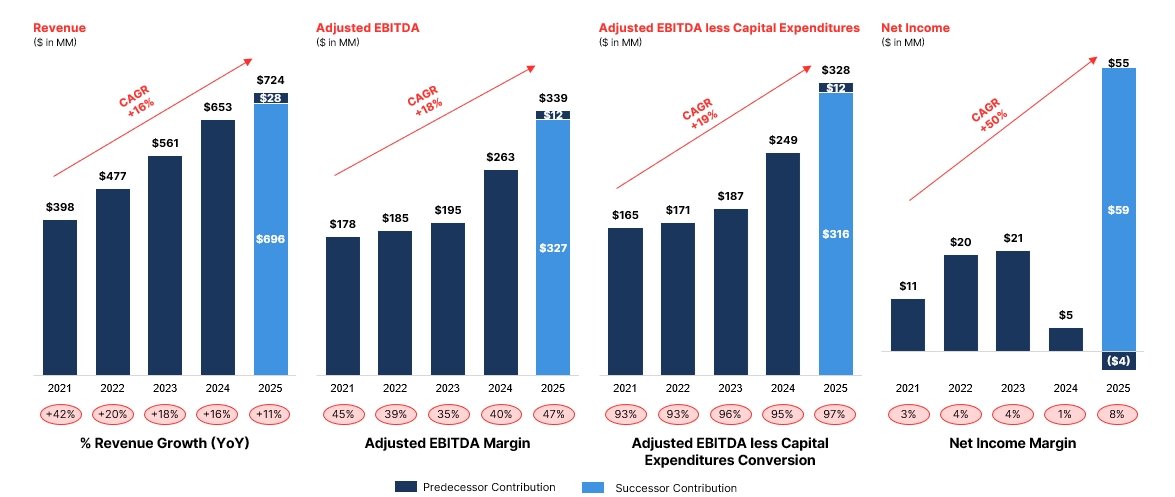
116
See the section titled “Management’s Discussion and Analysis of Financial Condition and Results of Operations—Non-GAAP Financial Measures” for additional information regarding our use of these metrics and reconciliations of Adjusted EBITDA, Adjusted EBITDA margin, Adjusted EBITDA less Capital Expenditures and Adjusted EBITDA less Capital Expenditures Conversion to the most directly comparable GAAP financial measures.
20 Years of Consistent Growth
Systemwide Sales Growth(1)
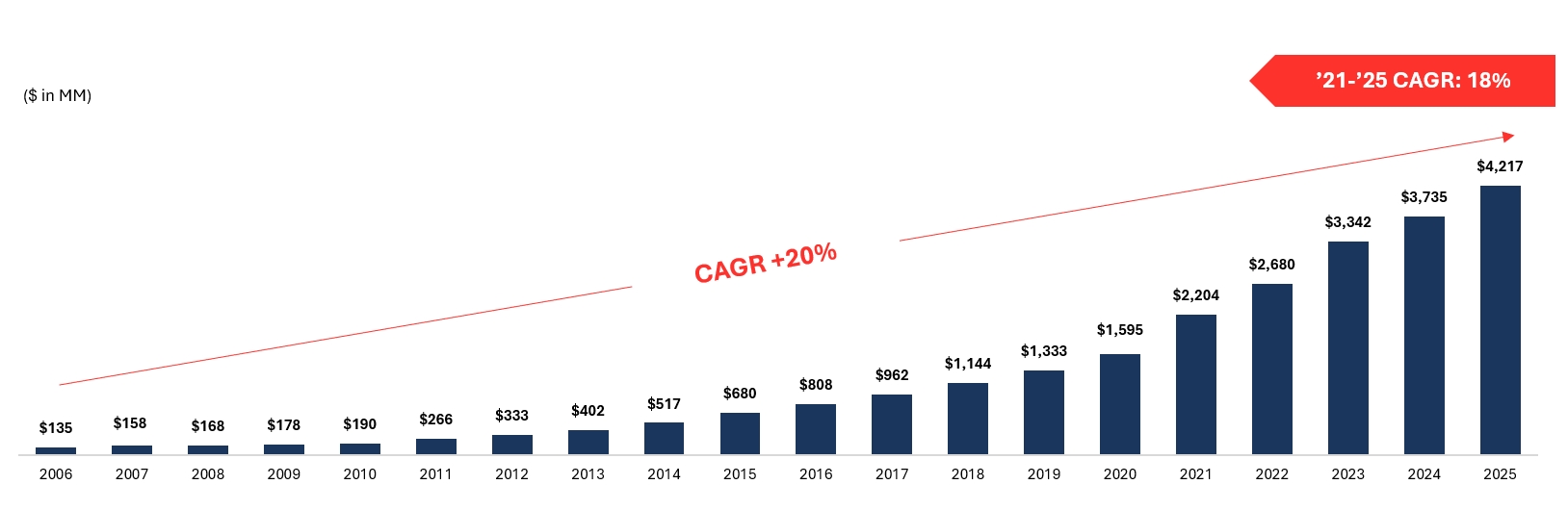
Store Growth
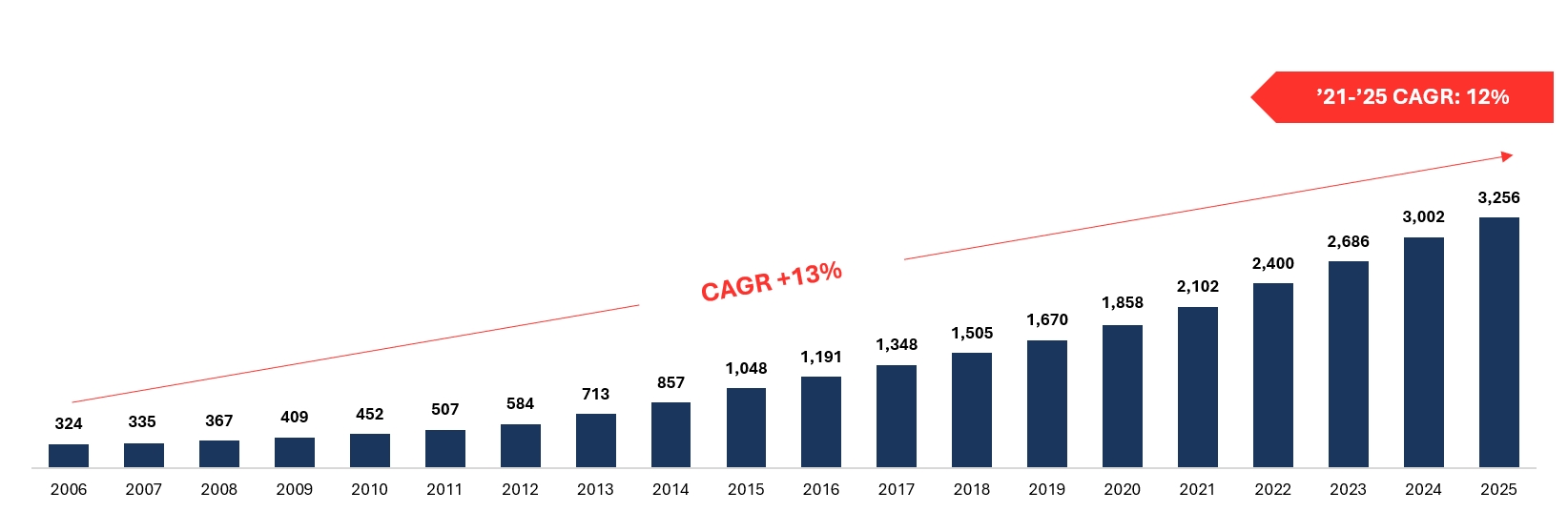
Average Unit Volume Growth(2)
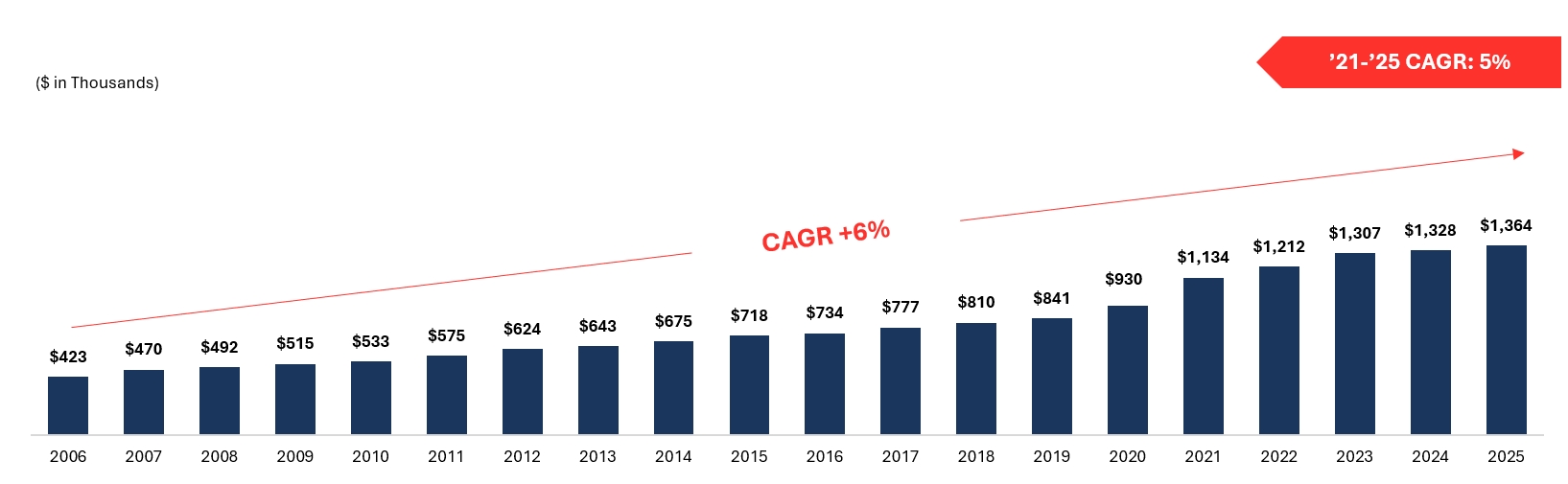
117
Same-Store Sales Growth(3)
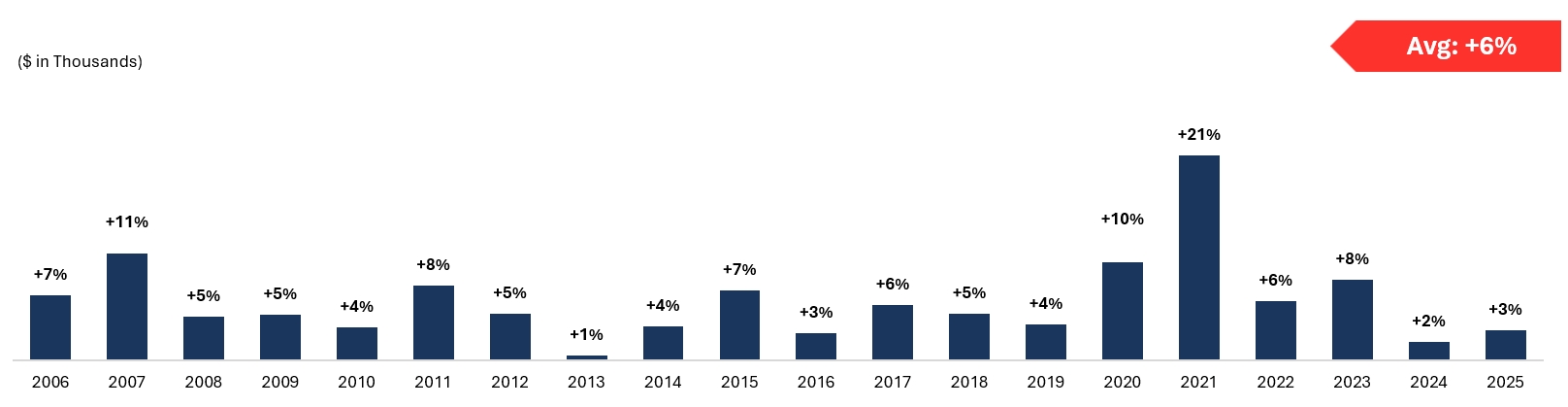
——————
The Jersey Shore Favorite: Our Market Opportunity
Jersey Mike’s competes in the large and growing limited-service restaurant market. As of 2025, this market in the U.S. is $377 billion in size and has grown at an approximate 6% CAGR since 2019, according to Technomic, Inc. The Company is well-positioned to capitalize on several favorable industry trends.
These trends have resulted in a strong growth trajectory with the market growing from approximately $52 billion in 2019 to $84 billion in 2025 representing a CAGR of 8.4%. Jersey Mike’s fast-casual positioning, with its commitment to premium ingredients, menu customization, digital accessibility, and a strong culture of service, aligns directly with these consumer preferences, supporting expectations of sustained growth and continued market share gains from both the fast-casual and quick service segments in the U.S. and around the world.
118
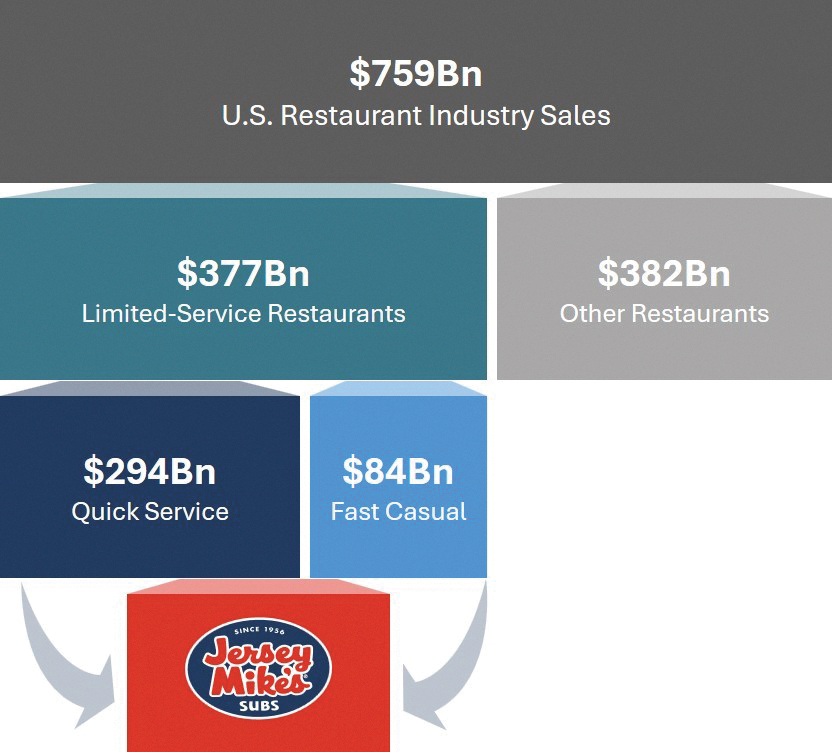
“A Sub Above” – Charting Our Competitive Advantages
Our Dedication to Authentic, High-Quality Subs
Jersey Mike’s is a brand that believes in the value of the highest-quality ingredients, the virtue of intention, and the idea that making a sub sandwich and making a difference can be one and the same. We believe that a Sub Above is one that’s measured in more than inches or seconds ‘til served. We carefully consider every aspect of what we do – every slice, every sandwich, every store. We proof, score, and bake our bread fresh every morning. We hand cut fresh vegetables daily in every store. We slice deli meats and premium cheeses fresh to order. We finish subs with our classic “Mike’s Way” preparation: fresh onions, crisp lettuce, juicy tomatoes, a sprinkling of the Juice – our signature blend of red wine vinegar and oil – and the perfect amount of seasoning. And then there’s the aroma and crackling of sizzling meats on our flattop grills, heating up the love for Jersey Mike’s. Our delicious hot subs are made with fresh-grilled steak and chicken as well as freshly cooked bacon.
119
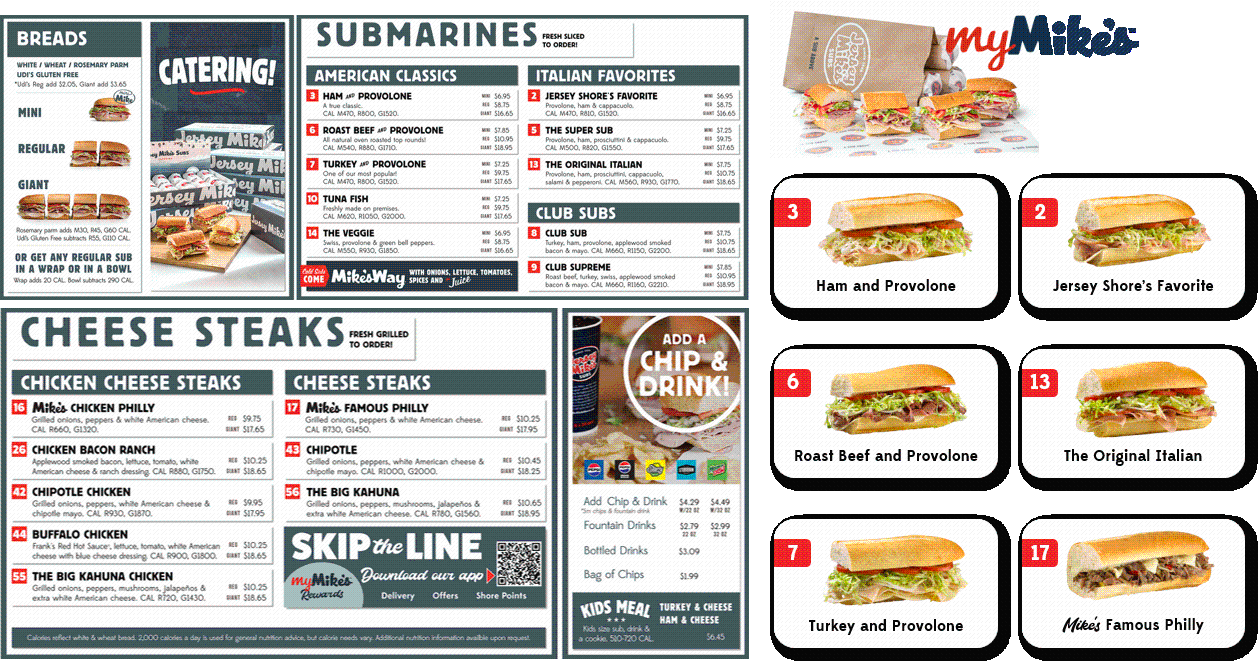
We believe our diverse menu offers something for everyone on every occasion. Guests can choose from a wide variety of cold and hot subs on white, wheat, rosemary parmesan, or gluten-free bread – or opt for wraps or our signature, low-carb bowl. We feature our iconic cold subs such as the #2 (Jersey Shore’s Favorite) and #13 (The Original Italian), alongside hot grilled favorites like the #17 (Famous Philly Cheesesteak) and #26 (Chicken Bacon Ranch). Through our broad assortment of breads and toppings, customers can customize their sandwiches to their individual preference, supporting a balanced mix of occasions across lunch, dinner, and off-premise as shown in the charts below (presented for Fiscal 2025):
Sales Mix
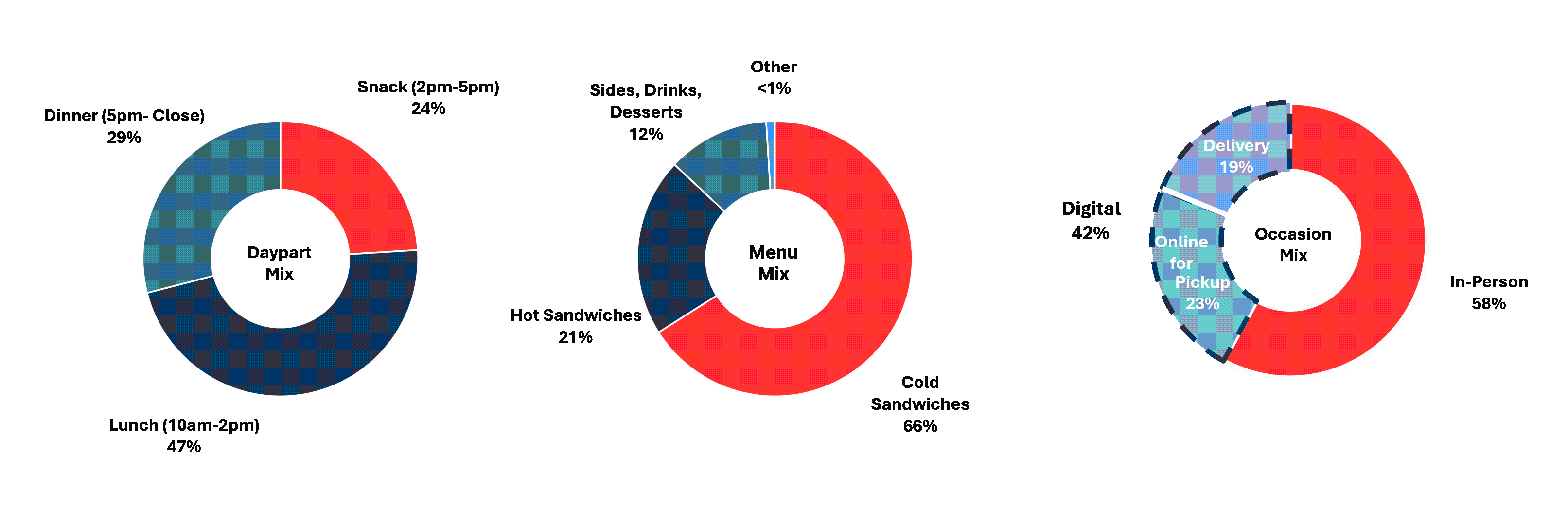
Our product quality, skilled preparation, and menu breadth combine to create a differentiated, craveable offering that fosters an enthusiastic fan base and positions Jersey Mike’s as a leader in premium submarine sandwiches.
We Give to Give – Community First Culture
Jersey Mike’s has cultivated a community-first culture centered on service and integrity. Since 1956, we have embraced the idea that great food and meaningful impact go hand in hand, built on the highest-quality ingredients, authentic relationships, and a commitment to giving back to the communities we serve. Each new store we open partners with a local charity, embedding community engagement into every market we enter from day one. We don’t give to get, we give to give: Our passion, our time, our talent, and our attention…we always have and always will.
120

Our commitment to giving is embedded in our day-to-day operations, with franchise owners and the Company supporting local and national charities throughout the year. These efforts intensify each March, when our system comes together for our annual Month of Giving, rallying customers and communities in support of charitable partners across the U.S. The month builds to our Day of Giving, held on the last Wednesday of March, when 100% of sales from participating stores are donated. From 2011 to April 2026, Jersey Mike’s has raised more than $166 million through the Month of Giving.
A Powerful Marketing Engine Driving Brand Awareness and Customer Loyalty
Jersey Mike’s has built one of the most recognized brands in fast casual. Our brand benefits from a $200+ million annual advertising fund and robust marketing platform that drives awareness, frequency and loyalty at scale. Our aided brand awareness exceeded 90% in 2025 – a reflection of sustained national campaigns that feature brand ambassadors like Danny DeVito and Eli Manning, strategic partnerships, and our designation as “the ‘Official Sub Sandwich Partner’ of the NFL”. This brand strength is reinforced by a best-in-class Net Promoter Score of 36, underscoring high customer satisfaction and strong word-of-mouth advocacy.
In June 2026, in our first year of inclusion in the American Customer Satisfaction Index (ACSI) Restaurant and Food Delivery Study, we debuted as the highest-rated quick-service restaurant in the United States, with a score of 84 out of 100. In doing so, we became the first new brand to lead the ACSI's quick-service restaurant category in more than a decade, surpassing Chick-fil-A, which had ranked at the top of the category for the prior 11 years. The ACSI recognized us for food freshness, menu variety and value, and noted that we have maintained quality while rapidly scaling our restaurant footprint. In an environment where consumers are becoming more selective about where they spend their restaurant dollars, the ACSI noted that brands delivering a consistently strong guest experience are increasingly differentiating themselves, underscoring the strength of our customer value proposition and operating model.
121
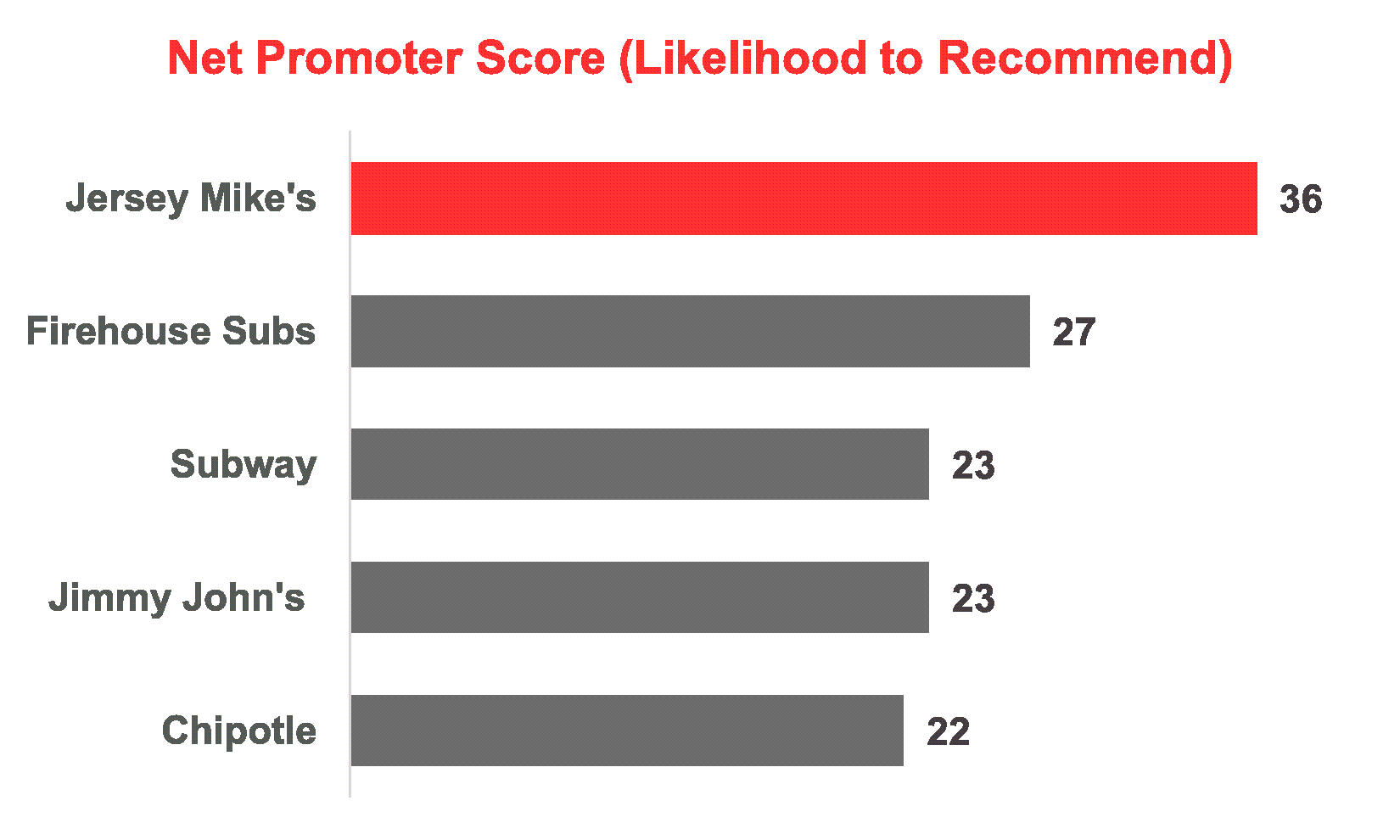
Our MyMike’s loyalty program reflects the strength of our marketing engine, with more than 12.5 million active members in 2025, up from approximately 7.9 million in 2021. Our marketing scale and brand awareness drive customer acquisition and frequency, deepening engagement with the brand. Increased customer engagement supports higher volumes at the store level, which enhances franchisee returns and incentivizes continued unit growth. As our store count expands, our advertising fund and marketing reach grow in tandem, reinforcing this cycle and creating a durable competitive advantage that is difficult to replicate and designed to compound over time.
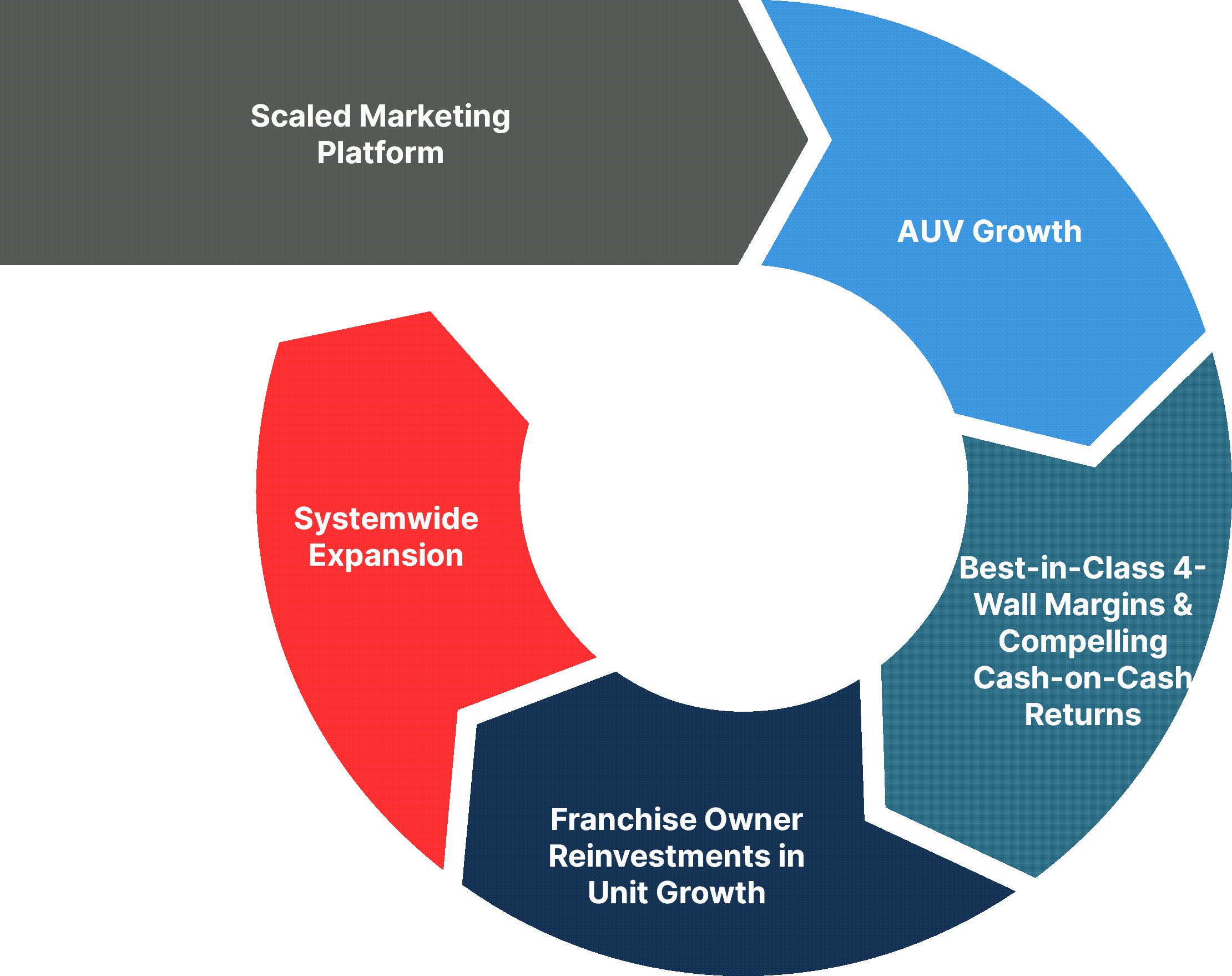
A Proven, Portable Concept with Compelling Unit Economics
Jersey Mike’s has demonstrated a proven, highly-portable business model, with 3,256 stores across all 50 states and a systemwide AUV of approximately $1.4 million in Fiscal 2025. Our strong brand and compelling unit economics have supported consistent performance across a broad set of markets and formats.
Our AUVs are consistent across regions, reflecting broad consumer appeal. Our brand performs well across multiple formats, from in-line and end-cap retail locations to non-traditional venues like airports and college campuses. Our flexible operating model has delivered 20 consecutive years of positive Same-Store Sales Growth, demonstrating the durability and scalability of the brand.
122
Store Count and AUV By Region as of December 28, 2025
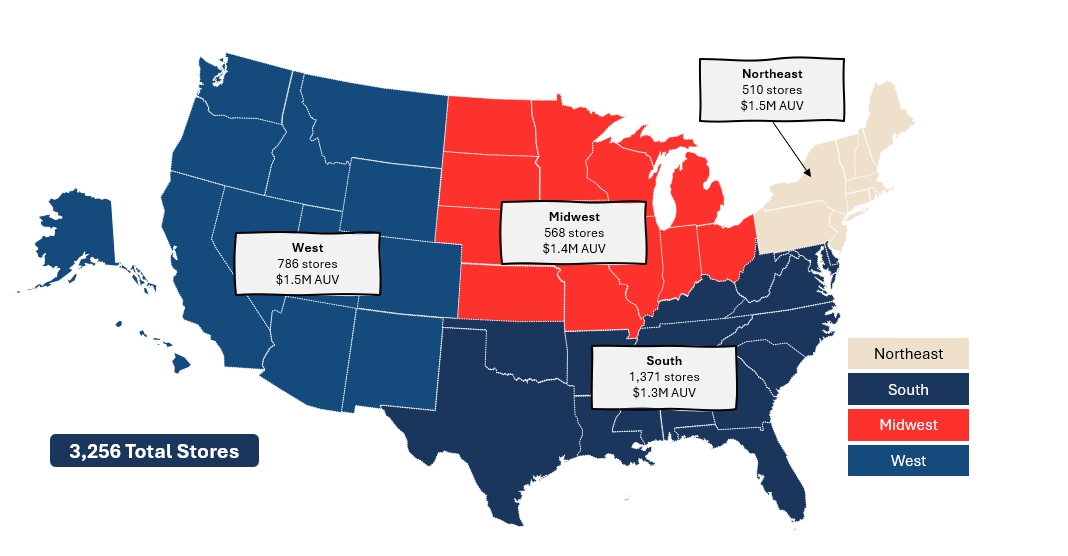
Our franchise owners have enjoyed consistently improving unit economics. As illustrated in the chart below, over the past 14 years, new store cohorts have performed in line with or above prior cohorts, demonstrating sustained consumer demand, increasing brand awareness, and low market saturation.
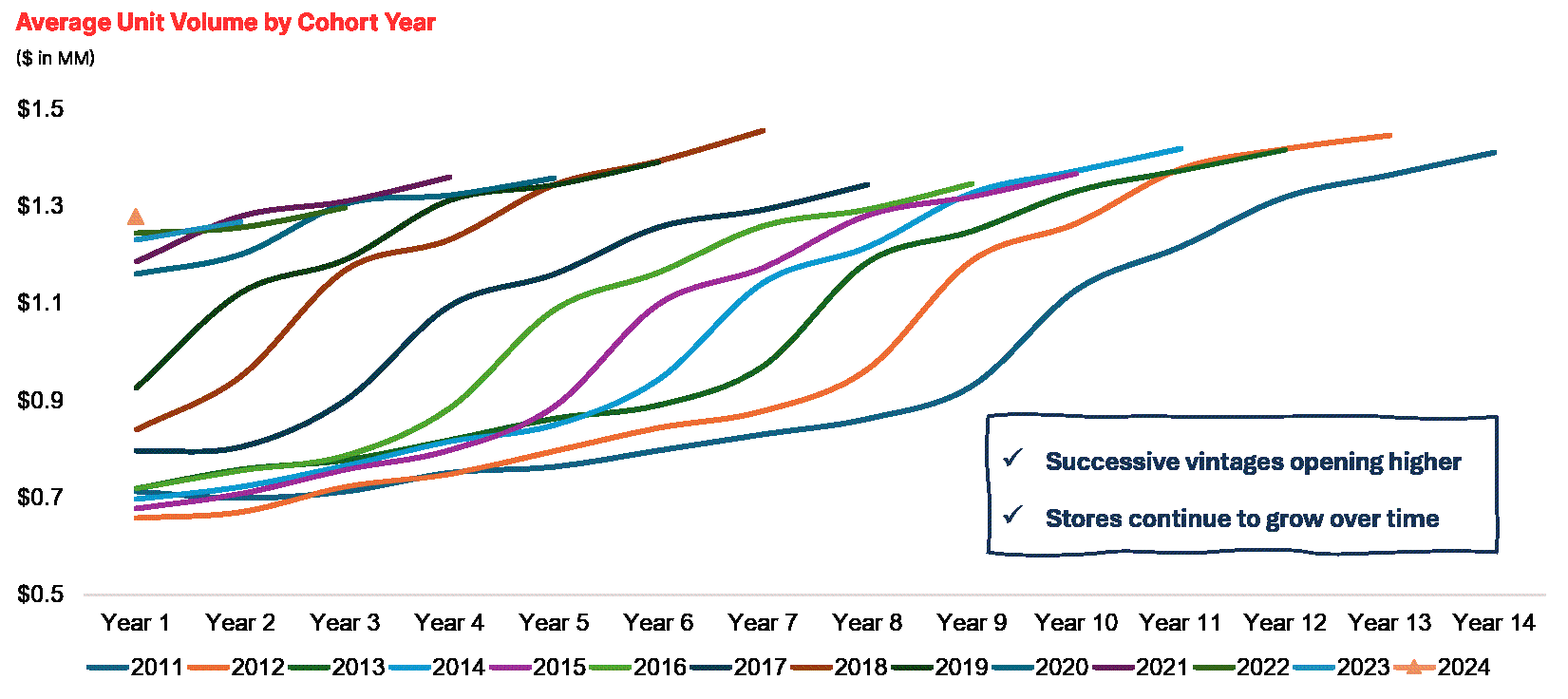
Our franchise owners benefit from a compelling and well-defined economic model. In 2025, our Average Store Sales-to-Investment Ratio was 2.6x, with Cash-on-Cash Returns of approximately 42%. We believe these compare favorably to other investment opportunities our franchise owners may evaluate. The strength of our economic model rests in the combination of a $1.4 million AUV, a 16% Store-level Margin (after royalties and advertising fees), and a low average Build Cost of approximately $515,000. Our ability to build “in-line” and “end-cap” locations, historically averaging ~1,500 square feet (with new builds targeted at 1,200-1,400 square feet), contributes to a lower Build Cost relative to many peers, particularly those reliant on higher-cost, drive-thru formats.
123
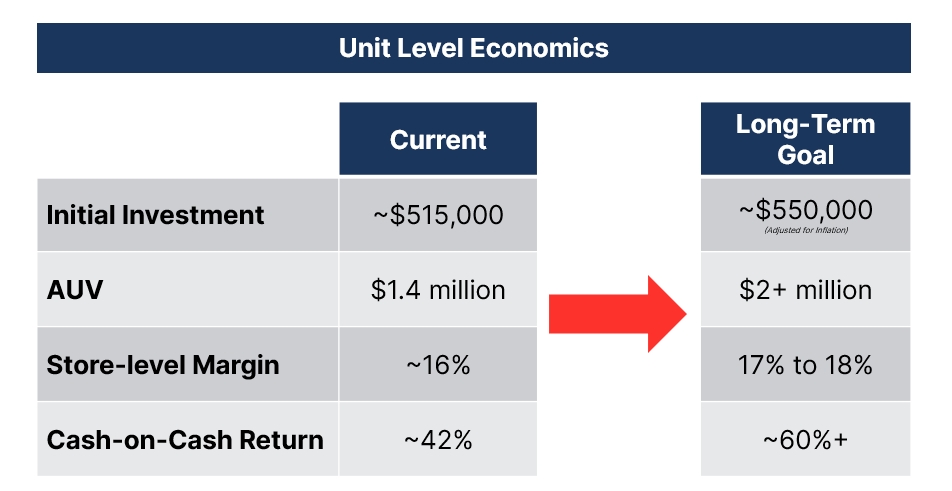
Our unit economics have demonstrated the potential for even higher returns through a combination of increased AUVs and operating leverage. A growing portion of our system is already operating at higher AUV levels, with over 6% of stores delivering AUVs above $2.0 million in 2025, up from less than 1% in 2019. In addition, our initial units in Canada have generated annualized average weekly sales of $1.6 million, outperforming our U.S. average. As these initiatives are implemented and AUVs expand, we aim to achieve increased margin flowthrough and franchise owner Cash-on-Cash Returns to increase to ~60% or better.
Selected Industry and Jersey Mike’s Metrics – Year-Over-Year Comparisons
The following table presents certain industry and Jersey Mike’s metrics for each of the fiscal years or timeframes indicated.
|
2025 |
2024 |
2023 |
Other (as specified) |
Limited-Service Restaurant Market Size(1) |
$377 billion |
$366 billion |
$353 billion |
CAGR 6% (2019-2025) |
Fast Casual Industry Sales Size(1) |
$84 billion |
$79 billion |
$73 billion |
CAGR 8% (2019-2025) |
Restaurant Industry Sales(1) |
$759 billion |
$679 billion |
$657 billion |
CAGR 6% (2019-2025) |
Food Away from Home % of Total Food Spend(2) |
45% |
45% |
44% |
40% (2006) |
Off-Premise Traffic (Limited-Service Restaurant Segment)(2)(3) |
n/a |
83% |
n/a |
76% (2019) |
Jersey Mike’s Aided Brand Awareness |
90% |
89% |
88% |
64% (2018) |
MyMike's Loyalty Program (Active Members as of End of Fiscal Year) |
12.5 million |
11.1 million |
9.8 million |
7.9 million (2021) |
AUVs Above $2 Million (% of System) |
6% |
5% |
4% |
<1% |
AUV |
$1.4 million |
$1.3 million |
$1.3 million |
CAGR 6% (2006-2025) |
(1) According to Technomic, Inc.
(2) According to National Restaurant Association.
(3) 2023 and 2025 information not available.
Committed and Diverse Franchise Owner Base
Jersey Mike’s benefits from a diverse franchise owner base comprised of both large multi-store operators and smaller, single‑store franchise owners who are deeply invested in their local communities. As of December 28, 2025, the system included more than 630 unique franchise owners of which approximately 80 franchise owners operate 10 or more stores, while more than 330 franchise owners operate only one or two stores, resulting in a highly diversified ownership base with no meaningful reliance on any single operator. The largest franchise owner operates 91 stores, representing approximately 3% of total system stores as of December 28, 2025. Strong demand from existing franchise owners, alongside continued interest from new franchise owners, reflects deep confidence in the brand, the durability of the operating model, and the significant white space that exists across the U.S. and internationally.
124
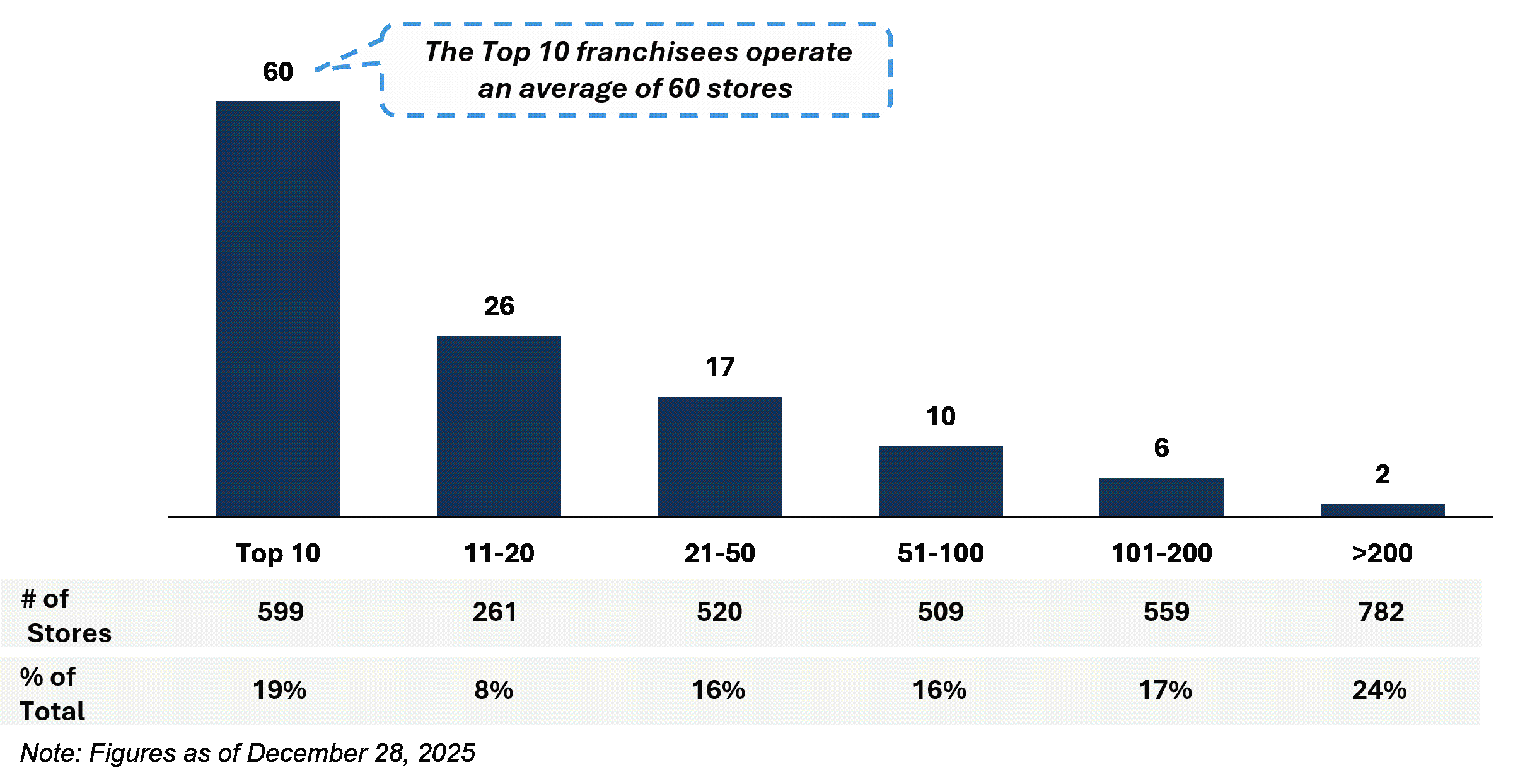
Description of Area Development and Franchise Agreements
Our franchise owners execute an Area Development Agreement (“ADA”) that gives them the right to develop a specified number of stores in a protected area on a pre-determined timeline, as well as a separate franchise agreement for each individual restaurant. Under our franchise agreements, we grant a franchise owner the right to develop and operate a franchised store at a specific location and to use, solely at such location, our store format and operating system, which includes standards and specifications, and procedures for the purchase, preparation and sale of branded food, beverage and other products, all of which are part of our brand standards for the Jersey Mike’s system. The standard term offered under the franchise agreement begins on the date the franchise agreement is signed and ends ten years after the opening of the store. Upon the expiration of the initial term, the franchise owner may acquire a successor franchise for one additional term of ten years, subject to certain conditions. While our standard agreements are revised periodically and terms may vary, our latest form of agreement includes a $10,000 development fee for each store to be developed along with a $20,000 initial franchise fee due upon the signing of each franchise agreement included in the ADA. The franchise agreement is signed once the franchisee has delivered a fully executed lease for the premises. Additionally, franchise owners are required to pay a continuing royalty fee of 6.5% of gross receipts and make advertising fund contributions equal to 5.0% of gross receipts.
Our franchise agreements require the franchise owner to operate the franchised store in conformity with our system standards or as otherwise provided in writing by us, including selling all menu items, products and services required; installing all fixtures, furnishings, equipment, décor items and signage from time to time; preparing all menu items in accordance with our recipes and procedures; and using the Jersey Mike’s trademarks in accordance with our guidelines. In addition, franchise owners must comply with all other obligations set forth in the franchise agreement, including complying with all applicable laws.
Under the franchise agreements, each franchise owner is required to procure and maintain insurance meeting certain minimum standards, coverage and limits specified by us, and must name us as additional insured parties. A franchise owner’s failure to maintain such required coverage is considered a breach of the franchise agreement. In addition, each franchise owner is required to defend, indemnify and hold harmless Jersey Mike’s from any and all claims arising directly or indirectly from, as a result of, or in connection with, the operation of its stores as well as the costs, including attorneys’ fees, of defending against them. We have the right to terminate the franchise agreement following a breach by the franchise owner or subject to other conditions.
Canada Area Director Agreement
As part of our planned international expansion, on December 18, 2023, we entered into an area director agreement with Redberry Shore Restaurants LP (“Redberry”) to develop directly, or through prospective franchise owners, 300 stores across Canada over a period of 10 years (subject to extensions in accordance with the agreement) (the “Canada Area Director Agreement”). Redberry is obligated to comply with a development schedule that specifies
125
the timeline for opening such stores over the initial period of the agreement. Redberry receives as a commission a share of royalties received by the Company from stores developed pursuant to the Canada Area Director Agreement and certain other payments. Redberry is not an affiliated party of Jersey Mike’s. A separate franchise agreement is entered into for each individual restaurant opened in Canada, and the terms of such franchise agreements are substantially consistent with the terms of franchise agreements domestically.
United Kingdom and Ireland Master Franchise and Operating Agreement
In addition, on December 31, 2025, we entered into a master franchise and operating agreement with JM Submarines UK LTD (the “Master Franchisee”), an entity controlled by Peter Cancro, our Founder and a member of our board, pursuant to which we granted the Master Franchisee the right to develop, own, operate and subfranchise a minimum of 300 stores in the United Kingdom and Ireland over a ten-year development term (subject to extensions in accordance with the agreement). The Master Franchisee is obligated to comply with a development schedule that specifies the timeline for opening such stores over the initial period of the agreement. The agreement generally reflects terms and conditions comparable to those we enter into with third parties, as described in “—Description of Area Development and Franchise Agreements.” Given our Founder’s track record of successful store development and significant investment and execution required to enter our first meaningfully distinct international market outside North America, the agreement includes certain negotiated terms that differ from our standard terms, including with respect to royalties and other payments. We do not expect the impact of these negotiated terms to be material to our results of operations or financial condition over the term of the agreement.
Asset-Light Model Generates Strong Cash Flow
Jersey Mike’s operates a proven, highly-franchised, asset-light business model that generates stable, diversified, and high-margin cash flows. In combination with our strong unit-level economics, our asset-light business model enables ongoing system expansion with minimal franchisor capital, low working capital requirements, and limited maintenance capital expenditures. Furthermore, we benefit from the resilience of a diverse and unconcentrated franchise owner base, which provides relative stability across economic cycles. In 2025, we generated approximately $55 million of Net income and $328 million of Adjusted EBITDA less Capital Expenditures converting from Adjusted EBITDA at a rate of approximately 97%. Corporate capital expenditures requirements remain low, and strong net income and Adjusted EBITDA margins of approximately 8% and 47%, respectively, underscore the efficiency of our performance. See the section titled “Management’s Discussion and Analysis of Financial Condition and Results of Operations—Non-GAAP Financial Measures” for additional information regarding our use of these metrics and reconciliations of Adjusted EBITDA less Capital Expenditures, Adjusted EBITDA and Adjusted EBITDA margin to the most directly comparable GAAP financial measures.
A Mission-Driven Management Team with a Proven Track Record
Jersey Mike’s is led by Chief Executive Officer Charlie Morrison, who previously served as CEO of Wingstop for approximately 10 years. He is supported by Chief Financial Officer Michele Allen, a seasoned public company CFO who brings over 25 years of hospitality and franchising experience; President and Chief Operating Officer Stacy Peterson, who has a track record of scaling high-growth concepts including at Wingstop as Chief Revenue & Technology Officer and Chief Digital & Technology Officer, and most recently, at Jeni’s Splendid Ice Creams, where she served as CEO; and President, International and Global Development Officer Andrew Skehan, who brings over two decades of global franchise leadership, including six years as President of International at Popeyes and previously President of North America at Krispy Kreme.
Rounding out the leadership team, Chief Information Officer Scott Scherer has spent more than two decades with Jersey Mike’s and led the buildout of the company’s proprietary, fully-integrated technology platform; Chief People Officer Betsy Mercado brings 27 years of experience leading people strategy, culture, and organizational development at scale, most recently at Flynn Group; General Counsel Scott McLester brings decades of legal expertise spanning major public companies and high-growth franchise systems; SVP of Finance Corey Horsch brings deep restaurant finance expertise having previously served as CFO at Sonic Drive-In; U.S. Chief Development Officer Brian Sommers has over 25 years of experience with Jersey Mike’s, rising from field operations to head of U.S. franchise development; and Matt Warren as SVP of Marketing brings over 15 years of experience with digital marketing spanning across Dutch Bros Coffee, Wingstop, Panera and Domino’s Pizza.
126
Together, this team combines institutional knowledge of the Jersey Mike’s brand with best-in-class functional expertise—positioning the company to execute its growth strategy and deliver long-term value for franchise owners and all stakeholders.
“Mike’s Way” Forward – The Growth Story
Jersey Mike’s growth is driven by a self-reinforcing model rooted in strong unit-level economics and sustained consumer demand. Our high-quality, craveable subs and strong brand awareness support category-leading AUVs, which translate into attractive returns for franchise owners. These economics drive continued franchise owner interest and investment, supporting disciplined domestic expansion while extending the brand into large, underpenetrated international markets.
We employ an asset-light, 99% franchised business model that generates high operating margins that require minimal capital expenditures, which facilitates strong cash flow generation. As we execute the growth strategies below, we expect to continue growing revenues, earnings and cash flows.
Expand Our System
We believe we have a significant opportunity to grow our store footprint in the U.S. and internationally through increased penetration in both existing and new markets. Our highly portable, profitable, and capital-efficient store model continues to generate strong franchise owner demand and drive store growth. We have a strong domestic development pipeline of over 1,600 stores across new and existing markets. Over 90% of this pipeline is being undertaken by existing franchise owners – a powerful signal of franchisee confidence in the model. We believe significant whitespace remains in the U.S., with the opportunity to open approximately 7,500 stores, based on benchmark store density levels achieved in our most penetrated domestic market. We believe we also have a meaningful international expansion opportunity, with the potential to eventually grow to approximately 15,000 stores globally over the long term, supported by the international growth experience of comparable restaurant brands.
Jersey Mike’s Store Count & Density by State
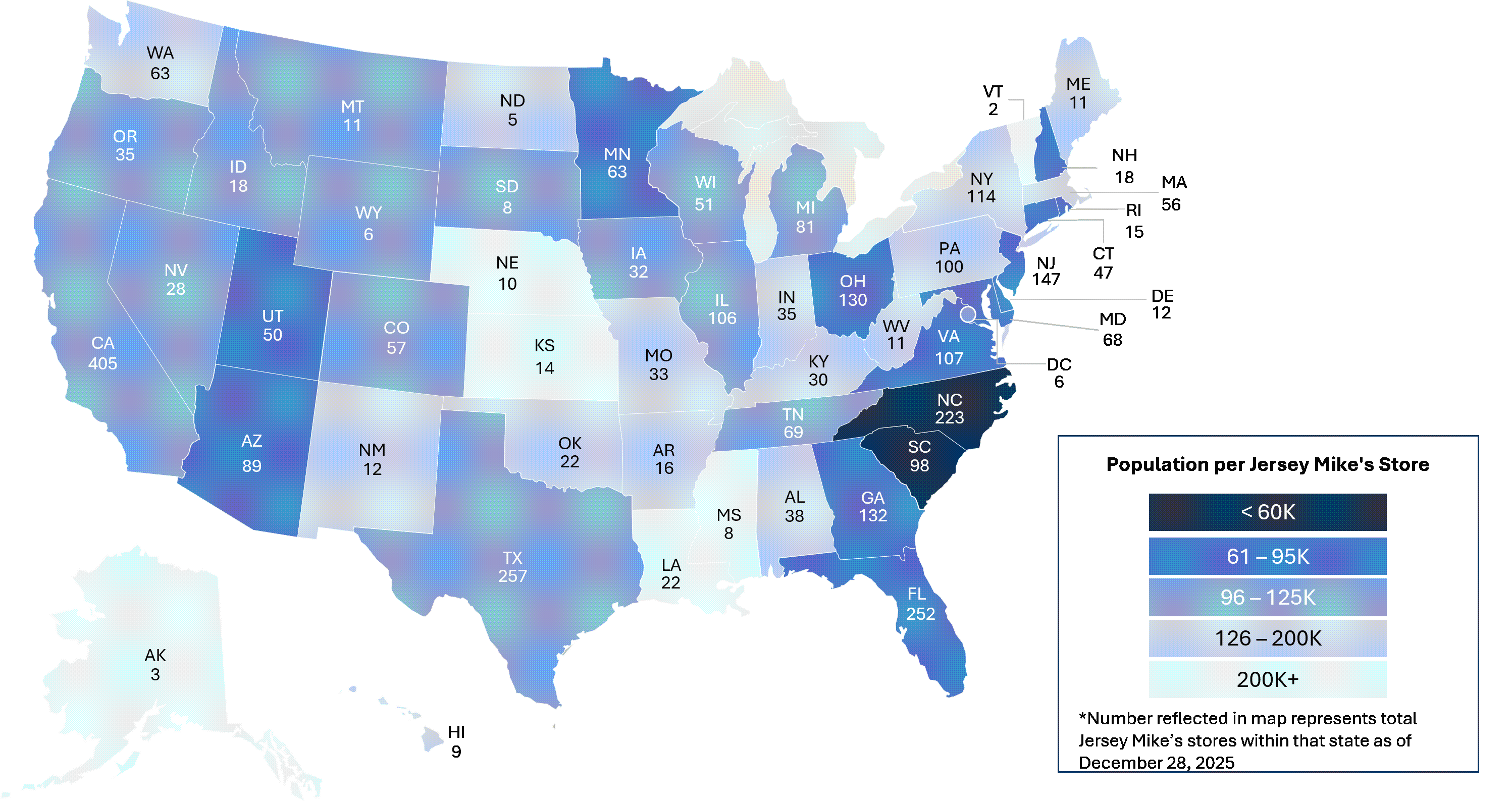
127
We support franchise owner expansion through a rigorous, cross-functional approach to site selection, prioritizing opportunities based on market potential, profitability and ongoing assessments of growth in both new and existing markets. We leverage data-driven insights, local broker expertise, landlord relationships, and market intelligence to identify prime locations, supported by detailed demographic and trade area analysis, traffic pattern evaluation, competition assessment and cash-on-cash return analyses. Within this framework, we target high-visibility inline or end-cap locations in first-ring retail centers.
Grow Same-Store Sales
Our operations are purpose-built to support continued AUV expansion via higher opening volumes and sustained Same-Store Sales Growth. Jersey Mike’s has grown AUVs every year since 2006, reaching $1.4 million in Fiscal 2025, representing a 6% CAGR since 2006. Kitchen workflows, labor models, and technology infrastructure are already designed to handle meaningfully higher volumes with no material changes to operations or efficiency. One of the key factors driving AUV Growth is Same-Store Sales Growth, which was 8.4% in 2023, 2.0% in 2024, and 3.2% in 2025. 2023 Same-Store Sales Growth was impacted by price increases related to inflation. In the second half of 2022 and early 2023, we recommended non-routine price increases to our franchisees to offset increases in their cost of goods sold, which contributed to a 4% increase in the average transaction price in 2023 versus 2022.
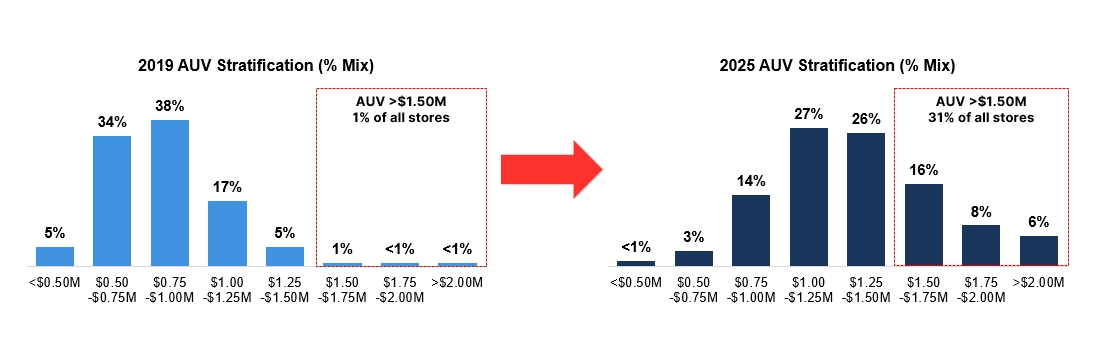
A growing number of stores – representing approximately 6% of the system as of December 28, 2025 – have already achieved volumes of $2.0 million or higher, demonstrating that our store model is proven at significantly higher volume levels and gives us confidence in our long-term AUV goal. We are confident in our ability to drive continued Same-Store Sales Growth and AUV expansion, supported by the following strategies:
128
Our Menu
The Jersey Mike’s brand is defined by a differentiated operating model centered on freshness, authenticity and made-to-order preparation. The vast majority of our guests choose to have their sandwiches prepared “Mike’s Way” – with fresh onions, crisp lettuce, juicy tomatoes and “The Juice,” our signature blend of red wine vinegar and oil, and then seasoned to perfection. This specific combination creates a distinct, craveable flavor profile that has stood the test of time while also serving as a platform to meet evolving consumer preferences.
129
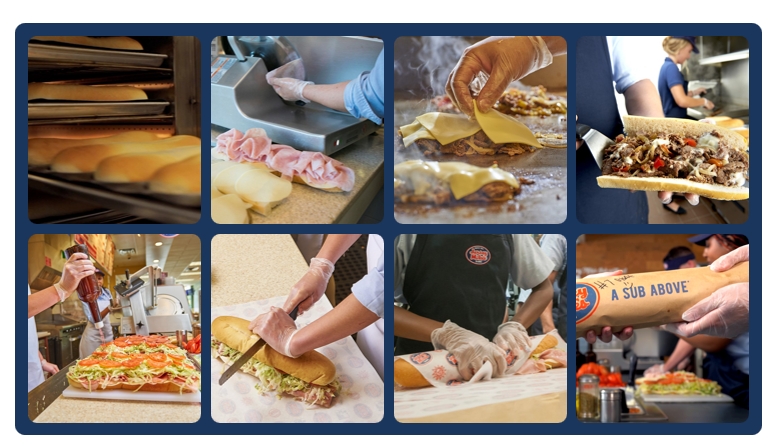
“The Classics”
Jersey Mike’s customers are loyal and passionate about our brand, which is driven by the quality and authenticity of our menu. Originally, we assigned numbers to our sandwiches - a way to get the world’s most authentic sub into your hands without the wait. But over time, these numbers became a language of their own and staples on our menu. Our customers typically do not ask for a “turkey and provolone with everything,” but simply for a “#7 Mike’s Way” or a “#13 Mike’s Way,” our Original Italian. These high-velocity “Classics” represent the core of the Jersey Mike’s menu. As a testament to their enduring appeal, these specific recipes have remained unchanged for decades. The #13 serves as the brand’s signature flavor icon, while our #7 represents the top-selling sub by volume across our network.
Menu Innovation
We view our menu as a living reflection of guest preference, and we continually invest in new products and menu innovation to maintain relevance with our customers and to drive incremental dining occasions. We utilize a rigorous, data-driven testing process to ensure every new product adheres to our “Sub Above” standards for taste and quality.
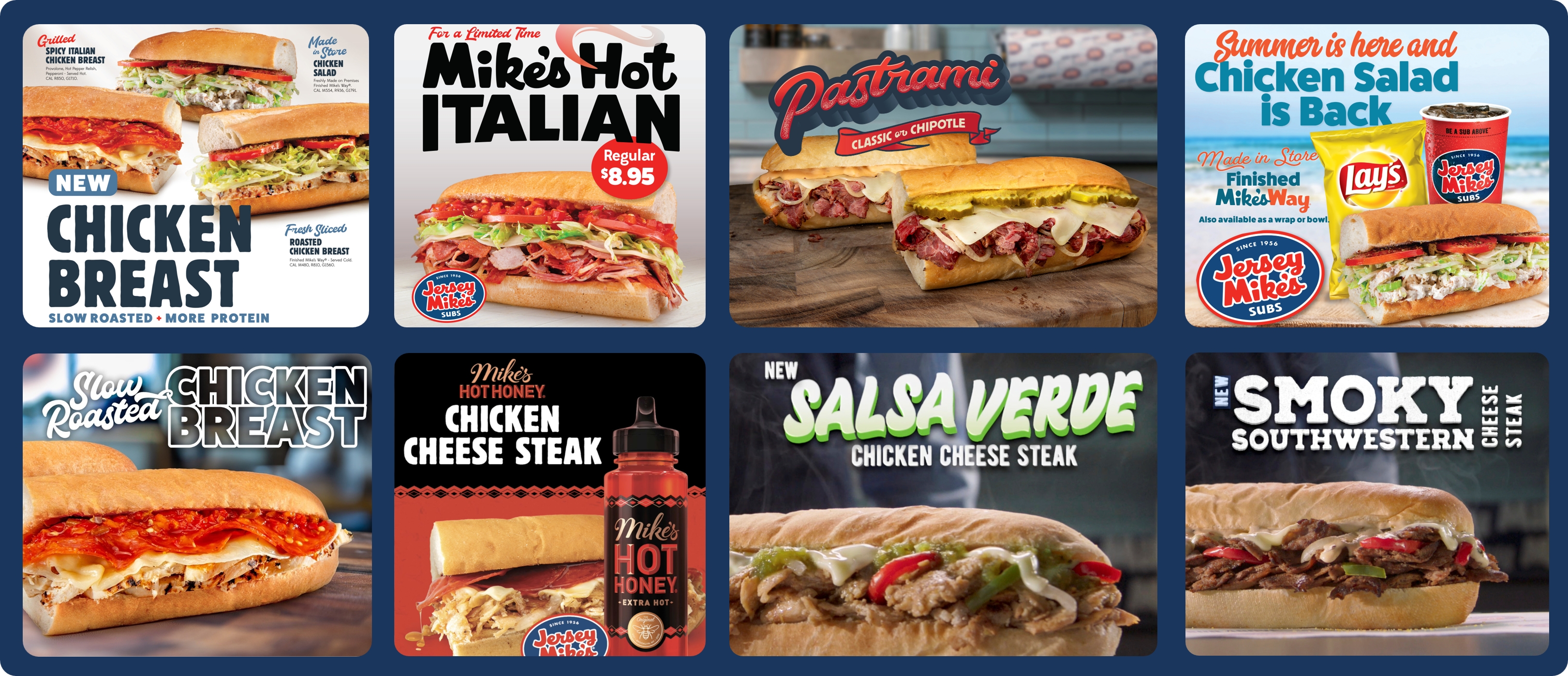
130
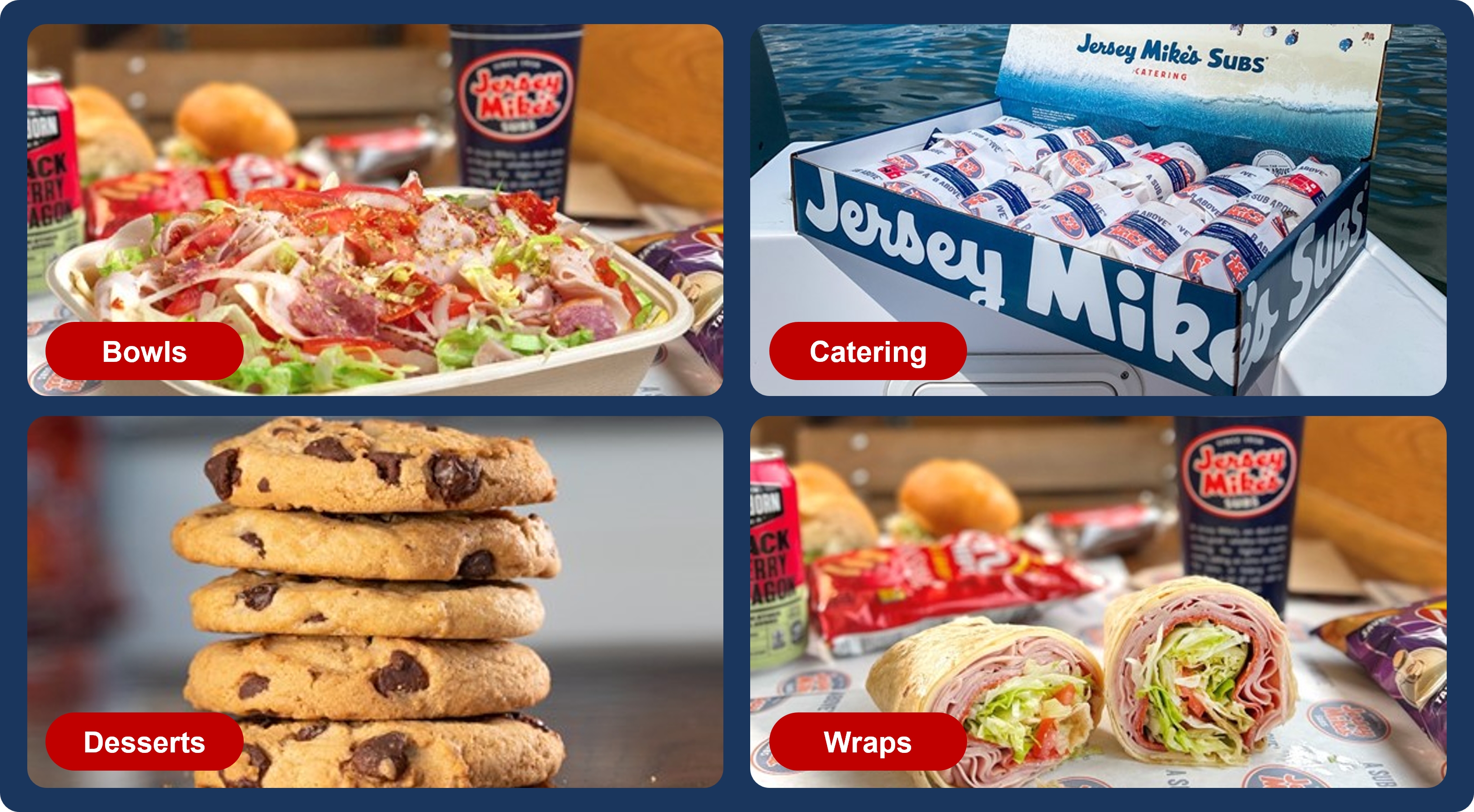
Our Customers
Our broad customer base reflects the universal appeal of our sub-style sandwiches across age groups, regions, and gender. The menu is highly adaptable to varied tastes and dietary preferences, offering extensive customization, hot and cold options, and a balance of indulgent and lighter choices. Our customers tend to skew toward middle- and higher-income households, supporting above-average check sizes and consistent frequency relative to the broader limited-service segment. This customer profile has demonstrated resilience across economic cycles, benefiting from brand loyalty, habitual visitation, and the affordable convenience positioning of the category.
Our Restaurants
Our guests are greeted by the aroma of freshly baked bread and a counter where premium meats and cheeses are sliced to order, alongside fresh-grilled options prepared in restaurant daily. Our standardized store formats—often in-line or end-cap locations, historically averaging ~1,500 square feet (with new builds targeted at 1,200-1,400 square feet)—are designed for convenience, enabling quick service for takeout, pick-up and dine-in occasions. Our highly-customizable menu lets guests tailor flavor, portion and build for individuals, families and groups across a range of dining occasions and value needs.
Our service-oriented franchisees bring our community focus to life through welcoming, consistent hospitality that keeps the line moving without losing personal touch. We believe this model differentiates us by meeting guests wherever they are between convenience and connection, delivering made-to-order quality at pace.
By combining enlivened hospitality, on-site prep with a streamlined layout and spaces that feel like home, we build familiarity, deepen loyalty and drive repeat customer visits.
Company-Owned Stores
We operate a limited number of company-owned stores. While these stores generate attractive financial returns, they are primarily utilized for research and development, training and testing of new menu items, equipment packages,
131
digital ordering flows, technology, labor models and remodel prototypes. As of June 28, 2026, we operated 26 company-owned stores, representing approximately 1%, of our total units. We have no intention of meaningfully increasing the number of company-owned stores at this time.
Our Scaled Marketing Platform
Our advertising fund currently exceeds $200 million annually. Our coordinated advertising efforts deliver highly targeted messaging and effective engagement that drive traffic and sales to Jersey Mike’s stores to the benefit of us and our franchise owners.
Our marketing strategy has historically emphasized high-reach placements, including national and regional television and major sponsorships, to drive broad brand awareness and brand equity. These top-of-funnel investments have enabled us to successfully increase our aided brand awareness from 64% in 2018 to over 90% in 2025. While this approach has been effective, we are actively optimizing our media mix to enhance returns on marketing investment. This includes maintaining a strong focus on high-impact national partnerships and campaigns, while taking a more selective approach to certain regional and local sponsorships and promotional activities, alongside a reallocation of spend toward lower-funnel digital and social channels, where we are currently underinvested relative to scaled peers.
National Advertising
Our national advertising focus is on high-reach placements and premium media buys designed to maximize brand equity and “top-of-mind” awareness across all markets, which benefits all franchise owners. Our national presence is anchored by iconic, national advertising campaigns, starring well-known celebrities and athletes, such as our “Jersey Icons”, Danny DeVito and Eli Manning, who have become synonymous with our brand. Our national media strategy has traditionally been focused around national and regional television campaigns to drive awareness, as well as through sponsorship at large sporting and cultural events to further amplify our brand messaging. For example, in April 2025, we became the Official Sub Sandwich Sponsor of the NFL, which provides a global platform to showcase our brand.
132

Digital Advertising
A recent third-party market study has estimated that Jersey Mike’s has approximately 10.7 million highly engaged guests who visit six or more times per year. While this reflects a strong and loyal customer base, we believe there is significant opportunity to both expand our reach and increase frequency of visit.
We intend to grow our customer base by increasing trial among new and underpenetrated customer segments, while also deepening engagement with existing customers to driver higher visit frequency. Notably, even our most loyal customers currently visit approximately six times per year, which we believe represents a meaningful opportunity for increased frequency over time.
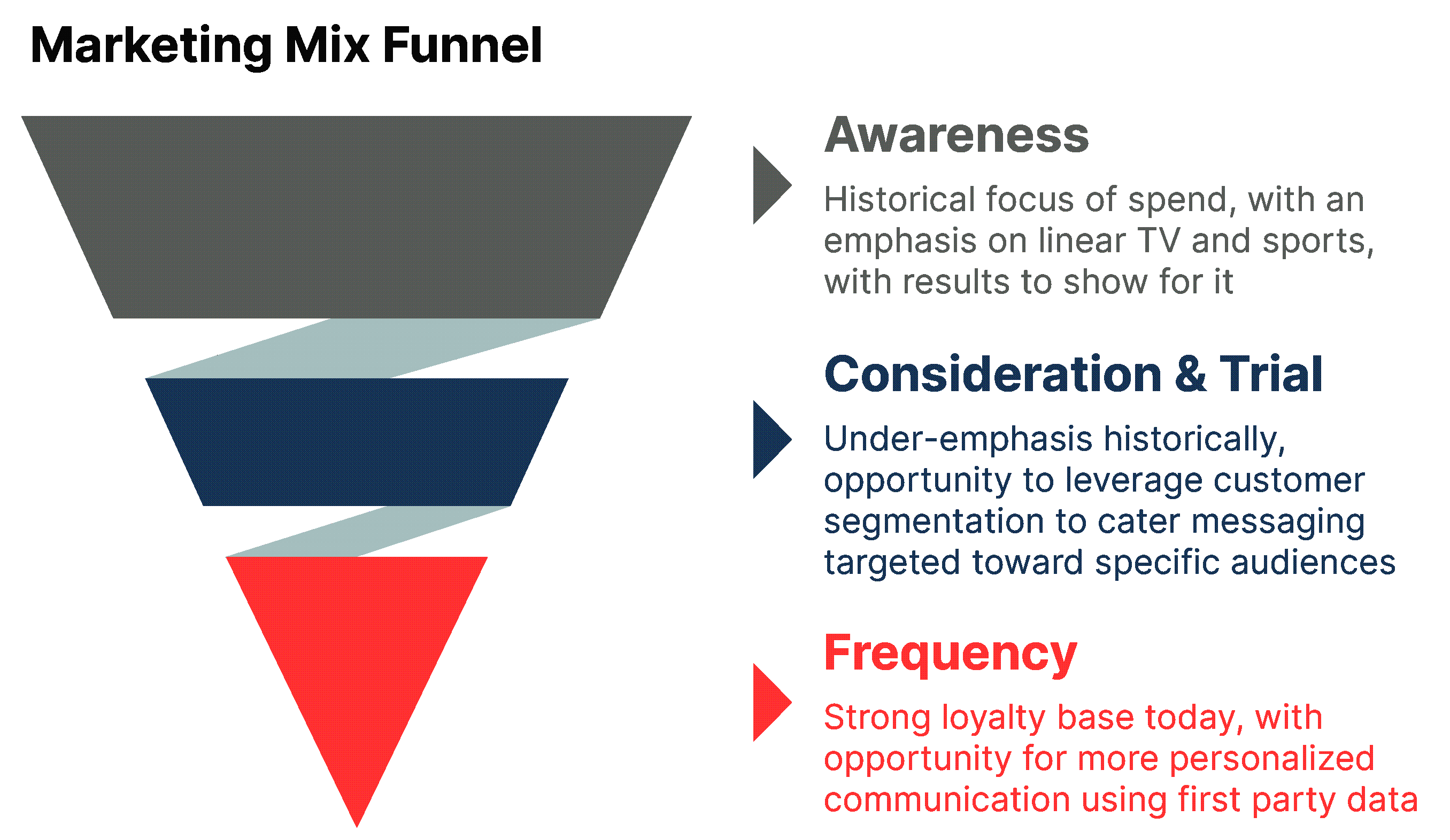
We are focused on achieving this through a more targeted and personalized digital marketing approach, leveraging our first-party data to deliver relevant, call-to-action messaging that drives both initial trial and repeat visits.
Our digital engagement strategies provide a seamless and personalized experience across channels, including search, email, text and social media, enabling us to effectively reach and engage customers.
133
Our MyMike’s app serves as the digital gateway for customer interaction, allowing us to leverage first-party data to deliver personalized communications while also providing an integrated platform for menu exploration, locating Jersey Mike’s stores and convenient ordering. These capabilities have contributed to digital sales exceeding 40% of Systemwide Sales in 2025, and position us to further enhance customer acquisition, engagement and frequency.
Targeted Marketing Opportunity
In 2025, our social media spending was approximately 1% of total marketing spend compared to 10-25% for many scaled peers, highlighting a significant opportunity to expand our reach to a broader demographic of customers and increase overall market penetration. Importantly, we believe this opportunity can be achieved largely by leveraging our existing platform, with limited incremental capital investment.
We have made meaningful investments in our digital infrastructure, including capabilities that support customer intelligence, first-party data activation and social media engagement, which provide a strong foundation for continued growth. As we enhance our access to and utilization of this data, we see a significant opportunity to further optimize our digital ecosystem by delivering more targeted, personalized marketing and promotional experiences. This includes expanding our ability to segment and engage customers on a more individualized basis, similar to other scaled restaurant platforms that have successfully leveraged data-driven marketing to increase customer trial and frequency.
As our capabilities improve and our advertising fund grows, we intend to pursue this opportunity through a reallocation of our media mix, shifting a greater portion of our resources towards digital and lower-funnel spend.
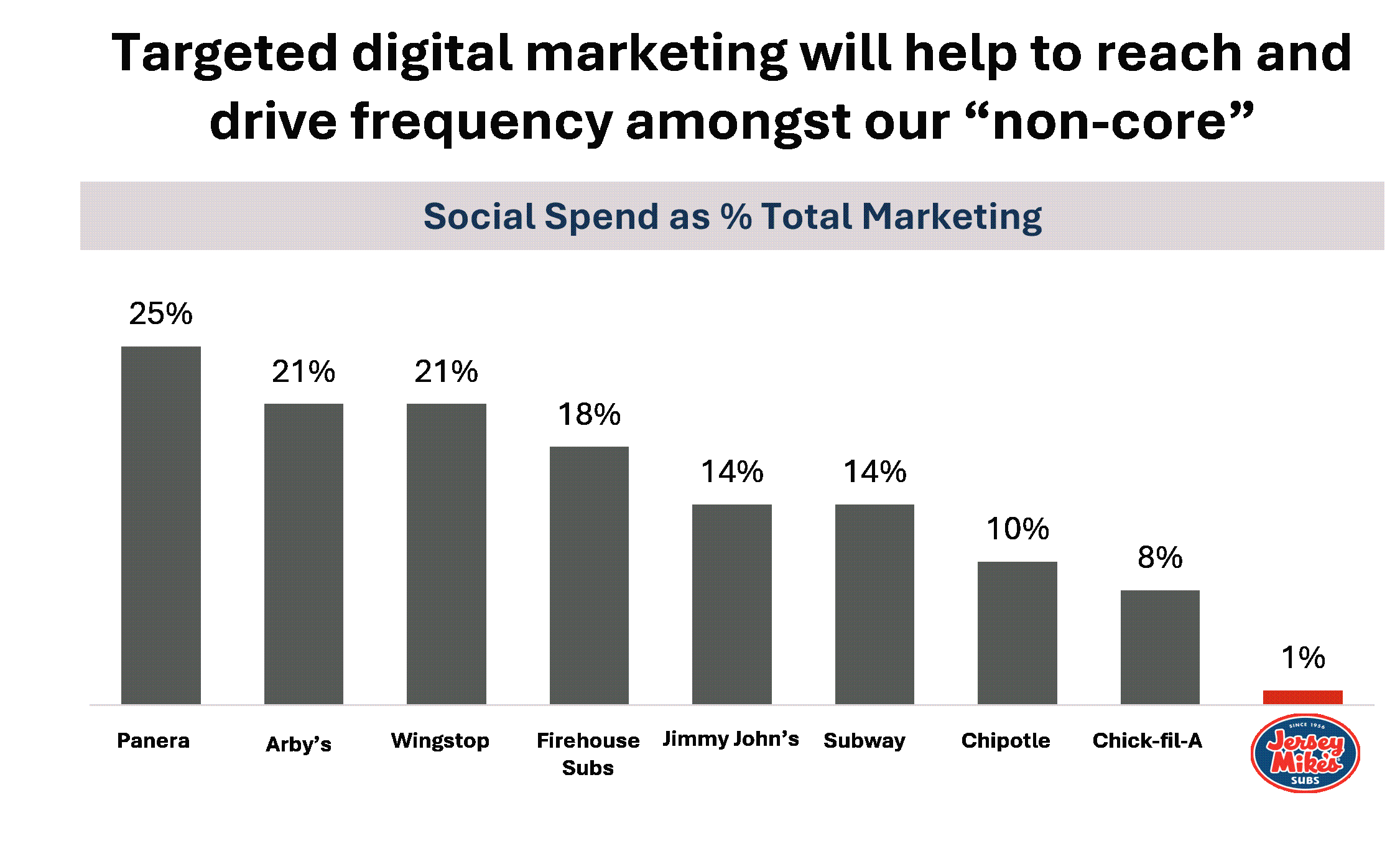
Loyalty Program
Our MyMike’s rewards program is a key driver of customer retention and frequency, enabling our guests to earn and redeem “Shore Points” with each purchase while also providing our business with a valuable repository of first party data. Our loyalty program is integrated within the MyMike’s app, facilitating a convenient and value-added experience for our guests, in-store and online. Members can track purchases, awards points and view market promotions, providing the Company and franchise owners with a direct channel for data-driven engagement. As of the end of 2025, we had over 12.5 million active members, representing an increase of approximately 62% since year-end 2021.
134
Our Technology
We have built a proprietary technology platform that is designed to power a seamless, multi-channel guest experience while delivering real-time data to support decision-making and execution. Our ecosystem provides franchise owners with the infrastructure needed to maximize profitability while maintaining a best-in-class guest experience. We plan to continue to evolve our technology to drive efficiencies, support our franchise owners and create an unrivaled guest experience.
Our Franchise Owner Support Ecosystem
We have built a scaled, disciplined operating model refined over decades of institutional knowledge that supports consistent product execution and in-store experience. We provide our franchise owners with significant training, technology and supply chain capabilities to deliver best‑in‑class unit economics without compromising the quality, authenticity, or service standards that define the brand.
Self-Reinforcing Value Creation Model
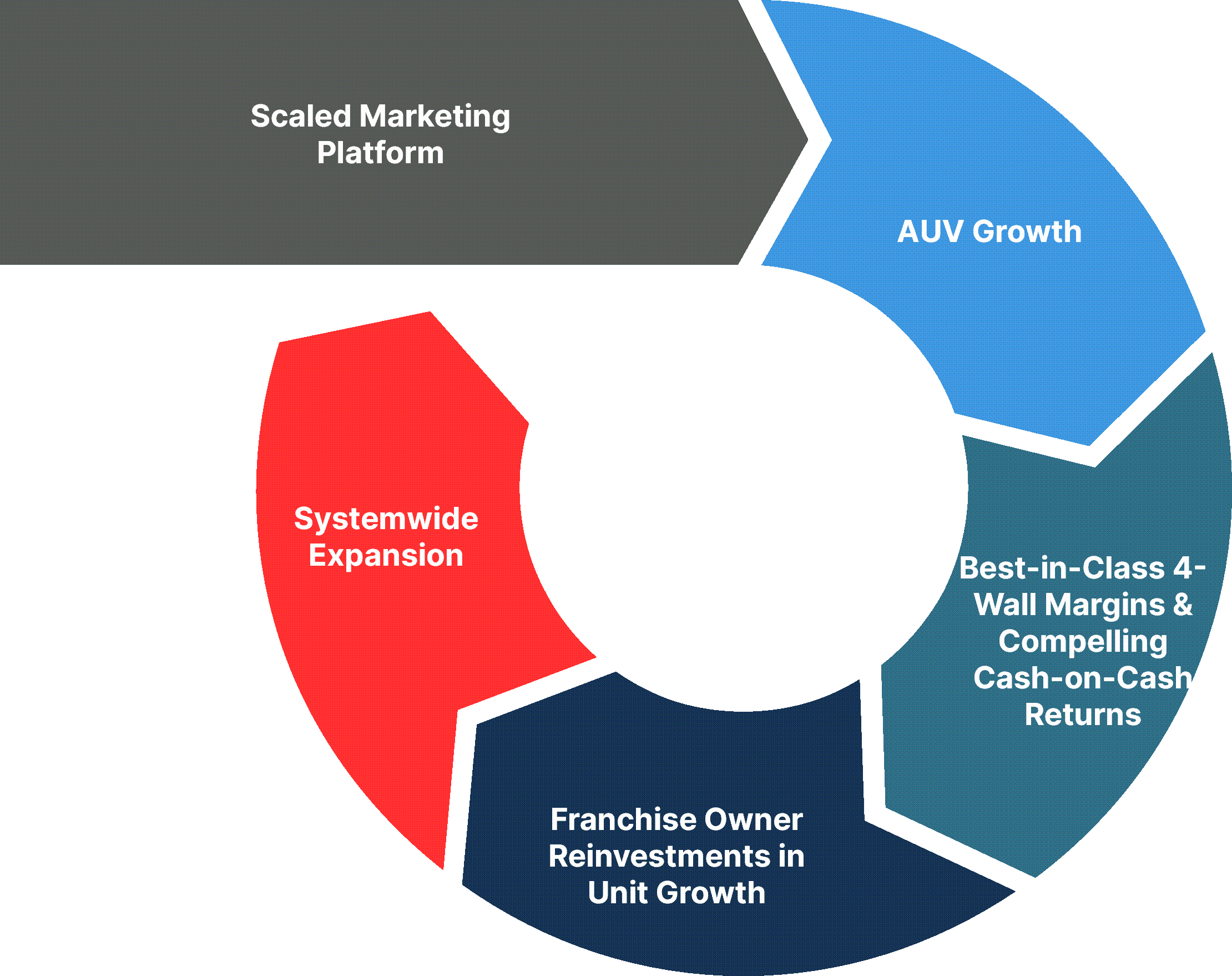
135
Economic Return Model
Our franchise owners benefit from a compelling and well-defined economic model, resulting in a $1.4 million AUV, a 16% Store-level Margin (after royalties and advertising fees), and a low average investment cost of approximately $515,000. Our ability to build “in-line” and “end-cap” locations in both new and existing retail development is a key factor in our ability to continue delivering a low average investment cost relative to our peers in the industry, many of whom rely on higher build cost, drive-through models.
We believe our Average Store Sales-to-Investment Ratio 2.6x and Cash-on-Cash Returns of approximately 42% in Fiscal 2025 compare favorably to other investment opportunities our franchise owners may evaluate. This economic model produces an estimated payback period of approximately 2.4 years that supports reinvestment in new store development and systemwide growth, creating a sustainable value creation flywheel.
Franchise Owner Training Program
We believe well-trained franchise owners and managers run better stores which protects the Jersey Mike’s brand. Our robust program focuses on every aspect of operation, so franchise owners can uphold our “Sub Above” standards.
To ensure consistent execution across our system, we provide a robust initial training program in which key personnel complete 360 hours of comprehensive instruction over an eight-to-ten-week period, a commitment that is significantly more intensive than others in the industry. The heart of the curriculum is “counter training,” which includes over 300 hours of hands‑on immersion in certified training stores where franchise owners and managers master the “Mike’s Way” service model and authentic sub‑slicing techniques with real guests, real pace and real standards. This on‑the‑line experience is combined with over 45 hours of classroom training at our National Training Center in Monmouth County, New Jersey, focused on operational fundamentals such as labor management, food safety, local marketing execution, and team leadership, as well as advocating the Jersey Mike’s culture.
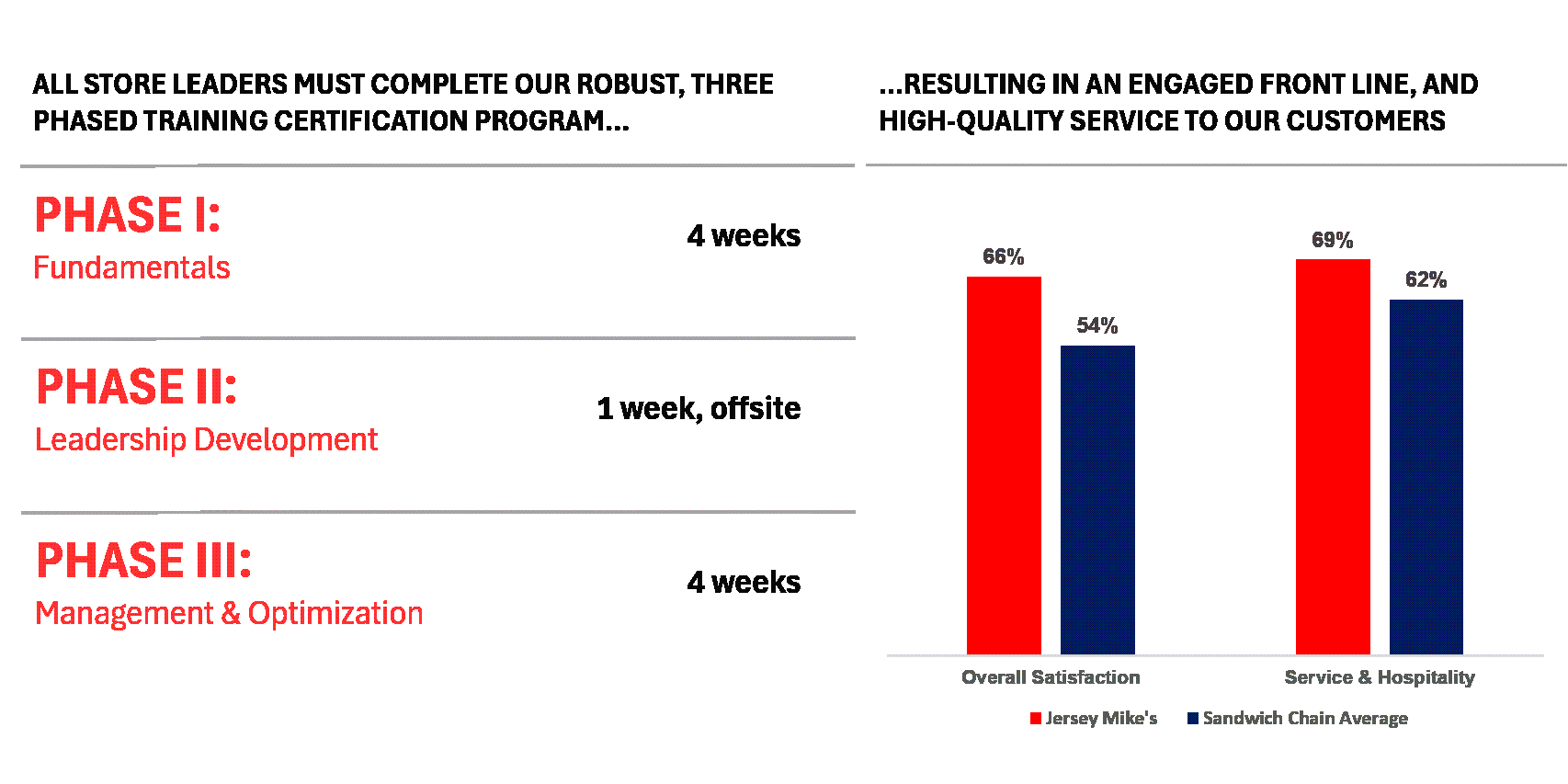
Operational Excellence
Operational training for our franchise owners continues well beyond opening day. Our “Living It” philosophy includes dedicated franchise business partners and training modules focused on our culture of giving and community integration, ensuring the brand’s identity is consistent across every market. We maintain high standards through “Ongoing Excellence” initiatives like “Back to Basics” re‑certification sessions that bring experienced managers back to core fundamentals and prevent brand drift. Our “Train the Trainer” program certifies local leaders to deliver high‑quality instruction within their own organizations, share best practices, and give franchise owners the tools to scale knowledge quickly while protecting what makes us Jersey Mike’s.
136
The impact is clear in both performance and guest response. Our training‑first approach correlates directly with industry‑leading financial and consumer metrics: well‑trained owners and managers typically operate stores with higher productivity and lower employee turnover. Our commitment to development also sustains exceptionally high consumer satisfaction levels, with the brand consistently leading the QSR sandwich segment in food quality and staff friendliness. This level of preparation sets a high‑performance bar that attracts deeply committed operators, creates a meaningful barrier to entry and preserves the long‑term value of the Jersey Mike’s brand—so every shift delivers a true “Sub Above” experience.
Highly Efficient Supply Chain
We leverage the scale of our franchise network to achieve highly attractive pricing and service levels from our supplier partners, which underpins our franchise owners’ leading unit economics and profitability. Our efficient supply chain enables our franchise owners to achieve attractive food and paper costs, a key driver to their strong Cash-on-Cash Returns.
To maintain our uncompromising quality-control standards, we utilize a centralized distribution model where all core ingredients—including our proprietary bread dough and private-labeled meats and cheeses—are shipped from approved providers. The Company reviews and evaluates suppliers’ quality assurance programs through third-party audits and product evaluations to ensure compliance with its standards. We also require all suppliers to submit a copy of their most recently available food safety audit, which includes the supplier’s overall score as well as any deficiencies and corresponding corrective actions. We believe we have strong relationships with our suppliers and distributors. While our supplier relationships were more concentrated historically, to mitigate supply chain disruptions that may arise due to our accelerated growth, we have established and continue to establish relationships with additional regional and/or secondary suppliers for a number of our products. The impact of supply chain disruptions we have experienced have been minor and alleviated by the introduction of such additional suppliers. We believe that there are a variety of alternative supply sources in the event of disruptions. Jersey Mike’s strives to continuously make improvements to the supply chain and distribution network to maximize quality while keeping costs efficient.
Research & Development
Our R&D efforts are centralized and corporate‑led at our National Training Center in Manasquan, New Jersey. Our product development and operational teams are highly coordinated, enabling us to be focused on what matters in our stores every day: a purposeful restaurant that is easy to run, operationally streamlined and staffed by teams sized to deliver speed and hospitality. New product ideas are refined and tested in company-owned training stores and proven in localized test markets. We start with the core flavor profile our guests know and love, then explore seasonal enhancements that fit naturally into the way we slice, grill and serve.
Competition
Jersey Mike’s stores operate in highly competitive markets which are affected by many factors, including changes in geographic competition, changes in the public’s eating habits and preferences, local and national economic conditions affecting consumer spending habits, population trends and local traffic patterns. Key elements of competition include price, quality and value of food products offered, quality and speed of service, advertising effectiveness, brand name awareness, media spending levels, store location and convenience, and attractiveness of facilities. We compete on the basis of high-quality ingredients, familiar service and an exceptional customer experience.
Each store competes directly and indirectly with a large number of national and regional store chains, some of which have significantly greater financial resources, as well as with locally-owned or independent stores in the quick-service and the fast-casual segments, and with other consumer options including grocery and specialty stores, catering, and delivery services. A significant change in market conditions, pricing, or other marketing strategies by one or more of these competitors could have an adverse impact on revenue, earnings, cash flows, and growth. Further, the restaurant industry has few barriers to entry and new competitors may emerge at any time.
Seasonality
137
Our business is subject to seasonal fluctuations in that our store sales are typically nominally higher during the summer months affecting the second and third quarters, and nominally lower in the winter months, affecting the first and fourth quarters.
Intellectual Property
We rely on a combination of trademark, trade secret and copyright laws, as well as contractual rights, such as confidentiality, invention assignment, license and other intellectual property agreements, to protect our intellectual property and other proprietary rights. We maintain an intellectual property portfolio developed, licensed or acquired over a number of years, including trademarks, copyrights and domain names. We also continue to develop, license or acquire new intellectual property rights. Our name and logos are material to our business and include the following: JERSEY MIKE’S SUBS, JERSEY MIKE’S, JERSEY MIKE’S SUBS SINCE 1956, A SUB ABOVE, JERSEY MIKE’S DAY OF GIVING, SHORE POINTS and MIKE’S WAY, which are registered trademarks and service marks in the United States, Canada and elsewhere.
At our headquarters, the financial accounting systems, human resources and payroll systems, and communications and network infrastructure support corporate functions. Our store software allows for daily polling of sales, inventory, and other data from Jersey Mike’s stores. Nearly all of Jersey Mike’s stores use our POS platform. The POS platform is designed to enable Jersey Mike’s stores to quickly adapt to menu changes, promotions and other technologies used by us, such as the Jersey Mike’s mobile app.
In addition, to protect our intellectual property and other proprietary rights, we may enter into confidentiality and/or proprietary rights agreements with our employees, consultants, contractors, franchise owners and business partners. While we believe that we have taken steps to obtain, maintain, protect, enforce and defend our intellectual property rights, we cannot guarantee that our efforts will be successful, including, for example, in the event such intellectual property or other proprietary rights are infringed by a third party. See “Risk Factors—Risks Related to Our Business, Industry and Operations—We may not be able to adequately obtain, maintain, protect or enforce our rights in our intellectual property or other proprietary rights” and “Risk Factors—Risk Related to Our Business, Industry and Operations—Our reliance on third parties, including our franchise owners and other licensees, may negatively impact our ability to protect our intellectual property or other property rights.”
Government Regulation
We and our franchise owners are subject to various U.S. federal, state, local and foreign laws affecting our business. Each store is subject to licensing, regulation and inspections by a number of governmental authorities such as the FDA, state and local departments of public health and fire departments. Difficulty in obtaining or failing to obtain the required licenses or approvals, and issues identified in inspections by governmental authorities or third parties, could delay or prevent the development of a new store in a particular area or require a particular store to temporarily or permanently shut down as a result of a public health or safety issue. U.S. federal, state and local authorities enforce laws and regulations regarding truth in advertising. Third parties including competitors and consumers also have the ability to enforce laws and regulations related to truth in advertising. The advertising that we and our franchise owners engage in could subject us to liability including for allegations that we failed to comply with standards for truth in advertising.
The laws and regulations to which we and our franchise owners are subject address health and safety, food safety and recalls, nutritional menu labeling and caloric information, disclosures regarding allergens (e.g., sesame), food packaging and labeling, packaged foods offered for sale, the use of plastic straws and other materials, ingredients, and components, marketing, advertising, health care, labor and employment, and environmental laws in the state or municipality in which the store is located. For example, the FDA’s Food Code is a model code for state and local jurisdictions, which they may enact and apply to stores; the Food Code, among other things, addresses major food allergens and contains requirements regarding labeling, as well as cleaning of equipment and utensils and time and temperature controls. Other federal laws also regulate allergen labeling and our ability to make certain claims about the food we and our franchise owners offer for sale and the ingredients used in them.
A number of states, counties and cities have enacted menu labeling laws requiring multi-unit store operators to disclose to consumers certain nutritional information or have enacted legislation restricting the use of certain types of ingredients in stores and packaged food sold in such stores. In California, Proposition 65, otherwise known as the Safe
138
Drinking Water and Toxic Enforcement Act of 1986, may, under certain circumstances, require us and our franchise owners to warn customers if products we offer for sale or otherwise provided to customers as a part of our operations (such as paper receipts) contain certain chemicals known by the State of California to cause cancer or reproductive harm. In addition, we and/or our franchise owners may become subject to legislation and regulations seeking to tax and/or regulate high fat, high calorie, high sodium, and other foods, or requiring warnings when certain ingredients or chemicals appear in certain foods. Many of these requirements are inconsistent or interpreted differently from one jurisdiction to another. These requirements may be different or inconsistent with requirements that we are subject to under the Patient Protection and Affordable Care Act of 2010, as amended by the Health Care and Education Reconciliation Act (collectively, the “ACA”), which establishes a uniform, federal requirement for certain stores to post nutritional information on their menus. Specifically, the ACA requires chain stores with 20 or more locations in the United States operating under the same name and offering substantially the same menus to publish the total number of calories of standard menu items on menus and menu boards, along with a statement that puts this calorie information in the context of a total daily calorie intake. The ACA also requires covered stores to provide to consumers, upon request, a written summary of detailed nutritional information for each standard menu item, and to provide a statement on menus and menu boards about the availability of this information upon request. Such labeling requirements may affect consumer choices, and we may need to adapt to consumer preferences as a result.
Our and our franchise owners’ store operations are also subject to federal and state labor and employment laws, including the U.S. Fair Labor Standards Act, the U.S. Immigration Reform and Control Act of 1986, and the Occupational Safety and Health Act, governing such matters as minimum wages, overtime, fringe benefits, workplace safety and other worker conditions and age and citizenship requirements. Significant numbers of our franchise owners’ food service and preparation personnel are paid at rates related to the applicable minimum wage and further increases in the minimum wage or other changes in these laws could increase our franchise owners’ labor costs. Our franchise owners’ ability to respond to minimum wage increases by increasing menu prices will depend on the responses of our competitors and customers. Our distributors and suppliers also may be affected by higher minimum wage and benefit standards, which could result in higher costs for goods and services supplied to us and our franchise owners. We and our franchise owners may also be subject to lawsuits from employees, the EEOC or others alleging violations of federal and state laws regarding workplace and employment matters, as well as discrimination and similar matters.
We and our franchise owners are subject to the Americans with Disabilities Act (the “ADA”) which, among other things, requires us and our franchise owners to meet federally mandated requirements for persons with disabilities. The ADA, as well as similar state laws, prohibits discrimination in employment and public accommodations on the basis of disability. Under the ADA, we and our franchise owners could be required to expend funds to modify Jersey Mike’s stores to provide service to, or make reasonable accommodations for the employment of, disabled persons and to surveille and, if necessary, modify our website to ensure accessibility to those with disabilities.
Data Protection and Privacy
We process personal, confidential, sensitive and other regulated information in connection with our business and the provision of our products and services to consumers. As a result, we are subject to complex and evolving U.S. and international laws, regulations, and other legal obligations relating to data protection, privacy, and cybersecurity. We also rely on a variety of marketing and advertising techniques in connection with our business operations, and are or may be subject to U.S. state and federal laws regulating email and telemarketing communications (including text messages). Such laws and regulations we are or may be subject to include, for example, the TCPA, the CAN-SPAM Act, Canada’s PIPEDA, Canada’s Anti-Spam Law, the FTC Act, and the CCPA, among others.
While we strive to comply with current and emerging privacy, data protection and cybersecurity-related laws, regulations and other legal obligations, there is no assurance that our compliance efforts will be adequate, and regulatory authorities may interpret or apply these laws and regulations in ways that were not previously known to us or that differ from our own interpretation and application. Additionally, some laws and regulations may assume the existence of certain technical capabilities that we do not currently possess. Any actual or perceived failure by us or our Third-Party Providers to address or comply with these laws, regulations or other legal obligations could expose us to regulatory scrutiny, investigations, proceedings or actions against us by governmental entities or others, legal liability, fines and penalties, judgments, result in loss of consumer confidence, erosion of consumer trust, reputational harm or negative publicity, require us to change our business practices or modify our solutions or features, increase
139
the costs and complexity of compliance, and other business, financial and operational impacts. See the section titled “Risk Factors—Risks Related to Our Business, Industry and Operations—Our or our Third-Party Providers’ actual or perceived failure to comply with complex and evolving laws and regulations and other obligations relating to privacy, data protection, cybersecurity, email and telephone marketing and/or the Processing of personal information could adversely affect our business, financial condition, results of operations, cash flows, and prospects.” for additional information.
Environmental, Health and Safety Regulation
Our and our franchise owners’ operations, products and services are subject to various federal, state and local environmental, health and safety laws and regulations, including obligations to obtain and comply with permits required for the operation of our business and to meet applicable safety or stewardship standards. Certain environmental laws and regulations also impose obligations for the cleanup of properties affected by hazardous substance spills or releases on a joint and several basis and without regard to fault and liability. We may become liable, either contractually or by operation of law, for remediation costs at any properties currently or formerly owned, leased or operated by us, or at third-party sites, such as off-site disposal facilities. We may also be subject to third-party claims arising from the presence of hazardous substances, including claims for hazardous substances that have migrated offsite (e.g., property damage) or exposure to hazardous substances (e.g., personal injury). Further, the development and construction of additional stores will be subject to compliance with applicable zoning, land use, and environmental, health and safety regulations. Environmental, health and safety laws and regulations may have a material impact on our operations, with respect to zoning, land use and environmental, health and safety factors that could delay construction and increase development costs for new stores.
Employee Health and Safety Regulations
We are subject to requirements relating to safe working conditions and restaurant operating practices in the United States including federal and state Occupational Safety and Health standards and regulations. Employee health and safety in the workplace is one of our core values. We aim to actively identify hazards in the workplace and implement incident tracking in an effort to take preventative and remedial actions to maintain and improve workplace safety, and we aim to encourage the same of our franchise owners.
Franchise Regulations
We are subject to the rules and regulations of the FTC and various state laws regulating the offer and sale of franchises. The FTC and various state franchise laws require that we furnish a franchise disclosure document containing certain information to prospective franchisees in advance of any franchise sale or the receipt of any consideration for the franchise, and a number of states require registration of the franchise disclosure document at least annually with state authorities. We are operating under exemptions from registration (though not disclosure) in several states based on our qualifications for exemption as set forth in each such state’s laws. State laws that regulate the franchisor-franchisee relationship, including in the areas of termination and non-renewal, presently exist in a substantial number of states. We believe that our franchise disclosure document and franchising procedures comply in all material respects with both the FTC guidelines and all applicable state laws regulating franchising.
Our international franchised stores are subject to provincial and local laws and regulations that are often similar to those affecting our U.S. restaurants. Similar to in the U.S., our franchise agreements require that our international franchise owners operate in compliance with all applicable laws.
Employees and Human Capital
Employee levels are managed to align with the pace of our business and management believes it has sufficient human capital to operate our business successfully. As of December 28, 2025, we had 293 corporate personnel and 529 company-owned store employees. Management believes that our employee relations are favorable. As a franchisor, we do not maintain a relationship with our franchise owners’ employees.
140
Properties
Our corporate headquarters is located in Tinton Falls, New Jersey, where we currently occupy approximately 72,326 square feet of space.
We lease the property for our corporate offices and for all of our company-owned stores. Lease terms for company-owned stores are generally between 5 to 10 years of original term with an additional 5 to 10 years of tenant option period, often contain rent escalation provisions, and generally require us to pay a proportionate share of real estate taxes, insurance and common area and other operating costs in addition to base or fixed rent.
Our franchised stores are situated on real property that is primarily leased by our franchise owners directly from third-party landlords and in some instances, owned by our franchise owners.
We consistently review our footprint and believe that our facilities are sufficient for our current needs and that, should it be needed, additional facilities will be available to accommodate the expansion of our business.
Legal Proceedings
We are subject to various litigations, claims and other proceedings that arise from time to time in the ordinary course of business. We believe these actions are routine and incidental to the business. While the outcome of these actions cannot be predicted with certainty, we do not believe that any will have a material adverse impact on our business.
141
Management
Directors and Executive Officers
Set forth below is a list of the names, ages (as of July 29, 2026) and positions of all directors, director nominees and executive officers of Jersey Mike’s Subs Inc. at the time of this offering.
Name |
|
Age |
|
Position |
Charles R. Morrison |
|
58 |
|
Chief Executive Officer and Director |
Michele Allen |
|
52 |
|
Chief Financial Officer |
Stacy Peterson |
|
51 |
|
President and Chief Operating Officer |
Scott G. McLester |
|
63 |
|
General Counsel |
Betsy J. Mercado |
|
49 |
|
Chief People Officer |
Andrew G. Skehan |
|
65 |
|
President, International and Global Development Officer |
Nigel Travis |
|
76 |
|
Chairman |
Matthew Bromberg |
|
59 |
|
Director Nominee |
Peter Cancro |
|
69 |
|
Founder and Director |
Fran Horowitz |
|
62 |
|
Director |
David N. Kestnbaum |
|
44 |
|
Director |
Cheryl S. Miller |
|
54 |
|
Director |
Devon L. Rinker |
|
37 |
|
Director |
Michael J. Staub |
|
42 |
|
Director |
Charles R. Morrison has served as our Chief Executive Officer and a member of our board since April 2025. Prior to joining us, Mr. Morrison served as a board member and then as Chief Executive Officer of Salad and Go, from April 2022 to December 2024. Mr. Morrison was Chairman and Chief Executive Officer of Wingstop Restaurants, Inc. (NASDAQ: WING) (“Wingstop”), which operates and franchises more than 2,000 fast-casual restaurant locations worldwide, from June 2012 until March 2022. Prior to joining Wingstop, he was Chief Executive Officer of Rave Restaurant Group, Inc. (NASDAQ: RAVE), a publicly traded pizza chain, from January 2007 until June 2012. Mr. Morrison has also held multiple senior leadership positions during his more than 20 years of restaurant experience, including serving as President of Steak & Ale and The Tavern Restaurants for Metromedia Restaurant Group, as well as various management positions at Kinko’s, Boston Market, and Pizza Hut. Mr. Morrison was recognized in 2016 by the International Foodservice Manufacturers Association with the Silver Plate award, which pays tribute to the most outstanding and innovative talents in foodservice operations and received in 2015 the Nation’s Restaurant News’ Golden Chain Award, an honor bestowed on those representing the very best that the restaurant industry has to offer. Mr. Morrison received a Bachelor of Science in Business Administration from Kansas State University.
Michele Allen has served as our Chief Financial Officer since December 2025. Prior to joining us, Ms. Allen served as Chief Financial Officer and Head of Strategy at Wyndham Hotels & Resorts, Inc. (NYSE: WH) from November 2019 to November 2025. Prior to that, Ms. Allen served in various senior finance roles at Wyndham from May 2018 to November 2019, including as Executive Vice President of Finance and Treasurer for Wyndham Worldwide. From April 2015 to May 2018, Ms. Allen served as Executive Vice President for Wyndham Worldwide. From August 2006 until March 2015, Ms. Allen held leadership positions of increasing responsibility at Wyndham Hotel Group, including Senior Vice President of Finance and Controller. From 1999 until August 2006, Ms. Allen served in various roles at Wyndham Worldwide’s predecessor, and she began her career as an independent auditor at Deloitte & Touche LLP. Ms. Allen received a Bachelor of Science in Accounting and a Bachelor of Arts in Liberal Arts from Cedar Crest College.
Stacy Peterson has served as our President and Chief Operating Officer since September 2025. Prior to joining us, Ms. Peterson served as Chief Executive Officer of Jeni’s Splendid Ice Creams, LLC from December 2022 until August 2025. From July 2022 until December 2022, Ms. Peterson served as EVP, Chief Revenue and Technology Officer of Wingstop. From May 2020 until July 2022, she served as EVP, Chief Digital and Technology Officer of Wingstop. From April 2019 until May 2020, she served as Chief Information Officer of Service King Collision Repair Centers. From September 2013 to March 2019, Ms. Peterson held multiple senior roles across marketing, innovation,
142
technology and operations at Wingstop, including Chief Experience Officer and Chief Digital Information Officer. Prior to joining Wingstop, Ms. Peterson held technology leadership roles at CBRE Group Inc. (NYSE: CBRE) from October 2010 until August 2013 and at Kinko’s/FedEx Office from June 2002 until September 2010. Ms. Peterson also serves on the board of directors of Tropical Smoothie Café. Ms. Peterson received a Bachelor of Science in Business Management from Florida Atlantic University.
Scott G. McLester has served as our General Counsel since November 2025. Prior to joining us, Mr. McLester served as General Counsel and Senior Legal Advisor at Orangetheory Fitness from September 2019 until February 2025. From July 2018 until September 2019, Mr. McLester served as a Partner at K&L Gates LLP. From 2006 until June 2018, Mr. McLester served as Executive Vice President and General Counsel for Wyndham Worldwide, Inc. (NYSE: WYN). Mr. McLester was also a Vice President in the Legal Department at Merrill Lynch and a Partner with the law firm of Carpenter, Bennett & Morrissey (now McElroy, Deutsch, Mulvaney and Carpenter). Mr. McLester earned a Juris Doctor from Seton Hall University School of Law and a Bachelor of Arts from the College of William and Mary.
Betsy J. Mercado has served as our Chief People Officer since September 2025. As Chief People Officer, she leads Jersey Mike’s comprehensive people strategies that support growth and strengthen its people-first culture. Ms. Mercado brings more than 20 years of human resources leadership experience across the restaurant and franchise industries. From March 2014 until September 2025, Ms. Mercado held various roles at Flynn Group, including most recently as Chief People Officer from January 2024 until September 2025. Prior to that, Ms. Mercado served as Vice President of Human Resources for The Palm Restaurants, where she led employee relations, talent management, and compensation and benefits. Ms. Mercado earned a Bachelor of Arts in Psychology from Towson University and a Master of Science in Human Resource Management from Johns Hopkins University.
Andrew G. Skehan has served as our President, International and Global Development Officer since February 2026 and served as President, International from November 2025 to February 2026. Prior to joining Jersey Mike’s, Mr. Skehan served as President and CEO of Home Franchise Concepts from September 2022 until July 2025. Mr. Skehan served as President, U.S. & Canada at Krispy Kreme, Inc. (NASDAQ: DNUT) from November 2017 until September 2022. Prior to joining Krispy Kreme, Mr. Skehan held various leadership positions at Popeyes Louisiana Kitchen, Inc. from August 2011 until October 2017. He has also served in senior leadership positions in marketing and operations with Wendy’s, Churchill Downs Incorporated, and PepsiCo Restaurants. Mr. Skehan served as an officer in the U.S. Navy, specializing in Surface Warfare, serving both aboard ship and on the Staff of the Commander in Chief of the Pacific Fleet. He holds a Master of Business Administration from the University of Rhode Island and a Bachelor of Science from the U.S. Naval Academy.
Nigel Travis has served as a member of our board since January 2025 and as Chairman of our board since February 2026. Mr. Travis currently serves as Senior Advisor at Blackstone since July 2022. Mr. Travis served as Chief Executive Officer of Dunkin’ Brands Group, Inc. from January 2009 until July 2018 and acted as Chairman from May 2013 until December 2020. Before Dunkin’, he served as Chief Executive Officer of Papa John’s International, Inc. from January 2005 until December 2008. Mr. Travis currently serves as chairman of Abercrombie & Fitch Co. (NYSE: ANF) (“Abercrombie”) and several private companies. Mr. Travis previously served on the board of Advance Auto Parts, Inc. (NYSE: AAP) from August 2018 until May 2023 and several other public companies. Mr. Travis received a Bachelor’s degree in Business Studies from Middlesex University.
Matthew Bromberg is expected to join our board prior to the completion of this offering. He currently serves as President and Chief Executive Officer of Unity Software, Inc. (NYSE: U) (“Unity”), roles he has held since May 2024, and serves on Unity’s board of directors. Mr. Bromberg previously served as a Senior Advisor to Blackstone from March 2022 until May 2024. He served on the board of directors of Bumble Inc., a public technology company, from July 2020 to June 2025. From 2018 to 2021, he served on the board of directors of Fitbit, Inc. From August 2016 to November 2021, Mr. Bromberg served as Chief Operating Officer at Zynga Inc., a mobile social game developer. Prior to Zynga, he held various leadership roles at Electronic Arts Inc., a video game company, including Senior Vice President of Strategy and Operations of the company’s mobile division and Group General Manager for all BioWare studios worldwide. Mr. Bromberg received a Bachelor of Arts in English from Cornell University and a Juris Doctor from Harvard Law School.
Peter Cancro is our founder and has served as a member of our board since 1975, including as chairman from January 2025 until February 2026. Mr. Cancro served as our Chief Executive Officer and Secretary from November
143
2007 until April 2025. From 1975 until 2007, Mr. Cancro served in various roles as our founder, including as our President. From 1971 until 1975, Mr. Cancro worked at Mike’s Subs, the original Jersey Mike’s location.
Fran Horowitz has served as a member of our board since October 2025. She currently serves as Chief Executive Officer of Abercrombie, a role she has held since 2017, and serves on Abercrombie’s board of directors and executive committee. She previously held various leadership roles at Abercrombie, including as Brand President of Hollister and Chief Merchandising Officer for all of Abercrombie’s brands. Ms. Horowitz previously served on the board of Conagra Brands, Inc. (NYSE: CAG) from 2021 until 2025. Ms. Horowitz received a Bachelor of Arts in International Studies from Lafayette College and a Master of Business Administration from Fordham University.
David N. Kestnbaum has served as a member of our board since January 2026. Mr. Kestnbaum currently serves as a Senior Managing Director at Blackstone in the Private Equity Group. Before joining Blackstone in 2013, Mr. Kestnbaum was with Vestar Capital Partners and JP Morgan’s Financial Sponsor Group. He currently serves as a member of the board of directors of several privately held companies including Ancestry, Candle Media, Encore, Servpro, SESAC, and Tropical Smoothie Café. Mr. Kestnbaum received a Bachelor of Arts in Political Science from The University of North Carolina at Chapel Hill.
Cheryl S. Miller has served as a member of our board since October 2025. Ms. Miller served as Chief Financial Officer of West Marine from January 2022 until October 2022. Before this, she served in various roles at JM Family Enterprises from January 2021 until December 2021, including executive strategic advisor and Chief Financial Officer. From May 2009 until July 2020, Ms. Miller held several leadership roles at AutoNation, Inc. (NYSE: AN), including Chief Executive Officer, President and Board Member. Ms. Miller serves on the board of various public companies, including Celsius Holdings, Inc. (NASDAQ: CELH), Tyson Foods (NYSE: TSN) and Old Dominion Freight Line (NASDAQ: ODFL). Ms. Miller is also NACD Directorship Certified® with the National Association of Corporate Directors. Ms. Miller received a Bachelor of Business Administration in Finance from James Madison University.
Devon L. Rinker has served as a member of our board since January 2025. Mr. Rinker is a Managing Director at Blackstone in the Private Equity Group and joined the firm in 2017. He currently serves on the board of directors of several privately held companies including CoreTrust, International Data Group, and Tropical Smoothie Café. Mr. Rinker received a Bachelor of Science in Commerce from the University of Virginia and a Master of Business Administration from Harvard Business School.
Michael J. Staub has served as a member of our board since January 2025. Mr. Staub is a Senior Managing Director at Blackstone in the Private Equity Group and joined the firm in 2014. He currently serves on the board of directors of several privately held companies including AI Fire, Champions Group, Integra Testing Services, Servpro, Shermco, and Tropical Smoothie Café. Mr. Staub received a Bachelor of Science in Business Administration from Ithaca College and a Master of Business Administration from the Wharton School of the University of Pennsylvania.
Composition of the Board of Directors After this Offering
Our business and affairs are managed under the direction of our board of directors. In connection with this offering, we will amend and restate our certificate of incorporation to provide for a classified board of directors, with three directors in Class I (expected to be Mr. Bromberg, Mr. Kestnbaum, and Ms. Miller), three directors in Class II (expected to be Mr. Cancro, Mr. Rinker, and Mr. Travis) and three directors in Class III (expected to be Ms. Horowitz, Mr. Morrison, and Mr. Staub). See “Description of Capital Stock—Anti-Takeover Effects of Our Amended and Restated Certificate of Incorporation and Amended and Restated Bylaws and Certain Provisions of Delaware Law—Classified Board of Directors.” In addition, we intend to enter into a stockholders agreement with our Sponsor in connection with this offering. Among other things, this agreement will grant our Sponsor the right to designate an agreed number of individuals to our board of directors. See “Certain Relationships and Related Person Transactions—Stockholders Agreement.”
Director Independence
Our board of directors has affirmatively determined that each of Mr. Travis, Mr. Bromberg, Ms. Horowitz, Mr. Kestnbaum, Ms. Miller, Mr. Rinker and Mr. Staub qualify as independent directors under the NYSE listing standards.
144
Background and Experience of Directors
When considering whether directors and our director nominee have the experience, qualifications, attributes or skills, taken as a whole, to enable our board of directors to satisfy its oversight responsibilities effectively in light of our business and structure, the board of directors focuses primarily on each person’s background and experience as reflected in the information discussed in each of the directors’ and our director nominee’s individual biographies set forth above. We believe that our directors and our director nominee provide an appropriate mix of experience and skills relevant to the size and nature of our business. In particular, the members of our board of directors considered the following important characteristics, among others:
Controlled Company Exception
After the completion of this offering, our Sponsor will hold a majority of the combined voting power of our shares eligible to vote for the election of our directors. As a result, we will be a “controlled company” within the meaning of the NYSE corporate governance standards, and accordingly, we may elect not to comply with certain corporate governance standards, including the requirements (1) that a majority of our board of directors consist of independent directors, (2) that our board of directors have a compensation committee that is comprised entirely of independent directors with a written charter addressing the committee’s purpose and responsibilities, and (3) that our board of directors have a nominating and governance committee that is comprised entirely of independent directors with a written charter addressing the committee’s purpose and responsibilities. Accordingly, you will not have the same protections afforded to stockholders of companies that are subject to all of these corporate governance requirements. In the event that we cease to be a “controlled company” and our Class A common stock continues to be listed on the NYSE, we will be required to comply with these provisions within the applicable transition periods.
Board Committees
We anticipate that, prior to the completion of this offering, our board of directors will establish the following committees: an audit committee; a compensation committee; and a nominating and corporate governance committee. The composition and responsibilities of each committee are described below. Our board of directors may also establish
145
from time to time any other committees that it deems necessary or desirable. Members serve on these committees until their resignation or until otherwise determined by our board of directors.
Audit Committee
Upon completion of this offering, we expect our audit committee will consist of Mr. Bromberg, Ms. Horowitz and Ms. Miller, with Ms. Miller serving as chair. Our audit committee will be responsible for, among other things:
The SEC rules and the NYSE rules require us to have at least one independent audit committee member upon the listing of our Class A common stock on the NYSE, a majority of independent directors within 90 days of the effective date of the registration statement, and all independent audit committee members within one year of the effective date of the registration statement. Our board of directors has affirmatively determined that Mr. Bromberg, Ms. Horowitz and Ms. Miller each qualify as independent directors under NYSE listing standards and the independence standards of Rule 10A-3 of the Exchange Act. In addition, our board of directors has determined that Ms. Miller is an audit committee financial expert within the meaning of Item 407(d) of Regulation S-K under the Securities Act.
Compensation Committee
Upon completion of this offering, we expect our compensation committee will consist of Ms. Horowitz, Mr. Rinker and Mr. Staub, with Mr. Staub serving as chair. Our compensation committee will be responsible for, among other things:
146
Nominating and Corporate Governance Committee
Upon completion of this offering, we expect our nominating and corporate governance committee will consist of Mr. Bromberg, Ms. Miller and Mr. Rinker, with Mr. Bromberg serving as chair. The nominating and corporate governance committee is responsible for, among other things:
Our board of directors will adopt a written charter for each of the audit committee, the compensation committee and the nominating and corporate governance committee, which will be available on our website at www.jerseymikes.com substantially concurrently with the consummation of this offering. The information contained on, or accessible from, our website is not part of this prospectus by reference or otherwise.
Compensation Committee Interlocks and Insider Participation
Jersey Mike’s Subs Inc. does not presently have, nor did it have during the last completed fiscal year, a compensation committee. Decisions regarding the compensation of our executive officers have historically been made by the compensation committee of the board of Jersey Mike’s Holdings. Peter Cancro, who is the founder and former chief executive officer of Jersey Mike’s and serves as a member of our board of directors, is a member of the compensation committee of the board of Jersey Mike’s Holdings. Mr. Morrison, who serves as our Chief Executive Officer and as a member of our board of directors, generally participates in discussions and deliberations with the compensation committee of the board regarding executive compensation, including during the last completed fiscal year. Other than Mr. Cancro and Mr. Morrison, no member of our board of directors was at any time during the last completed fiscal year, or at any other time, one of our officers or employees. None of our executive officers currently serves, or has served during the last completed fiscal year, as a member of the board of directors or compensation committee (or other committee performing equivalent functions) of any entity that has one or more of its executive officers serving on our board of directors or compensation committee. We are party to certain transactions with affiliates of our Principal Stockholders described in “Certain Relationships and Related Person Transactions.”
Code of Ethics
We will adopt codes of business conduct and ethics that apply to all of our officers, directors, and employees, including our principal executive officer, principal financial officer, principal accounting officer, and controller, or persons performing similar functions, which will be posted on our website. Our Code of Ethics for Senior Financial Officers is a “code of ethics,” as defined in Item 406(b) of Regulation S-K. We will make any legally required disclosures regarding amendments to, or waivers of, provisions of our code of ethics on our website. The information contained on, or accessible from, our website is not part of this prospectus by reference or otherwise.
147
Executive Compensation
Compensation Discussion and Analysis
This Compensation Discussion and Analysis provides an overview of our executive compensation philosophy, the overall objectives of our executive compensation program, and each material element of compensation for the fiscal year ended December 28, 2025 that we provided to the following executive officers (whom we refer to as our “Named Executive Officers”) who served in the following principal capacities during fiscal year 2025:
Name |
|
Title |
Charles R. Morrison |
|
Chief Executive Officer |
Michele Allen |
|
Chief Financial Officer |
Stacy Peterson |
|
President and Chief Operating Officer |
Scott G. McLester |
|
General Counsel |
Betsy J. Mercado |
|
Chief People Officer |
Peter Cancro (1) |
|
Former Chief Executive Officer |
Walter C. Tombs (2) |
|
Former Chief Financial Officer |
The Jersey Mike’s Holdings board established a compensation committee in April 2025. The compensation committee is currently responsible for establishing, implementing, and evaluating our employee compensation and benefit programs. Prior to the time the compensation committee was established, the Jersey Mike’s Holdings board had such responsibility. Our compensation plans and practices are designed to promote achievement of short- and long-term financial and operational objectives while mitigating the possibility of encouraging excessive risk-taking behavior and the potential impact thereof. The compensation committee evaluates the performance of our executive officers, establishes the annual salaries and annual cash incentive awards for our executive officers, and approves all equity awards. The compensation committee’s objective is to ensure that the total compensation paid to our Named Executive Officers, as well as our other members of our senior leadership team, is fair, reasonable, and competitive. Generally, the types of compensation and benefits provided to our Named Executive Officers are similar to those provided to other senior members of our management team.
Executive Compensation Objectives and Philosophy
The goal of our executive compensation program is to create long-term value for our investors while at the same time rewarding our executives for superior financial and operating performance and support retention in a competitive market environment. We believe the most effective way to achieve this objective is to design an executive compensation program rewarding the achievement of specific annual, long-term, and strategic goals and aligning executives’ interests with those of our investors by further rewarding performance above established goals. We use this philosophy as the foundation for evaluating and improving the effectiveness of our executive pay program. The following are the core elements of our executive compensation philosophy:
By incorporating these design elements, we believe our executive compensation program is responsive to our investors’ objectives and effective in attracting, motivating, and retaining the level of talent necessary to grow and manage our business successfully.
148
As our executive compensation program evolves as a public company, it will reflect the belief that the amount earned by our executives must significantly depend on achieving rigorous company and individual performance objectives designed to enhance shareholder value. We have made, and intend to continue to make, changes to our executive compensation programs with the goal of aligning our programs with our executive compensation philosophy as a public company. Accordingly, the compensation paid to our Named Executive Officers for fiscal year 2025, and the form and manner in which it was paid, is not necessarily indicative of how we will compensate our Named Executive Officers after this offering.
Process for Determining Fiscal Year 2025 Compensation
The compensation committee is responsible for overseeing key aspects of our executive compensation program, including executive salaries, goals, and payouts under the annual cash incentive plan, the size and structure of equity awards, and any executive perquisites or other benefits. The compensation committee is also responsible for determining the compensation of the Chief Executive Officer and the other executive officers.
In determining the compensation of each of our Named Executive Officers (other than the Chief Executive Officer), the compensation committee seeks the input of the Chief Executive Officer. The Chief Executive Officer provides recommendations at least annually to the compensation committee regarding the compensation of the other Named Executive Officers. The performance of our Named Executive Officers is reviewed at least annually by the compensation committee, with assessments provided by the Chief Executive Officer on all of our Named Executive Officers (other than the Chief Executive Officer), and the compensation committee determines each Named Executive Officer’s compensation at least annually.
We believe that compensation should be competitive with compensation for executive officers in similar positions and with similar responsibilities in our marketplace. In determining compensation levels for our Named Executive Officers, the compensation committee relies upon the judgment and experience of its members, including their knowledge of competitive compensation levels in our industry. The compensation committee considers each Named Executive Officer’s performance, scope of responsibilities, depth and breadth of overall leadership experience, and the importance of the officer’s position to achieving our strategies.
As noted above, prior to the time the compensation committee was established in April 2025, the Jersey Mike’s Holdings board had the responsibilities of the compensation committee described above.
We engaged Mercer, a compensation consultant, and worked with Mercer in fiscal year 2025 to evaluate existing pay practices, design a structured grading and leveling framework for current and future roles, and benchmark compensation against market data to support informed, consistent decision-making in our compensation framework. In connection with this offering, our compensation committee has engaged FW Cook as an independent compensation consultant to assist to provide the compensation committee with input and guidance on all components of our executive and director compensation programs, including peer group selection, risk, and stockholder alignment, and advise the compensation committee with respect to market data for base salary, annual bonus, long-term equity compensation, and other competitive pay practices for similarly situated executives and directors in our peer group.
We anticipate that we will continue to review our executive compensation programs in connection with this offering and make such changes as are determined to be necessary or appropriate for our status as a public company.
Relationship of Compensation Practices to Risk Management
Our compensation plans and practices are designed to mitigate the possibility of encouraging excessive risk-taking behavior and the potential impacts thereof. For example, the following features of our executive compensation program mitigate risk:
149
Compensation Elements
In establishing an appropriate mix of fixed and variable pay to reward and retain our executives, we consider Company-wide performance. The compensation committee balances the importance of meeting our short-term business goals with the need to create investor value and drive growth over the long term.
The primary components of our executive compensation program and the purposes of each are set forth below:
Pay Component |
Purpose |
Base Salary |
• To recognize an executive’s immediate contribution to the organization • To compensate for assuming a significant level of responsibility • To provide financial stability • To be market competitive |
Annual Cash Incentive Compensation |
• To reinforce the optimization of operating results throughout the year • To pay for performance and reinforce individual accountability • To drive investor value • To ensure both short-term and long-term goals of the Company are met via compensation elements |
Long-Term Equity Incentive Compensation |
• To hold executives accountable for long-term decisions • To reinforce collaboration between key leaders throughout the organization for long-term goals • To retain key talent over the long term • To share success with investors • To build executive equity ownership and investor value • To be competitive in the markets where we compete for executive talent |
Employee Benefits |
• To provide competitive employee benefit packages to attract and retain highly qualified personnel • To avoid materially different approaches to benefit strategy among executive and non-executive populations • To be cost effective through shared expense with executives • To be tax-effective |
We believe that offering each of the components of our executive compensation program helps us remain competitive in attracting, retaining and motivating talented executives. Furthermore, we structure the annual incentive bonus and long-term equity incentive compensation to ensure alignment of our executives’ interests with those of our investors. Collectively, these components are designed to motivate and reward our executives and drive our short- and long-term performance and increase our equity value.
Our base salaries are designed to attract and retain individuals with superior talent, to be market competitive and to reward executives for their individual performance and our short-term performance. Our annual incentive bonus program is designed to motivate our executives to achieve the targets we set annually for selected performance metrics, to reward them for that achievement and to hold them accountable if they fail to deliver. Our long-term incentive compensation, which is in the form of Class B Units intended to be profits interests for U.S. income tax purposes, ensures that our executives have a continuing stake in our long-term success and have incentives to increase our equity value.
150
Base Salary
Base salary compensates executives for performing requirements of their positions and provides executives with a level of cash income predictability and stability with respect to a portion of their total compensation. No formulaic base salary increases are provided to the Named Executive Officers.
Mr. Morrison, Ms. Allen, Ms. Peterson, Mr. McLester, and Ms. Mercado commenced employment with the Company during fiscal year 2025 and, accordingly, their base salaries have not yet been increased. The base salaries of Messrs. Cancro and Tombs also did not increase for fiscal year 2025.
The base annual salary for each of our Named Executive Officers during the fiscal year ended December 28, 2025 was as follows:
Name |
|
Fiscal |
|
|
Charles R. Morrison (1) |
|
$ |
1,100,000 |
|
Michele Allen (2) |
|
$ |
800,000 |
|
Stacy Peterson (3) |
|
$ |
700,000 |
|
Scott G. McLester (4) |
|
$ |
450,000 |
|
Betsy J. Mercado (5) |
|
$ |
450,000 |
|
Peter Cancro (6) |
|
$ |
3,000,000 |
|
Walter C. Tombs (6) |
|
$ |
1,000,000 |
|
Annual Incentive Compensation
Fiscal Year 2025 Annual Bonuses
In the case of our Named Executive Officers, for fiscal year 2025 only, Mr. Morrison, Ms. Allen, Ms. Peterson, Mr. McLester, and Ms. Mercado were entitled to a minimum guaranteed annual bonus in light of their first year of employment with us. We agreed to provide a guaranteed annual bonus amount for their respective first year of employment with us as an inducement to commence employment with us and also, in some cases, to compensate the executives for bonuses that were forfeited upon termination of employment with their former employer. The first year guaranteed annual bonus amounts were as follows: for Messrs. Morrison and Mr. McLester, an amount equal to their respective target annual bonus amounts for fiscal year 2025 (but pro-rated for their partial year of employment); for Ms. Peterson, an amount equal to her full target annual bonus amount for fiscal year 2025; for Ms. Allen, an amount equal to $487,500; and for Ms. Mercado, an amount equal to her target annual bonus amount for fiscal year 2025 (but pro-rated for her partial year of employment) plus $173,250.
The target annual bonus amounts for Mr. Morrison, Ms. Allen, Ms. Peterson, Mr. McLester, and Ms. Mercado are expressed as a percentage of base salary in their respective employment agreements, as follows: 100% of base salary for Mr. Morrison, 75% of base salary for Ms. Allen, and Ms. Peterson, and 60% of base salary for Mr. McLester and Ms. Mercado.
151
For fiscal year 2025, Mr. Morrison, Ms. Allen, Ms. Peterson, Mr. McLester, and Ms. Mercado were each awarded their respective first year guaranteed bonus amount, as set forth below.
Name |
|
Year Ended December 28, 2025 |
|
|
Charles R. Morrison |
|
$ |
744,384 |
|
Michele Allen |
|
$ |
487,500 |
|
Stacy Peterson |
|
$ |
525,000 |
|
Scott G. McLester |
|
$ |
32,548 |
|
Betsy J. Mercado |
|
$ |
242,045 |
|
Mr. Cancro and Mr. Tombs did not receive a fiscal year 2025 annual bonus, as agreed upon as part of the terms of their separation from employment (as further described below).
Fiscal Year 2026 Annual Bonus Program
For fiscal year 2025, annual bonuses were generally awarded to employees on a discretionary basis by our Chief Executive Officer (subject to the first year guaranteed annual bonus amounts for certain of our Named Executive Officers, as described above), and the 2025 bonuses were not determined based on using a formulaic approach based on pre-established performance objectives. However, we have adopted a formal annual bonus program for fiscal year 2026 following Mercer’s review of the Company’s compensation practices in which our Named Executive Officers and certain other employees participate. Under the 2026 annual bonus program, our Named Executive Officers will be eligible to receive a cash bonus based on the achievement of certain profitability measures.
Long-Term Equity Incentive Compensation
In fiscal year 2025, following the Sponsor Acquisition, the Jersey Mike’s Management Aggregator LLC (the “Aggregator”) Equity Incentive Plan (“MIP”) was established and certain key employees, including the Named Executive Officers (other than Mr. Cancro), were granted long-term equity incentive awards that are designed to promote our interests and incentivize such employees to remain in our service. The long-term equity incentive awards were granted under the MIP in the form of Class B Units of the Aggregator. Certain non-employee directors not affiliated with the Sponsor also received Class B Units of the Aggregator. The Aggregator is a management aggregator vehicle of Jersey Mike’s Holdings established for tax purposes. For each Class B Unit of the Aggregator issued to each director or employee, Jersey Mike’s Holdings issues a Class B Unit of Jersey Mike’s Holdings to the Aggregator on a one-to-one basis.
The Class B Units are “profits interests” under U.S. federal income tax law having economic characteristics similar to stock appreciation rights (i.e., representing the right to share in any increase in the equity value of Jersey Mike’s Holdings that exceeds specified thresholds). The Class B Units are divided into a time-vesting portion (one-third of the Class B Units granted) that vests over five years (the “Time-Vested Units”) and a performance-vesting portion (two-thirds of the Class B Units) that vests based on the achievement of certain returns to the Sponsor on its investment (the “Performance-Vesting Units”). The Performance-Vesting Units for the Named Executive Officers are divided into three equal tranches, referred to as the “Tranche I Performance-Vesting Units”, “Tranche II Performance-Vesting Units” and “Tranche III Performance-Vesting Units.” Unvested Class B Units are not entitled to distributions from the Aggregator. In fiscal year 2025, our Named Executive Officers were granted the following number of Class B Units of the Aggregator: Mr. Morrison, 86,489,304 Class B Units; Ms. Allen, 16,016,538 Class B Units; Ms. Peterson, 16,016,538 Class B Units; Mr. McLester, 11,211,576 Class B Units; Ms. Mercado, 11,211,576; and Mr. Tombs, 22,423,153 Class B Units. The grant date fair values, calculated in accordance with FASB Topic 718, for the awards granted in fiscal year 2025 are reported in the Summary Compensation Table. Mr. Cancro did not receive Class B Units. In connection with this offering, the Company expects to modify the vesting terms of outstanding Performance-Vesting Units to provide that certain of the returns to the Sponsor on its investment (but not others) will be deemed satisfied on a retroactive and going forward basis upon the earlier of (x) the second anniversary of the completion of this offering and (y) the date upon which the Sponsor no longer holds its equity interests in the Company, subject to the holder’s continued service through such earlier date. For additional information, see “—Narrative Disclosure to Summary Compensation Table and Grants of Plan-Based Awards Table—Equity Awards.”
152
The specific sizes of the Class B Unit grants made to our Named Executive Officers were determined in consideration of the Sponsor’s practices with respect to management equity programs at other private companies in its portfolio and the executive officer’s position and level of responsibilities with us.
For further discussion of the vesting and other terms of the Class B Units, see “—Narrative Disclosure to Summary Compensation Table and Grants of Plan-Based Awards Table.”
Other Compensation
Health and Welfare Benefits and Perquisites
We provide various employee benefits to our Named Executive Officers, including medical, vision, dental, life insurance, accidental death and dismemberment, long-term disability, short-term disability and wellness programs. These benefit programs are available to all of our salaried U.S.-based employees, and are intended to attract and retain employees while providing them with health and welfare security.
Our Named Executive Officers were also provided with certain other benefits during fiscal year 2025, as further described herein. Mr. Morrison, and Ms. Peterson received reimbursement for commuting expenses (including travel and meal expenses), and Ms. Mercado received reimbursement of relocation expenses. Mr. Morrison and Mses. Peterson and Mercado also received a tax gross-up for the imputed income associated with these reimbursement benefits. Mr. Morrison is also entitled to a monthly allowance not to exceed $15,000 per month for the cost of corporate housing and an automobile when traveling to our headquarters under the terms of his employment agreement, as well as 50 hours of private air travel per year through a company specializing in private aircraft services for the purpose of commuting to and from our headquarters to a personal residence. In the case of Messrs. Cancro and Tombs, the Company paid the health, vision and dental insurance premiums of each Named Executive Officer and each executive’s spouse.
Retirement Benefits
We also maintain a defined contribution plan that is tax-qualified under Section 401(k) of the U.S. Internal Revenue Code of 1986, as amended (the “Code”) and that we refer to as the “401(k) Plan”. The 401(k) Plan is offered on a nondiscriminatory basis to our full-time regular employees, including our Named Executive Officers, and our eligible part-time employees. However, employees (including our Named Executive Officers) are only eligible to participate in the 401(k) Plan following their first year of employment with us. Subject to certain limitations imposed by the Code, the 401(k) Plan permits eligible employees to defer receipt of up to 100% of their eligible compensation (up to the IRS’ annual maximum) each plan year on a pre-tax basis. The 401(k) Plan is intended to qualify as a safe harbor 401(k) plan and utilizes safe harbor non-elective contributions of 3%. All eligible employees will receive the 3% non-elective contribution, whether or not they elect to make contributions. We believe that matching contributions assist us in attracting and retaining talented employees and executives. The 401(k) Plan also provides an opportunity for participants to save money for retirement on a tax-deferred basis and to achieve financial security, thereby promoting retention.
Severance and Transition Benefits
We believe that reasonable and appropriate severance benefits are necessary in order to be competitive in our executive attraction and retention efforts. Messrs. Morrison and McLester and Mses. Allen, Peterson and Mercado are each party to an employment agreement with the Company that entitles the executive to severance benefits in the event the executive’s employment is terminated by the Company without “cause” or by the executive for “good reason” (as such terms are defined in their employment agreements). Mr. Cancro and Mr. Tombs were also party to employment agreements that provided for severance benefits, but, as further discussed below, Mr. Cancro and Mr. Tombs are no longer eligible for severance benefits under their respective employment agreements and, instead, received certain transition benefits in connection with their resignation. See “—Narrative Disclosure to Summary Compensation Table and Grants of Plan-Based Awards Table—Agreements with Named Executive Officers” and “—Potential Payments Upon Termination or Change in Control” below for a description of the severance and, as applicable, transition benefits payable to our Named Executive Officers under their respective arrangements with the Company.
153
Transaction Bonus
In connection with the Sponsor Acquisition, Mr. Tombs received a cash transaction bonus equal to $40,000,000.
Clawback Policy
In connection with this offering, we will adopt a compensation recovery policy that is compliant with the listing rules of the NYSE, as required by Rule 10D-1 under the Exchange Act, to be effective upon the completion of this offering.
In addition, all Class B Unit award agreements obligate the recipient to repay any after-tax proceeds received in respect of Class B Units if the recipient is terminated for cause (or we discover following termination that grounds to terminate the recipient’s employment for cause existed at the time of termination) or violates restrictive covenants.
Tax and Accounting Implications
The compensation committee intends to operate its compensation programs with the good faith intention of complying with Section 409A of the Code. We intend to account for equity-based payments with respect to our long-term equity incentive award programs in accordance with the requirements of FASB Accounting Standards Codification Topic 718, Compensation—Stock Compensation (“ASC Topic 718”).
Agreements with Named Executive Officers
In fiscal year 2025, we entered into employment agreements with Mr. Morrison, Ms. Allen, Ms. Peterson, Mr. McLester, and Ms. Mercado in connection with their commencement of employment with us. We also entered into a transition agreement with Mr. Tombs, which includes the terms that are applicable to his service relationship with the Company following his transition from his Chief Financial Officer role. The Company and Mr. Cancro also agreed to certain terms in connection with Mr. Cancro’s transition from his Chief Executive Officer role to chairman of the board. The material terms of each of Mr. Morrison’s, Ms. Allen’s, Ms. Peterson’s, Mr. McLester’s, and Ms. Mercado’s employment agreement and each of Mr. Cancro’s and Mr. Tombs’ transition terms are described below under “—Narrative Disclosure to Summary Compensation Table and Grants of Plan-Based Awards Table—Agreements with Named Executive Officers.”
Actions Taken in Connection with this Offering
In connection with this offering, we are working with FW Cook, our independent compensation consultant, to formalize our post-offering compensation programs and implement compensation arrangements that reflect our compensation philosophy described above.
154
Summary Compensation Table
The following table provides summary information concerning compensation earned by our Named Executive Officers for services rendered for the fiscal year ended December 28, 2025.
Name and Principal Position |
|
Year |
|
Salary |
|
|
Bonus |
|
|
Stock |
|
|
Option |
|
|
Non-Equity |
|
|
Change in |
|
|
All Other |
|
|
Total |
|
||||||||
Charles R. Morrison |
|
2025 |
|
$ |
740,385 |
|
|
$ |
744,384 |
|
|
$ |
18,739,349 |
|
|
|
— |
|
|
|
— |
|
|
|
— |
|
|
$ |
397,363 |
|
(4) |
$ |
20,621,481 |
|
Michele Allen |
|
2025 |
|
$ |
61,538 |
|
|
$ |
487,500 |
|
|
$ |
2,829,588 |
|
|
|
— |
|
|
|
— |
|
|
|
— |
|
|
|
— |
|
|
$ |
3,378,626 |
|
Stacy Peterson |
|
2025 |
|
$ |
226,154 |
|
|
$ |
525,000 |
|
|
$ |
3,096,531 |
|
|
|
— |
|
|
|
— |
|
|
|
— |
|
|
$ |
33,113 |
|
(5) |
$ |
3,880,798 |
|
Scott G. McLester |
|
2025 |
|
$ |
51,923 |
|
|
$ |
32,548 |
|
|
$ |
1,980,712 |
|
|
|
— |
|
|
|
— |
|
|
|
— |
|
|
|
— |
|
|
$ |
2,065,183 |
|
Betsy J. Mercado |
|
2025 |
|
$ |
112,500 |
|
|
$ |
242,045 |
|
|
$ |
2,167,571 |
|
|
|
— |
|
|
|
— |
|
|
|
— |
|
|
$ |
39,318 |
|
(6) |
$ |
2,561,434 |
|
Peter Cancro |
|
2025 |
|
$ |
980,769 |
|
|
|
— |
|
|
|
— |
|
|
|
— |
|
|
|
— |
|
|
|
— |
|
|
$ |
2,062,442 |
|
(7) |
$ |
3,043,211 |
|
Walter C. Tombs |
|
2025 |
|
$ |
1,011,539 |
|
|
$ |
40,038,462 |
|
|
$ |
4,110,911 |
|
|
|
— |
|
|
|
— |
|
|
|
— |
|
|
$ |
41,991 |
|
(8) |
$ |
45,202,903 |
|
155
Grants of Plan-Based Awards in Fiscal Year 2025
The following table provides information with respect to grants of plan-based awards to certain of our Named Executive Officers during fiscal year 2025.
|
|
|
|
|
Estimated Future |
|
All Other |
|
|
Grant |
|
|||||||||
|
|
Grant |
|
|
Threshold |
|
Target |
|
|
|
Maximum |
|
or Units |
|
|
Awards |
|
|||
Name |
|
Date |
|
|
(#) |
|
(#) |
|
|
|
(#) |
|
(#)(1) |
|
|
($) |
|
|||
Charles R. Morrison |
|
4/28/2025 |
|
|
|
|
|
|
|
|
|
|
|
28,829,768 |
|
|
$ |
18,739,349 |
|
|
|
|
4/28/2025 |
|
|
|
|
|
19,219,845 |
|
(2) |
|
|
|
|
|
|
|
|
||
|
|
4/28/2025 |
|
|
|
|
|
19,219,845 |
|
(3) |
|
|
|
|
|
|
|
|
||
|
|
4/28/2025 |
|
|
|
|
|
19,219,845 |
|
(4) |
|
|
|
|
|
|
|
|
||
Michele Allen |
|
12/2/2025 |
|
|
|
|
|
|
|
|
|
|
|
5,338,846 |
|
|
$ |
2,829,588 |
|
|
|
|
12/2/2025 |
|
|
|
|
|
3,559,231 |
|
(2) |
|
|
|
|
|
|
|
|
||
|
|
12/2/2025 |
|
|
|
|
|
3,559,231 |
|
(3) |
|
|
|
|
|
|
|
|
||
|
|
12/2/2025 |
|
|
|
|
|
3,559,231 |
|
(4) |
|
|
|
|
|
|
|
|
||
Stacy Peterson |
|
9/2/2025 |
|
|
|
|
|
|
|
|
|
|
|
5,338,846 |
|
|
$ |
3,096,531 |
|
|
|
|
9/2/2025 |
|
|
|
|
|
3,559,231 |
|
(2) |
|
|
|
|
|
|
|
|
||
|
|
9/2/2025 |
|
|
|
|
|
3,559,231 |
|
(3) |
|
|
|
|
|
|
|
|
||
|
|
9/2/2025 |
|
|
|
|
|
3,559,231 |
|
(4) |
|
|
|
|
|
|
|
|
||
Scott G. McLester |
|
11/17/2025 |
|
|
|
|
|
|
|
|
|
|
|
3,737,192 |
|
|
$ |
1,980,712 |
|
|
|
|
11/17/2025 |
|
|
|
|
|
2,491,461 |
|
(2) |
|
|
|
|
|
|
|
|
||
|
|
11/17/2025 |
|
|
|
|
|
2,491,461 |
|
(3) |
|
|
|
|
|
|
|
|
||
|
|
11/17/2025 |
|
|
|
|
|
2,491,461 |
|
(4) |
|
|
|
|
|
|
|
|
||
Betsy J. Mercado |
|
9/29/2025 |
|
|
|
|
|
|
|
|
|
|
|
3,737,192 |
|
|
$ |
2,167,571 |
|
|
|
|
9/29/2025 |
|
|
|
|
|
2,491,461 |
|
(2) |
|
|
|
|
|
|
|
|
||
|
|
9/29/2025 |
|
|
|
|
|
2,491,461 |
|
(3) |
|
|
|
|
|
|
|
|
||
|
|
9/29/2025 |
|
|
|
|
|
2,491,461 |
|
(4) |
|
|
|
|
|
|
|
|
||
Walter C. Tombs |
|
8/8/2025 |
|
|
|
|
|
|
|
|
|
|
|
7,474,384 |
|
|
$ |
4,110,911 |
|
|
|
|
8/8/2025 |
|
|
|
|
|
4,982,923 |
|
(2) |
|
|
|
|
|
|
|
|
||
|
|
8/8/2025 |
|
|
|
|
|
4,982,923 |
|
(3) |
|
|
|
|
|
|
|
|
||
|
|
8/8/2025 |
|
|
|
|
|
4,982,923 |
|
(4) |
|
|
|
|
|
|
|
|
||
Narrative Disclosure to Summary Compensation Table and Grants of Plan-Based Awards Table
Agreements with Named Executive Officers
The following descriptions of the employment agreements and other agreements with certain Named Executive Officers are qualified in their entirety by the full terms and conditions thereof. Each employment and other agreement, including any amendments, is filed as an exhibit to the registration statement of which this prospectus forms a part and is incorporated herein by reference.
Employment Agreement with Mr. Morrison
We entered into an employment agreement with Charles R. Morrison, dated April 23, 2025, which we refer to as the “Morrison employment agreement.” The Morrison employment agreement provides that Mr. Morrison will serve as our Chief Executive Officer, with an employment term commencing on April 28, 2025 and continuing until terminated in accordance with the terms of the employment agreement. The Morrison employment agreement provides at-will employment and can be terminated by Mr. Morrison or us at any time. The Morrison employment agreement
156
also provides for (i) an initial base salary of $1,100,000 per year, subject to change as may be determined from time to time in the Company’s sole discretion, and (ii) eligibility to receive an annual bonus, with a target bonus equal to 100% of base salary. The Morrison employment agreement also provides that, for fiscal year 2025 only, Mr. Morrison will receive a guaranteed annual bonus equal to 100% of his base salary, but pro-rated for his partial year of employment. Mr. Morrison is also entitled to participate in our employee benefit arrangements and to receive reimbursement for business expenses in accordance with our business expense policy. The Morrison employment agreement also provides for a grant of 86,489,304 Class B Units of the Aggregator to Mr. Morrison, which has been issued to Mr. Morrison.
Under the Morrison employment agreement, during his employment term, Mr. Morrison will be entitled to utilize corporate housing and an automobile (at an aggregate expense to the Company not to exceed $15,000 per month), in each case, leased and provided by the Company, when traveling to the Company’s headquarters. In addition, to the extent Mr. Morrison travels more than 25 miles from a personal residence to an office location of the Company, the Company will reimburse Mr. Morrison for reasonable travel expenses incurred by Mr. Morrison in connection with his travel to and from the Company’s offices in connection with carrying out his duties and responsibilities. The Company will also provide Mr. Morrison with access to 50 hours of private air travel per year through a company specializing in private aircraft services for the purpose of commuting to and from the Company’s offices from a personal residence.
The Morrison employment agreement contains restrictive covenants, including confidentiality of information, assignment of intellectual property, non-competition, employee no-hire and non-solicitation, client and customer non-solicitation, and mutual non-disparagement covenants. The confidentiality covenant and the mutual non-disparagement provision have indefinite terms. The non-competition and non-solicitation covenants are effective both during Mr. Morrison’s employment with us and until the 24-month anniversary of termination of employment for any reason. The Morrison employment agreement also provides for severance benefits, as described below under “—Potential Payments Upon Termination or Change in Control.”
Employment Agreement with Ms. Allen
We entered into an employment agreement with Michele Allen, dated November 10, 2025, which we refer to as the “Allen employment agreement.” The Allen employment agreement provides that Ms. Allen will serve as our Chief Financial Officer, with an employment term commencing on December 2, 2025 and continuing until terminated in accordance with the terms of the employment agreement. The Allen employment agreement provides at-will employment and can be terminated by Ms. Allen or us at any time. The Allen employment agreement also provides for (i) an initial base salary of $800,000 per year, subject to change as may be determined from time to time by the Company, and (ii) eligibility to receive an annual bonus, with a target bonus equal to 75% of base salary. The Allen employment agreement provides that, for fiscal year 2025 only, Ms. Allen will receive a guaranteed annual bonus in the amount of $487,500. Ms. Allen is also entitled to participate in our employee benefit arrangements and to receive reimbursement for business expenses in accordance with our business expense policy. The Allen employment agreement also provides for a grant of 16,016,538 Class B Units of the Aggregator to Ms. Allen, which has been issued to Ms. Allen.
The Allen employment agreement contains restrictive covenants, including confidentiality of information, assignment of intellectual property, non-competition, employee no-hire and non-solicitation, client and customer non-solicitation, and mutual non-disparagement covenants. The confidentiality covenant and the mutual non-disparagement provision have indefinite terms. The non-competition and non-solicitation covenants are effective both during Ms. Allen’s employment with us and until the 24-month anniversary of termination of employment for any reason. The Allen employment agreement also provides for severance benefits, as described below under “—Potential Payments Upon Termination or Change in Control.”
Employment Agreement with Ms. Peterson
We entered into an employment agreement with Stacy Peterson, dated July 11, 2025, which we refer to as the “Peterson employment agreement.” The Peterson employment agreement provides that Ms. Peterson will serve as our President and Chief Operating Officer, with an employment term commencing on September 2, 2025 and continuing until terminated in accordance with the terms of the employment agreement. The Peterson employment agreement
157
provides at-will employment and can be terminated by Ms. Peterson or us at any time. The Peterson employment agreement also provides for (i) an initial base salary of $700,000 per year, subject to change as may be determined from time to time by the Company, and (ii) eligibility to receive an annual bonus, with a target bonus equal to 75% of base salary. The Peterson employment agreement provides that, for fiscal year 2025 only, Ms. Peterson will receive a guaranteed annual bonus equal to 75% of her base salary. Ms. Peterson is also entitled to participate in our employee benefit arrangements and to receive reimbursement for business expenses in accordance with our business expense policy. The Peterson employment agreement also provides for a grant of 16,016,538 Class B Units of the Aggregator to Ms. Peterson, which has been issued to Ms. Peterson.
The Peterson employment agreement contains restrictive covenants, including confidentiality of information, assignment of intellectual property, non-competition, employee no-hire and non-solicitation, client and customer non-solicitation, and mutual non-disparagement covenants. The confidentiality covenant and the mutual non-disparagement provision have indefinite terms. The non-competition and non-solicitation covenants are effective both during Ms. Peterson’s employment with us and until the 12-month anniversary of termination of employment for any reason. The Peterson employment agreement also provides for severance benefits, as described below under “—Potential Payments Upon Termination or Change in Control.”
Employment Agreement with Mr. McLester
We entered into an employment agreement with Scott G. McLester, dated October 21, 2025, which we refer to as the “McLester employment agreement.” The McLester employment agreement provides that Mr. McLester will serve as our General Counsel, with an employment term commencing on November 17, 2025 and continuing until terminated in accordance with the terms of the employment agreement. The McLester employment agreement provides at-will employment and can be terminated by Mr. McLester or us at any time. The McLester employment agreement also provides for (i) an initial base salary of $450,000 per year, subject to change as may be determined from time to time in the Company’s sole discretion, and (ii) eligibility to receive an annual bonus, with a target bonus equal to 60% of base salary. The McLester employment agreement provides that, for fiscal year 2025 only, Mr. McLester will receive a guaranteed annual bonus equal to 60% of his base salary pro-rated for his partial year of employment. Mr. McLester is also entitled to participate in our employee benefit arrangements and to receive reimbursement for business expenses in accordance with our business expense policy. The McLester employment agreement also provides for a grant of 11,211,576 Class B Units of the Aggregator to Mr. McLester, which has been issued to Mr. McLester.
The McLester employment agreement contains restrictive covenants, including confidentiality of information, assignment of intellectual property, non-competition, employee no-hire and non-solicitation, client and customer non-solicitation, and mutual non-disparagement covenants. The confidentiality covenant and the mutual non-disparagement provision have indefinite terms. The non-competition and non-solicitation covenants are effective both during Mr. McLester’s employment with us and until the 12-month anniversary of termination of employment for any reason. The McLester employment agreement also provides for severance benefits, as described below under “—Potential Payments Upon Termination or Change in Control.”
Employment Agreement with Ms. Mercado
We entered into an employment agreement with Betsy J. Mercado, dated August 23, 2025, which we refer to as the “Mercado employment agreement.” The Mercado employment agreement provides that Ms. Mercado will serve as our Chief People Officer, with an employment term commencing on September 29, 2025 and continuing until terminated in accordance with the terms of the employment agreement. The Mercado employment agreement provides at-will employment and can be terminated by Ms. Mercado or us at any time. The Mercado employment agreement also provides for (i) an initial base salary of $450,000 per year, subject to change as may be determined from time to time by the Company, and (ii) eligibility to receive an annual bonus, with a target bonus equal to 60% of base salary. The Mercado employment agreement provides that, for fiscal year 2025 only, Ms. Mercado will receive a guaranteed annual bonus equal to the sum of 60% of Ms. Mercado’s base salary (pro-rated for Ms. Mercado’s partial year of employment), plus $173,250. Ms. Mercado is also entitled to participate in our employee benefit arrangements and to receive reimbursement for business expenses in accordance with our business expense policy, commuting expenses during the six-month period following Ms. Mercado’s start date, and relocation expenses (the relocation expenses will
158
be capped at an amount agreed to by the parties). The Mercado employment agreement also provides for a grant of 11,211,576 Class B Units of the Aggregator to Ms. Mercado, which has been issued to Ms. Mercado.
The Mercado employment agreement contains restrictive covenants, including confidentiality of information, assignment of intellectual property, non-competition, employee no-hire and non-solicitation, client and customer non-solicitation, and mutual non-disparagement covenants. The confidentiality covenant and the mutual non-disparagement provision have indefinite terms. The non-competition and non-solicitation covenants are effective both during Ms. Mercado’s employment with us and until the 12-month anniversary of termination of employment for any reason. The Mercado employment agreement also provides for severance benefits, as described below under “—Potential Payments Upon Termination or Change in Control.”
Transition Terms and Prior Employment Agreement with Mr. Cancro
Mr. Cancro resigned from his role as Chief Executive Officer on April 28, 2025. In connection with his resignation from his role as Chief Executive Officer, the Company and Mr. Cancro agreed that Mr. Cancro would continue to serve as chairman of the board until January 16, 2026 (unless he resigned or was terminated for “cause” prior to such date), and also agreed that he would continue to receive payment of his base salary during his service as chair. Mr. Cancro’s term as chair of the board was then extended until February 19, 2026.
Mr. Cancro did not otherwise receive severance benefits in connection with his resignation from his role as Chief Executive Officer. Mr. Cancro and the Company also agreed that following his resignation as Chief Executive Officer, Mr. Cancro would no longer be entitled to any payments under his employment agreement with us, which we refer to as the “Cancro employment agreement”.
Prior to Mr. Cancro’s resignation as Chief Executive Officer, Mr. Cancro’s employment agreement governed the terms of his employment, which we refer to as the “Cancro employment agreement.” The Cancro employment agreement was entered into on November 8, 2024, amended on January 15, 2025, and became effective upon consummation of the Sponsor Acquisition on January 16, 2025. The Cancro employment agreement provided that Mr. Cancro would serve as our Chief Executive Officer and as the chairman of our board through the first anniversary of the effective date of the Sponsor Acquisition. However, as noted above, his chairman term continued until February 19, 2026. The Cancro employment agreement also provided that Mr. Cancro would be paid annual compensation at the rate of $3,000,000. Pursuant to the terms of the Cancro employment agreement, Mr. Cancro was also entitled to participate in our employee benefit arrangements and to receive reimbursement for business expenses in accordance with our business expense policy during his employment term. The Cancro employment agreement also provided that the Company would provide Mr. Cancro an additional fixed amount of $166,666.66 per month (but pro-rated for any partial month of employment) in light of the business expenses incurred by Mr. Cancro related to air transportation to travel from time to time for business purposes in accordance with the Company’s travel policy. The Cancro employment agreement also provided for severance benefits, as described below under “—Potential Payments Upon Termination or Change in Control.”
Mr. Cancro is also party to a restrictive covenant agreement with Submarine Buyer LLC that was entered into in connection with the Sponsor Acquisition, which contains non-competition, customer non-solicitation and confidentiality of information covenants that are effective for five years following the closing of the Sponsor Acquisition. His restrictive covenant agreement also includes employee no-hire and non-solicitation covenants that are effective for two years following the consummation of the Sponsor Acquisition and a non-disparagement covenant that has an indefinite term.
Transition Agreement and Employment Agreement with Mr. Tombs
We entered into a transition agreement with Walter C. Tombs, dated as of December 10, 2025, which we refer to as the “Tombs transition agreement.” Pursuant to the Tombs transition agreement, Mr. Tombs resigned as the Chief Financial Officer of the Company on December 2, 2025 but continued as an employee of the Company through January 1, 2026. Effective as of January 2, 2026, Mr. Tombs’ employment with the Company ended, and Mr. Tombs transitioned to a consultant role. The Tombs transition agreement provides that Mr. Tombs will continue to serve as a consultant until January 16, 2027 (which we refer to as the “advisory period”). The Tombs transition agreement provides for the following advisory fee during the advisory period: for the period commencing on January 2, 2026
159
until June 30, 2026, a fee equal to $1,000,000, and for the period commencing on July 1, 2026 until January 16, 2027, Mr. Tombs will receive a fee equal to $500,000, in each case, payable in equal bi-weekly installments. During the advisory period, Mr. Tombs will also be entitled to continue to receive his Company-paid car allowance and the employer- and employee-paid portion of the health insurance premiums for Mr. Tombs and his dependents.
The Tombs transition agreement provided that in the event Mr. Tombs’ employment was terminated earlier than January 2, 2026, Mr. Tombs would be entitled to the severance benefits provided under Mr. Tombs’ employment agreement with the Company. The severance benefits provided for under Mr. Tombs’ employment agreement with the Company is described below under the “—Potential Payments Upon Termination or Change in Control.” Mr. Tombs’ employment was not terminated earlier than such date, and, accordingly, Mr. Tombs did not receive severance benefit in connection with the cessation of the employment with the Company or transition from his Chief Financial Officer role. Mr. Tombs’ transition agreement also provided that he would remain eligible to vest in 40% of his Time-Vested Units during his advisory period, and any Time-Vested Units that remained unvested as of the end of the advisory period would be forfeited. All Performance-Vesting Units were forfeited upon the transition date.
Prior to Mr. Tombs’s transition date, Mr. Tombs’s employment agreement governed the terms of his employment, which we refer to as the “Tombs employment agreement.” The Tombs employment agreement was entered into on May 13, 2016. The Tombs employment agreement provided that Mr. Tombs would serve as our Chief Financial Officer from July 1, 2016 through June 30, 2026 (unless earlier terminated in accordance with the terms of the Tombs employment agreement). The Tombs employment agreement also provided for (i) an initial base salary of $750,000 per year, which may be subject to increase as determined by the Chief Executive Officer and (ii) eligibility to receive an annual bonus, in an amount as determined by the Chief Executive Officer. The Tombs employment agreement also provided that Mr. Tombs was entitled to participate in our employee benefit arrangements and that the Company will pay 100% of Mr. Tombs’s health insurance and dental insurance premiums during the duration of the employment term. The Tombs employment agreement contains restrictive covenants, including an indefinite confidentiality of information covenant and a non-competition covenant that is effective for 12 months following his termination of employment.
In addition, in connection with the Sponsor Acquisition, Mr. Tombs received a cash transaction bonus equal to $40,000,000.
Equity Awards
In fiscal year 2025, in connection with our acquisition by our Sponsor, we adopted the Jersey Mike’s Management Aggregator LLC Equity Incentive Plan, which we refer to as the MIP, pursuant to which we grant the Named Executive Officers and other awards of Class B Units of the Aggregator to employees and directors. In fiscal year 2025, the Class B Units granted to our Named Executive Officers consisted of one-third Time-Vested Units and two-thirds Performance-Vesting Units. For each Class B Unit of the Aggregator issued, Jersey Mike’s Holdings issues a Class B Unit in Jersey Mike’s Holdings to the Aggregator on a one-for-one basis.
Terms of the Class B Units
The vesting terms of the Class B Units are as follows:
160
All unvested Class B Units will be forfeited upon a Named Executive Officer’s termination of employment. In addition, upon a termination of employment for cause or in the event of a restrictive covenant violation, all Class B Units, whether vested or unvested, will be immediately forfeited (except to the extent automatic forfeiture is not permissible under applicable law, in which case the call right described below will apply). Any Class B Units proceeds received by a Named Executive Officer are also subject to clawback upon a termination of employment by us for cause, a resignation by a Named Executive Officer where grounds for cause exist, or a restrictive covenant violation. Vested Class B Units held by the Named Executive Officers are subject to the following call rights:
161
In connection with this offering, we expect to modify the vesting terms of outstanding Performance-Vesting Units to provide that the multiple on Blackstone’s investment vesting conditions (but not the annualized internal rate of return on its investment vesting conditions) will be deemed satisfied upon the earlier of (x) the second anniversary of the completion of this offering and (y) the date that Blackstone no longer holds Class A Units of Jersey Mike’s Holdings (or any equivalent equity securities acquired in exchange, conversion or otherwise for such Class A Units), subject to the holder’s continued service through such earlier date (such earlier date, the “deemed MOIC achievement date”). As a result of this modification, to the extent the internal annualized rate of return hurdle applicable to any Performance-Vesting Units is achieved as a result of dispositions that occur on or before the deemed MOIC achievement date, then those Performance-Vesting Units would vest upon such deemed MOIC achievement date (without regard to the actual multiple on Blackstone’s investment). To the extent the internal annualized rate of return hurdle applicable to any Performance-Vesting Units is achieved as a result of dispositions that occur after the deemed MOIC achievement date, then those Performance-Vesting Units would vest in connection with those dispositions (again, without regard to the actual multiple on Blackstone’s investment). In connection with this offering, we also intend to waive the call rights described above, other than the call right applicable upon the occurrence of a restrictive covenant violation, which will continue to apply to the Incentive Units received by the Named Executive Officers in the Reclassification in respect of their Class B Units.
As a condition to receiving their Class B Units, each of the Named Executive Officers was required to enter into an incentive unit award agreement with the Aggregator and Jersey Mike’s Holdings and become a party to the amended and restated limited liability company agreement of the Aggregator. The incentive unit award agreements subject the Named Executive Officers to certain restrictive covenants, including confidentiality of information, non-competition, non-solicitation and non-disparagement covenants. The confidentiality covenant and non-disparagement covenants have an indefinite term, and the non-competition and non-solicitation covenants are effective both during the executive’s employment with us and for a period following termination of employment, as follows: 24 months post-employment for Messrs. Morrison and Tombs and Ms. Allen, and 12 months post-employment for Mses. Peterson and Mercado and Mr. McLester.
For a description of the terms of potential acceleration and forfeiture of Class B Units for certain of our Named Executive Officers, see “—Potential Payments Upon Termination or Change in Control” below.
Outstanding Equity Awards at Fiscal Year End
The following table includes certain information with respect to outstanding equity awards held by our Named Executive Officers as of December 28, 2025.
|
|
Equity Awards |
|
|||||||||||||||
Name |
|
Grant Date |
|
Number of |
|
|
Market Value |
|
|
Equity Incentive |
|
|
Equity Incentive |
|
||||
Charles R. Morrison |
|
4/28/2025 |
|
|
28,829,768 |
|
|
$ |
10,090,419 |
|
|
|
57,659,536 |
|
(3) |
|
— |
|
Michele Allen |
|
12/2/2025 |
|
|
5,338,846 |
|
|
$ |
142,369 |
|
|
|
10,677,692 |
|
(3) |
|
— |
|
Stacy Peterson |
|
9/2/2025 |
|
|
5,338,846 |
|
|
$ |
854,215 |
|
|
|
10,677,692 |
|
(3) |
|
— |
|
Scott G. McLester |
|
11/17/2025 |
|
|
3,737,192 |
|
|
$ |
99,658 |
|
|
|
7,474,384 |
|
(3) |
|
— |
|
Betsy J. Mercado |
|
9/29/2025 |
|
|
3,737,192 |
|
|
$ |
597,951 |
|
|
|
7,474,384 |
|
(3) |
|
— |
|
Walter C. Tombs |
|
8/8/2025 |
|
|
7,474,384 |
|
|
$ |
2,616,034 |
|
|
|
— |
|
|
|
— |
|
162
163
Equity Awards Vested During Fiscal Year 2025
None of the equity awards held by our Named Executive Officers vested during the fiscal year ended December 28, 2025.
Potential Payments Upon Termination or Change in Control
Severance Arrangements
Mr. Morrison. Pursuant to the terms of the Morrison employment agreement, if Mr. Morrison’s employment is terminated (i) by us without “cause” (as defined in the Morrison employment agreement) and not due to his death or disability or (ii) for “good reason” (as defined in the Morrison employment agreement) by Mr. Morrison, Mr. Morrison will be entitled to receive the following severance payments and benefits, in addition to certain accrued obligations (including any earned but unpaid prior year annual bonus):
In addition, upon a termination of Mr. Morrison’s employment due to his death or as a result of his disability, in addition to certain accrued obligations (including any earned but unpaid prior year annual bonus), Mr. Morrison will be entitled to a pro-rated bonus for the year of termination of employment, based on actual performance and payable at the time bonuses for such year are generally payable.
Our obligation to provide the severance payments and benefits are contingent upon Mr. Morrison’s execution and non-revocation of a release of claims and Mr. Morrison’s continued compliance, in all material respects, with any existing non-competition, non-solicitation and confidentiality agreements with us.
Ms. Allen. Pursuant to the terms of the Allen employment agreement, if Ms. Allen’s employment is terminated (i) by us without “cause” (as defined in the Allen employment agreement) and not due to her death or disability or (ii) for “good reason” (as defined in the Allen employment agreement) by Ms. Allen, Ms. Allen will be entitled to receive the following severance payments and benefits, in addition to certain accrued obligations (including any earned but unpaid prior year annual bonus):
In addition, upon a termination of Ms. Allen’s employment due to her death or as a result of her disability, in addition to certain accrued obligations (including any earned but unpaid prior year annual bonus), Ms. Allen will be entitled to a pro-rated bonus for the year of termination of employment, based on actual performance and payable at the time bonuses for such year are generally payable.
Our obligation to provide the severance payments and benefits are contingent upon Ms. Allen’s execution and non-revocation of a release of claims and Ms. Allen’s continued compliance, in all material respects, with any existing non-competition, non-solicitation and confidentiality agreements with us.
164
Ms. Peterson. Pursuant to the terms of the Peterson employment agreement, if Ms. Peterson’s employment is terminated (i) by us without “cause” (as defined in the Peterson employment agreement) and not due to her death or disability or (ii) for “good reason” (as defined in the Peterson employment agreement) by Ms. Peterson, Ms. Peterson will be entitled to receive the following severance payments and benefits, in addition to certain accrued obligations (including any earned but unpaid prior year annual bonus):
In addition, upon a termination of Ms. Peterson’s employment due to her death or as a result of her disability, in addition to certain accrued obligations (including any earned but unpaid prior year annual bonus), Ms. Peterson will be entitled to a pro-rated bonus for the year of termination of employment, based on actual performance and payable at the time bonuses for such year are generally payable.
Our obligation to provide the severance payments and benefits are contingent upon Ms. Peterson’s execution and non-revocation of a release of claims and Ms. Peterson’s continued compliance, in all material respects, with any existing non-competition, non-solicitation and confidentiality agreements with us.
Mr. McLester. Pursuant to the terms of the McLester employment agreement, if Mr. McLester’s employment is terminated (i) by us without “cause” (as defined in the McLester employment agreement) and not due to his death or disability or (ii) for “good reason” (as defined in the McLester employment agreement) by Mr. McLester, Mr. McLester will be entitled to receive the following severance payments and benefits, in addition to certain accrued obligations (including any earned but unpaid prior year annual bonus):
In addition, upon a termination of Mr. McLester’s employment due to his death or as a result of his disability, in addition to certain accrued obligations (including any earned but unpaid prior year annual bonus), Mr. McLester will be entitled to a pro-rated bonus for the year of termination of employment, based on actual performance and payable at the time bonuses for such year are generally payable.
Our obligation to provide the severance payments and benefits are contingent upon Mr. McLester’s execution and non-revocation of a release of claims and Mr. McLester’s continued compliance, in all material respects, with any existing non-competition, non-solicitation and confidentiality agreements with us.
Ms. Mercado. Pursuant to the terms of the Mercado employment agreement, if Ms. Mercado’s employment is terminated (i) by us without “cause” (as defined in the Mercado employment agreement) and not due to her death or disability or (ii) for “good reason” (as defined in the Mercado employment agreement) by Ms. Mercado, Ms. Mercado will be entitled to receive the following severance payments and benefits, in addition to certain accrued obligations (including any earned but unpaid prior year annual bonus):
165
In addition, upon a termination of Ms. Mercado’s employment due to her death or as a result of her disability, in addition to certain accrued obligations (including any earned but unpaid prior year annual bonus), Ms. Mercado will be entitled to a pro-rated bonus for the year of termination of employment, based on actual performance and payable at the time bonuses for such year are generally payable.
Our obligation to provide the severance payments and benefits are contingent upon Ms. Mercado’s execution and non-revocation of a release of claims and Ms. Mercado’s continued compliance, in all material respects, with any existing non-competition, non-solicitation and confidentiality agreements with us.
Mr. Cancro. The Cancro employment agreement provided that, if Mr. Cancro’s employment was terminated by us for any reason before the one-year anniversary of the consummation of the Sponsor Acquisition (other than as a result of Mr. Cancro’s death, disability or resignation), Mr. Cancro would be entitled to receive the following severance payments and benefits, in addition to certain accrued obligations:
Our obligation to provide the severance payments and benefits are contingent upon Mr. Cancro’s execution and non-revocation of a release of claims and Mr. Cancro’s continued compliance with the restrictive covenant agreement by and between Mr. Cancro and Submarine Buyer LLC.
Mr. Cancro resigned from his role of Chief Executive Officer on April 28, 2025. The Company and Mr. Cancro agreed that Mr. Cancro would continue to receive payment of his base salary following the date of his resignation in connection with his continued service as chair of the board and that he would not be entitled to receive any of the severance entitlements under his employment agreement.
Mr. Tombs. The Tombs transition agreement provided that, in the event Mr. Tombs’ employment with the Company was terminated earlier than January 2, 2026 (the “CFO Transition Date”), the existing terms of his employment agreement would apply. The Tombs employment agreement provided for severance benefits in an amount equal to six months’ base salary in the event the Company notified Mr. Tombs of its election not to renew the employment agreement at least 90 days prior to the end of the initial term of the Tombs employment agreement (June 30, 2026). Mr. Tombs’ employment was not terminated earlier than the CFO Transition Date, and, accordingly, Mr. Tombs did not receive severance benefits in fiscal year 2025 in connection with the cessation of the employment with the Company.
Under the Tombs transition agreement, in the event Mr. Tombs’ advisory period (which commenced on January 2, 2026) is terminated without “cause” (as defined in the Tombs transition agreement), Mr. Tombs will be entitled to receive, subject to his execution and non-revocation of a release of claims, (i) continued payment of the applicable advisory fee and the employer- and employee-paid portion of his health insurance premiums through January 16, 2027, and (ii) if the advisory period is terminated prior to June 30, 2026, continued payment of his car allowance through June 30, 2026.
Pursuant to the Tombs transition agreement, Mr. Tombs’ Performance-Vesting Units were forfeited upon the start of the advisory period, and his Time-Vested Units will remain outstanding during the advisory period to provide Mr. Tombs with the opportunity to vest in 40% of such Time-Vested Units during the advisory period. Any vested Class B Units held by Mr. Tombs will be subject to the Company’s call option in accordance with the terms of his award agreement. Any unvested Class B Units will be forfeited upon termination of the advisory period, and in the event Mr. Tombs’ services are terminated by us for cause or Mr. Tombs breaches any restrictive covenants, any Class B Units held by Mr. Tombs will be forfeited for no consideration. Under the Tombs transition agreement, the Aggregator waived its call right under with respect to Mr. Tombs’ Class A Units under Mr. Tombs’ unit subscription agreement.
166
Equity Awards
Termination without “cause” or by executive for “good reason”
There is no additional vesting with respect to the Class B Units held by any Named Executive Officers upon a termination of employment by us without cause (other than (i) as described above for Mr. Tombs under the Tombs transition agreement and (ii) as set forth below following a change in control event for other Named Executive Officers).
Change of Control
In the event of a change of control (defined as described below), outstanding Time-Vested Unit awards held by our Named Executive Officers will become fully vested, subject to the Named Executive Officer’s continued employment through the consummation of the change of control. For purposes of accelerated vesting of Time-Vested Units, a change of control generally means the occurrence of (i) the sale or disposition of all or substantially all of the assets of Jersey Mike’s Holdings, other than to certain investors and their affiliates, or (ii) any person or group, other than certain investors and their affiliates, being or becoming the beneficial owner, directly or indirectly, of more than 50% of the total voting power of Jersey Mike’s Holdings, whether by merger, consolidation, or otherwise, and certain investors or their affiliates no longer control the board of Jersey Mike’s Holdings. This offering does not constitute a change of control.
Assuming a termination of employment effective as of December 28, 2025 (i) by us without cause, (ii) by the executive for good reason or (iii) due to the executive’s death or disability, each of the specified Named Executive Officers would have received the severance payments and benefits set forth in the table below. In addition, assuming the occurrence of a change of control effective on December 28, 2025, each of the specified Named Executive Officers would have realized the value in respect of accelerated vesting of Time-Vested Units set forth in the table below. In connection with Mr. Cancro’s resignation from his role as Chief Executive Officer on April 28, 2025, the Company and Mr. Cancro agreed that he would forgo severance benefits, and accordingly, no amounts are included in the table below for Mr. Cancro. For amounts received in connection with Mr. Cancro’s role as chairman of the board see the “Summary Compensation Table.”
Name |
|
Payment Type |
|
Termination |
|
|
|
Termination |
|
|
|
Change of |
|
|
|||
Charles R. Morrison |
|
Cash severance |
|
$ |
2,200,000 |
|
(1) |
|
$ |
— |
|
|
|
$ |
— |
|
|
|
|
Prior year bonus |
|
|
744,384 |
|
(2) |
|
|
744,384 |
|
(2) |
|
|
— |
|
|
|
|
Health benefits |
|
|
1,585 |
|
(3) |
|
|
— |
|
|
|
|
— |
|
|
|
|
Class B Unit vesting |
|
|
— |
|
|
|
|
— |
|
|
|
|
10,090,419 |
|
(8) |
|
|
Total |
|
|
2,965,969 |
|
|
|
|
744,384 |
|
|
|
|
10,090,419 |
|
|
Michele Allen |
|
Cash severance |
|
|
2,000,000 |
|
(4) |
|
|
— |
|
|
|
|
— |
|
|
|
|
Prior year bonus |
|
|
487,500 |
|
(2) |
|
|
487,500 |
|
(2) |
|
|
— |
|
|
|
|
Health benefits |
|
|
17,445 |
|
(5) |
|
|
— |
|
|
|
|
— |
|
|
|
|
Class B Unit vesting |
|
|
— |
|
|
|
|
— |
|
|
|
|
142,369 |
|
(8) |
|
|
Total |
|
|
2,504,945 |
|
|
|
|
487,500 |
|
|
|
|
142,369 |
|
|
Stacy Peterson |
|
Cash severance |
|
|
700,000 |
|
(6) |
|
|
— |
|
|
|
|
— |
|
|
|
|
Prior year bonus |
|
|
525,000 |
|
(2) |
|
|
525,000 |
|
(2) |
|
|
— |
|
|
|
|
Health benefits |
|
|
17,445 |
|
(5) |
|
|
— |
|
|
|
|
— |
|
|
|
|
Class B Unit vesting |
|
|
— |
|
|
|
|
— |
|
|
|
|
854,215 |
|
(8) |
|
|
Total |
|
|
1,242,445 |
|
|
|
|
525,000 |
|
|
|
|
854,215 |
|
|
Scott G. McLester |
|
Cash severance |
|
|
450,000 |
|
(6) |
|
|
— |
|
|
|
|
— |
|
|
|
|
Prior year bonus |
|
|
32,548 |
|
(2) |
|
|
32,548 |
|
(2) |
|
|
— |
|
|
|
|
Health benefits |
|
|
21,585 |
|
(5) |
|
|
— |
|
|
|
|
— |
|
|
|
|
Class B Unit vesting |
|
|
— |
|
|
|
|
— |
|
|
|
|
99,658 |
|
(8) |
|
|
Total |
|
|
504,133 |
|
|
|
|
32,548 |
|
|
|
|
99,658 |
|
|
Betsy J. Mercado |
|
Cash severance |
|
|
450,000 |
|
(6) |
|
|
— |
|
|
|
|
— |
|
|
|
|
Prior year bonus |
|
|
242,045 |
|
(2) |
|
|
242,045 |
|
(2) |
|
|
— |
|
|
|
|
Health benefits |
|
|
6,760 |
|
(5) |
|
|
— |
|
|
|
|
— |
|
|
|
|
Class B Unit vesting |
|
|
— |
|
|
|
|
— |
|
|
|
|
597,951 |
|
(8) |
|
|
Total |
|
|
698,805 |
|
|
|
|
242,045 |
|
|
|
|
597,951 |
|
|
Walter C. Tombs |
|
Cash severance |
|
|
505,769 |
|
(7) |
|
|
— |
|
|
|
|
— |
|
|
|
|
Class B Unit vesting |
|
|
— |
|
|
|
|
— |
|
|
|
|
2,616,034 |
|
(8) |
|
|
Total |
|
|
505,769 |
|
|
|
|
— |
|
|
|
|
2,616,034 |
|
|
167
Director Compensation
Directors who are employed by us and directors who are affiliated with our Sponsor are not compensated by us for their services as directors. Independent non-employee directors who are not affiliated with our Sponsor are currently entitled to compensation consisting of:
Like the Class B Units granted to our Named Executive Officers, the Class B Units granted to our directors consist of a time-vesting portion (one-third of the Class B Units granted), and a performance-vesting portion (two-thirds of the Class B Units granted, of which one third are Tranche I Performance-Vesting Units, Tranche II Performance-Vesting Units and Tranche III Performance-Vesting Units). For a description of the vesting terms of the Class B Units granted to our directors, see “—Narrative Disclosure to Summary Compensation Table and Grants of Plan-Based Awards Table—Equity Awards.”
During fiscal year 2025, Charles Morrison (our Chief Executive Officer) served as a member of the board of Jersey Mike’s Holdings, and Peter Cancro (our former Chief Executive Officer) continued to serve as member of the board of Jersey Mike’s Holdings following the date of his resignation as Chief Executive Officer. Compensation earned by Mr. Cancro during fiscal year 2025 in respect of his services on the board is disclosed in the Summary Compensation Table above. Mr. Morrison did not receive any additional compensation or benefits in respect of his services as director.
The following table provides summary information concerning compensation paid or accrued by us to or on behalf of Mr. Travis and Mses. Horowitz and Miller for services rendered to us as directors during the last fiscal year.
Name |
|
Fees |
|
|
Stock |
|
|
Non-Equity |
|
|
Change in |
|
|
All Other |
|
|
Total |
|
||||||
Nigel Travis |
|
$ |
250,000 |
|
|
$ |
1,083,333 |
|
|
|
— |
|
|
|
— |
|
|
$ |
14,976 |
|
|
$ |
1,333,333 |
|
Cheryl S. Miller |
|
$ |
125,000 |
|
|
$ |
114,000 |
|
|
|
— |
|
|
|
— |
|
|
|
— |
|
|
$ |
239,000 |
|
Fran Horowitz |
|
$ |
125,000 |
|
|
$ |
95,000 |
|
|
|
— |
|
|
|
— |
|
|
|
— |
|
|
$ |
220,000 |
|
168
It is anticipated that Mr. Travis, Ms. Miller, and Ms. Horowitz will continue to receive a cash retainer in connection with their service on the board following this offering, but we will continue to review our director compensation program in connection with this offering and make such changes as we determine are necessary or appropriate for our status as a public company.
As noted above, Matthew Bromberg is expected to join our board prior to the completion of this offering. Mr. Bromberg entered into an offer letter with the Company, which provides for a $125,000 per year cash retainer (payable quarterly) and an initial award of $125,000 in restricted stock units to be issued under the Omnibus Incentive Plan described below (subject to adoption of the plan and final approval of the award by our board).
Compensation Arrangements to be Adopted in Connection with this Offering
Omnibus Incentive Plan
In connection with this offering, our board of directors expects to adopt, and we expect our stockholders to approve, the Jersey Mike’s Subs Inc. 2026 Omnibus Incentive Plan, which we refer to as the omnibus incentive plan, prior to the completion of the offering. The term “board of directors” as used in this “Omnibus Incentive Plan” section refers to the board of directors of Jersey Mike’s Subs Inc.
Purpose. The purpose of our Omnibus Incentive Plan is to provide a means through which to attract and retain key personnel and to provide a means whereby our directors, officers, employees, consultants, and advisors can acquire and maintain an equity interest in us, or be paid incentive compensation, including incentive compensation measured by reference to the value of our shares of Class A common stock, thereby strengthening their commitment to our welfare and aligning their interests with those of our stockholders.
Eligibility. Eligible participants are any (i) individual employed by the Company or any of its subsidiaries, provided that no employee covered by a collective bargaining agreement will be eligible to receive awards under our Omnibus Incentive Plan unless and to the extent such eligibility is set forth in a collective bargaining agreement or in an agreement or instrument related thereto; (ii) director or officer of the Company or any of its subsidiaries; or (iii) a consultant or advisor to Jersey Mike’s Holdings or any of its subsidiaries, or any other person, in each case, who may be offered securities registrable pursuant to a registration statement on Form S-8 under the Securities Act who, in the case of each of clauses (i) through (iii) above, has entered into an award agreement or who has received written notification from the Committee (as defined herein) or its designee that they have been selected to participate in our Omnibus Incentive Plan.
Administration. Our Omnibus Incentive Plan will be administered by the compensation committee of our board of directors, or such other committee of our board of directors to which it has properly delegated power, or if no such committee or subcommittee exists, our board of directors (such administering body referred to herein, for purposes of this description of the Omnibus Incentive Plan, as the “Committee”). Except to the extent prohibited by applicable law or the applicable rules and regulations of any securities exchange or interdealer quotation system on which our securities are listed or traded, the Committee may allocate all or any portion of its responsibilities and powers to any one or more of its members and may delegate all or any part of its responsibilities and powers to any person or persons selected by it in accordance with the terms of our Omnibus Incentive Plan. The Committee is authorized to: (i) designate participants; (ii) determine the type or types of awards to be granted to a participant; (iii) determine the number of shares of our Class A common stock to be covered by, or with respect to which payments, rights, or other matters are to be calculated in connection with, awards; (iv) determine the terms and conditions of any award; (v) determine whether, to what extent, and under what circumstances awards may be settled in, or exercised for, cash, shares of our Class A common stock, or Common Units, as applicable, other securities, other awards, or other property, or canceled, forfeited, or suspended and the method or methods by which awards may be settled, exercised, canceled, forfeited, or suspended; (vi) determine whether, to what extent, and under what circumstances the delivery of cash, shares of our Class A common stock, other securities, other awards, or other property and other amounts payable with respect to an award will be deferred either automatically or at the election of the participant or of the Committee; (vii) interpret, administer, reconcile any inconsistency in, correct any defect in, and/or supply any omission in our Omnibus Incentive Plan and any instrument or agreement relating to, or award granted under, our Omnibus Incentive Plan; (viii) establish, amend, suspend, or waive any rules and regulations and appoint such agents as the Committee may deem appropriate for the proper administration of our Omnibus Incentive Plan; (ix) adopt sub-plans; and (x) make any other determination and take any other action that the Committee deems necessary or desirable for the administration of our
169
Omnibus Incentive Plan. Unless otherwise expressly provided in our Omnibus Incentive Plan, all designations, determinations, interpretations, and other decisions under or with respect to our Omnibus Incentive Plan or any award or any documents evidencing awards granted pursuant to our Omnibus Incentive Plan are within the sole discretion of the Committee, may be made at any time, and are final, conclusive, and binding upon all persons or entities, including, without limitation, us, any participant, any holder or beneficiary of any award, and any of our stockholders.
Awards Subject to our Omnibus Incentive Plan. Our Omnibus Incentive Plan provides that the total number of shares of our Class A common stock that may be issued under our Omnibus Incentive Plan is equal to no more than 10,000,000 shares of our Class A common stock (excluding shares of Class A common stock received by, or to be received by, participants in connection with the exchange for, conversion into, redemption of, or substitution for Common Units or for such other equity or equity-based awards issued by Jersey Mike’s Holdings (or a predecessor or affiliate thereof) and exchangeable for, convertible into or redeemable or substitutable for, shares of Class A common stock), or the “Absolute Share Limit”; provided, however, that the Absolute Share Limit shall be increased on the first day of each fiscal year beginning with the 2027 fiscal year in an amount equal to the lower of (x) 5% of the total number of shares of our Class A common stock outstanding on the last day of the immediately preceding fiscal year, and (y) a lower number of shares of our Class A common stock as determined by our board of directors. Of this amount, the maximum number of Interests for which incentive stock options may be granted is 10,000,000; and during each fiscal year beginning with the fiscal year following the completion of this offering, each non-employee director shall be granted a number of Interests subject to awards, taken together with any cash fees paid to such non-employee director during the fiscal year, equal to a total value of $1,000,000 or such lower amount as determined by our board of directors. Unless otherwise determined by the Committee, shares of our Class A common stock delivered by us or our affiliates upon exchange of Common Units or other equity securities of any of our subsidiaries that have been issued under our Omnibus Incentive Plan shall be issued under our Omnibus Incentive Plan. Except for “Substitute Awards” (as described below), to the extent that an award expires or is canceled, forfeited, terminated, settled in cash, or otherwise is settled without issuance to the participant of the full number of Interests to which the award related, the unissued shares will again be available for grant under our Omnibus Incentive Plan. Shares of our Class A common stock withheld in payment of the exercise price, or taxes relating to an award, and shares equal to the number of shares surrendered in payment of any exercise price, or taxes relating to an award, shall be deemed to constitute shares not issued; provided, however, that such shares shall not become available for issuance if either: (i) the applicable shares are withheld or surrendered following the termination of our Omnibus Incentive Plan or (ii) at the time the applicable shares are withheld or surrendered, it would constitute a material revision of our Omnibus Incentive Plan subject to stockholder approval under any then-applicable rules of the national securities exchange on which our Class A common stock is listed. No award may be granted under our Omnibus Incentive Plan after the tenth anniversary of the Effective Date (as defined in our Omnibus Incentive Plan), but awards granted before then may extend beyond that date. Awards may, in the sole discretion of the Committee, be granted in assumption of, or in substitution for, outstanding awards previously granted by an entity directly or indirectly acquired by us or with which we combine, or Substitute Awards, and such Substitute Awards will not be counted against the Absolute Share Limit, except that Substitute Awards intended to qualify as incentive stock options will count against the limit on incentive stock options described above.
Grants. All awards granted under our Omnibus Incentive Plan will vest and become exercisable in such manner and on such date or dates or upon such event or events as determined by the Committee, including, without limitation, attainment of Performance Conditions. As used herein, “Performance Conditions” means specific levels of performance of the Company (and/or one or more members of its subsidiaries, divisions, or operational and/or business units, product lines, brands, business segments, administrative departments, or any combination of the foregoing), which may be determined in accordance with GAAP or on a non-GAAP basis on the following measures: (i) net earnings, net income (before or after taxes), or consolidated net income; (ii) basic or diluted earnings per share (before or after taxes); (iii) net revenue or net revenue growth; (iv) gross revenue or gross revenue growth, gross profit or gross profit growth; (v) net operating profit (before or after taxes); (vi) return measures (including, but not limited to, return on investment, assets, capital, employed capital, invested capital, equity, or sales); (vii) cash flow measures (including, but not limited to, operating cash flow, free cash flow, or cash flow return on capital), which may be, but are not required to be, measured on a per share basis; (viii) actual or adjusted earnings before or after interest, taxes, depreciation, and/or amortization (including EBIT and EBITDA); (ix) gross or net operating margins; (x) productivity ratios; (xi) share price (including, but not limited to, growth measures and total stockholder return); (xii) expense targets or cost reduction goals, general and administrative expense savings; (xiii) operating efficiency; (xiv) objective measures of customer/client satisfaction; (xv) working capital targets; (xvi) measures of economic value added or
170
other ‘value creation’ metrics; (xvii) enterprise value; (xviii) sales; (xix) stockholder return; (xx) customer/client retention; (xxi) competitive market metrics; (xxii) employee retention; (xxiii) objective measures of personal targets, goals, or completion of projects (including, but not limited to, succession and hiring projects, completion of specific acquisitions, dispositions, reorganizations, or other corporate transactions or capital-raising transactions, expansions of specific business operations, and meeting divisional or project budgets); (xxiv) comparisons of continuing operations to other operations; (xxv) market share; (xxvi) cost of capital, debt leverage, year-end cash position, or book value; (xxvii) strategic objectives; or (xxviii) any combination of the foregoing. Any one or more of the aforementioned performance criteria may be stated as a percentage of another performance criteria, or used on an absolute or relative basis to measure the performance of one or more of the Company or its subsidiaries as a whole or any divisions or operational and/or business units, product lines, brands, business segments, or administrative departments of the Company and/or one or more of its subsidiaries, or any combination thereof, as the Committee may deem appropriate, or any of the above performance criteria may be compared to the performance of a selected group of comparison companies, or a published or special index that the Committee, in its sole discretion, deems appropriate, or as compared to various stock market indices.
Options. Under our Omnibus Incentive Plan, the Committee may grant non-qualified stock options and incentive stock options with terms and conditions determined by the Committee that are not inconsistent with our Omnibus Incentive Plan; provided, that all stock options granted under our Omnibus Incentive Plan are required to have a per share exercise price that is not less than 100% of the fair market value of our shares of Class A common stock in respect of such stock options on the date such stock options are granted (other than in the case of options that are Substitute Awards), and all stock options that are intended to qualify as incentive stock options must be granted pursuant to an award agreement expressly stating that the options are intended to qualify as incentive stock options, and will be subject to the terms and conditions that comply with the rules as may be prescribed by Section 422 of the Code. The maximum term for stock options granted under our Omnibus Incentive Plan will be ten years from the initial date of grant, or with respect to any stock options intended to qualify as incentive stock options, such shorter period as prescribed by Section 422 of the Code. However, if a non-qualified stock option would expire at a time when trading of our shares of Class A common stock is prohibited by our insider trading policy (or “blackout period” imposed by us), the term will automatically be extended to the 30th day following the end of such period. The purchase price for the shares of our Class A common stock as to which a stock option is exercised may be paid to us, to the extent permitted by law (i) in cash, check, cash equivalent, and/or shares of our Class A common stock valued at the fair market value at the time the option is exercised; provided, that such shares of our Class A common stock are not subject to any pledge or other security interest and have been held by the participant for at least six months (or such other period as established from time to time by the Committee in order to avoid adverse accounting treatment applying GAAP) or (ii) by such other method as the Committee may permit in its sole discretion, including, without limitation: (a) in other property having a fair market value on the date of exercise equal to the exercise price, (b) if there is a public market for the shares of our Class A common stock at such time, by means of a broker-assisted “cashless exercise” pursuant to which we are delivered (including telephonically to the extent permitted by the Committee) a copy of irrevocable instructions to a stockbroker to sell the shares of our Class A common stock otherwise issuable upon the exercise of the option and to deliver promptly to us an amount equal to the exercise price or (c) a “net exercise” procedure effected by withholding the minimum number of shares of our Class A common stock otherwise issuable in respect of an option that is needed to pay the exercise price. Any fractional shares of our Class A common stock shall be settled in cash.
171
Stock Appreciation Rights. The Committee may grant stock appreciation rights (“SARs”) under our Omnibus Incentive Plan, with terms and conditions determined by the Committee that are not inconsistent with our Omnibus Incentive Plan. The Committee may also award SARs independent of any option. Generally, each SAR will entitle the participant upon exercise to an amount (in cash, shares of our Class A common stock, or a combination of cash and shares, as determined by the Committee) equal to the product of (i) the excess of (a) the fair market value on the exercise date of one share of our Class A common stock over (b) the strike price per share of our Class A common stock covered by the SAR, times (ii) the number of shares of our Class A common stock covered by the SAR, less any taxes required to be withheld. The strike price per share of our Class A common stock covered by a SAR will be determined by the Committee at the time of grant but in no event may such amount be less than 100% of the fair market value of a share of our Class A common stock on the date the SAR is granted (other than in the case of SARs granted in substitution of previously granted awards).
Restricted Stock and Restricted Stock Units. The Committee may grant restricted shares of Class A common stock or restricted stock units (“RSUs”). RSUs represent the right to receive, upon vesting and the expiration of any applicable restricted period, one share of our Class A common stock for each RSU, or, in the sole discretion of the Committee, the cash value thereof (or any combination thereof). As to restricted shares of our Class A common stock, subject to the other provisions of our Omnibus Incentive Plan, the holder will generally have the rights and privileges of a stockholder as to such restricted shares of our Class A common stock, including, without limitation, the right to vote such restricted shares of our Class A common stock.
Common Units. The Committee may issue awards in the form of Common Units or other classes of limited liability company units in Jersey Mike’s Holdings established pursuant to Jersey Mike’s Holdings limited liability company agreement. Common Unit awards will be valued by reference to, or otherwise determined by reference to or based on, our shares of Class A common stock. Common Unit awards may be (i) convertible, exchangeable, or redeemable for other limited partnership interests in Jersey Mike’s Holdings or our shares of Class A common stock or (ii) valued by reference to the book value, fair value, or performance of Jersey Mike’s Holdings. For purposes of calculating the number of our shares of Class A common stock in respect of Common Unit awards relative to the total number of our shares of Class A common stock available for issuance under our Omnibus Incentive Plan, the Committee will establish, in good faith, the maximum number of our shares of Class A common stock to which a participant receiving a Common Unit award may be entitled upon fulfillment of all applicable conditions set forth in the relevant award documentation, including vesting conditions, capital account allocations, value accretion factors, conversion ratios, exchange ratios, and other similar criteria. If and when any such conditions are no longer capable of being met, in whole or in part, the number of our shares of Class A common stock in respect of such Common Unit award will be reduced accordingly by the Committee, and the number of our shares Class A common stock available under our Omnibus Incentive Plan will be increased by one share for each share so reduced. The Committee will determine all other terms of Common Unit awards.
Other Equity-Based Awards and Other Cash-Based Awards. The Committee may grant other equity-based or other cash-based awards under our Omnibus Incentive Plan, with terms and conditions determined by the Committee that are not inconsistent with our Omnibus Incentive Plan.
Effect of Certain Events on Our Omnibus Incentive Plan and Awards. In the event of (i) any dividend (other than regular cash dividends) or other distribution (whether in the form of cash, shares of our Class A common stock, other securities, or other property), recapitalization, stock split, reverse stock split, reorganization, merger, consolidation, split-up, split-off, spin-off, combination, repurchase, or exchange of shares of our Class A common stock, Common Units, or other securities, issuance of warrants or other rights to acquire shares of our Class A common stock or other securities, or other similar corporate transaction or event that affects the shares of our Class A common stock (including a “Change in Control,” as defined in our Omnibus Incentive Plan); or (ii) unusual or non-recurring events affecting us, including changes in applicable rules, rulings, regulations, or other requirements, that the Committee determines, in its sole discretion, could result in substantial dilution or enlargement of the rights intended to be granted to, or available for, participants (any event in (i) or (ii), an “Adjustment Event”), the Committee will, in respect of any such Adjustment Event, make such proportionate substitution or adjustment, if any, as it deems equitable, to any or all of (a) the Absolute Share Limit, or any other limit applicable under our Omnibus Incentive Plan with respect to the number of awards which may be granted thereunder; (b) the number of our Interests or other securities (or number and kind of other securities or other property) which may be issued in respect of awards or with respect to which awards may be granted under our Omnibus Incentive Plan or any sub-plan; and (c) the terms of any
172
outstanding award, including, without limitation, (x) the number of Interests or other securities (or number and kind of other securities or other property) subject to outstanding awards or to which outstanding awards relate; (y) the exercise price or strike price with respect to any award; or (z) any applicable performance measures; provided, that in the case of any “equity restructuring,” (within the meaning of the FASB ASC Topic 718 (or any successor pronouncement thereto)) the Committee will make an equitable or proportionate adjustment to outstanding awards to reflect such equity restructuring. In connection with any Adjustment Event, the Committee may, in its sole discretion, provide for any one or more of the following: (i) substitution or assumption of awards, acceleration of the exercisability of, lapse of restrictions on, or termination of, awards or a period of time for participants to exercise outstanding awards prior to the occurrence of such event (and any such award not so exercised will terminate upon the occurrence of such event); and (ii) subject to any limitations or reductions as may be necessary to comply with Section 409A of the Code, cancellation of any one or more outstanding awards and payment to the holders of such awards that are vested as of such cancellation (including, without limitation, any awards that would vest as a result of the occurrence of such event but for such cancellation or for which vesting is accelerated by the Committee in connection with such event) the value of such awards, if any, as determined by the Committee (which value, if applicable, may be based upon the price per share of our Class A common stock received or to be received by other holders of our shares of Class A common stock in such event), including, without limitation, in the case of stock options and SARs, a cash payment equal to the excess, if any, of the fair market value of the shares of our Class A common stock subject to the option or SAR over the aggregate exercise price or strike price thereof, or, in the case of restricted stock, RSUs, or other equity-based awards that are not vested as of such cancellation, a cash payment or equity subject to deferred vesting and delivery consistent with the vesting restrictions applicable to such award prior to cancellation of the underlying shares in respect thereof.
Non-transferability of Awards. No award will be permitted to be assigned, alienated, pledged, attached, sold, or otherwise transferred or encumbered by a participant other than by will or by the laws of descent and distribution and any such purported assignment, alienation, pledge, attachment, sale, transfer, or encumbrance will be void and unenforceable against us or any of our subsidiaries. However, the Committee may, in its sole discretion, permit awards (other than incentive stock options) to be transferred, including transfers to a participant’s family members, any trust established solely for the benefit of a participant or such participant’s family members, any partnership or limited liability company of which a participant, or such participant and such participant’s family members, are the sole member(s), and a beneficiary to whom donations are eligible to be treated as “charitable contributions” for tax purposes.
Amendment and Termination. Our board of directors may amend, alter, suspend, discontinue or terminate our Omnibus Incentive Plan or any portion thereof at any time; provided, that no such amendment, alteration, suspension, discontinuance, or termination may be made without stockholder approval if (i) such approval is necessary to comply with any regulatory requirement applicable to our Omnibus Incentive Plan or for changes in GAAP to new accounting standards; (ii) it would materially increase the number of securities which may be issued under our Omnibus Incentive Plan (except for adjustments in connection with certain corporate events); or (iii) it would materially modify the requirements for participation in our Omnibus Incentive Plan; provided, further, that any such amendment, alteration, suspension, discontinuance, or termination that would materially adversely affect the rights of any participant or any holder or beneficiary of any award will not to that extent be effective without such individual’s consent.
173
The Committee may, to the extent consistent with the terms of any applicable award agreement, waive any conditions or rights under, amend any terms of, or alter, suspend, discontinue, cancel, or terminate any award granted or the associated award agreement, prospectively or retroactively (including after a termination of employment or service); provided, that, except as otherwise permitted in our Omnibus Incentive Plan, any such waiver, amendment, alteration, suspension, discontinuance, cancellation, or termination that would materially adversely affect the rights of any participant with respect to such award will not to that extent be effective without such individual’s consent; provided, further, that without stockholder approval, except as otherwise permitted in our Omnibus Incentive Plan, (i) no amendment or modification may reduce the exercise price of any option or the strike price of any SAR; (ii) the Committee may not cancel any outstanding option or SAR and replace it with a new option or SAR (with a lower exercise price or strike price, as the case may be) or other award or cash payment that is greater than the value of the cancelled option or SAR; and (iii) the Committee may not take any other action which is considered a “repricing” for purposes of the stockholder approval rules of any securities exchange or inter-dealer quotation system on which our securities are listed or quoted.
Dividends and Dividend Equivalents. The Committee in its sole discretion may provide as part of an award dividends or dividend equivalents, on such terms and conditions as may be determined by the Committee in its sole discretion. Any dividends payable in respect of restricted stock awards that remain subject to vesting conditions shall be retained by the Company and delivered to the participant within 15 days following the date on which such restrictions on such restricted stock awards lapse and, if such restricted stock is forfeited, the participant shall have no right to such dividends. Dividends attributable to RSUs shall be distributed to the participant in cash or, in the sole discretion of the Committee, in shares of our Class A common stock having a fair market value equal to the amount of such dividends, upon the settlement of the RSUs and, if such RSUs are forfeited, the participant shall have no right to such dividends.
Clawback/Repayment. All awards are subject to reduction, cancellation, forfeiture, or recoupment to the extent necessary to comply with (i) any clawback, forfeiture, or other similar policy adopted by our board of directors or the Committee and as in effect from time to time and (ii) applicable law. To the extent that a participant receives any amount in excess of the amount that the participant should otherwise have received under the terms of the award for any reason (including, without limitation, by reason of a financial restatement, mistake in calculations, or other administrative error), the participant will be required to repay us any such excess amount.
Detrimental Activity. If a participant has engaged in any detrimental activity, as defined in our Omnibus Incentive Plan, as determined by the Committee, the Committee may, in its sole discretion, provide for one or more of the following: (i) cancellation of any or all of such participant’s outstanding awards or (ii) forfeiture and repayment to us on any gain realized on the vesting, exercise, or settlement of any awards previously granted to such participant.
Employee Stock Purchase Plan
Purpose. In connection with this offering, our board of directors expects to adopt, and we expect our stockholders to approve, the Jersey Mike’s Subs Inc. 2026 Employee Stock Purchase Plan, which we refer to as the ESPP, prior to the completion of the offering. The ESPP is intended to give eligible employees an opportunity to acquire shares of our common stock and promote our best interests and enhance our long-term performance. The term “board of directors” as used in this “Employee Stock Purchase Plan” section refers to the board of directors of Jersey Mike’s Subs Inc.
Under the ESPP, we may authorize offerings that qualify as being under an “employee stock purchase plan” under Section 423 of the Code. We may also authorize offerings under the ESPP that are not intended to comply with the requirements of Section 423 of the Code, which may, but are not required to, be made pursuant to any rules, procedures or sub-plans adopted by the compensation committee of our board of directors for such purpose.
Shares Reserved for the ESPP. The aggregate number of shares of our Class A common stock that may be issued under the ESPP may not exceed 3,500,000 shares of our Class A common stock, subject to adjustment in accordance with the terms of the ESPP. Notwithstanding the foregoing, the share reserve of the ESPP shall automatically be increased on the first day of each fiscal year following the fiscal year in which the effective date of the ESPP occurred by a number of shares of our common stock equal to the lower of (x) 1% of the total number of
174
shares of our Class A common stock outstanding on the last day of the immediately preceding fiscal year, and (y) a lower number of shares of our Class A common stock as determined by our board of directors. If a purchase right expires or is terminated, surrendered or canceled without being exercised, in whole or in part, the number of shares subject to the purchase right will again be available for issuance and will not reduce the aggregate number of shares available under the ESPP.
Administration. The ESPP will be administered by the compensation committee of our board of directors unless the board of directors elects to administer the ESPP. The compensation committee may appoint one or more agents to assist in the administration of the ESPP and may delegate certain responsibilities or powers subject to ESPP terms and applicable law. Subject to ESPP terms and applicable law, the compensation committee will have full and final authority to take any action with respect to the ESPP, including, without limitation, the authority to: (a) establish, amend and rescind rules and regulations for administration of the ESPP; (b) prescribe the form(s) of any agreements or other instruments used in connection with the ESPP; (c) determine the terms and provisions of the purchase rights granted under the ESPP; (d) determine eligibility and adjudicate all disputed claims filed under the ESPP; and (e) construe and interpret the ESPP, purchase rights, the rules and regulations, and the agreements or other written instruments, and to make all other determinations deemed necessary or advisable for the administration of the ESPP. The compensation committee may also adopt sub-plans relating to the operation and administration of the ESPP to accommodate the specific requirements of local laws and procedures for jurisdictions outside the United States, the terms of which sub-plans may take precedence over the terms of the ESPP, to the extent provided in the ESPP. To the extent inconsistent with the requirements of Section 423 of the Code, purchase rights offered under any such sub-plan will not be required by the terms of the ESPP to comply with Section 423 of the Code.
Effective Date. The ESPP will become effective on or about the date of this offering. However, no offering periods will commence under the ESPP until such time and subject to such terms and conditions as may be determined by the compensation committee of our board of directors. The term of the ESPP will continue until terminated by our board of directors or until the date on which all shares available for issuance under the ESPP have been issued.
Eligible Participants. Subject to the compensation committee’s ability to exclude certain groups of employees on a uniform and nondiscriminatory basis, including Section 16 officers, generally, all of our employees will be eligible to participate in the ESPP if they are employed by us or by a designated company (as defined below) except for (a) any employee who has been employed for less than 90 days, (b) any employee whose customary employment is less than 20 hours per week or (c) any employee whose customary employment is for not more than five months in any calendar year; provided that the compensation committee may determine prior to any purchase period start date that employees outside of the United States who are participating in a separate offering will be “eligible employees” even if they do not meet the requirements of (b) or (c) above if and to the extent required by applicable law. No employee will be eligible to participate if, immediately after the purchase right grant, the employee would own stock (including any stock the employee may purchase under outstanding purchase rights) representing 5% or more of the total combined voting power or value of our common stock. A “designated company” is any subsidiary or affiliate of Jersey Mike’s Subs Inc. whether now existing or existing in the future, that has been designated by the compensation committee from time to time in its sole discretion as eligible to participate in the ESPP. The compensation committee may designate subsidiaries or affiliates of Jersey Mike’s Subs Inc. as designated companies in an offering that does not satisfy the requirements of Section 423 of the Code. For offerings that, when taken together with the ESPP, comply with Section 423 of the Code and the regulations thereunder, only Jersey Mike’s Subs Inc. and its subsidiaries may be designated companies; provided, however, that at any given time, a subsidiary that is a designated company under a Section 423 Code-compliant offering will not be a designated company under an offering that does not comply with Section 423 of the Code.
Contributions. A participant may acquire common stock under the ESPP by authorizing the use of contributions to purchase shares of common stock. Contributions must be at a rate of not less than 1% nor more than 15% (in whole percentages only) of the participant’s total compensation (with certain exclusions as set forth in the ESPP or as otherwise determined by the compensation committee). All contributions made by a participant will be credited (without interest) to his or her account. A participant may discontinue plan participation as provided in the ESPP, but a participant may not alter the amount of his or her contributions during an offering period. However, a participant’s contribution election may be decreased to 0% at any time during an offering period to the extent necessary to comply with Section 423 of the Code or the terms of the ESPP. A participant may not make separate cash payments into his or her account except in limited circumstances when the participant is on leave of absence or unless otherwise
175
required by applicable law. A participant may withdraw contributions credited to his or her account during an offering period at any time before the applicable purchase period end date.
Offering Periods and Purchase Price. The ESPP generally provides for two six-month offering periods, with one purchase period in each offering period. The compensation committee has the authority to change the duration of a purchase period; provided that the change is announced a reasonable period of time prior to its effective date and the purchase period is not greater than 27 months.
On the first day of an offering period, a participant will be granted a purchase right to purchase on the purchase period end date, at the applicable purchase price, the number of shares of common stock as is determined by dividing the amount of the participant’s contributions accumulated as of the last day of the purchase period by the applicable purchase price; provided that (a) no participant may purchase shares of common stock with a fair market value (as of the date of purchase right grant) in excess of $25,000 (or local equivalent) per calendar year in the case of offerings intended to comply with Section 423 of the Code; and (b) in no event will the aggregate number of shares subject to purchase rights during a purchase period exceed the number of shares then available under the ESPP or the maximum number of shares available for any single purchase period (as determined by the compensation committee from time to time).
The purchase price will be 85% (or such greater percentage as may be determined by the compensation committee prior to the start of any purchase period) of the lesser of (i) the fair market value per share of our common stock as determined on the applicable grant date of the purchase right or (ii) the fair market value per share of our common stock as determined on the applicable purchase period end date (provided that, in no event may the purchase price be less than the par value per share of our common stock). The compensation committee may determine prior to a purchase period to calculate the purchase price for such period solely by reference to the fair market value of a share on the applicable purchase period end date or applicable grant date of the purchase right, or based on the greater (rather than the lesser) of such values.
A participant’s purchase right to purchase shares of common stock during a purchase period will be exercised automatically on the purchase period end date for that purchase period unless the participant withdraws at least thirty days prior to the end of the purchase period or his or her participation is terminated. On the purchase period end date, a participant’s purchase right will be exercised to purchase that number of shares which the accumulated contributions in his or her account at that time will purchase at the applicable purchase price, but not in excess of the number of shares subject to the purchase right or other ESPP terms. Subject to the terms of the ESPP, a purchase right will generally terminate on the earlier of the date of the participant’s termination of employment or the last day of the applicable purchase period.
Rights as Stockholder. A participant will have no rights as a stockholder with respect to our shares that the participant has a purchase right to purchase in any offering until those shares are issued to the participant.
Rights Not Transferable. A participant’s rights under the ESPP will be exercisable only by the participant and are not transferable other than by will or the laws of descent or distribution.
Effect of a Change in Control; Adjustments. If there is any change in the outstanding shares of our common stock because of a merger, change in control (as defined in the Omnibus Incentive Plan), consolidation, recapitalization or reorganization involving Jersey Mike’s Subs Inc., or if our board of directors declares a stock dividend, stock split distributable in shares of common stock or reverse stock split, other distribution or combination or reclassification of our common stock, or if there is a similar change in the capital stock structure of Jersey Mike’s Subs Inc. affecting our common stock, then the number and type of shares of our common stock reserved for issuance under the ESPP will be correspondingly adjusted and, subject to applicable law, the compensation committee will make such adjustments to purchase rights or to any ESPP provision as the compensation committee deems equitable to prevent dilution or enlargement of purchase rights or as may otherwise be advisable. In addition, in the event of a change in control, the compensation committee’s discretion includes, but is not limited to, the authority to provide for any of, or a combination of any of, the following:
176
Amendment and Termination. The ESPP may be amended, altered, suspended and/or terminated at any time by our board of directors; provided, that approval of an amendment to the ESPP by our stockholders will be required to the extent, if any, that stockholder approval of such amendment is required by applicable law. The compensation committee may (subject to the provisions of Section 423 of the Code and the ESPP) amend, alter, suspend and/or terminate any purchase right granted under the ESPP, prospectively or retroactively, but (except as otherwise provided in the ESPP) such amendment, alteration, suspension or termination of a purchase right may not, without the written consent of a participant with respect to an outstanding purchase right, materially adversely affect the rights of the participant with respect to the purchase right. In addition, the compensation committee has unilateral authority to (a) subject to the provisions of Section 423 of the Code, amend the ESPP and any purchase right (without participant consent) to the extent necessary to comply with applicable law or changes in applicable law and (b) make adjustments to the terms and conditions of purchase rights in recognition of unusual or nonrecurring events affecting us or any parent or subsidiary corporation (each as defined under Section 424 of the Code), or our financial statements (or those of any parent or subsidiary corporation), or of changes in applicable law, or accounting principles, if the compensation committee determines that such adjustments are appropriate in order to prevent dilution or enlargement of benefits intended to be made available under the ESPP or necessary or appropriate to comply with applicable accounting principles or applicable law.
Jersey Mike’s Shared Ownership Program
Following the Sponsor Acquisition, we implemented the Jersey Mike’s Shared Ownership Program (“SOP”). Under the terms of the SOP, certain employees are eligible for an award (the “SOP Award”) that becomes payable upon meeting both a service condition (the “SOP Service Condition”) and a liquidity event condition defined to be either a change of control or an equity sale that results in our Sponsor ceasing to own at least 50% of its original equity interests in Jersey Mike’s Holdings (or any equivalent equity securities acquired in exchange, conversion or otherwise for such equity interests). Franchisees and their employees, employees of corporate-owned stores, and any employees who participate in another long-term incentive or equity incentive program are not eligible to participate in the SOP. The SOP Service Condition requires that the employee be continuously employed with the Company for at least one year (pro-rated for certain participants) prior to the liquidity event and remain employed with the Company through the payment date of the SOP Award. The ultimate SOP Award earned will be determined at the time of a liquidity event based on the return multiple that the Sponsor receives in respect of the Sponsor’s investment. The amount of a SOP Award can range from $0 up to a maximum of 200% of annual eligible compensation (measured immediately prior to the liquidity event). The Company may pay the SOP Award in cash, or at the Company’s discretion, in equity securities.
Treatment of Existing Equity Interests
All Class B Units held by Continuing Incentive Unitholders, including Messrs. Morrison, and McLester and Mses. Allen, Peterson and Mercado, will be converted into Incentive Units in connection with the Reclassification, as described above in “Organizational Structure.” The Incentive Units will be subject to the same terms and conditions as applied to the Class B Units immediately prior to the Reclassification, except with respect to the waiver of certain call rights, as described in “Narrative Disclosure to Summary Compensation Table and Grants of Plan-Based Awards Table—Equity Awards.” In addition, subject to certain restrictions, pursuant to the terms of the amended and restated limited liability company agreement of Jersey Mike’s Holdings, the holders of vested Incentive Units will have the right to convert their vested Incentive Units into a number of Common Units of Jersey Mike’s Holdings as a function of the “spread value” of such vested Incentive Units, i.e. the amount by which the market value of a Common Unit
177
(based on the public trading price of a share of Class A common stock) exceeds the applicable participation threshold of such Incentive Unit. The applicable participation threshold is subject to customary anti-dilution adjustments. Common Units received upon conversion will be exchangeable on a one-for-one basis for shares of Class A common stock of Jersey Mike’s Inc. in accordance with the terms of the exchange agreement. An unvested Incentive Unit will not be exchangeable unless and until such Incentive Unit vests. See “Certain Relationships and Related Person Transactions—Jersey Mike’s Holdings Amended and Restated Limited Liability Company Agreement.”
178
The agreements described in this section, or forms of such agreements as they will be in effect at the time of this offering, to the extent required, are filed as exhibits to the registration statement of which this prospectus forms a part, and the following descriptions are qualified by reference thereto.
Stockholders Agreement
In connection with this offering, we intend to enter into a stockholders agreement with our Sponsor that, among other things, permits our Sponsor to designate an agreed number of individuals as directors (such directors, the “Designated Directors” and each, a “Designated Director”), such that, the number of Designated Directors serving as directors of our company will be equal to: if our Sponsor and its affiliates together continue to beneficially own: (i) at least 50% of the outstanding shares of Class A common stock, assuming exchange of all Common Units, the lowest whole number that is greater than 50% of the total number of directors comprising our board of directors; (ii) at least 40% (but less than 50%) of the outstanding shares of Class A common stock, assuming exchange of all Common Units, the lowest whole number that is greater than 40% of the total number of directors comprising our board of directors; (iii) at least 30% (but less than 40%) of the outstanding shares of Class A common stock, assuming exchange of all Common Units, the lowest whole number that is greater than 30% of the total number of directors comprising our board of directors; (iv) at least 20% (but less than 30%) of the outstanding shares of Class A common stock, assuming exchange of all Common Units, the lowest whole number that is greater than 20% of the total number of directors comprising our board of directors; and (v) at least 5% (but less than 20%) of the outstanding shares of Class A common stock, assuming exchange of all Common Units, the lowest whole number that is greater than 10% of the total number of directors comprising our board of directors. In addition, for so long as our Sponsor and its affiliates together continue to beneficially own at least 5% of the outstanding shares of Class A common stock, assuming exchange of all Common Units, our Sponsor will have the right to appoint a non-voting observer to attend meetings of our board of directors.
In addition, the stockholders agreement will permit our Sponsor and its affiliates to assign their rights and obligations under the agreement, in whole or in part. Furthermore, the stockholders agreement requires us to cooperate with our Sponsor in connection with certain future pledges, hypothecations, grants of security interest in, or transfers (including to third party investors) of any or all of the Class A common stock or Common Units held by our Sponsor, including to banks or financial institutions as collateral or security for loans, advances or extensions of credit.
Although our Sponsor and its affiliates may be permitted to designate a certain number of individuals pursuant to the foregoing provisions, there is no requirement that our Sponsor and its affiliates designate all (or any) such individuals. Jersey Mike’s Subs Inc. has been advised by our Sponsor that at the time of the offering, our Sponsor intends to designate three directors (Mr. Staub, Mr. Kestnbaum and Mr. Rinker) to our board of directors. For so long as the stockholders agreement remains in effect, Designated Directors may be removed only with the consent of our Sponsor and/or its affiliates that designated such Designated Director. Moreover, our Sponsor and its affiliates have certain customary information rights pursuant to the stockholders agreement.
We will also agree to indemnify and hold harmless our Sponsor, its affiliates and their respective agents and representatives to the fullest extent permitted by law against certain liabilities arising out of third-party actions related to our Sponsor's or its affiliates' ownership of our securities, control or ability to influence us, or our business and operations, and to advance expenses in connection therewith, subject to limited exceptions.
Exchange Agreement
In connection with the Reorganization Transactions and Offering Transactions, we will enter into an exchange agreement (the “Exchange Agreement”) with the Continuing Unitholders pursuant to which each holder of Common Units (including Common Units issued upon conversion of vested Incentive Units) (or certain permitted transferees thereof) may (subject to the terms of the exchange agreement) exchange their Common Units for shares of our Class A common stock on a one-for-one basis, subject to customary conversion rate adjustments for stock splits, stock dividends, and reclassifications, except that in certain circumstances, the Company may elect to settle such exchanges with the cash proceeds of a concurrent primary issuance of an equivalent number of shares of Class A common stock. Upon the settlement of any exchange, an equivalent number of shares of Class B common stock held by each
179
such Continuing Unitholder will be automatically transferred to us and cancelled and retired. Class A common stock received upon such exchanges during the applicable restricted periods described in “Shares Eligible for Future Sale—Lock-Up Agreements,” would be subject to the restrictions described in such section. As a holder exchanges Common Units for shares of Class A common stock, the number of Common Units held by Jersey Mike’s Subs Inc. is correspondingly increased as it acquires the exchanged Common Units.
Registration Rights Agreement
In connection with the Offering Transactions, we will enter into a registration rights agreement with our Principal Stockholders, which will provide our Principal Stockholders and their respective affiliates with customary “demand” registrations and “piggyback” registration rights. The registration rights agreement also will provide that we will pay certain expenses relating to such registrations and indemnify the registration rights holders against (or make contributions in respect of) certain liabilities which may arise under the Securities Act.
Sponsor Acquisition
On November 8, 2024, Jersey Mike’s Franchise Systems entered into an equity purchase agreement (the “Equity Purchase Agreement”) with Submarine Buyer LLC (the “Buyer”), a Delaware limited liability company controlled by affiliates of our Sponsor, and certain other parties thereto. Pursuant to the Equity Purchase Agreement, Original 56ers, Inc. (formerly named Jersey Mike’s Inc.) and certain other affiliated entities holding equity interests in Jersey Mike’s Franchise Systems (“Sellers”) formed a new Delaware limited liability company, Jersey Mike’s Holdings, to indirectly hold 100% of the equity interests of Jersey Mike’s Franchise Systems (the “Transaction”). On January 16, 2025, Jersey Mike’s Franchise Systems was acquired by the Buyer as a new portfolio investment for a purchase price of $6.3 billion, which includes a 10% non-controlling interest attributable to shares retained by the Sellers and a maximum additional $250 million in cash once 4,000 Jersey Mike’s stores are operational worldwide or upon a change in control event. While initially recorded as a contingent consideration liability by the Buyer, the obligation is being transferred to Jersey Mike’s Holdings in connection with the Reorganization Transactions and Offering Transactions. See “Unaudited Pro Forma Condensed Consolidated Financial Information—Notes to the Unaudited Pro Forma Condensed Consolidated Financial Information—Notes to Unaudited Pro Forma Condensed Consolidated Balance Sheet—Reorganization Transactions and Offering Transactions Adjustments.”
Tax Receivable Agreement
In connection with the Reorganization Transactions, Jersey Mike’s Subs Inc. will enter into a tax receivable agreement with certain of the pre-IPO owners that provides for the payment by Jersey Mike’s Subs Inc. to such pre-IPO owners of 90% of certain tax benefits, if any, that Jersey Mike’s Subs Inc. actually realizes, or is deemed to realize (calculated using certain assumptions), as a result of (i) Jersey Mike’s Subs Inc.’s allocable share of existing tax basis in certain Jersey Mike’s Holdings’ assets acquired in this offering, (ii) increases in Jersey Mike’s Subs Inc.’s allocable share of existing tax basis and tax basis adjustments to certain tangible and intangible assets of Jersey Mike’s Holdings as a result of sales or exchanges of Common Units (including Common Units issued upon conversion of vested Incentive Units) in connection with or after this offering, (iii) Jersey Mike’s Subs Inc.’s utilization of certain tax attributes (including any existing tax basis) of the Blocker Companies, which Jersey Mike’s Subs Inc. acquires in connection with this offering, and (iv) certain other tax benefits related to entering into the tax receivable agreement, including tax benefits attributable to payments under the tax receivable agreement. Sales or exchanges of Common Units (including Common Units issued upon conversion of vested Incentive Units) by Continuing Unitholders to Jersey Mike’s Subs Inc. are expected to result in increases in the tax basis of the assets of Jersey Mike’s Holdings. The existing tax basis, increases in existing tax basis, and the tax basis adjustments generated over time may increase (for tax purposes) depreciation and amortization deductions available to Jersey Mike’s Subs Inc. and, therefore, may reduce the amount of U.S. federal, state, and local tax that Jersey Mike’s Subs Inc. would otherwise be required to pay in the future. It is possible that the IRS may challenge all or part of the validity of such tax basis or other tax attributes covered by the tax receivable agreement, and a court could sustain such a challenge. Jersey Mike’s Subs Inc.’s allocable share of existing tax basis acquired in this offering and the increase in Jersey Mike’s Subs Inc.’s allocable share of existing tax basis and the anticipated tax basis adjustments upon purchases or exchanges of Common Units (including Common Units issued upon conversion of vested Incentive Units) for shares of Class A common stock may also decrease gains (or increase losses) on future dispositions of certain assets to the extent tax basis is allocated to those assets. Actual tax benefits realized by Jersey Mike’s Subs Inc. may differ from tax benefits
180
calculated under the tax receivable agreement as a result of the use of certain assumptions in the tax receivable agreement, including the use of an assumed weighted-average state and local income tax rate to calculate tax benefits. The payment obligation under the tax receivable agreement is an obligation of Jersey Mike’s Subs Inc. and not of Jersey Mike’s Holdings. For purposes of the tax receivable agreement, the cash tax benefits will be generally computed by comparing the actual income tax liability of Jersey Mike’s Subs Inc. to the amount of such taxes that Jersey Mike’s Subs Inc. would have been required to pay had it not had use of the tax attributes covered by the tax receivable agreement. The actual and hypothetical tax liabilities determined in the tax receivable agreement will be calculated using the actual U.S. federal income tax rate in effect for the applicable period and an assumed weighted-average state and local income tax rate based on apportionment factors for the applicable period (along with the use of certain other assumptions). The term of the tax receivable agreement will continue until all such tax benefits have been utilized or expired, unless Jersey Mike’s Subs Inc. exercises its right to terminate the tax receivable agreement early, certain changes of control occur (as described in more detail below), upon a breach by Jersey Mike’s Subs Inc. of a material obligation under the tax receivable agreement, or upon certain events of insolvency, in which case all obligations generally will be accelerated and due as if Jersey Mike’s Subs Inc. had exercised its right to terminate the tax receivable agreement. The payment to be made upon an early termination of the tax receivable agreement will generally equal the present value of payments to be made under the tax receivable agreement using certain assumptions. Payments under the tax receivable agreement are not conditioned upon continued ownership of us by the pre-IPO owners. Estimating the amount of payments that may be made under the tax receivable agreement is by its nature imprecise, insofar as the calculation of amounts payable depends on a variety of factors. The increase in Jersey Mike’s Subs Inc.’s allocable share of existing tax basis and the anticipated tax basis adjustments upon the purchase or exchange of Common Units (including Common Units issued upon conversion of vested Incentive Units) for shares of Class A common stock, as well as the amount and timing of any payments under the tax receivable agreement, will vary depending upon a number of factors, including:
181
We expect that as a result of the size of Jersey Mike’s Subs Inc.’s allocable share of existing tax basis acquired in this offering (including such existing tax basis acquired from the Blocker Companies pursuant to the Blocker Transfers), the increase in Jersey Mike’s Subs Inc.’s allocable share of existing tax basis and the anticipated tax basis adjustment to certain tangible and intangible assets of Jersey Mike’s Holdings upon the purchase or exchange of Common Units (including Common Units issued upon conversion of vested Incentive Units) in connection with or after this offering and our possible utilization of certain tax attributes (including any existing tax basis), the payments that we may make under the tax receivable agreement will be substantial. There may be a material negative effect on our liquidity if, as a result of timing discrepancies or otherwise, the payments under the tax receivable agreement exceed the actual cash tax benefits that Jersey Mike’s Subs Inc. realizes in respect of the tax attributes subject to the tax receivable agreement and/or if distributions to Jersey Mike’s Subs Inc. by Jersey Mike’s Holdings are not sufficient to permit Jersey Mike’s Subs Inc. to make payments under the tax receivable agreement after it has paid taxes and other expenses. Late payments under the tax receivable agreement generally will accrue interest at an uncapped rate equal to one year SOFR plus 500 basis points. The payments under the tax receivable agreement are not conditioned upon continued ownership of us by the pre-IPO owners.
In addition, Jersey Mike’s Subs Inc. may elect to terminate the tax receivable agreement early by making an immediate payment to the parties to the tax receivable agreement equal to the present value of all anticipated future cash tax benefits with respect to all Common Units. In determining such anticipated future cash tax benefits, the tax receivable agreement includes several assumptions, including that (i) any Common Units (including Common Units issued or that would have been issued upon conversion of vested Incentive Units) that have not been exchanged are deemed exchanged for the market value of the shares of Class A common stock at the time of termination, (ii) Jersey Mike’s Subs Inc. will have sufficient taxable income in each future taxable year to fully realize all potential tax benefits, (iii) Jersey Mike’s Subs Inc. will have sufficient taxable income to fully utilize any remaining net operating losses subject to the tax receivable agreement on a straight line basis over the shorter of the statutory expiration period for such net operating losses or the five-year period after the early termination or change in control, (iv) the tax rates for future years will be those specified in the law as in effect at the time of termination and (v) certain non-amortizable assets are deemed disposed of within specified time periods. In addition, the present value of such anticipated future cash tax benefits are discounted at a rate equal to the lesser of (i) 6.5% per annum and (ii) one year SOFR (or its successor rate) plus 100 basis points. Assuming that the market value of a share of Class A common stock were to be equal to the initial public offering price per share of Class A common stock in this offering and that one year SOFR were to be 3.7%, we estimate that the aggregate amount of these termination payments would be approximately $1,444 million if Jersey Mike’s Subs Inc. were to exercise its termination right immediately following this offering.
Furthermore, in the event of certain changes of control, upon a breach by Jersey Mike’s Subs Inc. of a material obligation under the tax receivable agreement or upon certain events of insolvency, the obligations of Jersey Mike’s Subs Inc. would be automatically accelerated and be immediately due and payable, and Jersey Mike’s Subs Inc. would be required to make an immediate payment equal to the present value of the anticipated future cash tax benefit with respect to all Common Units, calculated based on the valuation assumptions described above. In these situations, our obligations under the tax receivable agreement could have a substantial negative impact on our liquidity. As a result, Jersey Mike’s Subs Inc. could be required to make payments under the tax receivable agreement that are greater than the specified percentage of the actual cash tax benefits that Jersey Mike’s Subs Inc. realizes in respect of the tax attributes subject to the tax receivable agreement or that are prior to the actual realization, if any, of such future tax benefits. In these situations, our obligations under the tax receivable agreement could have a substantial negative impact on our liquidity. Changes in law or changes in tax rates following the date of acceleration may also result in payments being made in excess of the future tax benefits, if any.
182
Decisions made by our pre-IPO owners in the course of running our business may influence the timing and amount of payments that are received by an exchanging or selling existing owner under the tax receivable agreement. For example, the earlier disposition of assets following an exchange generally will accelerate payments under the tax receivable agreement and increase the present value of such payments, and the disposition of assets before an exchange will increase an existing owner’s tax liability without giving rise to any rights of an existing owner to receive payments under the tax receivable agreement.
Payments under the tax receivable agreement will be based on complex tax reporting positions that we will determine. Jersey Mike’s Subs Inc. will not be reimbursed for any payments previously made under the tax receivable agreement if Jersey Mike’s Subs Inc.’s tax attributes subject to the tax receivable agreement are successfully challenged by the IRS, although such amounts may reduce our future obligations, if any, under the tax receivable agreement. As a result, in certain circumstances, payments could be made under the tax receivable agreement in excess of Jersey Mike’s Subs Inc.’s cash tax benefits.
Jersey Mike’s Holdings Amended and Restated Limited Liability Company Agreement
As a result of the Reorganization Transactions and Offering Transactions, Jersey Mike’s Subs Inc. will directly or indirectly hold Common Units in Jersey Mike’s Holdings and will be the managing member of Jersey Mike’s Holdings. Accordingly, Jersey Mike’s Subs Inc. will operate and control all of the business and affairs of Jersey Mike’s Holdings, and, through Jersey Mike’s Holdings and its operating entity subsidiaries, conduct our business.
Pursuant to the amended and restated limited liability company agreement of Jersey Mike’s Holdings as it will be in effect at the time of this offering, Jersey Mike’s Subs Inc. has the right to determine when distributions will be made to holders of Common Units and the amount of any such distributions. If a distribution is authorized, such distribution will be made to the holders of Common Units and any participating Incentive Units (as described below) pro rata, in accordance with the percentages of their respective Common Units or Incentive Units, as applicable, held. Incentive Units initially will not be entitled to receive distributions (other than tax distributions) until holders of Common Units have received a minimum return as provided in the amended and restated limited liability company agreement of Jersey Mike’s Holdings. However, Incentive Units will have the benefit of adjustment provisions that will reduce the participation threshold for distributions in respect of which they do not participate until there is no participation threshold, at and after which time the Incentive Units would participate pro rata with distributions on Common Units.
The Continuing Unitholders (including Jersey Mike’s Subs Inc.) will incur U.S. federal, state, and local income taxes on their allocable share of any taxable income of Jersey Mike’s Holdings. Net profits and net losses of Jersey Mike’s Holdings will generally be allocated to its holders (including Jersey Mike’s Subs Inc.) pro rata, in accordance with the percentages of their respective Common Units held, except as otherwise required by law. The amended and restated limited liability company agreement of Jersey Mike’s Holdings will provide for cash distributions, which we refer to as “tax distributions,” to the holders of the Common Units if Jersey Mike’s Subs Inc., as the managing member of Jersey Mike’s Holdings, determines that a holder, by reason of holding Common Units, incurs an income tax liability. Generally, these tax distributions will be computed based on our estimate of the net taxable income of Jersey Mike’s Holdings allocated to the holder of Common Units that receives the greatest proportionate allocation of income multiplied by an assumed tax rate equal to the highest effective marginal combined U.S. federal, state, and local income tax rate prescribed for an individual or corporation residing in New York, New York, whichever is higher. Tax distributions will be pro rata as among the Common Units.
Subject to certain restrictions, pursuant to the terms of the amended and restated limited liability company agreement of Jersey Mike’s Holdings, the holders of vested Incentive Units will have the right to convert their vested Incentive Units into a number of Common Units of Jersey Mike’s Holdings as a function of the “spread value” of such vested Incentive Units, i.e. the amount by which the market value of a Common Unit (based on the public trading price of a share of Class A common stock) exceeds the applicable participation threshold of such Incentive Unit. The applicable participation threshold is subject to customary anti-dilution adjustments. Common Units received upon conversion will be exchangeable on a one-for-one basis for shares of Class A common stock of Jersey Mike’s Subs Inc. in accordance with the terms of the exchange agreement. An unvested Incentive Unit will not be exchangeable unless and until such Incentive Unit vests.
183
The amended and restated limited liability company agreement of Jersey Mike’s Holdings will also provide that expenses incurred by or attributable to Jersey Mike’s Subs Inc. (such as expenses incurred in connection with this offering), but not including income tax expenses of Jersey Mike’s Subs Inc. and obligations incurred under the tax receivable agreement by Jersey Mike’s Subs Inc., will generally be borne by Jersey Mike’s Holdings.
Transition Services Agreement
In connection with the closing of the Sponsor Acquisition, our Founder and Jersey Mike’s Franchise Systems entered into a Transition Services Agreement pursuant to which Jersey Mike’s Franchise Systems provides our Founder with various specified services on a transitional basis at cost. There has been no such services performed and, therefore, there were no payments made or expected to be paid by our Founder under this agreement, which expired on January 16, 2026.
Services and Information Agreements
In connection with the closing of the Sponsor Acquisition, Jersey Mike’s Holdings and Jersey Mike’s Franchise Systems entered into an administrative services agreement (the “Administrative Services Agreement”) with Blackstone Management Partners L.L.C. and Blackstone Private Investments Advisors L.L.C. (collectively, “BX Management”) and an investor information agreement (together with the Administrative Services Agreement, the “Services and Information Agreements”) with Blackstone Capital Partners IX L.P. and Blackstone Private Equity Strategies Fund L.P. (collectively, “BX Funds”). Under the Services and Information Agreements, Jersey Mike’s Holdings pays or reimburses BX Management, BX Funds and their affiliates for out-of-pocket costs and expenses incurred on behalf of or in connection with the monitoring and evaluation of the operations of Jersey Mike’s Holdings. Jersey Mike’s Holdings also indemnifies each of BX Management and certain of its related persons against, among other things, losses and liabilities incurred in connection with or as a result of the services provided to Jersey Mike’s Holdings or its affiliates pursuant to the Administrative Services Agreement.
We made an approximately $2 million payment pursuant to the Services and Information Agreements to BX Management and BX Funds in the thirteen weeks ended March 29, 2026 related to the reimbursement of recruiting and other costs. No payments were made in the year ended December 28, 2025. The Services and Information Agreements will continue in effect following this offering.
Management Co-Investment
We have entered into unit subscription agreements (“Unit Subscription Agreement”) with certain of our executive officers and members of our board pursuant to which such individuals purchased Class A-2 Units of the Aggregator. The Aggregator in turn purchased the same amount of Class A-2 Units of Jersey Mike’s Holdings at the same price per unit. The following purchases were made pursuant to these Unit Subscription Agreements: On June 13, 2025, Charles R. Morrison, our Chief Executive Officer, purchased Class A-2 Units of the Aggregator at a price of $1.00 per unit for an aggregate investment of $1,000,000; on June 13, 2025, an entity affiliated with Nigel Travis, the Chairman of our board, purchased Class A-2 Units of the Aggregator at a price of $1.00 per unit for an aggregate investment of $1,000,000; on July 14, 2025, Walter C. Tombs, our former Chief Financial Officer, purchased Class A-2 Units of the Aggregator at a price of $1.00 per unit for an aggregate investment of $1,000,000; on September 25, 2025, Fran Horowitz, a member of our board, purchased Class A-2 Units of the Aggregator at a price of $1.19 per unit for an aggregate investment of $595,000; on October 19, 2025, Cheryl S. Miller, a member of our board, purchased Class A-2 Units of the Aggregator at a price of $1.19 per unit for an aggregate investment of $750,000; and on February 24, 2026, Michele Allen, our Chief Financial Officer, purchased Class A-2 Units of the Aggregator at a price of $1.31 per unit for an aggregate investment of $500,000.
Franchise Owner Relationships
Certain entities that own and operate stores are controlled by related persons and/or members of their immediate families or affiliated entities, including Peter Cancro, our Founder and a member of our board, and Walter C. Tombs, our former Chief Financial Officer. These related persons operate stores under franchise agreements on terms that are generally consistent with those offered to other franchise owners. Royalty revenues earned from these related persons franchise agreements represented less than 1% for the thirteen weeks ended March 29, 2026, approximately 1% of
184
total revenue for the periods from January 16 to December 28, 2025 and January 1 to January 15, 2025, and less than 2% of total revenue for each of the years ended December 31, 2024 and 2023.
In addition, on December 31, 2025, we entered into a master franchise and operating agreement with the Master Franchisee, an entity controlled by Peter Cancro, our Founder and a member of our board, pursuant to which we granted the Master Franchisee the right to develop, own, operate and subfranchise a minimum of 300 stores in the United Kingdom and Ireland over a ten-year development term (subject to extensions in accordance with the agreement). The Master Franchisee is obligated to comply with a development schedule that specifies the timeline for opening such stores over the initial period of the agreement. The agreement generally reflects terms and conditions comparable to those we enter into with third parties, as described in “Business—‘A Sub Above’—Charting Our Competitive Advantages—Description of Area Development and Franchise Agreements.” Given our Founder’s track record of successful store development and significant investment and execution required to enter our first meaningfully distinct international market outside North America, the agreement includes certain negotiated terms that differ from our standard terms, including with respect to royalties and other payments. We do not expect the impact of these negotiated terms to be material to our results of operations or financial condition over the term of the agreement. We did not receive any payments pursuant to this franchise agreement in the thirteen weeks ended March 29, 2026 and year ended December 28, 2025.
On January 23, 2026, we acquired ten franchised stores for aggregate consideration of $23 million pursuant to an asset purchase agreement by and between Robert Cancro, the son of Peter Cancro, our Founder and a member of our board, and Jersey Mike’s Franchise Systems (the “Asset Purchase Agreement”). The Asset Purchase Agreement was entered into on terms generally consistent with those offered to other franchise owners in comparable transactions. In connection with our acquisition of the Manasquan store per the Asset Purchase Agreement, we assumed the lease for the store premises from TL Squan LLC, an entity of which Robert Cancro is the managing member. The landlord under the assumed lease is an entity controlled by Robert Cancro. See “—Other Transactions” for additional information.
Employment Relationships
Prior to the Sponsor Acquisition, certain family members of Peter Cancro, our Founder and a member of our board, were employed by the Company in various roles and received compensation in excess of $120,000 from the Company as follows for the years ended December 28, 2025 and December 31, 2024 and 2023: John Cancro, Mr. Cancro’s brother, received total compensation of approximately $20,019,231, $519,231 and $500,000, respectively; Paul J. Cancro, Mr. Cancro’s son, received total compensation of approximately $8,001, $216,022 and $208,023, respectively; Robert Cancro, Mr. Cancro’s son, received total compensation of approximately $38,462, $1,038,462 and $1,000,000, respectively; Tatiana Cancro, Mr. Cancro’s wife, received total compensation of approximately $11,538, $311,539 and $300,000, respectively; Caroline Jones, Mr. Cancro’s daughter, received total compensation of approximately $38,462, $1,038,462 and $1,000,000, respectively; Alexandra Powers, Mr. Cancro’s sister-in-law, received total compensation of approximately $0, $1,165,437 and $0; Daniel Powers, Mr. Cancro’s brother-in-law, received total compensation of approximately $30,213,462, $1,793,952 and $0; John Tesauro Jr., Mr. Cancro’s brother-in-law, received total compensation of approximately $0, $0 and $2,429,628, respectively; and Phillip Sivolobov, Mr. Cancro’s stepson, received total compensation of approximately $50,011,538, $311,539 and $276,923, respectively. None of these individuals received any compensation from the Company in the thirteen weeks ended March 29, 2026.
Corporate Aircraft
In connection with the Sponsor Acquisition, an aircraft was transferred to an entity controlled by Peter Cancro, our Founder and a member of our board, for approximately $41 million. Concurrently with such purchase, we entered into an amended employment agreement with Mr. Cancro, dated January 15, 2025, pursuant to which we provided Mr. Cancro an additional fixed amount of $166,666.66 per month in light of the business expenses incurred by Mr. Cancro related to air transportation to travel from time to time for business purposes. In connection with Mr. Cancro’s resignation on April 28, 2025, Mr. Cancro is no longer entitled to receive these payments. For the year ended December 28, 2025, approximately $2 million was paid to our Founder related to this agreement.
Directed Share Program
At our request, the underwriters have reserved for sale at the initial public offering price up to 5% of the
185
Class A common stock being offered for sale, to our directors, officers, employees, business associates and related persons. We will offer those shares to the extent permitted under applicable regulations in the United States and in various countries. Pursuant to the underwriting agreement, the sales will be made by the representatives through a directed share program. The number of shares of Class A common stock available for sale to the general public will be reduced to the extent that such persons purchase such reserved shares. Any reserved shares not so purchased will be offered by the underwriters to the general public on the same basis as the other shares of Class A common stock offered hereby. Any directors and officers buying shares of Class A common stock through the directed share program will be subject to a 180-day lock-up period with respect to such shares. We have agreed to indemnify the representatives in connection with the directed share program, including for the failure of any participant to pay for its shares of Class A common stock. Other than the underwriting discount described on the front cover of this prospectus, the underwriters will not be entitled to any commission with respect to shares of Class A common stock sold pursuant to the directed share program.
Other Transactions
We lease certain properties from related persons and/or members of their immediate families or affiliated entities. These related persons lease arrangements include (i) lease agreements each dated January 16, 2025 with Peter Cancro, our Founder and a member of our board, 2251 Landmark Place, LLC and 2271 Landmark Place, LLC, of which Mr. Cancro is the managing member and (ii) an assignment and assumption of lease agreement with PRCC Group I, dated January 20, 2026, an entity of which Robert Cancro is a member, the son of Mr. Cancro. Aggregate rent expense under these arrangements totaled less than $1 million for the thirteen weeks ended March 29, 2026 and approximately $1 million for the year ended December 28, 2025. The leases with 2251 Landmark Place, LLC and 2271 Landmark Place, LLC are expected to expire on December 31, 2029, and the lease with PRCC Group I is expected to expire on May 22, 2030, in each case subject to the exercise by the respective tenant of any renewal options contained therein.
In addition, we periodically provided limited guarantees or other forms of financial support for franchise owners, including guarantees of payment obligations under lease agreements for certain stores owned by related persons, including Peter Cancro, our Founder and a member of our board, members of his family and affiliated entities. As of December 28, 2025, the maximum potential undiscounted payments we could be required to make under these lease guarantees is approximately $2 million. In the event of default by a franchise owner under a lease agreement for which we have provided a guarantee, we have the right to pursue reimbursement from the franchise owner or any amounts paid under the guarantee. During the thirteen weeks ended March 29, 2026 and the periods January 16 through December 28, 2025 and January 1 through January 15, 2025 and the years ended December 31, 2024 and 2023, there were no payments under these lease guarantees.
Statement of Policy Regarding Transactions with Related Persons
Prior to the completion of this offering, our board will adopt a written statement of policy regarding transactions with related persons, which we refer to as our “related person transaction policy.” Our related person transaction policy will require that a “related person” (as defined in paragraph (a) of Item 404 of Regulation S-K) must promptly disclose to our General Counsel or Chief Financial Officer any “related person transaction” (defined as any transaction or any series of similar transactions, arrangement or relationships that would be required to be disclosed by us under Item 404(a) of Regulation S-K in which we were or are to be a participant and the amount involved exceeds $120,000 and in which any related person had, has, or will have a direct or indirect material interest) and all material facts with respect thereto. Our General Counsel or Chief Financial Officer will then promptly communicate that information to our audit committee. No related person transaction entered into following the completion of this offering will be executed without the approval or ratification of our audit committee. It is our policy that directors interested in a related person transaction will recuse themselves from any vote on a related person transaction in which they have an interest.
Indemnification of Directors and Officers
We have entered, or will enter, into an indemnification agreement with each of our directors and certain officers. The indemnification agreements, together with our amended and restated bylaws, will provide that we will indemnify our directors and officers to the fullest extent permitted by the DGCL, subject to limited exceptions. The indemnification agreements, together with our amended and restated bylaws, will also require us to advance expenses, including attorneys’ fees, incurred by our directors and officers in defending against proceedings to which they are or are threatened to be made a party or participant, to the fullest extent permitted by law, subject to limited exceptions.
186
In addition, our amended and restated certificate of incorporation provides that our directors and officers will not be liable to us or our stockholders for monetary damages for breach of fiduciary duty as directors or officers to the fullest extent permitted by the DGCL. There is no pending litigation or proceeding naming any of our directors or officers to which indemnification is being sought, and we are not aware of any pending or threatened litigation that may result in claims for indemnification by any director or officer.
187
Principal AND SELLING Stockholders
The following tables set forth information regarding the beneficial ownership of shares of our Class A common stock and our Class B common stock by (1) the selling stockholders, (2) each person known to us to beneficially own more than 5% of any class of the outstanding voting securities of Jersey Mike’s Subs Inc., (3) each of our directors, our director nominee and named executive officers and (4) all of our directors, our director nominee and executive officers as a group.
The percentage of beneficial ownership of shares of our Class A common stock and our Class B common stock outstanding before the offering set forth below is based on the number of shares of our Class A common stock and our Class B common stock to be issued and outstanding immediately prior to the consummation of this offering. The percentage of beneficial ownership of our Class A common stock and our Class B common stock after the offering set forth below is based on shares of our Class A common stock and our Class B common stock to be issued and outstanding immediately after the offering. Beneficial ownership is determined in accordance with the rules of the SEC. The following tables do not reflect any shares of Class A common stock that may be purchased pursuant to our directed share program described under “Underwriting (Conflicts of Interest)—Directed Share Program.” If any shares are purchased by our existing principal stockholders, directors, executive officers or their affiliated entities, the number and percentage of shares of our Class A common stock beneficially owned by them after this offering will differ from those set forth in the following tables.
In connection with this offering, we will issue to each Continuing Common Unitholder one share of Class B common stock for each Common Unit such Continuing Common Unitholder beneficially owns immediately prior to the consummation of this offering. Upon conversion of vested Incentive Units for Common Units, the converting holders will also receive an equivalent number of shares of Class B common stock. Upon an exchange by any such Continuing Unitholder of Common Units for shares of our Class A common stock pursuant to the Exchange Agreement, an equivalent number of shares of Class B common stock held by each such Continuing Unitholder will be automatically transferred to us and cancelled and retired. See “Certain Relationships and Related Person Transactions—Exchange Agreement.” As a result, the number of shares of our Class B common stock listed in the table below correlates to the number of Common Units each Continuing Unitholder beneficially owns. The Continuing Common Unitholders will hold all of the initially outstanding shares of our Class B common stock. The shares of Class B common stock will have no economic rights but will entitle each holder to one vote for each share held of record on all matters to be voted on by stockholders generally, with the number of shares of Class B common stock held by each Continuing Unitholder being equal to the number of Common Units held by each such Continuing Unitholder.
188
|
|
Class A Common Stock Beneficially Owned(1) |
|
Class B Common Stock Beneficially Owned(1) |
|
Class A Common Stock |
|
Combined Voting Power(3) |
||||||||||||||||||||||||||
|
|
Prior to the Offering |
|
After the Offering |
|
After the Offering |
|
Prior to the Offering |
|
After the Offering |
|
After the Offering |
|
Assuming |
|
Assuming |
|
Prior to the |
|
After the |
|
After the |
||||||||||||
Name of Beneficial Owner |
|
Number |
|
Percentage |
|
Number |
|
Percentage |
|
Number |
|
Percentage |
|
Number |
|
Percentage |
|
Number |
|
Percentage |
|
Number |
|
Percentage |
|
Number |
|
Number |
|
Percentage |
||||
Blackstone(4) |
|
171,858,631 |
|
80.9% |
|
153,167,962 |
|
65.8% |
|
149,063,130 |
|
63.6% |
|
60,435,966 |
|
66.1% |
|
53,842,047 |
|
63.5% |
|
52,393,895 |
|
62.9% |
|
25,284,588 |
|
30,837,572 |
|
76.4% |
|
65.2% |
|
63.4% |
Abu Dhabi Investment Authority(5) |
|
40,525,336 |
|
19.1% |
|
36,114,272 |
|
15.5% |
|
35,145,517 |
|
15.0% |
|
— |
|
— |
|
— |
|
— |
|
— |
|
— |
|
4,411,064 |
|
5,379,819 |
|
13.3% |
|
11.4% |
|
11.1% |
Charles R. Morrison |
|
118 |
|
* |
|
118 |
|
* |
|
118 |
|
* |
|
93,492 |
|
* |
|
93,492 |
|
* |
|
93,492 |
|
* |
|
— |
|
— |
|
* |
|
* |
|
* |
Michele Allen |
|
43 |
|
* |
|
43 |
|
* |
|
43 |
|
* |
|
18,675 |
|
* |
|
18,675 |
|
* |
|
18,675 |
|
* |
|
— |
|
— |
|
* |
|
* |
|
* |
Stacy Peterson |
|
— |
|
— |
|
— |
|
— |
|
— |
|
— |
|
— |
|
— |
|
— |
|
— |
|
— |
|
— |
|
— |
|
— |
|
— |
|
— |
|
— |
Scott G. McLester |
|
— |
|
— |
|
— |
|
— |
|
— |
|
— |
|
— |
|
— |
|
— |
|
— |
|
— |
|
— |
|
— |
|
— |
|
— |
|
— |
|
— |
Betsy J. Mercado |
|
— |
|
— |
|
— |
|
— |
|
— |
|
— |
|
— |
|
— |
|
— |
|
— |
|
— |
|
— |
|
— |
|
— |
|
— |
|
— |
|
— |
Walter C. Tombs |
|
118 |
|
* |
|
118 |
|
* |
|
118 |
|
* |
|
61,522 |
|
* |
|
61,522 |
|
* |
|
61,522 |
|
* |
|
— |
|
— |
|
* |
|
* |
|
* |
Nigel Travis(6) |
|
118 |
|
* |
|
118 |
|
* |
|
118 |
|
* |
|
52,797 |
|
* |
|
52,797 |
|
* |
|
52,797 |
|
* |
|
— |
|
— |
|
* |
|
* |
|
* |
Matthew Bromberg |
|
— |
— |
— |
|
— |
|
— |
|
— |
|
— |
|
— |
|
— |
|
— |
|
— |
|
— |
|
- |
|
— |
|
— |
|
— |
|
— |
|
— |
Peter Cancro(7) |
|
72,072 |
|
* |
|
72,072 |
|
* |
|
72,072 |
|
* |
|
30,274,744 |
|
33.1% |
|
30,274,744 |
|
35.7% |
|
30,274,744 |
|
36.3% |
|
— |
|
— |
|
10.0% |
|
9.6% |
|
9.6% |
Fran Horowitz |
|
59 |
|
* |
|
59 |
|
* |
|
59 |
|
* |
|
25,199 |
|
* |
|
25,199 |
|
* |
|
25,199 |
|
* |
|
— |
|
— |
|
* |
|
* |
|
* |
David N. Kestnbaum |
|
— |
|
— |
|
— |
|
— |
|
— |
|
— |
|
— |
|
— |
|
— |
|
— |
|
— |
|
— |
|
— |
|
— |
|
— |
|
— |
|
— |
Cheryl S. Miller |
|
— |
|
— |
|
— |
|
— |
|
— |
|
— |
|
— |
|
— |
|
— |
|
— |
|
— |
|
— |
|
— |
|
— |
|
— |
|
— |
|
— |
Devon L. Rinker |
|
— |
|
— |
|
— |
|
— |
|
— |
|
— |
|
— |
|
— |
|
— |
|
— |
|
— |
|
— |
|
— |
|
— |
|
— |
|
— |
|
— |
Michael J. Staub |
|
— |
|
— |
|
— |
|
— |
|
— |
|
— |
|
— |
|
— |
|
— |
|
— |
|
— |
|
— |
|
— |
|
— |
|
— |
|
— |
|
— |
Directors, director nominee and executive officers as a group (14 persons) |
|
72,410 |
|
* |
|
72,410 |
|
* |
|
72,410 |
|
* |
|
30,464,906 |
|
33.3% |
|
30,464,906 |
|
35.9% |
|
30,464,906 |
|
36.5% |
|
— |
|
— |
|
10.0% |
|
9.6% |
|
9.6% |
* Represents less than 1%.
Submarine Buyer Holdco LLC is the sole member of Submarine Buyer LLC. Boardwalk I Aggregator L.P. is the managing member of Submarine Buyer Holdco LLC.
BCP 9 Holdings Manager L.L.C. is the general partner of Boardwalk I Aggregator L.P. and Boardwalk II Aggregator L.P.
189
Blackstone Management Associates IX L.P. is the managing member of BCP 9 Holdings Manager L.L.C. BMA IX L.L.C. is the general partner of Blackstone Management Associates IX L.P. Blackstone Holdings II L.P. is the managing member of BMA IX L.L.C. Blackstone Holdings I/II GP L.L.C. is the general partner of Blackstone Holdings II L.P. Blackstone Inc. is the sole member of Blackstone Holdings I/II GP L.L.C. The sole holder of the Series II preferred stock of Blackstone Inc. is Blackstone Group Management L.L.C. Blackstone Group Management L.L.C. is wholly-owned by Blackstone’s senior managing directors and controlled by its founder, Stephen A. Schwarzman. Each of the Blackstone entities described in this footnote and Mr. Schwarzman may be deemed to beneficially own the securities directly or indirectly controlled by such Blackstone entities or him, but each (other than the Blackstone Funds to the extent of their direct holdings) disclaims beneficial ownership of such securities. The address of Mr. Schwarzman and each of the other entities listed in this footnote is c/o Blackstone Inc., 345 Park Avenue, New York, New York 10154. Certain of the Blackstone Funds may pledge, hypothecate, or grant security interests in any or all of the shares of Class A common stock and Class B common stock held by them pursuant to a margin loan agreement with customary default provisions. In the event of a default under any such margin loan agreement, including, without limitation, the failure to maintain a required LTV of the collateral ratio or for the borrower to satisfy certain payments required under such margin loan, the lenders may foreclose upon any and all of the pledged securities and may seek recourse against the borrowers. See “Risk Factors—Risks Related to this Offering and Ownership of our Class A Common Stock—If we or our pre-IPO owners sell additional shares of our Class A common stock after this offering or are perceived by the public markets as intending to sell them, the market price of our Class A common stock could decline” and “Shares Eligible for Future Sale.”
For information relating to our material relationships and related person transactions with the principal and selling stockholders, see the section titled “Certain Relationships and Related Person Transactions.”
190
Description of Certain Indebtedness
The following section summarizes the terms of our material principal indebtedness.
Securitization Notes
The Master Issuer completed a series of securitized financing transactions pursuant to the Indenture and the related guarantee and collateral agreement.
Series 2019-1 Notes
On December 23, 2019, the Master Issuer issued $500 million Series 2019-1 4.433% Fixed Rate Senior Secured Notes, Class A-2 (the “Series 2019-1 Notes”). A portion of the net proceeds of the Series 2026-1 Notes were used to redeem any outstanding amounts under the Series 2019-1 Notes in full.
Series 2021-1 Notes
On December 9, 2021, the Master Issuer issued $500 million senior secured notes (the “Series 2021-1 Notes”) in two tranches, Series 2021-1 2.891% Fixed Rate Senior Secured Notes, Class A-2-I (the “Series 2021-1 Class A-2-I Notes”) and Series 2021-1 2.493% Fixed Rate Senior Secured Notes, Class A-2-II (the “Series 2021-1 Class A-2-II Notes”), each with initial principal amounts of $250 million, respectively. Interest and principal payments are payable on a quarterly basis. A portion of the net proceeds of the Series 2026-1 Notes were used to redeem outstanding amounts under the Series 2021-1 Class A-2-I Notes in full. The anticipated repayment date of the Series 2021-1 Class A-2-II Notes is February 2029, and the final maturity date is in February 2052.
Series 2024-1 Notes
On December 18, 2024, the Master Issuer issued (i) $750 million Series 2024-1 5.636% Fixed Rate Senior Secured Notes, Class A-2 (the “Series 2024-1 Class A-2 Notes”), and (ii) $100 million Series 2024-1 Variable Funding Senior Secured Notes, Class A-1 (the “Series 2024-1 Class A-1 Notes”, and together with the Series 2024-1 Class A-2 Notes, the “Series 2024-1 Notes”). The Series 2024-1 Class A-1 Notes are available to be drawn by the Master Issuer on a revolving basis for general corporate purposes and for the issuance of letters of credit subject to the terms of the Indenture and the variable funding note purchase agreement. The Series 2024-1 Class A-1 Notes accrue interest at a variable interest rate based on (i) the Prime Rate (as defined in the Indenture), (ii) overnight federal funds rates, (iii) a SOFR rate for U.S. Dollars (or any replacement thereof agreed to pursuant to the terms of the variable funding note purchase agreement) or (iv) with respect to advances made by conduit investors, the weighted average cost of, or related to, the issuance of commercial paper allocated to fund or maintain such advances, in each case plus any applicable margin and as specified in the variable funding note purchase agreement. Interest and principal payments on the Series 2024-1 Notes are payable on a quarterly basis. The anticipated repayment date of the Series 2024-1 Notes is in February 2032 and the final maturity date of the Series 2024-1 Notes is in February 2055.
Series 2025-1 Notes
On July 24, 2025, the Master Issuer issued $400 million Series 2025-1 5.610% Fixed Rate Senior Secured Notes, Class A-2 (the “Series 2025-1 Notes”). Interest and principal payments are payable on a quarterly basis; the anticipated repayment date of the Series 2025-1 Notes is August 2032 and the final maturity date is August 2055.
Series 2026-1 Notes
On February 9, 2026, the Master Issuer issued (i) the Series 2026-1 Class A-2-I Notes and (ii) the Series 2026-1 Class A-2-II Notes. Interest and principal payments are payable on a quarterly basis. A portion of the net proceeds of the Series 2026-1 Notes were used (i) to redeem any outstanding amounts under the Series 2019-1 Notes and the Series 2021-1 Class A-2-I Notes in full, (ii) to pay certain transaction related fees and expenses incurred in connection with the issuance of the Series 2026-1 Notes, and (iii) for general corporate purposes, including a dividend to our Sponsor and debt repayment. The anticipated repayment dates of the Series 2026-1 Class A-2-I Notes and Series
191
2026-1 Class A-2-II Notes are in February 2031 and February 2034, respectively, and the final maturity date for the Series 2026-1 Notes is in February 2056. At the Company’s option, up to 50% of the principal balance of the Series 2026-1 Notes can be repaid in conjunction with an equity offering.
Optional Principal Payment
The Series 2021-1 Notes, Series 2024-1 Notes, Series 2025-1 Notes and Series 2026-1 Notes (the “Securitization Notes”) have optional principal payments if a specified leverage ratio, which is a measure of outstanding securitization debt (net of certain cash accounts, eligible investments, and amounts available under letters of credit) to net cash flow, is less than or equal to 5.0x and no rapid amortization event has occurred and is continuing. The leverage ratio is calculated on a quarterly basis, which permits the Master Issuer to elect to make a principal payment or not unless the threshold is exceeded. As of December 28, 2025, the Master Issuer’s leverage ratio was greater than 5.0x, therefore the Master Issuer was required to make a total principal payment of $5 million in February 2026 related to the Securitization Notes.
Covenants
The Securitization Notes are subject to terms and provisions (including covenants and restrictions) usual and customary for whole-business securitization transactions of this nature, including (i) that the Master Issuer maintain specified collection accounts, reserve accounts and other accounts to be used inter alia to make required payments in respect of the Securitization Notes, (ii) provisions relating to optional and mandatory prepayments and the related payment of specified amounts, including specified make-whole payments in the case of the Securitization Notes under certain circumstances, (iii) certain indemnification payments in the event, among other things, the assets pledged as collateral for the Securitization Notes are in stated ways defective or ineffective, and (iv) covenants relating to recordkeeping, access to information, and similar matters. As of March 29, 2026, the Master Issuer was in compliance with all covenants.
If the Master Issuer has not repaid or refinanced the Securitization Notes prior to the respective anticipated repayment dates, additional interest will accrue pursuant to the Indenture.
Collateral
The Securitization Notes are secured by, among other collateral and related assets, a pledge of 100% of the limited liability company interests and stock of the Master Issuer by Jersey Mike’s Franchise Systems, 100% of the limited liability company interests and stock of certain entities by the Master Issuer, certain intellectual property and related rights owned by or on behalf or, or licensed to or on behalf of, Jersey Mike’s Franchise Systems, the Master Issuer, JM’75, LLC, or A Sub Above, LLC, certain (i) indebtedness owed, (ii) franchise agreements and payments owed in connection therewith, (iii) area development agreements and payments owed in connection therewith, (iv) technology vendor agreements and payments owed in connection therewith, (v) IP license agreements and payments owed in connection therewith, and (vi) store vendor agreements and payments owed in connection therewith.
192
Description of Capital Stock
In connection with this offering, we will amend and restate our certificate of incorporation and our bylaws. The following is a description of the material terms of, and is qualified in its entirety by, Jersey Mike’s Subs Inc.’s amended and restated certificate of incorporation and amended and restated bylaws, each of which will be in effect upon the consummation of this offering, the forms of which are filed as exhibits to the registration statement of which this prospectus forms a part. Under “Description of Capital Stock,” “we,” “us,” “our,” the “Company,” and “our company” refer to Jersey Mike’s Subs Inc. and not to any of its subsidiaries.
Our purpose is to engage in any lawful act or activity for which corporations may be organized under the DGCL. Upon the consummation of this offering, our authorized capital stock will consist of 10,000,000,000 shares of Class A common stock, par value $0.0001 per share, 10,000,000,000 shares of Class B common stock, par value $0.0001 per share, and 1,000,000,000 shares of preferred stock, par value $0.0001 per share. No shares of preferred stock will be issued or outstanding immediately after the offering contemplated by this prospectus. Unless our board of directors determines otherwise, we will issue all shares of our capital stock in uncertificated form.
Common Stock
Class A Common Stock
Holders of shares of our Class A common stock are entitled to one vote for each share held of record on all matters on which stockholders are entitled to vote generally, including the election or removal of directors. The holders of our Class A common stock do not have cumulative voting rights in the election of directors.
Holders of shares of our Class A common stock are entitled to receive dividends when, as and if declared by our board of directors out of funds legally available therefore, subject to any statutory or contractual restrictions on the payment of dividends and to the rights of the holders of one or more outstanding series of our preferred stock.
Upon our liquidation, dissolution or winding up and after payment in full of all amounts required to be paid to creditors, and subject to the rights of the holders of one or more outstanding series of preferred stock, the holders of shares of our Class A common stock will be entitled to receive pro rata our remaining assets available for distribution to stockholders.
All shares of our Class A common stock that will be outstanding at the time of the completion of the offering will be fully paid and non-assessable. The Class A common stock will not be subject to further calls or assessments by us. Holders of shares of our Class A common stock do not have preemptive, subscription, redemption or conversion rights. There will be no redemption or sinking fund provisions applicable to the Class A common stock. The rights, powers, preferences and privileges of holders of our Class A common stock will be subject to those of the holders of any shares of our preferred stock or any other series or class of stock we may authorize and issue in the future.
Class B Common Stock
Holders of shares of our Class B common stock are entitled to one vote for each share held of record on all matters on which stockholders are entitled to vote generally, including the election and removal of directors. Upon the occurrence of any split or combination of the Common Units, the issued shares of our Class B common stock will be automatically split or combined into a greater or lesser number of shares of our Class B common stock at the same ratio as such split or combination of the Common Units. Additionally, other than as a result of a split or combination for which an adjustment has been made as outlined in the foregoing sentence, if at any time the ratio at which Common Units are exchangeable for shares of our Class A common stock changes from one-for-one as described under “Certain Relationships and Related Person Transactions—Exchange Agreement,” the number of votes to which holders of our Class B common stock are entitled will be adjusted accordingly. The holders of our Class B common stock do not have cumulative voting rights in the election of directors.
193
We will issue one share of Class B common stock for each Common Unit held by our Continuing Unitholders and, upon conversion of vested Incentive Units for Common Units, the converting holders will also receive an equivalent number of shares of Class B common stock. Upon an exchange by any such Continuing Unitholder of Common Units for shares of our Class A common stock pursuant to the Exchange Agreement, an equivalent number of shares of Class B common stock held by each such Continuing Unitholder will be automatically transferred to us and cancelled and retired.
Holders of shares of our Class B common stock will vote together with holders of our Class A common stock as a single class on all matters on which stockholders are entitled to vote generally, except as otherwise required by law or by the amended and restated certificate of incorporation. Delaware law entitles the holders of the outstanding shares of Class A common stock, Class B common stock, and any preferred stock to vote separately as different classes in connection with any amendment to our certificate of incorporation that would increase or decrease the par value of the shares of such class or that would alter or change the powers, preferences, or special rights of such class so as to affect them adversely. As permitted by Delaware law, the amended and restated certificate of incorporation includes a provision which eliminates the separate class vote that the holders of our Class A common stock, Class B common stock, or preferred stock would otherwise have with respect to an amendment to the certificate of incorporation increasing or decreasing the authorized number of shares of Class A common stock, Class B common stock, or preferred stock. Thus, subject to any special or additional voting requirements contained in the amended and restated certificate of incorporation, the holders of our Class A common stock, Class B common stock, and preferred stock would vote together as a single class on any amendment to the certificate of incorporation increasing or decreasing the authorized number of shares of Class A common stock, Class B common, stock or preferred stock. Under Delaware law, depending on the circumstances, any such increase in the authorized number of shares of our Class A common stock, Class B common stock, or preferred stock would require either the affirmative vote of the holders of a majority of the votes cast at a meeting at which a quorum is present or a majority in voting power of the outstanding shares of capital stock entitled to vote thereon.
Holders of our Class B common stock are not entitled to receive dividends (other than dividends payable in the form of additional shares of Class B common stock (or rights to acquire, or securities convertible into or exchangeable for, such shares) corresponding to analogous dividends on the Class A Common Stock) or to receive a distribution upon a liquidation, dissolution, or winding up of Jersey Mike’s Subs Inc.
Our amended and restated certificate of incorporation does not provide for any restrictions on transfer of shares of Class B common stock other than:
All shares of our Class B common stock that will be outstanding at the time of the completion of the offering will be fully paid and non-assessable. The Class B common stock will not be subject to further calls or assessments by us. Holders of shares of our Class B common stock do not have preemptive, subscription, redemption, or conversion rights. There will be no redemption or sinking fund provisions applicable to the Class B common stock. The rights, powers, preferences, and privileges of holders of our Class B common stock will be subject to those of the holders of any shares of our preferred stock or any other series or class of stock we may authorize and issue in the future.
Preferred Stock
Our amended and restated certificate of incorporation authorizes our board of directors to establish one or more series of preferred stock (including convertible preferred stock). Unless required by law or by any stock exchange, and subject to the terms of our amended and restated certificate of incorporation, the authorized shares of preferred stock will be available for issuance without further action by holders of our common stock. Our board of directors is
194
able to determine, with respect to any series of preferred stock, the powers (including voting powers), preferences, and relative, participating, optional, or other special rights, and the qualifications, limitations, or restrictions thereof, including, without limitation:
We could issue one or more series of preferred stock that could, depending on the terms of the series, impede or discourage an acquisition attempt or other transaction that some, or a majority, of the holders of our Class A common stock might believe to be in their best interests or in which the holders of our Class A common stock might receive a premium over the market price of the shares of our Class A common stock. Additionally, the issuance of preferred stock may adversely affect the rights or interests of holders of our Class A common stock by restricting dividends on the Class A common stock, diluting the voting power of the Class A common stock, or subordinating the rights of the Class A common stock to distributions upon a liquidation, dissolution, or winding up or other event. As a result of these or other factors, the issuance of preferred stock could have an adverse impact on the market price of our Class A common stock.
Dividends
The DGCL permits the board of directors of a corporation, subject to any restrictions in the certificate of incorporation, to declare and pay dividends out of the corporation’s “surplus” or, if there is no “surplus,” out of its net profits for the fiscal year in which the dividend is declared and/or the preceding fiscal year. “Surplus” is defined as the excess of the net assets of the corporation over the amount determined to be the capital of the corporation. The capital of the corporation is typically calculated to be (and cannot be less than) the aggregate par value of all issued shares of capital stock. Net assets is an amount equal to the fair value of the total assets minus total liabilities. The DGCL also provides that dividends may not be paid out of net profits if, after the payment of the dividend, the remaining capital would be less than the capital represented by the outstanding stock of all classes having a preference upon the distribution of assets. Declaration and payment of any dividend will be subject to the discretion of our board of directors, except that our amended and restated certificate of incorporation will provide that holders of Class B common stock shall not be entitled to any dividends on their shares of Class B common stock (other than dividends payable in the form of additional shares of Class B common stock or rights to acquire such shares). See also “Dividend Policy.”
195
Annual Stockholder Meetings
Our amended and restated bylaws provide that annual stockholder meetings will be held at a date, time, and place, if any, as exclusively selected by our board of directors. To the extent permitted under applicable law, we may conduct meetings solely by means of remote communications, including by webcast.
Anti-Takeover Effects of Our Amended and Restated Certificate of Incorporation and Amended and Restated Bylaws and Certain Provisions of Delaware Law
Our amended and restated certificate of incorporation, amended and restated bylaws, and the DGCL contain provisions that are summarized in the following paragraphs and that are intended to enhance the likelihood of continuity and stability in the composition of our board of directors. These provisions are intended to avoid costly takeover battles, reduce our vulnerability to a hostile or abusive change of control, and enhance the ability of our board of directors to maximize stockholder value in connection with any unsolicited offer to acquire us. However, these provisions may have an anti-takeover effect and may delay, deter or prevent a merger or acquisition of the Company by means of a tender offer, a proxy contest, or other takeover attempt that a stockholder might consider in its best interest, including those attempts that might result in a premium over the prevailing market price for the shares of common stock held by stockholders.
Authorized but Unissued Capital Stock
Delaware law does not require stockholder approval for any issuance of shares that are authorized and available for issuance. However, the listing requirements of the NYSE, which would apply so long as the shares of Class A common stock remain listed on the NYSE, require stockholder approval of certain issuances equal to or exceeding 20% of the then outstanding voting power or the then outstanding number of shares of Class A common stock (we believe the position of the NYSE is that the calculation in this latter case treats as outstanding shares issuable upon exchange of outstanding Common Units not indirectly held by Jersey Mike’s Subs Inc.). These additional shares may be used for a variety of corporate purposes, including future public offerings, to raise additional capital, or to facilitate acquisitions.
Our board of directors may generally issue shares of one or more series of preferred stock on terms designed to discourage, delay, or prevent a change of control of the Company or the removal of our management. Moreover, our authorized but unissued shares of preferred stock will be available for future issuances in one or more series without stockholder approval and could be utilized for a variety of corporate purposes, including future offerings to raise additional capital, to facilitate acquisitions, and to fund employee benefit plans.
One of the effects of the existence of authorized and unissued and unreserved common stock or preferred stock may be to enable our board of directors to issue shares to persons friendly to current management, which issuance could render more difficult or discourage an attempt to obtain control of the Company by means of a merger, tender offer, proxy contest, or otherwise, and thereby protect the continuity of our management and possibly deprive our stockholders of opportunities to sell their shares of Class A common stock at prices higher than prevailing market prices.
Classified Board of Directors
Our amended and restated certificate of incorporation provides that, subject to the right of holders of any series of preferred stock, our board of directors will be divided into three classes of directors and with the directors serving staggered three-year terms, with only one class of directors being elected at each annual meeting of stockholders. The classification of directors will have the effect of making it more difficult for stockholders to change the composition of our board of directors. Our amended and restated certificate of incorporation provides that, at any time when our Sponsor ceases to be entitled to designate a Designated Director, directors may only be removed for cause and only upon the affirmative vote of holders of at least 66 2/3% of the voting power of all the
196
then outstanding shares of stock entitled to vote generally in the election of directors, voting together as a single class.
Business Combinations
We have elected not to be governed by Section 203 of the DGCL, which is Delaware’s anti-takeover statute that, subject to certain exceptions and approvals, restricts “business combinations,” including specified mergers, asset sales, stock sales, and other transactions, between a corporation and its subsidiaries, on the one hand, and any interested stockholder (generally defined to mean a person who (x) owns 15% or more of the outstanding voting stock of the corporation or (y) is an affiliate or associate of us and was the owner of 15% or more of our voting stock within the three-year period before the date on which it is sought to be determined whether such person is an “interested stockholder,” and the affiliates or associates of such person), on the other, for a three-year period following the time the person became an interested stockholder. However, our amended and restated certificate of incorporation contains similar provisions providing that we may not engage in certain “business combinations” with any “interested stockholder” for a three-year period following the time that the stockholder became an interested stockholder, unless:
Generally, a “business combination” includes a merger, asset or stock sale, or other transaction resulting in a financial benefit to the interested stockholder. Subject to certain exceptions, an “interested stockholder” is a person who, together with that person’s affiliates and associates, owns, or within the previous three years owned, 15% or more of our outstanding voting stock and was an affiliate of us. For purposes of this section only, “voting stock” generally means any class or series of our stock that is entitled to vote generally in the election of directors. References to a percentage of voting stock in this section refer to the percentage of the votes of such voting stock.
Under certain circumstances, this provision will make it more difficult for a person who would be an “interested stockholder” to effect various business combinations with us for a three-year period. This provision may encourage companies interested in acquiring us to negotiate in advance with our board of directors because the stockholder approval requirement would be avoided if our board of directors approves either the business combination or the transaction that results in the stockholder becoming an interested stockholder. These provisions also may have the effect of preventing changes in our board of directors and may make it more difficult to accomplish transactions that stockholders may otherwise deem to be in their best interests.
Our amended and restated certificate of incorporation provides that our Sponsor and its affiliates, and any of its direct or indirect transferees, and any group as to which such persons are a party, do not constitute “interested stockholders” for purposes of this provision.
No Cumulative Voting
Under Delaware law, the right to vote cumulatively does not exist unless the certificate of incorporation specifically authorizes cumulative voting. Our amended and restated certificate of incorporation does not authorize cumulative voting. Therefore, stockholders holding a majority in voting power of the shares of our stock entitled to vote generally in the election of directors will be able to elect all of our directors.
Special Stockholder Meetings
Our amended and restated certificate of incorporation provides that special meetings of our stockholders may be called at any time only by or at the direction of the board of directors, the chair of our board, or the chief executive
197
officer; provided, however, that at any time when our Sponsor is entitled to designate a Designated Director, special meetings of our stockholders shall also be called by the board of directors or the chair of the board of directors at the request of our Sponsor. Our amended and restated bylaws prohibit the conduct of any business at a special meeting other than as specified in the notice for such meeting. These provisions may have the effect of deterring, delaying, or discouraging hostile takeovers, or changes in control or management of the Company.
Director Nominations and Stockholder Proposals
Our amended and restated bylaws establish advance notice procedures with respect to stockholder proposals and the nomination of candidates for election as directors, other than nominations made by or at the direction of the board of directors or a committee of the board of directors. In order for any matter to be “properly brought” before a meeting, a stockholder will have to comply with advance notice requirements and provide us with certain information. Generally, to be timely, a stockholder’s notice must be received at our principal executive offices not less than 90 days nor more than 120 days prior to the first anniversary date of the immediately preceding annual meeting of stockholders. Our amended and restated bylaws also specify requirements as to the form and content of a stockholder’s notice. These provisions will not apply to the parties to the stockholders agreement so long as the agreement remains in effect. Our amended and restated bylaws allow the chair of the meeting at a meeting of the stockholders to adopt rules and regulations for the conduct of meetings which may have the effect of precluding the conduct of certain business at a meeting if the rules and regulations are not followed. These provisions may also defer, delay, or discourage a potential acquirer from conducting a solicitation of proxies to elect the acquirer’s own slate of directors or otherwise attempting to influence or obtain control of the Company.
Stockholder Action by Consent
Pursuant to Section 228 of the DGCL, any action required or permitted to be taken at any annual or special meeting of the stockholders may be taken without a meeting, without prior notice, and without a vote if a consent or consents, setting forth the action so taken, is or are signed by the holders of outstanding stock having not less than the minimum number of votes that would be necessary to authorize or take such action at a meeting at which all shares of our stock entitled to vote thereon were present and voted, unless our amended and restated certificate of incorporation provides otherwise. Our amended and restated certificate of incorporation does not permit our Class A common stockholders to act by consent in lieu of a meeting unless such action is (i) recommended by all directors then in office or (ii) at any time when our Sponsor is entitled to designate a Designated Director, approved by our Sponsor, but it does provide that any action required or permitted to be taken by holders of our Class B common stock, voting separately as a class, or, to the extent expressly permitted by any certificate of designation relating to one or more series of our preferred stock, by the holders of such series of preferred stock, voting separately as a series or separately as a class with one or more other such series, may be taken by consent in lieu of a meeting if a consent or consents, setting forth the action so taken, is or are signed by the holders of outstanding shares of the relevant class or series having not less than the minimum number of votes that would be necessary to authorize or take such action at a meeting at which all shares entitled to vote thereon were present and voted.
Supermajority Provisions
Our amended and restated certificate of incorporation and amended and restated bylaws provide that the board of directors is expressly authorized to make, alter, amend, change, add to, rescind or repeal, in whole or in part, our bylaws without a stockholder vote in any matter not inconsistent with the laws of the State of Delaware or our amended and restated certificate of incorporation. At any time when our Sponsor ceases to be entitled to designate a Designated Director, any amendment, alteration, rescission or repeal of our bylaws by our stockholders requires the affirmative vote of the holders of at least 66 2/3% in voting power of all the then outstanding shares of stock entitled to vote thereon, voting together as a single class.
The DGCL provides generally that the affirmative vote of a majority of the outstanding shares entitled to vote thereon, voting together as a single class, is required to amend a corporation’s certificate of incorporation, unless the certificate of incorporation requires a greater percentage. Our amended and restated certificate of incorporation provides that, at any time when our Sponsor ceases to be entitled to designate a Designated Director, the following provisions in our amended and restated certificate of incorporation may be amended, altered, repealed
198
or rescinded only by the affirmative vote of the holders of at least 66 2/3% in voting power of all the then outstanding shares of our stock entitled to vote thereon, voting together as a single class:
The combination of the classification of our board of directors, the lack of cumulative voting and the supermajority voting requirements will make it more difficult for our stockholders to replace our board of directors as well as for another party to obtain control of us by replacing our board of directors. Because our board of directors has the power to retain and discharge our officers, these provisions could also make it more difficult for stockholders or another party to effect a change in management.
These provisions may have the effect of deterring hostile takeovers or delaying or preventing changes in control of us or our management, such as a merger, reorganization or tender offer. These provisions are intended to enhance the likelihood of continued stability in the composition of our board of directors and its policies and to discourage certain types of transactions that may involve an actual or threatened acquisition of the Company. These provisions are also designed to reduce our vulnerability to an unsolicited acquisition proposal and discourage certain tactics that may be used in proxy fights.
Dissenters’ Rights of Appraisal and Payment
Under the DGCL, with certain exceptions, our stockholders will have appraisal rights in connection with a merger, consolidation, statutory conversion or statutory domestication, transfer, or continuance in which we are a constituent entity. Pursuant to the DGCL, stockholders who properly demand and perfect appraisal rights in connection with such merger, consolidation, statutory conversion or statutory domestication, transfer, or continuance will have the right to receive payment of the fair value of their shares as determined by the Delaware Court of Chancery, plus interest, if any, on the amount determined to be the fair value, from the effective time of the merger, consolidation, statutory conversion or statutory domestication, transfer, or continuance through the date of payment of the judgment.
Stockholders Agreement
We intend to enter into a stockholders agreement with our Sponsor in connection with this offering. See “Certain Relationships and Related Person Transactions—Stockholders Agreement” for a description of this agreement. Among other things, this agreement will grant our Sponsor and its affiliates the right to designate an agreed number of individuals to our board of directors. Our amended and restated certificate of incorporation implements provisions of this agreement.
199
Stockholders’ Derivative Actions
Under the DGCL, any of our stockholders may bring an action in our name to procure a judgment in our favor, also known as a derivative action, provided that the stockholder bringing the action is a holder of our shares at the time of the transaction to which the action relates or such stockholder’s stock thereafter devolved by operation of law. To bring such an action, the stockholder must otherwise comply with Delaware law regarding derivative actions, including by making a pre-suit demand on our board of directors or satisfying its burden to show that any pre-suit demand would be futile. Our amended and restated certificate of incorporation has vested an independent and disinterested litigation demand committee with sole and exclusive authority to consider the merits of any such demands and make decisions and taken actions with respect to any such demands, including whether to initiate a proceeding. This provision may affect a stockholder’s ability to commence or control a derivative proceeding.
Exclusive Forum
To prevent having to litigate claims in multiple jurisdictions and the threat of inconsistent or contrary rulings by different courts, among other considerations, our amended and restated certificate of incorporation includes forum selection provisions.
More specifically, our amended and restated certificate of incorporation provides that, unless we consent in writing to the selection of an alternative forum, the Court of Chancery of the State of Delaware will, to the fullest extent permitted by law, be the sole and exclusive forum for: (i) any derivative action or proceeding brought on our behalf (other than causes of action subject to the Federal Forum Provision as described below); (ii) any action asserting a breach of fiduciary duty owed by any current or former director, officer, stockholder, or employee of the company to the company or our stockholders; (iii) any action asserting a claim against us arising under the DGCL, our amended and restated certificate of incorporation or our amended and restated bylaws or as to which the DGCL confers jurisdiction on the Court of Chancery of the State of Delaware; or (iv) any action asserting a claim against us that is governed by the internal affairs doctrine.
Section 22 of the Securities Act creates concurrent jurisdiction for federal and state courts over all suits brought to enforce any duty or liability created by the Securities Act or the rules and regulations thereunder. Accordingly, both state and federal courts have jurisdiction to entertain such claims. Our amended and restated certificate of incorporation further provides that, unless we consent in writing to the selection of an alternative forum, to the fullest extent permitted by law, the federal district courts of the United States of America will be the exclusive forum for the resolution of any cause of action, including any derivative action or proceeding brought on our behalf, arising under the federal securities laws of the United States of America, including, in each case, the applicable rules and regulations promulgated thereunder (the “Federal Forum Provision”). While Section 22 of the Securities Act creates jurisdiction for U.S. federal and state courts over all claims brought to enforce any duty or liability created by the Securities Act or the rules and regulations thereunder, the Supreme Court of the State of Delaware has held that provisions vesting jurisdiction for the resolution of federal securities claims in U.S. federal (and not state) courts are facially valid under Delaware law. It is possible that a court could find our forum selection provisions to be inapplicable or unenforceable and, accordingly, we could be required to litigate claims in multiple jurisdictions, incur additional costs or otherwise not receive the benefits that we expect our forum selection provisions to provide. Further, Section 27 of the Exchange Act creates exclusive federal jurisdiction over all claims brought to enforce any duty or liability created by the Exchange Act or the rules and regulations thereunder. Accordingly, actions by our stockholders to enforce any duty or liability created by the Exchange Act or the rules and regulations thereunder must be brought in federal court. For the avoidance of doubt, the forum selection provision described above will not apply to any direct action to enforce rights under the Exchange Act or Securities Act.
To the fullest extent permitted by law, any person or entity purchasing or otherwise acquiring or holding any interest in shares of capital stock of our company shall be deemed to have notice of and consented to the forum provisions in our amended and restated certificate of incorporation. These provisions may limit a stockholder’s ability to bring a claim in a judicial forum of their choosing for disputes with us or our directors, officers, or other employees, which may discourage lawsuits against us and our directors, officers, and other employees. If a court were to find the Federal Forum Provision in our amended and restated bylaws to be inapplicable or unenforceable in an action, we may incur further significant additional costs associated with resolving the dispute in other jurisdictions, all of which could harm our business. However, investors cannot waive and will not be deemed to have waived compliance with
200
the federal securities laws and the rules and regulations thereunder as a result of our forum selection provisions. See “Risk Factors—Risks Related to this Offering and Ownership of our Class A Common Stock—Our amended and restated certificate of incorporation will designate the Court of Chancery of the State of Delaware or the federal district courts of the United States of America, as applicable, as the sole and exclusive forum for certain types of actions and proceedings that may be initiated by our stockholders, which could limit our stockholders’ ability to obtain a favorable judicial forum for disputes with the Company or the Company’s directors, officers or other employees.”
Conflicts of Interest
Delaware law permits corporations to adopt provisions renouncing any interest or expectancy in certain opportunities that are presented to the corporation or its officers, directors or stockholders. Our amended and restated certificate of incorporation will, to the maximum extent permitted from time to time by Delaware law, renounce any interest or expectancy that we have in, or right to be offered an opportunity to participate in, specified business opportunities that are from time to time presented to our officers, directors, or stockholders or their respective affiliates, other than those officers, directors, stockholders, or affiliates who are our or our subsidiaries’ employees. As a consequence of this waiver, none of our Sponsor or any of its affiliates nor any of our directors who are not employed by us (including any non-employee director who serves as one of our officers in both their director and officer capacities) or their affiliates will have any duty to refrain from (i) engaging in a corporate opportunity in the same or similar lines of business in which we or our affiliates now engage or propose to engage or (ii) otherwise competing with us or our affiliates. In addition, to the fullest extent permitted by law, in the event that our Sponsor or any non-employee director acquires knowledge of a potential transaction or other business opportunity which may be a corporate opportunity for itself or themselves or its or their affiliates or for us or our affiliates, as a consequence of this waiver, such person will have no duty to communicate or offer such transaction or business opportunity to us or any of our affiliates and they may take any such opportunity for themselves or offer it to another person or entity. Our amended and restated certificate of incorporation will not renounce our interest in any business opportunity that is expressly offered to a non-employee director solely in their capacity as a director or officer of the Company. To the fullest extent permitted by law, no business opportunity will be deemed to be a potential corporate opportunity for us unless we would be permitted to undertake the opportunity under our amended and restated certificate of incorporation, we have sufficient financial resources to undertake the opportunity and the opportunity would be in line with our business. The stockholders agreement we will enter into with our Sponsor will also contain provisions providing our Sponsor with access to our corporate information.
Limitations on Liability and Indemnification of Officers and Directors
The DGCL authorizes corporations to limit or eliminate the personal liability of directors and certain officers to corporations and their stockholders for monetary damages for breaches of their fiduciary duties, subject to certain exceptions. Our amended and restated certificate of incorporation includes a provision that eliminates the personal liability of directors and officers for monetary damages to the corporation or its stockholders for any breach of fiduciary duty as a director or officer, except to the extent such exemption from liability or limitation thereof is not permitted under the DGCL. The effect of these provisions is to eliminate the rights of us and our stockholders to recover monetary damages from a director or officer for breach of fiduciary duty as a director or officer, including breaches resulting from grossly negligent behavior. Under current law, this provision will not limit or eliminate the liability of any officer in any action by or in the right of the Company, including any derivative claim. Further, the exculpation from liability for monetary damages does not apply to any director or officer if the director or officer has breached their duty of loyalty to the corporation and its stockholders, acted in bad faith, knowingly or intentionally violated the law, or derived an improper benefit from their actions as a director or officer. In addition, exculpation does not apply to any director in connection with the authorization of illegal dividends, redemptions or stock repurchases.
Our amended and restated bylaws generally provide that we must indemnify and advance expenses to our directors and officers to the fullest extent authorized by the DGCL, subject to limited exceptions. We also are expressly authorized to carry directors’ and officers’ liability insurance providing indemnification for our directors, officers, and certain employees for some liabilities. We believe that these indemnification and advancement provisions and insurance are useful to attract and retain qualified directors and executive officers.
The limitation of liability, indemnification, and advancement provisions in our amended and restated certificate of incorporation and amended and restated bylaws may discourage stockholders from bringing a lawsuit against
201
directors and officers for breach of their fiduciary duty. These provisions also may have the effect of reducing the likelihood of derivative litigation against directors and officers, even though such an action, if successful, might otherwise benefit us and our stockholders. In addition, your investment may be adversely affected to the extent we pay the costs of settlement and damage awards against directors and officers pursuant to these indemnification provisions.
There is currently no pending material litigation or proceeding involving any of our directors, officers or employees for which indemnification is sought.
Transfer Agent and Registrar
The transfer agent and registrar for shares of our Class A common stock will be Computershare Trust Company, N.A.
Listing
Our Class A common stock has been approved for listing on the NYSE under the symbol “JMKE.”
202
Certain U.S. Federal Income Tax Consequences to Non-U.S. Holders
The following is a summary of certain material U.S. federal income tax consequences to a non-U.S. holder (as defined herein) of the purchase, ownership and disposition of shares of our Class A common stock but does not purport to be a complete analysis of all the potential tax considerations relating thereto. We have not sought, and do not intend to seek, any ruling from the IRS with respect to the statements made and the conclusions reached in the following summary. Accordingly, the discussion below neither binds the IRS nor the courts, and there can be no assurance that the IRS or a court will agree with such statements and conclusions. This summary deals only with Class A common stock that is held as a capital asset by a non-U.S. holder.
A “non-U.S. holder” means a beneficial owner of shares of our Class A common stock (other than an entity or arrangement treated as a partnership for U.S. federal income tax purposes) that is not, for U.S. federal income tax purposes, any of the following:
This summary is based upon provisions of the Code, and regulations, rulings and judicial decisions as of the date hereof. Those authorities may be changed, perhaps retroactively, so as to result in U.S. federal income tax consequences different from those summarized below. This summary does not address all of the U.S. federal income tax consequences that may be relevant to you in light of your particular circumstances, nor does it address the Medicare tax on net investment income, U.S. federal alternative minimum taxes, U.S. federal estate and gift taxes, or the effects of any state, local, or non-United States tax laws. In addition, it does not represent a detailed description of the U.S. federal income tax consequences applicable to you if you are subject to special treatment under the U.S. federal income tax laws (including if you are a U.S. expatriate, “controlled foreign corporation,” “foreign controlled foreign corporation,” “passive foreign investment company,” a partnership or other pass-through entity for U.S. federal income tax purposes, tax-exempt organizations or governmental organizations, persons deemed to sell our common stock under the constructive sale provisions of the Code, persons who hold or receive our common stock pursuant to the exercise of any employee stock option or otherwise as compensation, tax-qualified retirement plans, “qualified foreign pension funds” as defined in the Code and entities all of the interests of which are held by qualified foreign pension funds or persons subject to special tax accounting rules as a result of any item of gross income with respect to the stock being taken into account in an applicable financial statement). We cannot assure you that a change in law will not alter significantly the tax considerations that we describe in this summary.
If a partnership (or other entity or arrangement treated as a partnership for U.S. federal income tax purposes) holds shares of our Class A common stock, the tax treatment of a partner generally will depend upon the status of the partner and the activities of the partnership. If you are a partnership or a partner of a partnership considering an investment in our Class A common stock, you should consult your tax advisors.
If you are considering the purchase of our Class A common stock, you should consult your own tax advisors concerning the particular U.S. federal income tax consequences to you of the purchase, ownership and disposition of our Class A common stock, as well as the consequences to you arising under other U.S. federal tax laws and the laws of any other taxing jurisdiction.
Dividends
In the event that we make a distribution of cash or other property (other than certain pro rata distributions of our Class A common stock) in respect of shares of our Class A common stock, the distribution generally will be treated as a dividend for U.S. federal income tax purposes to the extent it is paid from our current or accumulated earnings and profits, as determined under U.S. federal income tax principles. Any portion of a distribution that exceeds our
203
current and accumulated earnings and profits generally will be treated first as a tax-free return of capital, causing a reduction in the adjusted tax basis of a non-U.S. holder’s Class A common stock, and to the extent the amount of the distribution exceeds a non-U.S. holder’s adjusted tax basis in shares of our Class A common stock, the excess will be treated as a capital gain from the disposition of shares of our Class A common stock (the tax treatment of which is discussed below under “—Gain on Disposition of Class A Common Stock”).
Dividends paid to a non-U.S. holder generally will be subject to withholding of U.S. federal income tax at a 30% rate or such lower rate as may be specified by an applicable income tax treaty. However, dividends that are effectively connected with the conduct of a trade or business by the non-U.S. holder within the United States (and, if required by an applicable income tax treaty, are attributable to a U.S. permanent establishment) are not subject to the withholding tax, provided certain certification and disclosure requirements are satisfied. Instead, such dividends are subject to U.S. federal income tax on a net income basis generally in the same manner as if the non-U.S. holder were a U.S. person as defined under the Code. Any such effectively connected dividends received by a foreign corporation may be subject to an additional “branch profits tax” at a 30% rate or such lower rate as may be specified by an applicable income tax treaty.
A non-U.S. holder who wishes to claim the benefit of an applicable treaty rate and avoid backup withholding, as discussed below, for dividends will be required (a) to provide the applicable withholding agent with a properly executed IRS Form W-8BEN or Form W-8BEN-E (or other applicable form) certifying under penalty of perjury that such holder is not a U.S. person as defined under the Code and is eligible for treaty benefits or (b) if our Class A common stock is held through certain foreign intermediaries, to satisfy the relevant certification requirements of applicable U.S. Treasury regulations. Special certification and other requirements apply to certain non-U.S. holders that are pass-through entities rather than corporations or individuals.
A non-U.S. holder eligible for a reduced rate of U.S. federal withholding tax pursuant to an income tax treaty may obtain a refund of any excess amounts withheld by timely filing an appropriate claim for refund with the IRS. Non-U.S. holders should consult their tax advisors regarding their entitlement to benefits under any applicable income tax treaty.
Gain on Disposition of Class A Common Stock
Subject to the discussion of backup withholding below, any gain realized by a non-U.S. holder on the sale or other disposition of our Class A common stock generally will not be subject to U.S. federal income tax unless:
A non-U.S. holder described in the first bullet point immediately above will be subject to tax on the gain derived from the sale or other disposition in the same manner as if the non-U.S. holder were a U.S. person as defined under the Code. In addition, if any non-U.S. holder described in the first bullet point immediately above is a foreign corporation, the gain realized by such non-U.S. holder may be subject to an additional “branch profits tax” at a 30% rate or such lower rate as may be specified by an applicable income tax treaty. An individual non-U.S. holder described in the second bullet point immediately above will be subject to a 30% (or such lower rate as may be specified by an applicable income tax treaty) tax on the gain derived from the sale or other disposition, which gain may be offset by U.S. source capital losses even though the individual is not considered a resident of the United States.
Generally, a corporation is a “U.S. real property holding corporation” if the fair market value of its U.S. real property interests equals or exceeds 50% of the sum of the fair market value of its worldwide real property interests and its other assets used or held for use in a trade or business (all as determined for U.S. federal income tax purposes). We believe we are not and do not anticipate becoming a “U.S. real property holding corporation” for U.S. federal income tax purposes.
204
Information Reporting and Backup Withholding
Distributions paid to a non-U.S. holder and the amount of any tax withheld with respect to such distributions generally will be reported to the IRS. Copies of the information returns reporting such distributions and any withholding may also be made available to the tax authorities in the country in which the non-U.S. holder resides under the provisions of an applicable income tax treaty.
A non-U.S. holder will not be subject to backup withholding on distributions received if such holder certifies under penalty of perjury that it is a non-U.S. holder (and the payor does not have actual knowledge or reason to know that such holder is a U.S. person as defined under the Code) such as by furnishing a valid IRS Form W-8BEN, W-8BEN-E, or W-8ECI, or such holder otherwise establishes an exemption.
Information reporting and, depending on the circumstances, backup withholding will apply to the proceeds of a sale or other disposition of our Class A common stock within the United States or conducted through certain U.S.-related financial intermediaries, unless the beneficial owner certifies under penalty of perjury that it is a non-U.S. holder (and the payor does not have actual knowledge or reason to know that the beneficial owner is a U.S. person as defined under the Code), or such owner otherwise establishes an exemption.
Backup withholding is not an additional tax and any amounts withheld under the backup withholding rules will be allowed as a refund or a credit against a non-U.S. holder’s U.S. federal income tax liability provided the required information is timely furnished to the IRS.
Additional Withholding Requirements
Under Sections 1471 through 1474 of the Code (such Sections commonly referred to as “FATCA”), a 30% U.S. federal withholding tax may apply to any dividends paid on our common stock to (i) a “foreign financial institution” (as specifically defined in the Code and whether such foreign financial institution is the beneficial owner or an intermediary) which does not provide sufficient documentation, typically on IRS Form W-8BEN-E, evidencing either (x) an exemption from FATCA, or (y) its compliance (or deemed compliance) with FATCA (which may alternatively be in the form of compliance with an intergovernmental agreement with the United States) in a manner which avoids withholding, or (ii) a “non-financial foreign entity” (as specifically defined in the Code and whether such non-financial foreign entity is the beneficial owner or an intermediary) which does not provide sufficient documentation, typically on IRS Form W-8BEN-E, evidencing either (x) an exemption from FATCA, or (y) adequate information regarding certain substantial United States beneficial owners of such entity (if any). If a dividend payment is both subject to withholding under FATCA and subject to the withholding tax discussed above under “—Dividends,” an applicable withholding agent may credit the withholding under FATCA against, and therefore reduce, such other withholding tax. While withholding under FATCA would also have applied to payments of gross proceeds from the sale or other taxable disposition of our common stock, proposed United States Treasury regulations (upon which taxpayers may rely until final regulations are issued) eliminate FATCA withholding on payments of gross proceeds entirely. You should consult your own tax advisors regarding these requirements and whether they may be relevant to your ownership and disposition of our common stock.
205
Prior to this offering, there has been no public market for shares of our Class A common stock. We cannot predict the effect, if any, future sales of shares of Class A common stock, or the availability for future sale of shares of Class A common stock, will have on the market price of shares of our Class A common stock prevailing from time to time. The sale of substantial amounts of shares of our Class A common stock in the public market, or the perception that such sales could occur, could harm the prevailing market price of shares of our Class A common stock and could impair our future ability to raise capital through the sale of our equity or equity-related securities at a time and price that we deem appropriate. See “Risk Factors—Risks Related to this Offering and Ownership of our Class A Common Stock—If we or our pre-IPO owners sell additional shares of our Class A common stock after this offering or are perceived by the public markets as intending to sell them, the market price of our Class A common stock could decline.”
Upon completion of this offering we will have a total of 232,834,177 shares of our Class A common stock outstanding (or 234,282,329 shares of Class A common stock if the underwriters exercise in full their option to purchase additional shares of Class A common stock). All of these shares of Class A common stock will have been sold in this offering and will be freely tradable without restriction or further registration under the Securities Act by persons other than our “affiliates.” Under the Securities Act, an “affiliate” of an issuer is a person that directly or indirectly controls, is controlled by, or is under common control with that issuer. The 189,355,916 shares of our Class A common stock held by the Pre-IPO Stockholders (or 184,282,329 shares of Class A common stock if the underwriters exercise in full their option to purchase additional shares of Class A common stock) will be “restricted securities,” as defined in Rule 144 and may not be sold absent registration under the Securities Act or compliance with Rule 144 thereunder or in reliance on another exemption from registration.
In addition, subject to certain limitations and exceptions, pursuant to the terms of an exchange agreement we will enter into with the Continuing Unitholders, holders of Common Units (including Common Units issued upon conversion of vested Incentive Units) may (subject to the terms of the exchange agreement) exchange Common Units for shares of our Class A common stock on a one-for-one basis, subject to customary conversion rate adjustments for stock splits, stock dividends, and reclassifications, except that in certain circumstances, the Company may elect to settle such exchanges with the cash proceeds of a concurrent primary issuance of an equivalent number of shares of Class A common stock. Upon the settlement of any exchange, an equivalent number of shares of Class B common stock held by each such Continuing Unitholder will be automatically transferred to us and cancelled and retired. Upon consummation of this offering, the Continuing Unitholders will hold 84,804,723 Common Units (or 83,356,571 Common Units if the underwriters exercise in full their option to purchase additional shares of Class A common stock), all of which will be exchangeable for shares of our Class A common stock. Any shares we issue upon exchange of Common Units will be “restricted securities” as defined in Rule 144 and may not be sold in the absence of registration under the Securities Act unless an exemption from registration is available, including the exemptions contained in Rule 144. Under applicable SEC guidance, we believe that for purposes of Rule 144 the holding period in such shares will generally include the holding period in the corresponding Common Units exchanged. Moreover, as a result of the registration rights agreement, all or a portion of these shares may be eligible for future sale without restriction, subject to the lock-up arrangements described below. See “—Registration Rights” and “Certain Relationships and Related Person Transactions—Registration Rights Agreement.”
Our Sponsor may pledge, hypothecate, or grant security interests in any or all of the shares of Class A common stock, shares of Class B common stock and Common Units held by it pursuant to a margin loan agreement. We and our subsidiaries will have no obligations (other than certain administrative obligations) with respect to any such margin loan agreement. Any such margin loan agreement would contain customary default provisions, as well as customary adjustment rights by lenders, required prepayment in the event the trading price of our Class A common stock declines below certain thresholds, and other customary terms. Under any such margin loan agreement, if the price of our Class A common stock declines to certain levels, absent a repayment of the applicable margin loan, the applicable borrower may be required to provide additional collateral. For instance, any such margin loan could be subject to a “margin call” by the lenders if, among other events, the LTV exceeds a certain threshold. In the event of a default under such financing, including, without limitation, the failure to maintain a required LTV or for the borrower to satisfy certain payments required under any such margin loan, the lenders may foreclose upon any and all of the pledged securities if the applicable borrower fails to cure such default. In such case, the lenders may sell the shares of Class A common stock (including shares issued upon exchange of Common Units) they
206
obtain by foreclosure in the open market, or any pledged securities in privately negotiated transactions. The lock-up agreement entered into by our Sponsor with the underwriters does not restrict pledges, charges, hypothecations or granting a security interest in our shares by our Sponsor, the foreclosure by lenders in accordance with the terms of the documentation governing such financing or the sale of our shares by the lenders following any such foreclosure. In addition, from time to time, the borrowers may consider it advisable to sell shares of Class A common stock (including shares issued upon exchange of Common Units) in order to finance the prepayment or repayment of such financings, which number of shares of Class A common stock may, individually or in the aggregate, be significant.
In addition, 23,624,121 shares of Class A common stock may be granted under our Omnibus Incentive Plan, including shares of Class A common stock issuable following vesting and upon conversion of Incentive Units held by the Continuing Incentive Unitholders. In addition, for a description of these grants under our Omnibus Incentive Plan, see “Management—Compensation Arrangements to be Adopted in Connection with this Offering—Omnibus Incentive Plan.” Additionally, 3,500,000 shares of Class A common stock will be reserved for issuance under our ESPP. For a detailed description of the ESPP, see “Management—Compensation Arrangements to be Adopted in Connection with this Offering—Employee Stock Purchase Plan.” We intend to file one or more registration statements on Form S-8 under the Securities Act to register shares of Class A common stock or securities convertible into or exchangeable for shares of Class A common stock issued under or covered by our Omnibus Incentive Plan and our ESPP. Any such Form S-8 registration statements will automatically become effective upon filing. Accordingly, shares of Class A common stock registered under such registration statements will be available for sale in the open market.
Our amended and restated certificate of incorporation authorizes us to issue additional shares of Class A common stock and options, rights, warrants, and appreciation rights relating to Class A common stock for the consideration and on the terms and conditions established by our board of directors in its sole discretion. In accordance with the DGCL and the provisions of our amended and restated certificate of incorporation, we may also issue preferred stock that has designations, preferences, rights, powers, and duties that are different from, and may be senior to, those applicable to shares of Class A common stock. See “Description of Capital Stock.” Similarly, the amended and restated limited liability company agreement of Jersey Mike’s Holdings permits Jersey Mike’s Holdings to issue an unlimited number of additional limited liability company interests of Jersey Mike’s Holdings with designations, preferences, rights, powers, and duties that are different from, and may be senior to, those applicable to the Common Units, and which may be exchangeable for shares of our Class A common stock.
Registration Rights
In connection with the Offering Transactions, we will enter into a registration rights agreement with our Principal Stockholders. See “Certain Relationships and Related Person Transactions—Registration Rights Agreement.”
Lock-Up Agreements
We, our officers, directors, our Principal Stockholders and our pre-IPO owners representing substantially all of the Common Units prior to this offering have agreed, subject to certain exceptions, that we and they will not offer, sell, contract to sell, pledge or otherwise dispose of, directly or indirectly, any shares of our Class A common stock or securities convertible into or exchangeable or exercisable for any shares of our Class A common stock, enter into a transaction that would have the same effect, or enter into any swap, hedge or other arrangement that transfers, in whole or in part, any of the economic consequences of ownership of our Class A common stock, whether any of these transactions are to be settled by delivery of our Class A common stock or other securities, in cash or otherwise, or publicly disclose the intention to make any such offer, sale, pledge, or disposition, or to enter into any transaction, swap, hedge, or other arrangement, without, in each case, the prior written consent of any two representatives of the underwriters for a period of 180 days after the date of this prospectus. These agreements are subject to certain exceptions, as set forth in “Underwriting (Conflicts of Interest).”
207
Rule 144
In general, under Rule 144, as currently in effect, a person who is not deemed to be our affiliate for purposes of Rule 144 or to have been one of our affiliates at any time during the three months preceding a sale and who has beneficially owned the shares of Class A common stock proposed to be sold for at least six months, including the holding period of any prior owner other than our affiliates, is entitled to sell those shares of Class A common stock without complying with the manner of sale, volume limitation or notice provisions of Rule 144, subject to compliance with the public information requirements of Rule 144. If such a person has beneficially owned the shares of Class A common stock proposed to be sold for at least one year, including the holding period of any prior owner other than our affiliates, then that person is entitled to sell those shares of Class A common stock without complying with any of the requirements of Rule 144. In general, six months after the effective date of the registration statement of which this prospectus forms a part, under Rule 144, as currently in effect, our affiliates or persons selling shares of Class A common stock on behalf of our affiliates are entitled to sell, within any three-month period, a number of shares of Class A common stock that does not exceed the greater of (1) 1% of the number of shares of Class A common stock then outstanding and (2) the average weekly trading volume of the shares of Class A common stock during the four calendar weeks preceding the filing of a notice on Form 144 with respect to that sale. Sales under Rule 144 by our affiliates or persons selling shares of Class A common stock on behalf of our affiliates are also subject to certain manner of sale provisions and notice requirements and to the availability of current public information about us.
Any shares we issue upon exchange of Common Units will be “restricted securities” as defined in Rule 144 and may not be sold in the absence of registration under the Securities Act unless an exemption from registration is available, including the exemptions contained in Rule 144. Under applicable SEC guidance, we believe that for purposes of Rule 144 the holding period in such shares will generally include the holding period in the corresponding Common Units exchanged.
208
Underwriting (Conflicts of Interest)
We, the selling stockholders and the underwriters named below will enter into an underwriting agreement with respect to the shares of Class A common stock being offered. Subject to certain conditions, each underwriter has severally agreed to purchase the number of shares of Class A common stock indicated in the following table. Morgan Stanley & Co. LLC, Jefferies LLC and J.P. Morgan Securities LLC are the representatives of the underwriters.
Underwriters |
|
Number of Shares of |
|
|
Morgan Stanley & Co. LLC |
|
|
6,694,493 |
|
Jefferies LLC |
|
|
6,694,493 |
|
J.P. Morgan Securities LLC |
|
|
6,694,493 |
|
Barclays Capital Inc. |
|
|
3,200,000 |
|
Guggenheim Securities, LLC |
|
|
3,200,000 |
|
BofA Securities, Inc. |
|
|
1,740,000 |
|
Goldman Sachs & Co. LLC |
|
|
1,740,000 |
|
Evercore Group L.L.C. |
|
|
1,000,000 |
|
UBS Securities LLC |
|
|
1,000,000 |
|
Robert W. Baird & Co. Incorporated |
|
|
800,000 |
|
Wells Fargo Securities, LLC |
|
|
480,000 |
|
William Blair & Company, L.L.C |
|
|
480,000 |
|
RBC Capital Markets, LLC |
|
|
400,000 |
|
Deutsche Bank Securities Inc. |
|
|
340,000 |
|
Nomura Securities International, Inc. |
|
|
323,000 |
|
WR Securities, LLC |
|
|
17,000 |
|
Piper Sandler & Co. |
|
|
340,000 |
|
Raymond James & Associates, Inc |
|
|
340,000 |
|
Stifel, Nicolaus & Company, Incorporated |
|
|
340,000 |
|
TD Securities (USA) LLC |
|
|
340,000 |
|
BTIG, LLC |
|
|
260,000 |
|
Mizuho Securities USA LLC |
|
|
260,000 |
|
SG Americas Securities, LLC |
|
|
260,000 |
|
Truist Securities, Inc. |
|
|
260,000 |
|
Blackstone Securities Partners L.P. |
|
5,434,782 |
|
|
PJT Partners LP |
|
200,000 |
|
|
Rabo Securities USA, Inc. |
|
200,000 |
|
|
Loop Capital Markets LLC |
|
120,000 |
|
|
Tigress Financial Partners LLC |
|
120,000 |
|
|
Academy Securities, Inc. |
|
40,000 |
|
|
Drexel Hamilton, LLC |
|
40,000 |
|
|
Penserra Securities LLC |
|
40,000 |
|
|
Roberts & Ryan, Inc. |
|
40,000 |
|
|
Telsey Advisory Group LLC |
|
40,000 |
|
|
Total |
|
|
43,478,261 |
|
The underwriters are committed to take and pay for all of the shares being offered, if any are taken, other than the shares covered by the option described below unless and until this option is exercised.
The underwriters have an option to purchase up to an additional 6,521,739 shares from the selling stockholders to cover sales by the underwriters of a greater number of shares than the total number set forth in the table above. They may exercise that option for 30 days. If any shares are purchased pursuant to this option, the underwriters will severally purchase shares in approximately the same proportion as set forth in the table above. The underwriters do
209
not expect sales to discretionary accounts to exceed five percent of the total number of shares of Class A common stock offered.
The following table shows the per share and total underwriting discounts and commissions to be paid to the underwriters by us and the selling stockholders. Such amounts are shown assuming both no exercise and full exercise of the underwriters’ option to purchase up to 6,521,739 additional shares.
Paid by Us
|
|
No Exercise |
|
|
Full Exercise |
|
||
Per Share |
|
$ |
1.15 |
|
|
$ |
1.15 |
|
Total |
|
$ |
15,850,000 |
|
|
$ |
15,850,000 |
|
Paid by the Selling Stockholders
|
|
No Exercise |
|
|
Full Exercise |
|
||
Per Share |
|
$ |
1.15 |
|
|
$ |
1.15 |
|
Total |
|
$ |
34,150,000 |
|
|
$ |
41,650,000 |
|
Shares of Class A common stock sold by the underwriters to the public will initially be offered at the initial public offering price set forth on the cover of this prospectus. Any shares sold by the underwriters to securities dealers may be sold at a discount of up to $0.6900 per share from the initial public offering price. After the initial offering of the shares, the representatives may change the offering price and the other selling terms. The offering of the shares by the underwriters is subject to receipt and acceptance and subject to the underwriters’ right to reject any order in whole or in part.
We and our officers and directors and our pre-IPO owners have agreed with the underwriters, subject to certain exceptions, not to dispose of or hedge any shares of Class A common stock or securities convertible into or exchangeable for shares of Class A common stock during the period from the date of this prospectus continuing through the date 180 days after the date of this prospectus, except with the prior written consent of any two representatives of the underwriters.
Our Class A common stock has been approved for listing on the NYSE under the symbol “JMKE.”
Prior to the offering, there has been no public market for the shares. The initial public offering price has been negotiated among us, the selling stockholders and the representatives. Among the factors to be considered in determining the initial public offering price of the shares, in addition to prevailing market conditions, will be our historical performance, estimates of the business potential and our earnings prospects, an assessment of our management and the consideration of the above factors in relation to market valuation of companies in related businesses.
210
In connection with the offering, the underwriters may purchase and sell shares of Class A common stock in the open market. These transactions may include short sales, stabilizing transactions, and purchases to cover positions created by short sales. Short sales involve the sale by the underwriters of a greater number of shares than they are required to purchase in the offering, and a short position represents the amount of such sales that have not been covered by subsequent purchases. A “covered short position” is a short position that is not greater than the amount of additional shares for which the underwriters’ option described above may be exercised. The underwriters may cover any covered short position by either exercising their option to purchase additional shares or purchasing shares in the open market. In determining the source of shares to cover the covered short position, the underwriters will consider, among other things, the price of shares available for purchase in the open market as compared to the price at which they may purchase additional shares pursuant to the option described above. “Naked” short sales are any short sales that create a short position greater than the amount of additional shares for which the option described above may be exercised. The underwriters must cover any such naked short position by purchasing shares in the open market. A naked short position is more likely to be created if the underwriters are concerned that there may be downward pressure on the price of the shares of Class A common stock in the open market after pricing that could adversely affect investors who purchase in the offering. Stabilizing transactions consist of various bids for or purchases of shares of Class A common stock made by the underwriters in the open market prior to the completion of the offering.
The underwriters may also impose a penalty bid. This occurs when a particular underwriter repays to the underwriters a portion of the underwriting discount received by it because the representatives have repurchased shares sold by or for the account of such underwriter in stabilizing or short covering transactions.
Purchases to cover a short position and stabilizing transactions, as well as other purchases by the underwriters for their own accounts, may have the effect of preventing or retarding a decline in the market price of our Class A common stock, and together with the imposition of the penalty bid, may stabilize, maintain, or otherwise affect the market price of the shares of Class A common stock. As a result, the price of the shares may be higher than the price that otherwise might exist in the open market. The underwriters are not required to engage in these activities and may end any of these activities at any time. These transactions may be effected on the NYSE, in the over-the-counter market or otherwise.
We estimate that its share of the total expenses of the offering, excluding underwriting discounts and commissions, will be approximately $23 million. We have also agreed to reimburse the underwriters for certain FINRA-related expenses incurred by them in connection with the offering in an amount up to $50,000. The underwriters have agreed to reimburse us for certain fees and expenses related to the offering.
We and the selling stockholders have agreed to indemnify the several underwriters against certain liabilities, including liabilities under the Securities Act.
A prospectus in electronic format may be made available on websites maintained by one or more underwriters, or selling group members, if any, participating in this offering. The representatives may agree to allocate a number of our shares to underwriters for sale to their online brokerage account holders. Internet distributions will be allocated by the representatives to underwriters that may make Internet distributions on the same basis as other allocations.
Directed Share Program
At our request, the underwriters have reserved for sale at the initial public offering price up to 5% of the Class A common stock being offered for sale, to our directors, officers, employees, business associates and related persons. We will offer these shares to the extent permitted under applicable regulations in the United States and in various countries. Pursuant to the underwriting agreement, the sales will be made by the representatives through a directed share program. The number of shares of Class A common stock available for sale to the general public will be reduced to the extent that such persons purchase such reserved shares. Any reserved shares not so purchased will be offered by the underwriters to the general public on the same basis as the other shares of Class A common stock offered hereby. Any directors and officers buying shares of Class A common stock through the directed share program will be subject to a 180-day lock-up period with respect to such shares. We have agreed to indemnify the representatives in connection with the directed share program, including for the failure of any participant to pay for its shares of Class A common stock. Other than the underwriting discount described on the front cover of this prospectus, the underwriters will not be entitled to any commission with respect to shares of Class A common stock sold pursuant to the directed share program.
211
Other Relationships
The underwriters and their respective affiliates are full service financial institutions engaged in various activities, which may include sales and trading, commercial and investment banking, advisory, investment management, investment research, principal investment, hedging, market making, brokerage, and other financial and non-financial activities and services. Certain of the underwriters and their respective affiliates have provided, and may in the future provide, a variety of these services to us and our affiliates, for which they received or will receive customary fees and expenses.
In the ordinary course of their various business activities, the underwriters and their respective affiliates, officers, directors and employees may purchase, sell, or hold a broad array of investments and actively trade securities, derivatives, loans, commodities, currencies, credit default swaps, and other financial instruments for their own account and for the accounts of their customers, and such investment and trading activities may involve or relate to assets, securities, and/or instruments of ours or our affiliates (directly, as collateral securing other obligations or otherwise). The underwriters and their respective affiliates may also communicate independent investment recommendations, market color or trading ideas, and/or publish or express independent research views in respect of such assets, securities, or instruments and may at any time hold, or recommend to clients that they should acquire, long and/or short positions in such assets, securities, and instruments.
Certain of the underwriters and their affiliates are holders of the Series 2026-1 Notes as of the date of this prospectus. As a result of such holdings, such underwriters and/or such affiliates may receive a portion of the proceeds of this offering upon repayment of the portion of the outstanding indebtedness under the Series 2026-1 Notes.
“Wolfe | Nomura Alliance” is the marketing name used by Wolfe Research Securities and Nomura Securities International, Inc. in connection with certain equity capital markets activities conducted jointly by the firms. Both Nomura Securities International, Inc. and WR Securities, LLC are serving as underwriters in the offering described herein. In addition, WR Securities, LLC and certain of its affiliates may provide sales support services, investor feedback, investor education, and/or other independent equity research services in connection with this offering.
Bernstein Institutional Services LLC is serving as selling agent on behalf of SG Americas Securities, LLC in the offering described herein. Bernstein Institutional Services LLC and certain of its affiliates may provide investor feedback, research, market sounding, block monitoring, market intelligence, historical market or trading information, and origination and deal execution support to SG Americas Securities, LLC in connection with this offering and may also provide such services in the general course of business.
Conflicts of Interest
Affiliates of Blackstone Securities Partners L.P. (i) own in excess of 10% of our issued and outstanding common stock and (ii) will receive proceeds from the sale of shares of Class A common stock in this offering by the selling stockholders and will receive at least 5% of the net proceeds of this offering. Because Blackstone Securities Partners L.P. is an underwriter in this offering and its affiliates (i) own in excess of 10% of our outstanding common stock and (ii) will receive proceeds from the sale of shares of Class A common stock in this offering by the selling stockholders and will receive at least 5% of the net proceeds of this offering, Blackstone Securities Partners L.P. is deemed to have a “conflict of interest” under FINRA Rule 5121. Accordingly, this offering is being made in compliance with the requirements of FINRA Rule 5121. Pursuant to that rule, the appointment of a “qualified independent underwriter” is not required in connection with this offering. In accordance with FINRA Rule 5121(c), no sales of the shares in this offering will be made to any discretionary account over which Blackstone Securities Partners L.P. exercises discretion without the prior specific written approval of the account holder.
Offering Outside the United States
This offering includes a public offering in the United Kingdom. We do not currently intend to list our Class A common stock on any exchange in such jurisdiction.
212
Selling Restrictions
Other than in the United States, no action has been taken by us or the underwriters that would permit a public offering of the securities offered by this prospectus in any jurisdiction where action for that purpose is required. The securities offered by this prospectus may not be offered or sold, directly or indirectly, nor may this prospectus or any other offering material or advertisements in connection with the offer and sale of any such securities be distributed or published in any jurisdiction, except under circumstances that will result in compliance with the applicable rules and regulations of that jurisdiction. Persons into whose possession this prospectus comes are advised to inform themselves about and to observe any restrictions relating to the offering and the distribution of this prospectus. This prospectus does not constitute an offer to sell or a solicitation of an offer to buy any securities offered by this prospectus in any jurisdiction in which such an offer or a solicitation is unlawful.
European Economic Area
In relation to each member state of the European Economic Area (each, a “Member State”), no shares of Class A common stock have been offered or will be offered pursuant to this offering to the public in that Member State prior to the publication of a prospectus in relation to the shares which has been approved by the competent authority in that Member State or, where appropriate, approved in another Member State and notified to the competent authority in that Member State, all in accordance with the Prospectus Regulation (as defined herein), except that offers of shares may be made to the public in that Member State at any time under the following exemptions under the Prospectus Regulation:
provided that no such offer of shares of Class A common stock shall require us or any underwriter to publish a prospectus pursuant to Article 3 of the Prospectus Regulation or supplement a prospectus pursuant to Article 23 of the Prospectus Regulation and each person who initially acquires any shares or to whom any offer is made will be deemed to have represented, acknowledged and agreed to and with each of the representatives and us that it is a “qualified investor” as defined in the Prospectus Regulation.
In the case of any shares of Class A common stock being offered to a financial intermediary as that term is used in Article 5 of the Prospectus Regulation, each such financial intermediary will be deemed to have represented, acknowledged and agreed that the shares acquired by it in the offer have not been acquired on a non-discretionary basis on behalf of, nor have they been acquired with a view to their offer or resale to, persons in circumstances which may give rise to an offer of any shares of Class A common stock to the public other than their offer or resale in a Member State to qualified investors as so defined or in circumstances in which the prior consent of the representatives has been obtained to each such proposed offer or resale.
For the purposes of this provision, the expression an “offer to the public” in relation to any shares of Class A common stock in any Member State means the communication in any form and by means of sufficient information on the terms of the offer and the shares of Class A common stock to be offered so as to enable an investor to decide to purchase shares of Class A common stock, and the expression “Prospectus Regulation” means Regulation (EU) 2017/1129 (as amended).
United Kingdom
This prospectus has been prepared on the basis that the offering of the shares of Class A common stock falls within one of the exceptions specified in Part 1 of Schedule 1 of the Public Offers and Admissions to Trading Regulations 2024 (the “POATRs”) and accordingly there will not be a prospectus prepared or published for the purposes of the POATRs. This prospectus does not constitute a prospectus for the purposes of the POATRs.
213
Each underwriter has represented and agreed that it has not made and will not make an offer of the shares of Class A common stock which are the subject of this prospectus to the public in the United Kingdom except that it may make an offer:
For the purposes of this provision, the expression an offer of the shares of Class A common stock to the public in relation to any shares of Class A common stock means the communication in any form and by any means of sufficient information on the terms of the offer and the shares of Class A common stock to be offered so as to enable an investor to decide to buy or subscribe for the shares of Class A common stock and the expression “POATRs” means the Public Offers and Admissions to Trading Regulations 2024.
Each underwriter has represented and agreed that:
a) it has only communicated or caused to be communicated and will only communicate or cause to be communicated an invitation or inducement to engage in investment activity (within the meaning of section 21 of the UK Financial Services and Markets Act 2000, as amended (“FSMA”) in connection with the issue or sale of shares of Class A common stock in circumstances in which section 21(1) of FSMA does not, apply to the Company; and
b) it has complied and will comply with all applicable provisions of the FSMA with respect to anything done by it in relation to the shares of Class A common stock in, from or otherwise involving, the United Kingdom.
Canada
The shares of Class A common stock may be sold in Canada only to purchasers purchasing, or deemed to be purchasing, as principal that are accredited investors, as defined in National Instrument 45-106 Prospectus Exemptions or subsection 73.3(1) of the Securities Act (Ontario), and are permitted clients, as defined in National Instrument 31-103 Registration Requirements, Exemptions and Ongoing Registrant Obligations. Any resale of the shares of Class A common stock must be made in accordance with an exemption from, or in a transaction not subject to, the prospectus requirements of applicable securities laws.
Securities legislation in certain provinces or territories of Canada may provide a purchaser with remedies for rescission or damages if this prospectus (including any amendment thereto) contains a misrepresentation, provided that the remedies for rescission or damages are exercised by the purchaser within the time limit prescribed by the securities legislation of the purchaser’s province or territory. The purchaser should refer to any applicable provisions of the securities legislation of the purchaser’s province or territory for particulars of these rights or consult with a legal advisor.
Pursuant to section 3A.3 (or, in the case of securities issued or guaranteed by the government of a non-Canadian jurisdiction, section 3A.4) of National Instrument 33-105 Underwriting Conflicts (NI 33-105), the underwriters are not required to comply with the disclosure requirements of NI 33-105 regarding underwriter conflicts of interest in connection with this offering.
Switzerland
The offering of the shares of Class A common stock in Switzerland is exempt from requirement to prepare and publish a prospectus under the Swiss Financial Services Act (“FinSA”) because such offering is made to professional clients within the meaning of the FinSA only and the shares of Class A common stock will not be admitted to trading on any trading venue (exchange or multilateral trading facility) in Switzerland. This prospectus does not constitute a
214
prospectus pursuant to the FinSA, and no such prospectus has been or will be prepared for or in connection with the offering of the shares of Class A common stock.
Hong Kong
The shares of Class A common stock have not been offered or sold and will not be offered or sold in Hong Kong, by means of any document, other than (a) to “professional investors” as defined in the Securities and Futures Ordinance (Cap. 571) of Hong Kong (“SFO”) and any rules made under the SFO; or (b) in other circumstances which do not result in the document being a “prospectus” as defined in the Companies (Winding Up and Miscellaneous Provisions) Ordinance (Cap. 32) of Hong Kong (“CO”) or which do not constitute an offer or invitation to the public for the purpose of the CO or the SFO. No document, invitation, or advertisement relating to the shares of Class A common stock has been or may be issued or has been or may be in the possession of any person for the purpose of issue (in each case whether in Hong Kong or elsewhere) which is directed at, or the contents of which are likely to be accessed or read by, the public of Hong Kong (except if permitted under the securities laws of Hong Kong) other than with respect to shares of Class A common stock which are or are intended to be disposed of only to persons outside Hong Kong or only to “professional investors” as defined in the Securities and SFO and any rules made under the SFO.
Australia
No placement document, prospectus, product disclosure statement, or other disclosure document has been lodged with the Australian Securities and Investments Commission in relation to this offering. This prospectus does not constitute a prospectus, product disclosure statement, or other disclosure document under Chapter 6D.2 of the Corporations Act 2001 (the “Corporations Act”), and does not purport to include the information required for a prospectus, product disclosure statement, or other disclosure document under the Corporations Act.
Any offer in Australia of the shares may only be made to persons, or the Exempt Investors, who are “sophisticated investors” (within the meaning of section 708(8) of the Corporations Act), “professional investors” (within the meaning of section 708(11) of the Corporations Act), or otherwise pursuant to one or more exemptions contained in section 708 of the Corporations Act so that it is lawful to offer the shares without disclosure to investors under Chapter 6D of the Corporations Act.
The shares applied for by Exempt Investors in Australia must not be offered for sale in Australia in the period of 12 months after the date of allotment under the offering, except in circumstances where disclosure to investors under Chapter 6D of the Corporations Act would not be required pursuant to an exemption under section 708 of the Corporations Act or otherwise, or where the offer is pursuant to a disclosure document which complies with Chapter 6D of the Corporations Act. Any person acquiring shares must observe such Australian on-sale restrictions.
This prospectus contains general information only and does not take account of the investment objectives, financial situation, or particular needs of any particular person. It does not contain any securities recommendations or financial product advice. Before making an investment decision, investors need to consider whether the information in this prospectus is appropriate to their needs, objectives, and circumstances, and, if necessary, seek expert advice on those matters.
215
Israel
The shares of Class A common stock offered by this document have not been approved or disapproved by the Israel Securities Authority (the “ISA”), nor have such shares of Class A common stock been registered for sale in Israel. The shares of Class A common stock may not be offered or sold, directly or indirectly, to the public in Israel, absent the publication of a prospectus that has been approved by the ISA. The ISA has not issued permits, approvals or licenses in connection with this offering or publishing this document, nor has it authenticated the details included herein, confirmed their reliability or completeness, or rendered an opinion as to the quality of the shares of Class A common stock being offered. Any resale in Israel, directly or indirectly, to the public of the shares of Class A common stock offered by this prospectus is subject to restrictions on transferability and must be effected only in compliance with the Israeli securities laws and regulations.
This document does not constitute a prospectus under the Israeli Securities Law, 5728-1968 (the “Israeli Securities Law”), and has not been filed with or approved by the ISA. In Israel, this prospectus is being distributed only to, and is directed only at, and any offer of the shares of Class A common stock is directed only at, (i) a limited number of persons in accordance with the Israeli Securities Law and (ii) investors listed in the first addendum (the “Addendum”) to the Israeli Securities Law, consisting primarily of joint investment in trust funds, provident funds, insurance companies, banks, portfolio managers, investment advisors, members of the Tel Aviv Stock Exchange, underwriters, venture capital funds, entities with equity in excess of NIS 50 million and “qualified individuals,” each as defined in the Addendum (as it may be amended from time to time), collectively referred to as qualified investors (in each case, purchasing for their own account or, where permitted under the Addendum, for the accounts of their clients who are investors listed in the Addendum). Qualified investors are required to submit written confirmation that they fall within the scope of the Addendum, are aware of the meaning of same and agree to it.
Japan
The offering has not been and will not be registered under the Financial Instruments and Exchange Act of Japan (Act No. 25 of 1948 of Japan, as amended, the “FIEA”) and no shares of Class A common stock will be offered or sold, directly or indirectly, in Japan or to, or for the account or benefit of, any resident of Japan or to, or for the account or benefit of, others for reoffering or resale, directly or indirectly, in Japan or to, or for the account or benefit of, any resident of Japan except pursuant to an exemption from the registration requirements of, and otherwise in compliance with, the FIEA and any other applicable laws, regulations and ministerial guidelines of Japan in effect at the relevant time.
Singapore
This prospectus has not been and will not be lodged or registered as a prospectus with the Monetary Authority of Singapore. Accordingly, this prospectus and any other document or material in connection with the offer or sale, or invitation for subscription or purchase, of the shares of Class A common stock may not be circulated or distributed, nor may the shares of Class A common stock be offered or sold, or be made the subject of an invitation for subscription or purchase, whether directly or indirectly, to any person in Singapore other than (i) to an institutional investor (as defined in Section 4A of the Securities and Futures Act 2001 of Singapore, as modified or amended from time to time (the “SFA”)) pursuant to Section 274 of the SFA, or (ii) to an accredited investor (as defined in Section 4A of the SFA) pursuant to and in accordance with the conditions specified in Section 275 of the SFA.
United Arab Emirates
The shares of Class A common stock have not been, and will not be, publicly offered, sold, promoted or advertised in the United Arab Emirates (including the Dubai International Financial Center) other than in compliance with the laws of the United Arab Emirates (and the Dubai International Financial Center) governing the issue, offering and sale of securities. Further, this prospectus does not constitute a public offer of securities in the United Arab Emirates (including the Dubai International Financial Center) and is not intended to be a public offer. This prospectus has not been approved by or filed with the Central Bank of the United Arab Emirates, the Securities and Commodities Authority, Financial Services Regulatory Authority or the Dubai Financial Services Authority.
216
Abu Dhabi Global Market (“ADGM”)
The Abu Dhabi Global Market (“ADGM”), including the Financial Services Regulatory Authority and the Registration Authority does not accept any responsibility for the content of the information included in this prospectus, including the accuracy or completeness of such information. The liability for the content of this prospectus lies with the issuer of this prospectus and other persons, such as experts, whose opinions are included in this prospectus with their consent. The ADGM has also not assessed the suitability of the securities to which this prospectus relates to any particular investor or type of investor. The securities to which this prospectus relates may be illiquid and/or subject to restrictions on their resale. Prospective purchasers of the securities offered should conduct their own due diligence on the securities. If you do not understand the contents of this prospectus or are unsure whether the securities to which this prospectus relates are suitable for your individual investment objectives and circumstances, you should consult an authorized financial adviser.
Dubai International Financial Centre (“DIFC”)
This prospectus relates to an exempt offer which is not subject to any form of regulation or approval by the Dubai Financial Services Authority (the “DFSA”). The DFSA has not approved this prospectus nor has any responsibility for reviewing or verifying any document or other documents in connection with the offering. Accordingly, the DFSA has not approved this prospectus or any other associated documents nor taken any steps to verify the information set out in this prospectus, and has no responsibility for it. The shares to which this prospectus relates may be illiquid and/or subject to restrictions on their resale. Prospective purchasers of the shares offered should conduct their own due diligence on the shares. If you do not understand the contents of this prospectus you should consult an authorized financial advisor. In relation to its use in the DIFC, this document is strictly private and confidential and is being distributed to a limited number of investors and must not be provided to any person other than the original recipient, and may not be reproduced or used for any other purpose. The interests in the securities may not be offered or sold directly or indirectly to the public in the DIFC.
Brazil
The offer and sale of the shares of Class A common stock have not been and will not be registered with the Brazilian Securities Commission (Comissão de Valores Mobiliários, or “CVM”) and, therefore, will not be carried out by any means that would constitute a public offering in Brazil under CVM Resolution No 160, dated 13 July 2022, as amended or unauthorized distribution under Brazilian laws and regulations. The shares of Class A common stock may only be offered to Brazilian professional investors (as defined by applicable CVM regulation), who may only acquire the securities through a non-Brazilian account, with settlement outside Brazil in non-Brazilian currency. The trading of these securities on regulated securities markets in Brazil is prohibited.
China
This prospectus will not be circulated or distributed in the PRC and the shares of Class A common stock will not be offered or sold, and will not be offered or sold to any person for re-offering or resale, directly or indirectly, to any residents of the PRC except pursuant to any applicable laws and regulations of the PRC. Neither this prospectus nor any advertisement or other offering material may be distributed or published in the PRC, except under circumstances that will result in compliance with applicable laws and regulations.
Korea
The shares of Class A common stock have not been and will not be registered under the Financial Investments Services and Capital Markets Act of Korea (the “FSCMA”), and the decrees and regulations thereunder and the shares have been and will be offered in Korea as a private placement under the FSCMA. None of the shares of Class A common stock may be offered, sold, or delivered, directly or indirectly, or offered or sold to any person for re-offering or resale, directly or indirectly, in Korea or to any resident of Korea except pursuant to the applicable laws and regulations of Korea, including the FSCMA and the Foreign Exchange Transaction Law of Korea (the “FETL”), and the decrees and regulations thereunder. The shares of Class A common stock have not been listed on any of securities exchanges in the world including, without limitation, the Korea Exchange in Korea. Furthermore, the purchaser of the shares of Class A common stock shall comply with all applicable regulatory requirements (including but not limited to requirements under the FETL) in connection with the purchase of such shares of Class A common stock. By the
217
purchase of the shares of Class A common stock, the relevant holder thereof will be deemed to represent and warrant that if it is in Korea or is a resident of Korea, it purchased the shares of Class A common stock pursuant to the applicable laws and regulations of Korea.
Qatar
The shares of Class A common stock described in this prospectus have not been, and will not be, offered, sold, or delivered, at any time, directly or indirectly in the State of Qatar in a manner that would constitute a public offering. This prospectus has not been, and will not be, registered with or approved by the Qatar Financial Markets Authority or Qatar Central Bank and may not be publicly distributed. This prospectus is intended for the original recipient only and must not be provided to any other person. It is not for general circulation in the State of Qatar and may not be reproduced or used for any other purpose.
218
Legal Matters
The validity of the shares of Class A common stock will be passed upon for us by Simpson Thacher & Bartlett LLP, Washington, D.C. Certain legal matters in connection with this offering will be passed upon for the underwriters by Davis Polk & Wardwell LLP, New York. An investment vehicle comprised of selected partners of Simpson Thacher & Bartlett LLP, members of their families, related persons, and others owns an interest representing less than 1% of the capital commitments of certain investment funds affiliated with Blackstone.
Experts
The financial statements of Jersey Mike’s HoldCo, LLC as of December 28, 2025 (successor) and December 31, 2024 (predecessor), and for the periods from January 16 through December 28, 2025 (successor), January 1 through January 15, 2025 (predecessor), and for each of the two years in the period ended December 31, 2024 (predecessor), included in this prospectus have been audited by Deloitte & Touche LLP, an independent registered public accounting firm, as stated in their report. Such financial statements are included in reliance upon the reports of such firm given their authority as experts in accounting and auditing.
The financial statements of Jersey Mike’s Subs Inc. as of February 24, 2026, included in this prospectus have been audited by Deloitte & Touche LLP, an independent registered public accounting firm, as stated in their report. Such financial statements are included in reliance upon the report of such firm given their authority as experts in accounting and auditing.
Where You Can Find More Information
We have filed with the SEC a registration statement on Form S-1 under the Securities Act with respect to the shares of Class A common stock offered by this prospectus. This prospectus, filed as part of the registration statement, does not contain all of the information set forth in the registration statement and its exhibits and schedules, portions of which have been omitted as permitted by the rules and regulations of the SEC. For further information about us and shares of our Class A common stock, we refer you to the registration statement and to its exhibits and schedules. Statements in this prospectus about the contents of any contract, agreement or other document are not necessarily complete and in each instance we refer you to the copy or form of such contract, agreement or document filed as an exhibit to the registration statement, each statement being qualified in all respects by such reference. You may inspect these reports and other information without charge at a website maintained by the SEC. The address of this site is www.sec.gov.
We maintain an internet site at www.jerseymikes.com. The information on, or accessible from, our website is not part of this prospectus by reference or otherwise.
Upon completion of this offering, we will become subject to the informational requirements of the Exchange Act and will be required to file annual, quarterly and current reports, proxy statements and other information with the SEC. You will be able to inspect copies of these materials without charge at the SEC’s website. We intend to make available to our Class A common stockholders annual reports containing consolidated financial statements audited by an independent registered public accounting firm.
219
Index to Financial Statements
Jersey Mike’s Subs Inc. |
|
Audited Consolidated Financial Statements: |
|
F-2 |
|
F-3 |
|
F-4 |
|
|
|
Unaudited Consolidated Financial Statements: |
|
F-5 |
|
F-6 |
|
|
|
Jersey Mike’s HoldCo, LLC |
|
Audited Consolidated Financial Statements: |
|
F-8 |
|
Consolidated Balance Sheets as of December 31, 2024 (Predecessor) and December 28, 2025 (Successor) |
F-10 |
F-11 |
|
F-12 |
|
F-13 |
|
F-14 |
Jersey Mike’s HoldCo, LLC |
|
Unaudited Condensed Consolidated Financial Statements: |
|
Condensed Consolidated Balance Sheets as of March 29, 2026 (Successor) and December 28, 2025 (Successor) |
F-37 |
F-38 |
|
Condensed Consolidated Statement of Changes in Members’ Equity (Deficit) for the Thirteen Weeks Ended March 29, 2026 (Successor) and the Periods Ended January 1 through January 15, 2025 (Predecessor) and January 16 through March 30, 2025 (Successor) |
F-39 |
Condensed Consolidated Statement of Cash Flows for the Thirteen Weeks Ended March 29, 2026 (Successor) and the Periods Ended January 1 through January 15, 2025 (Predecessor) and January 16 through March 30, 2025 (Successor) |
F-40 |
F-41 |
F-1
REPORT OF INDEPENDENT REGISTERED PUBLIC ACCOUNTING FIRM
To the stockholders and Board of Directors of Jersey Mike’s Subs Inc.
Opinion on the Financial Statements
We have audited the accompanying balance sheet of Jersey Mike’s Subs Inc. (the “Company”) as of February 24, 2026, and the related notes (collectively referred to as the “financial statements”). In our opinion, the financial statements present fairly, in all material respects, the financial position of the Company as of February 24, 2026, in conformity with accounting principles generally accepted in the United States of America.
Basis for Opinion
These financial statements are the responsibility of the Company’s management. Our responsibility is to express an opinion on the Company’s financial statements based on our audit. We are a public accounting firm registered with the Public Company Accounting Oversight Board (United States) (PCAOB) and are required to be independent with respect to the Company in accordance with the U.S. federal securities laws and the applicable rules and regulations of the Securities and Exchange Commission and the PCAOB.
We conducted our audit in accordance with the standards of the PCAOB. Those standards require that we plan and perform the audit to obtain reasonable assurance about whether the financial statements are free of material misstatement, whether due to error or fraud. The Company is not required to have, nor were we engaged to perform, an audit of its internal control over financial reporting. As part of our audit, we are required to obtain an understanding of internal control over financial reporting but not for the purpose of expressing an opinion on the effectiveness of the Company’s internal control over financial reporting. Accordingly, we express no such opinion.
Our audit included performing procedures to assess the risks of material misstatement of the financial statements, whether due to error or fraud, and performing procedures that respond to those risks. Such procedures included examining, on a test basis, evidence regarding the amounts and disclosures in the financial statements. Our audit also included evaluating the accounting principles used and significant estimates made by management, as well as evaluating the overall presentation of the financial statements. We believe that our audit provides a reasonable basis for our opinion.
Critical Audit Matters
Critical audit matters are matters arising from the current-period audit of the financial statements that were communicated or required to be communicated to the audit committee and that (1) relate to accounts or disclosures that are material to the financial statements and (2) involved our especially challenging, subjective, or complex judgments. We determined that there are no critical audit matters.
/s/ Deloitte & Touche LLP
Morristown, New Jersey
April 10, 2026
We have served as the Company’s auditor since 2026.
F-2
JERSEY MIKE’S SUBS INC.
BALANCE SHEET
($ in dollars)
|
|
As of February 24, 2026 |
|
Assets |
|
|
|
Current assets: |
|
|
|
Cash |
|
|
1 |
Total assets |
|
$ |
1 |
Liabilities and Stockholders’ equity |
|
|
|
Liabilities |
|
|
— |
Total liabilities |
|
|
— |
Commitments and contingencies (Note 4) |
|
|
|
Stockholders’ equity |
|
|
|
Class A common stock, $0.0001 par value per share, 100,000 shares authorized and no shares issued and outstanding |
|
|
— |
Class B common stock, $0.0001 par value per share, 100,000 shares authorized and 10,000 shares issued and outstanding |
|
|
1 |
Total stockholders’ equity |
|
|
1 |
Total liabilities and stockholders’ equity |
|
$ |
1 |
F-3
JERSEY MIKE’S SUBS INC.
NOTES TO BALANCE SHEET
Jersey Mike’s Subs Inc. (the “Corporation”) was formed and incorporated as a Delaware corporation on February 24, 2026, in anticipation of a potential initial public offering (“IPO”) and related reorganization transactions. Upon consummation of the IPO and related reorganization transactions, the Corporation will be a holding company whose sole asset will consist of equity interests in Jersey Mike’s Holdco, LLC.
Basis of Accounting and Presentation
The balance sheet has been prepared in accordance with accounting principles generally accepted in the United States of America. Separate statements of operations, comprehensive income, stockholders’ equity and cash flows have not been presented because Jersey Mike’s Subs Inc. has not had any operations to date other than the transaction described below.
The Corporation is authorized to issue 100,000 shares of Class A common stock with a par value of $0.0001 per share, and 100,000 shares of Class B common stock with a par value of $0.0001 per share. Under the Corporation’s certificate of incorporation in effect as of February 24, 2026, all shares of Class A common stock and Class B common stock are identical. As February 24, 2026, 10,000 shares of Class B common stock were issued and outstanding for an aggregate consideration of $1.00, all of which were held by Jersey Mike’s Holdco, LLC as of February 24, 2026.
During the normal course of business, the Corporation may be subject to various claims or litigation. While the outcome of such matters cannot be predicted with certainty, management does not believe that the ultimate resolution of these matters, individually or in the aggregate, will have a material adverse effect on the Corporation’s financial position.
The Corporation has evaluated subsequent events through April 10, 2026, the date on which the balance sheet was available to be issued, and determined there are no significant subsequent events requiring adjustment or disclosure.
F-4
JERSEY MIKE’S SUBS INC.
CONDENSED CONSOLIDATED BALANCE SHEET
($ in dollars)
(Unaudited)
|
|
As of March 29, 2026 |
|
As of February 24, 2026 |
|
Assets |
|
|
|
|
|
Current assets: |
|
|
|
|
|
Cash |
|
1 |
|
|
1 |
Total assets |
$ |
1 |
|
$ |
1 |
Liabilities and Stockholders’ equity |
|
|
|
|
|
Liabilities |
|
— |
|
|
— |
Total liabilities |
|
— |
|
|
— |
Commitments and contingencies (Note 4) |
|
|
|
|
|
Stockholders’ equity |
|
|
|
|
|
Class A common stock, $0.0001 par value per share, 100,000 shares authorized and no shares issued and outstanding |
|
— |
|
|
— |
Class B common stock, $0.0001 par value per share, 100,000 shares authorized and 10,000 shares issued and outstanding |
|
1 |
|
|
1 |
Total stockholders’ equity |
|
1 |
|
|
1 |
Total liabilities and stockholders’ equity |
$ |
1 |
|
$ |
1 |
F-5
JERSEY MIKE’S SUBS INC.
NOTES TO CONDENSED CONSOLIDATED BALANCE SHEET
(Unaudited)
Jersey Mike’s Subs Inc. (the “Corporation”) was formed and incorporated as a Delaware corporation on February 24, 2026, in anticipation of a potential initial public offering (“IPO”) and related reorganization transactions. Upon consummation of the IPO and related reorganization transactions, the Corporation will be a holding company whose sole asset will consist of equity interests in Jersey Mike’s Holdco, LLC.
Basis of Accounting and Presentation
The balance sheet has been prepared in accordance with accounting principles generally accepted in the United States of America. Separate statements of operations, comprehensive income, stockholders’ equity and cash flows have not been presented because Jersey Mike’s Subs Inc. has not had any operations to date other than the transaction described below. The balance sheet is unaudited, and in the opinion of management, includes all adjustments (consisting only of normal recurring adjustments) necessary for a fair presentation of the results for the interim periods. Accordingly, they do not include all the information and footnotes required by U.S. GAAP for complete financial statements and should be read in conjunction with the annual financial statements for the fiscal year ended December 28, 2025. The results reported in these financial statements should not be taken as indicative of results that may be expected for the entire fiscal year.
Equity Offering Costs
Costs in connection with proposed equity offerings, including its Initial Public Offering, are expensed as incurred and recorded as an expense of Jersey Mike’s Holdco, LLC. Such costs primarily consist of legal, accounting, consulting and other professional fees. Such amounts are included within Selling, general and administrative expense on the Condensed Consolidated Statement of Operations. The Company does not capitalize deferred offering costs on the Condensed Consolidated Balance Sheets. In the event an equity offering is completed, any previously expensed costs are not reclassified to equity.
Organization Costs
Costs related to the incorporation of the Company will be paid and recorded as an expense of Jersey Mike’s Holdco, LLC.
The Corporation is authorized to issue 100,000 shares of Class A common stock with a par value of $0.0001 per share, and 100,000 shares of Class B common stock with a par value of $0.0001 per share. Under the Corporation’s certificate of incorporation in effect as of February 24, 2026, all shares of Class A common stock and Class B common stock are identical. As February 24, 2026 and March 29, 2026, 10,000 shares of Class B common stock were issued and outstanding for an aggregate consideration of $1.00, all of which were held by Jersey Mike’s Holdco, LLC as of February 24, 2026 and March 29, 2026, respectively.
During the normal course of business, the Corporation may be subject to various claims or litigation. While the outcome of such matters cannot be predicted with certainty, management does not believe that the ultimate resolution of these matters, individually or in the aggregate, will have a material adverse effect on the Corporation’s financial position.
F-6
The Corporation has evaluated subsequent events through July 2, 2026, the date on which the balance sheet was available to be issued, and determined there are no significant subsequent events requiring adjustment or disclosure.
F-7
REPORT OF INDEPENDENT REGISTERED PUBLIC ACCOUNTING FIRM
To the Members and the Board of Directors of Jersey Mike’s HoldCo, LLC and Subsidiaries
Opinion on the Financial Statements
We have audited the accompanying consolidated balance sheets of Jersey Mike’s HoldCo, LLC and Subsidiaries (the “Company”) as of December 28, 2025 (successor) and December 31, 2024 (predecessor), the related consolidated statements of operations, members’ equity (deficit), and cash flows for the periods from January 16, 2025 to December 28, 2025 (successor), January 1, 2025 to January 15, 2025 (predecessor), and for each of the two years in the period ended December 31, 2024 (predecessor), and the related notes to the consolidated financial statements (collectively referred to as the “financial statements”). In our opinion, the financial statements present fairly, in all material respects, the financial position of the Company as of December 28, 2025 (successor) and December 31, 2024 (predecessor), and the results of its operations and its cash flows for the periods from January 16, 2025 to December 28, 2025 (successor), January 1, 2025 to January 15, 2025 (predecessor), and for each of the two years in the period ended December 31, 2024 (predecessor), in conformity with accounting principles generally accepted in the United States of America.
Basis for Opinion
These financial statements are the responsibility of the Company’s management. Our responsibility is to express an opinion on the Company’s financial statements based on our audits. We are a public accounting firm registered with the Public Company Accounting Oversight Board (United States) (PCAOB) and are required to be independent with respect to the Company in accordance with the U.S. federal securities laws and the applicable rules and regulations of the Securities and Exchange Commission and the PCAOB.
We conducted our audits in accordance with the standards of the PCAOB and in accordance with auditing standards generally accepted in the United States of America. Those standards require that we plan and perform the audit to obtain reasonable assurance about whether the financial statements are free of material misstatement, whether due to error or fraud. The Company is not required to have, nor were we engaged to perform, an audit of its internal control over financial reporting. As part of our audits, we are required to obtain an understanding of internal control over financial reporting but not for the purpose of expressing an opinion on the effectiveness of the Company’s internal control over financial reporting. Accordingly, we express no such opinion.
Our audits included performing procedures to assess the risks of material misstatement of the financial statements, whether due to error or fraud, and performing procedures that respond to those risks. Such procedures included examining, on a test basis, evidence regarding the amounts and disclosures in the financial statements. Our audits also included evaluating the accounting principles used and significant estimates made by management, as well as evaluating the overall presentation of the financial statements. We believe that our audits provide a reasonable basis for our opinion.
Critical Audit Matter
The critical audit matter communicated below is a matter arising from the current-period audit of the financial statements that was communicated or required to be communicated to the audit committee and that (1) relates to accounts or disclosures that are material to the financial statements and (2) involved our especially challenging, subjective, or complex judgments. The communication of critical audit matters does not alter in any way our opinion on the financial statements, taken as a whole, and we are not, by communicating the critical audit matter below, providing a separate opinion on the critical audit matter or on the accounts or disclosures to which it relates.
F-8
Accounting for Business Combinations — Refer to Notes 2 and 3 to the financial statements
Critical Audit Matter Description
During 2025, Jersey Mike’s Franchise Systems, LLC was acquired by Submarine Buyer LLC, a company controlled by the affiliates of Blackstone Inc. The Company accounted for the acquisition under ASC 805, Business Combinations (“ASC 805”), which required the Company to record assets and liabilities assumed at their respective fair market values at the date of acquisition. Submarine Buyer LLC was identified as the accounting acquirer and pushdown accounting was applied to the Company’s financial statements, which required management to measure the identifiable assets acquired and liabilities assumed at fair value.
We identified the Company’s conclusion to treat Submarine Buyer LLC as the accounting acquirer and the application of pushdown accounting as a critical audit matter because of the significant audit effort necessary to evaluate the Company’s conclusions and the resulting presentation of the Company’s financial statements and disclosures. This required a higher degree of auditor judgment and an increased extent of effort in auditing the accounting for and presentation of the business combination, including the need to involve professionals in our firm with expertise in applying accounting for business combinations.
How the Critical Audit Matter Was Addressed in the Audit
Our audit procedures related to the Company’s conclusion to treat Submarine Buyer LLC as the accounting acquirer and application of pushdown accounting included the following, among others:
/s/ Deloitte & Touche LLP
Morristown, New Jersey
April 10, 2026
We have served as the Company’s auditor since 2017.
F-9
JERSEY MIKE’S HOLDCO, LLC AND SUBSIDIARIES
Consolidated Balance Sheets
(amounts in millions)
|
|
Successor |
|
|
|
Predecessor |
|
||
|
|
As of |
|
|
|
As of |
|
||
|
|
December 28, 2025 |
|
|
|
December 31, 2024 |
|
||
Assets |
|
|
|
|
|
|
|
||
Current assets: |
|
|
|
|
|
|
|
||
Cash and cash equivalents |
|
$ |
215 |
|
|
|
$ |
811 |
|
Restricted cash |
|
|
31 |
|
|
|
|
32 |
|
Accounts receivable, net |
|
|
41 |
|
|
|
|
49 |
|
Prepaid expenses and other current assets(a) |
|
|
18 |
|
|
|
|
10 |
|
Total current assets |
|
|
305 |
|
|
|
|
902 |
|
Property and equipment, net |
|
|
9 |
|
|
|
|
90 |
|
Trade name |
|
|
5,710 |
|
|
|
|
— |
|
Franchise agreements, net and other intangibles |
|
|
1,719 |
|
|
|
|
19 |
|
Goodwill |
|
|
395 |
|
|
|
|
— |
|
Other assets(a) |
|
|
43 |
|
|
|
|
33 |
|
Total assets |
|
$ |
8,181 |
|
|
|
$ |
1,044 |
|
Liabilities and members’ equity |
|
|
|
|
|
|
|
||
Current liabilities: |
|
|
|
|
|
|
|
||
Accounts payable |
|
$ |
22 |
|
|
|
$ |
19 |
|
Accrued expenses and other current liabilities(a) |
|
|
107 |
|
|
|
|
96 |
|
Current portion of long-term debt |
|
|
22 |
|
|
|
|
19 |
|
Total current liabilities |
|
|
151 |
|
|
|
|
134 |
|
Long term debt, net of current portion |
|
|
2,062 |
|
|
|
|
1,752 |
|
Other non-current liabilities(a) |
|
|
65 |
|
|
|
|
24 |
|
Total liabilities |
|
|
2,278 |
|
|
|
|
1,910 |
|
Commitments and contingencies (Note 12) |
|
|
|
|
|
|
|
||
Members’ equity (deficit) |
|
|
|
|
|
|
|
||
Share capital |
|
|
6,318 |
|
|
|
|
— |
|
Additional paid in capital |
|
|
8 |
|
|
|
|
— |
|
Retained deficit |
|
|
(423 |
) |
|
|
|
(866 |
) |
Total members’ equity (deficit) |
|
|
5,903 |
|
|
|
|
(866 |
) |
Total liabilities and members’ equity (deficit) |
|
$ |
8,181 |
|
|
|
$ |
1,044 |
|
The accompanying notes are an integral part of these Consolidated Financial Statements.
F-10
JERSEY MIKE’S HOLDCO, LLC AND SUBSIDIARIES
Consolidated Statements of Operations
(amounts in millions)
|
|
Successor |
|
|
|
Predecessor |
|
||||||||||
|
|
Period from |
|
|
|
Period from |
|
|
Year Ended December 31, 2024 |
|
|
Year Ended December 31, 2023 |
|
||||
Revenue: |
|
|
|
|
|
|
|
|
|
|
|
|
|
||||
Royalties and other revenues(a) |
|
$ |
464 |
|
|
|
$ |
19 |
|
|
$ |
434 |
|
|
$ |
371 |
|
Advertising fees |
|
|
196 |
|
|
|
|
7 |
|
|
|
183 |
|
|
|
160 |
|
Company-owned stores sales |
|
|
36 |
|
|
|
|
2 |
|
|
|
36 |
|
|
|
30 |
|
Total revenues |
|
|
696 |
|
|
|
|
28 |
|
|
|
653 |
|
|
|
561 |
|
Operating expenses: |
|
|
|
|
|
|
|
|
|
|
|
|
|
||||
Selling, general and administrative expense(a) |
|
|
214 |
|
|
|
|
19 |
|
|
|
349 |
|
|
|
262 |
|
Advertising expenses |
|
|
207 |
|
|
|
|
8 |
|
|
|
220 |
|
|
|
208 |
|
Depreciation and amortization |
|
|
96 |
|
|
|
|
— |
|
|
|
10 |
|
|
|
10 |
|
Company-owned stores expense |
|
|
28 |
|
|
|
|
1 |
|
|
|
30 |
|
|
|
24 |
|
Total operating expenses |
|
|
545 |
|
|
|
|
28 |
|
|
|
609 |
|
|
|
504 |
|
Operating income |
|
|
151 |
|
|
|
|
— |
|
|
|
44 |
|
|
|
57 |
|
Interest income |
|
|
(9 |
) |
|
|
|
(1 |
) |
|
|
(5 |
) |
|
|
(6 |
) |
Interest expense |
|
|
99 |
|
|
|
|
5 |
|
|
|
43 |
|
|
|
41 |
|
Other expense, net |
|
|
1 |
|
|
|
|
— |
|
|
|
— |
|
|
|
— |
|
Income (loss) before income tax expense |
|
|
60 |
|
|
|
|
(4 |
) |
|
|
6 |
|
|
|
22 |
|
Income tax expense |
|
|
1 |
|
|
|
|
— |
|
|
|
1 |
|
|
|
1 |
|
Net income (loss) |
|
$ |
59 |
|
|
|
$ |
(4 |
) |
|
$ |
5 |
|
|
$ |
21 |
|
Total comprehensive income (loss) |
|
$ |
59 |
|
|
|
$ |
(4 |
) |
|
$ |
5 |
|
|
$ |
21 |
|
The accompanying notes are an integral part of these Consolidated Financial Statements.
F-11
JERSEY MIKE’S HOLDCO, LLC AND SUBSIDIARIES
Consolidated Statements of Members’ Equity (Deficit)
(amounts in millions)
|
|
Predecessor |
|
|||||||||
|
|
Contributed |
|
|
Retained |
|
|
Total |
|
|||
Balance as of December 31, 2022 |
|
$ |
— |
|
|
$ |
(839 |
) |
|
$ |
(839 |
) |
Members’ distributions, net |
|
|
— |
|
|
|
(18 |
) |
|
|
(18 |
) |
Net income |
|
|
— |
|
|
|
21 |
|
|
|
21 |
|
Balance as of December 31, 2023 |
|
|
— |
|
|
|
(836 |
) |
|
|
(836 |
) |
Members’ distributions, net |
|
|
— |
|
|
|
(35 |
) |
|
|
(35 |
) |
Net income |
|
|
— |
|
|
|
5 |
|
|
|
5 |
|
Balance as of December 31, 2024 |
|
|
— |
|
|
|
(866 |
) |
|
|
(866 |
) |
Members’ distributions, net |
|
|
— |
|
|
|
(18 |
) |
|
|
(18 |
) |
Net loss |
|
|
— |
|
|
|
(4 |
) |
|
|
(4 |
) |
Balance as of January 15, 2025 |
|
$ |
— |
|
|
$ |
(888 |
) |
|
$ |
(888 |
) |
|
|
Successor |
|
|||||||||||||
|
|
Share |
|
|
Additional |
|
|
Retained |
|
|
Total |
|
||||
Balance as of January 16, 2025 |
|
$ |
6,317 |
|
|
$ |
— |
|
|
$ |
— |
|
|
$ |
6,317 |
|
Equity-based compensation |
|
|
— |
|
|
|
8 |
|
|
|
— |
|
|
|
8 |
|
Members’ distributions, net |
|
|
— |
|
|
|
— |
|
|
|
(482 |
) |
|
|
(482 |
) |
Capital contributed, net |
|
|
1 |
|
|
|
— |
|
|
|
— |
|
|
|
1 |
|
Net income |
|
|
— |
|
|
|
— |
|
|
|
59 |
|
|
|
59 |
|
Balance as of December 28, 2025 |
|
$ |
6,318 |
|
|
$ |
8 |
|
|
$ |
(423 |
) |
|
$ |
5,903 |
|
The accompanying notes are an integral part of these Consolidated Financial Statements.
F-12
JERSEY MIKE’S HOLDCO, LLC AND SUBSIDIARIES
Consolidated Statements of Cash Flows
(amounts in millions)
|
|
Successor |
|
|
|
Predecessor |
|
||||||||||
|
|
Period from |
|
|
|
Period from |
|
|
Year Ended December 31, 2024 |
|
|
Year Ended December 31, 2023 |
|
||||
Cash flows from operating activities: |
|
|
|
|
|
|
|
|
|
|
|
|
|
||||
Net income (loss) |
|
$ |
59 |
|
|
|
$ |
(4 |
) |
|
$ |
5 |
|
|
$ |
21 |
|
Adjustments to reconcile net income (loss) to cash provided |
|
|
|
|
|
|
|
|
|
|
|
|
|
||||
Depreciation and amortization |
|
|
96 |
|
|
|
|
— |
|
|
|
10 |
|
|
|
10 |
|
Amortization of debt discount & deferred financing costs |
|
|
16 |
|
|
|
|
— |
|
|
|
4 |
|
|
|
4 |
|
Stock-based compensation expense |
|
|
8 |
|
|
|
|
— |
|
|
|
— |
|
|
|
— |
|
Changes in operating assets and liabilities |
|
|
|
|
|
|
|
|
|
|
|
|
|
||||
Accounts receivable, net |
|
|
4 |
|
|
|
|
4 |
|
|
|
(7 |
) |
|
|
5 |
|
Prepaid expenses and other assets |
|
|
(1 |
) |
|
|
|
(3 |
) |
|
|
4 |
|
|
|
— |
|
Accounts payable, accrued expenses, and other liabilities |
|
|
16 |
|
|
|
|
3 |
|
|
|
20 |
|
|
|
26 |
|
Payment of assumed transaction bonus liability |
|
|
(411 |
) |
|
|
|
— |
|
|
|
— |
|
|
|
— |
|
Other, net |
|
|
3 |
|
|
|
|
— |
|
|
|
2 |
|
|
|
1 |
|
Net cash provided by (used in) operating activities |
|
|
(210 |
) |
|
|
|
— |
|
|
|
38 |
|
|
|
67 |
|
Cash flows from investing activities: |
|
|
|
|
|
|
|
|
|
|
|
|
|
||||
Purchases of property and equipment |
|
|
(5 |
) |
|
|
|
— |
|
|
|
(47 |
) |
|
|
(3 |
) |
Acquisition of intangible assets |
|
|
(6 |
) |
|
|
|
— |
|
|
|
(8 |
) |
|
|
(5 |
) |
Repayment (issuance) of notes receivable |
|
|
2 |
|
|
|
|
5 |
|
|
|
(6 |
) |
|
|
(5 |
) |
Net cash provided by (used in) investing activities |
|
|
(9 |
) |
|
|
|
5 |
|
|
|
(61 |
) |
|
|
(13 |
) |
Cash flows from financing activities: |
|
|
|
|
|
|
|
|
|
|
|
|
|
||||
Proceeds from issuance securitization debt |
|
|
400 |
|
|
|
|
— |
|
|
|
750 |
|
|
|
— |
|
Proceeds from borrowings on notes payable |
|
|
— |
|
|
|
|
— |
|
|
|
31 |
|
|
|
(3 |
) |
Payments on long-term debt |
|
|
(17 |
) |
|
|
|
— |
|
|
|
(3 |
) |
|
|
— |
|
Debt issuance costs |
|
|
(9 |
) |
|
|
|
— |
|
|
|
(19 |
) |
|
|
— |
|
Capital contributed, net |
|
|
1 |
|
|
|
|
— |
|
|
|
— |
|
|
|
— |
|
Members’ distributions, net |
|
|
(482 |
) |
|
|
|
14 |
|
|
|
(32 |
) |
|
|
(18 |
) |
Net cash provided by (used in) financing activities |
|
|
(107 |
) |
|
|
|
14 |
|
|
|
727 |
|
|
|
(21 |
) |
Net increase (decrease) in cash, cash equivalents, and restricted |
|
|
(326 |
) |
|
|
|
19 |
|
|
|
704 |
|
|
|
33 |
|
Cash, cash equivalents, and restricted cash at beginning of the year |
|
|
572 |
|
|
|
|
843 |
|
|
|
139 |
|
|
|
106 |
|
Cash, cash equivalents, and restricted cash at end of the period |
|
$ |
246 |
|
|
|
$ |
862 |
|
|
$ |
843 |
|
|
$ |
139 |
|
Supplemental cash flow information: |
|
|
|
|
|
|
|
|
|
|
|
|
|
||||
Cash paid for interest |
|
$ |
82 |
|
|
|
$ |
— |
|
|
$ |
37 |
|
|
$ |
37 |
|
The accompanying notes are an integral part of these Consolidated Financial Statements.
F-13
JERSEY MIKE’S HOLDCO, LLC AND SUBSIDIARIES
Notes to Consolidated Financial Statements
(Unless otherwise noted, all amounts are in millions, except share amounts)
1. DESCRIPTION OF BUSINESS
Jersey Mike’s HoldCo, LLC, and its wholly owned subsidiaries (collectively, “Jersey Mike’s” or the “Company”) is in the business of franchising and operating Jersey Mike’s restaurants.
As of December 28, 2025, there were a total of 3,256 stores in the Jersey Mike’s system, of which 99.2% are franchised (including 21 international restaurants) and 26 company-owned stores.
Jersey Mike’s HoldCo, LLC, a Delaware limited liability company, was formed on January 7, 2025, in connection with the acquisition (“Sponsor Acquisition”) to indirectly hold all of the equity interest of Jersey Mike’s Franchise Systems, LLC, the historical operating entity prior to the formation of the Company.
On January 16, 2025, 90% of the equity interest in Jersey Mike’s HoldCo, LLC was acquired by Submarine Buyer LLC, a Delaware limited liability company controlled by affiliates of Blackstone Inc. The remaining 10% non-controlling interest was retained by Original 56ers, Inc. (formerly Jersey Mike’s Inc.), a Delaware corporation controlled by the Company’s founder. Refer to Note 3, Business Combinations, for additional information.
2. SUMMARY OF SIGNIFICANT ACCOUNTING POLICIES
Basis of Presentation
The accompanying Consolidated Financial Statements have been prepared in accordance with accounting principles generally accepted in the United States of America (“U.S. GAAP”).
As a result of the Sponsor Acquisition that occurred on January 16, 2025, the Company has presented the results for fiscal year 2025 as two separate periods. The Predecessor period refers to the timeframe prior to January 16, 2025, which was before the Sponsor Acquisition and reflects the financial statements of Jersey Mike’s Franchise Systems, LLC. The Successor period refers to the period beginning on January 16, 2025, and reflects the financial statements of the Company after the Sponsor Acquisition. The Company elected to apply pushdown accounting to the Company’s separate financial statements and the Jersey Mike’s Franchise Systems, LLC’s assets and liabilities were adjusted to fair value on the closing date of the Sponsor Acquisition. Due to the change in the basis of accounting, the Consolidated Financial Statements for the Predecessor and the Successor are not necessarily comparable. Where applicable, a black line separates the Successor and Predecessor periods to highlight the lack of comparability. Refer to Note 3, Business Combinations for additional information.
Principles of Consolidation
The Consolidated Financial Statements include the accounts of Jersey Mike’s HoldCo, LLC and its wholly owned subsidiaries. All intercompany balances and transactions have been eliminated in consolidation.
Fiscal Year
On December 12, 2025, the Board of Directors of Jersey Mike’s HoldCo, LLC approved a change in the Company’s fiscal year end from December 31 to a 52/53-week fiscal year that ends on the last Sunday of the calendar year. This change is effective for fiscal year ended December 28, 2025 and applied prospectively. Prior-period operating results were not adjusted and remain presented on a calendar basis. While the shift affects comparability of fiscal quarters and the annual period for the year ending December 28, 2025, the impact is not material. Due to the fiscal year change, the years ended December 28, 2025, December 31, 2024 and December 31, 2023 contained 362 days (comprised of 347 days in the Successor period and 15 days in the Predecessor period), 366 days and 365 days, respectively.
F-14
Use of Estimates
The preparation of the Consolidated Financial Statements in conformity with U.S. GAAP requires management to make estimates and assumptions, primarily related to long-lived asset valuation, indefinite and finite lived intangible asset valuation, leases, supplier program payments, income taxes, equity-based compensation, and contingencies. These estimates and assumptions affect the reported amounts of assets and liabilities, and disclosure of contingent assets and liabilities at the date of the Consolidated Financial Statements and the reported amounts of revenue and expenses during the reporting period. Although management bases its estimates on historical experience and assumptions that are believed to be reasonable under the circumstances, actual results could differ from those estimates.
Cash and Cash Equivalents
The Company continually monitors its positions with, and the credit quality of, the financial institutions in which it maintains its deposits and investments. As of December 28, 2025 and December 31, 2024, the Company maintained balances in various cash accounts in excess of federally insured limits. Highly liquid investments with an original maturity of three months or less are considered cash equivalents.
Restricted Cash
Restricted cash primarily represents cash and cash equivalents held for future principal and interest payments as required by the Company’s Securitization Financing Facility (refer to Note 9, Long-Term Debt).
Accounts Receivable, net
Accounts receivable, net of allowance for credit losses, primarily consists of accrued royalty and advertising fees, which are collected weekly in arrears, as well as supplier program payments from certain food and beverage suppliers, which are generally due within 90 days. Historically, the Company has not incurred significant losses related to its Accounts receivable and does not believe there to be a meaningful risk of loss.
The Company determines the allowance for credit losses on Accounts receivable using the Current Expected Credit Losses (“CECL”) model in accordance with Accounting Standards Codification (“ASC”) 326. Expected credit losses are estimated based on historical collections experience, current economic conditions, and forecasts that affect the collectability of the receivables. Accounts are written off when they are deemed uncollectible, generally after they are 120 days past due and collection efforts have been exhausted. Recoveries of amounts previously written off are recorded upon receipt. The allowance for credit losses is evaluated at each reporting date and adjusted as necessary based on changes in expected credit losses.
Revenue Recognition
The Company provides goods and services in connection with its franchise agreements, consisting of a franchise license and ongoing services, management of the advertising contributions, development of training materials and menu items, and store monitoring and ongoing franchise owner support. In exchange, the Company collects royalties and advertising fees, with royalties recorded in Royalties and other revenues on the Consolidated Statement of Operations. As these goods and services are highly interrelated, they are accounted for as a single performance obligation, which is satisfied by providing a right to use the Company’s intellectual property over the term of each franchise agreement. Royalties and advertising fees represent sales-based fees calculated as a percentage of franchised store sales, and are recognized as revenue as franchised store sales occur. Amounts are generally payable on a weekly basis.
The Company generates system support revenue through supplier programs and technology that support the overall franchise system and its franchise owners. These revenues are classified within Royalties and other revenues on the Consolidated Statements of Operations. Supplier programs reflect contractual arrangements with certain major food and beverage suppliers and distributors, pursuant to which the Company receives payments based on the dollar volume of food and beverage purchases and cases delivered, which are generally correlated with franchised store sales. Actual dollar volumes are available on a monthly basis, but may lapse reporting deadlines. Goods and services related
F-15
to technology program fees are distinct from the franchise performance obligation as they are not dependent on, nor highly interrelated with, the franchise license. Accordingly, revenue is recognized throughout the year as the related services are provided and the benefit is transferred to the franchise owner.
Other revenues consist primarily of initial franchise fees, upfront development fees and gift card income and are classified within Royalties and other revenues on the Consolidated Statement of Operations. Initial franchise fees and upfront development fees are interrelated to the franchise agreement and part of the same performance obligation as royalties and advertising fees. Accordingly, these fees are generally deferred upon receipt within Accrued expenses and other current liabilities and Other non-current liabilities on the Consolidated Balance Sheets, and recognized as revenue ratably over the term of the related franchise agreement. For gift card income, the Company estimates and records revenue based on historical redemption patterns, including the timing and channel in which the card was purchased or reloaded, and in accordance with government agencies under unclaimed property laws, where applicable. These gift cards do not have an expiration date, and no service fees are charged on them.
Advertising Expenses
The Company administers advertising funds on behalf of its franchise owners, for which a percentage of gross sales is collected to be used for various forms of advertising for the JERSEY MIKE’S brand. Advertising expenses are generally expensed in the period incurred.
Property and Equipment
Property and equipment is recorded at cost. Depreciation is computed on a straight-line basis over the estimated useful lives of the underlying assets, as indicated below:
Property and Equipment |
|
Estimated Useful Lives |
Buildings |
|
39 years |
Furniture and equipment |
|
3 to 7 years |
Leasehold improvements |
|
Lesser of 5 to 10 years or the expected lease term |
Expenditures for major renewals and improvements that extend the useful life of an asset are capitalized. Expenditures for repairs and maintenance are expensed as incurred.
Impairment of Long-Lived Assets
The Company evaluates long-lived assets for impairment whenever events or changes in circumstances indicate that their carrying amounts may not be recoverable. Recoverability is assessed by comparing the carrying amount of an asset or asset group to the estimated future undiscounted cash flows expected to result from its use. If the carrying amount is not recoverable, an impairment loss is recognized for the amount by which the carrying amount exceeds fair value. The Company identified no triggering events and recorded no impairment losses for the periods from January 16 to December 28, 2025 and January 1 to January 15, 2025, or for the years ended December 31, 2024 and 2023.
Goodwill and Intangible Assets
Intangible assets with a finite life are amortized on a straight-line basis over the remaining estimated useful life of the asset. The Company’s indefinite lived intangible assets, which are not subject to amortization, consist of goodwill and trademarks. On an annual basis (October 1st of each year) and whenever events or changes in circumstances indicate that the carrying amounts may not be recoverable, the Company reviews the recoverability of its indefinite-lived intangible assets. The goodwill impairment test is assessed at the reporting unit level. No indications of impairment were identified for the periods from January 16 to December 28, 2025 and January 1 to January 15, 2025, or for the years ended December 31, 2024 and 2023. It is possible that changes in circumstances or changes in management’s judgments, assumptions, and estimates could result in an impairment charge of a portion or all of its goodwill or other intangible assets.
F-16
Additionally, the Company may acquire operating stores from franchise owners. Goodwill arising from these acquisitions is recorded as the excess of the purchase price over the fair value of the net assets acquired, including identifiable intangible assets such as reacquired franchise rights, and liabilities assumed.
Intangible Assets |
|
Estimated Useful Lives |
Trade Name |
|
Indefinite |
Reacquired franchise rights |
|
3 to 6 years |
Franchise agreements |
|
20 years |
Technology |
|
5 years |
Other intangible assets |
|
10 - 40 years |
Capitalized Software
The Company capitalizes the costs of software developed for internal-use and website design when the preliminary project stage is completed and management believes it is probable that the project will be completed and the software or website design will be used to perform the function intended. These costs are amortized on a straight-line basis commencing when such software and website design is ready for its intended use. Software development costs related to preliminary project activities and post-implementation and maintenance activities are expensed as incurred. The Company states capitalized software at cost less accumulated amortization within Intangible assets, net on the Consolidated Balance Sheets.
Leases
In accordance with ASC 842, the Company determines whether an arrangement is a lease or contains a lease at inception and whether that lease conveys the right to control the use of an identified asset for a period of time in exchange for consideration. The Company primarily leases office and retail store locations from third parties under operating leases. The lease term includes the non-cancellable period of the lease together with renewal options that the Company is reasonably certain to exercise, based on relevant economic and operational factors.
Right-of-use assets and lease liabilities are recognized based on the present value of the future minimum lease payments over the lease term at the commencement date for leases exceeding 12 months. Minimum lease payments include the fixed lease component of the agreement, as well as any variable rate payments that depend on an index, initially measured using the index at the lease commencement date. Given that most leases do not provide an implicit rate, the Company uses its incremental borrowing rate to calculate the present value of the lease payments. The Company estimates its incremental borrowing rate using information available at lease commencement, including recent borrowing activity and other market data, and applies updated rates upon remeasurement of the lease liability when required.
The Company’s lease agreements typically include fixed costs, such as base rent and minimum fixed common area maintenance charges, and may also contain variable lease costs such as contingent rent based on sales volume, common area maintenance, real estate taxes and insurance. The other variable lease costs mentioned above are excluded from consideration and included in the period in which the obligation for those payments is incurred. Subsequent amortization of the right-of-use asset and accretion of the lease liability for an operating lease is recognized as a single lease cost, on a straight-line basis, over the lease term. The Company’s lease agreements do not contain any material residual value guarantees or material restrictive covenants.
Equity-Based Compensation
The Company accounts for the issuance of equity instruments to employees in accordance with accounting standards for share-based payments, which require the recognition of compensation expense for equity awards granted to employees and directors based on the grant-date fair value of the awards. Compensation cost for time-vested awards is recognized over the requisite service period for each award. For performance awards, the Company recognizes expense in the period in which the vesting becomes probable. The Company recognizes forfeitures as they occur.
F-17
Fair Value Measurements
Fair value is the price the Company would receive to sell an asset or pay to transfer a liability (exit price) in an orderly transaction between market participants. Assets and liabilities measured or disclosed at fair value are classified within the fair value hierarchy based on the nature of the inputs used in the valuation, as follows:
Level 1—Unadjusted quoted prices for identical assets or liabilities in active markets that the plan has the ability to access.
Level 2—Observable other than quoted prices included in Level 1 that are observable for the asset or liability either directly or indirectly
Level 3—Unobservable inputs for the asset or liability whose values are determined using pricing models, discounted cash flow methodologies, or similar techniques, as well as instruments for which determining fair value requires significant judgment or estimation by Management.
The asset or liability’s fair value measurement level within the fair value hierarchy is based on the lowest level of any input that is significant to the fair value measurement. The valuation techniques utilized need to maximize the use of observable inputs and minimize the use of unobservable inputs.
Income Taxes
Jersey Mike’s HoldCo, LLC and its wholly owned subsidiaries have elected to be treated as a partnership for federal and most applicable state and local income tax purposes. As a result, the Company does not incur U.S. federal income taxes and incurs minimal state net worth and franchise taxes. Accordingly, the Company’s earnings and losses are ultimately included on the income tax returns of the members of Jersey Mike’s. The accompanying Consolidated Statements of Operations include income tax expenses, which is comprised of state net worth and franchise taxes, representing the minimum taxes due to various states.
Income taxes are accounted for under the asset and liability method. Under this method, a deferred tax asset or liability is recognized for the estimated future tax effects attributable to temporary differences between the carrying amounts of assets and liabilities and their respective tax basis, using enacted tax rates expected to apply to taxable income in the years in which those temporary differences are expected to be recovered or settled. The effect on deferred assets and liabilities of a change in tax rates is recognized in the period of change. The Company assesses the income tax position and records the liabilities for all years subject to examination based upon management’s evaluation of the facts, circumstances, and information available at the reporting date.
Business Combinations
The Company accounts for acquisitions under ASC 805, Business Combinations, which requires companies to record assets acquired and liabilities assumed at their respective fair market values at the date of acquisition. The accounting for acquisitions involves a considerable amount of judgment and estimates, including the fair value of certain forms of consideration: fair value of acquired intangible assets involving projections of future revenues and cash flows that are then discounted at an estimated discount rate; fair value of other acquired assets and assumed liabilities including potential contingencies, and the useful lives of the acquired assets. The Company allocates any excess purchase price over the fair value of the tangible and identifiable intangible assets acquired and liabilities assumed to Goodwill. The assumptions used are determined at the time of the acquisition in accordance with accepted valuation models. Projections are developed using internal forecasts, available industry and market data and estimates of long-term rates of growth for the Company. The impact of prior or future acquisitions on the Company’s financial position or result of operations may be materially impacted by the initial selection of or change in assumptions and estimates.
F-18
Recently Adopted Accounting Pronouncements
In November 2023, the Financial Accounting Standard Board (the “FASB”) issued Accounting Standard Update (“ASU”) 2023-07, Segment Reporting (Topic 280): Improvements to Reportable Segment Disclosures. The ASU updates reportable segment disclosure requirements, primarily by requiring enhanced disclosures about significant segment expenses, increased interim disclosure requirements, and additional information used to assess segment performance, among other changes. The Company adopted this guidance beginning with the fiscal year ended December 31, 2024 as disclosed within Note 17, Segment Information.
In December 2023, the FASB issued ASU 2023-09, Income Taxes (Topic 740): Improvements to Income Tax Disclosure. The ASU includes amendments requiring enhanced income tax disclosures regarding disaggregated information about a reporting entity’s effective tax rate reconciliation as well as disaggregated information on income tax paid. The Company adopted this guidance for the fiscal year ended December 28, 2025 as disclosed within Note 10, Income Taxes.
In March 2024, the FASB issued ASU 2024-01, Compensation—Stock Compensation - Scope Application of Profits Interest and Similar Awards (Topic 718): Scope Application of Profits Interest and Similar Awards. This ASU provides clarity regarding whether profits interest and similar awards are within the scope of ASC 718, Compensation – Stock Compensation. The Company adopted this guidance for the fiscal year ended December 28, 2025 as disclosed within Note 14, Equity-Based Compensation.
In July 2025, the FASB issued ASU 2025-05, Financial Instruments-Credit Losses (Topic 326): Measurement of Credit Losses for Accounts Receivable and Contract Assets, which allows entities to use the practical expedient to estimate expected credit losses on current accounts receivable and contract assets. The amendment is effective for fiscal years beginning after December 15, 2025, with early adoption permitted. The Company early adopted this guidance for the fiscal year ended December 28, 2025 as disclosed within Note 2, Summary of Significant Accounting Policies. The adoption did not have a material impact on the Company’s Consolidated Financial Statements or related disclosures.
Recently Issued Accounting Pronouncements
In November 2024, the FASB issued ASU 2024-03, Income Statement - Reporting Comprehensive Income - Expense Disaggregation Disclosures (Topic 220): Disaggregation of Income Statement Expenses, which requires, for each relevant expense caption on the income statement, detailed disclosure amounts for purchases of inventory, employee compensation, depreciation, and intangible asset amortization. The amendment is effective for fiscal years beginning after December 15, 2026, with early adoption permitted. The Company is assessing the potential impact of ASU 2024-03 and does not expect it will have a material impact on its Consolidated Financial Statements or related disclosures.
In September 2025, the FASB issued ASU 2025-06, Intangibles—Goodwill and Other—Internal-Use Software (Subtopic 350-40): Targeted Improvements to the Accounting for Internal-Use Software, which modernizes the accounting for internal-use software by removing the guidance related to development stages and instead requiring capitalization of software costs once management commits to a project and it is probable the software will be completed and used as intended. The amendment is effective for fiscal years beginning after December 15, 2027, with early adoption permitted. The Company is assessing the potential impact of ASU 2025-06 and does not expect it will have a material impact on its Consolidated Financial Statements or related disclosures.
In November 2025, the FASB issued ASU 2025-11, Interim Reporting (Topic 270): Narrow-Scope Improvement, which clarifies when interim disclosure requirements apply and reorganizes existing disclosure requirements, without changing current requirements. The amendment is effective for fiscal years beginning after December 15, 2027, with early adoption permitted. The Company is assessing the potential impact of ASU 2025-11 and does not expect it will have a material impact on its Consolidated Financial Statements or related disclosures.
F-19
3. BUSINESS COMBINATIONS
On November 8, 2024, Jersey Mike’s Franchise Systems, LLC and its equity holders entered into an Equity Purchase Agreement with Submarine Buyer LLC (the “Buyer”), a Delaware limited liability company controlled by affiliates of Blackstone Inc. Pursuant to the Equity Purchase Agreement, Original 56ers, Inc. (formerly named Jersey Mike’s Inc.) (“Seller”) formed a new Delaware limited liability company, Jersey Mike’s HoldCo LLC, to indirectly hold 100% of the equity interests of Jersey Mike’s Franchise Systems, LLC. On January 16, 2025, Jersey Mike’s Franchise Systems, LLC was acquired by the Buyer as a new portfolio investment for a purchase price of $6,317 million, which includes a 10% non-controlling interest attributable to shares retained by the Seller and a maximum additional $250 million in cash payable from the Buyer once 4,000 Jersey Mike’s stores are operational worldwide or upon a change in control event (the “Sponsor Acquisition”).
In connection with the Sponsor Acquisition, the 2251 Landmark Place, LLC and Farnborough, LLC entities were transferred to the Seller and decreased Property and equipment by approximately $79 million and Current portion of long-term debt and Long term debt, net of current portion by approximately $56 million in the aggregate. This was accounted for as a pro rata distribution to the existing owners of the Seller and did not result in the recognition of a gain or loss. Additionally, the deconsolidation of these entities resulted in $23 million of non-cash activity in the period from January 1 to January 15, 2025.
The Sponsor Acquisition was accounted for using the acquisition method of accounting which requires, among other things, that the assets acquired and liabilities assumed be recognized at their estimated fair values (based on Level 3 measurements) as of the acquisition date. Estimates of fair value represent management’s best estimate and require a complex series of judgments about future events and uncertainties.
The fair value measurement of the contingent consideration liability is based on significant inputs not observable in the market and thus represents a Level 3 measurement as defined in ASC 820, Fair Value Measurements. Submarine Buyer LLC estimated the fair value of the contingent earn-out liability using a probability-weighted analysis of expected payments and applying a discount rate that reflects the risks associated with the obligation. The resulting liability was recognized at fair value on the acquisition date as part of the opening purchase accounting for Submarine Buyer, LLC. As of January 16, 2025, the fair value of the contingent consideration liability was $210 million using a weighted average probability of success of 100% and a discount factor of 5.5%, which was not pushed down to the Company as it is not the Company’s legal obligation to pay the contingent consideration. Unobservable inputs were weighted by the relative fair value of the contingent consideration.
Submarine Buyer LLC was identified as the accounting acquirer, and the Company elected to apply pushdown accounting to its separate financial statements in accordance with ASC 805.
As a result of the Sponsor Acquisition, the Company recorded $7,517 million of identifiable intangible assets and $660 million of other acquired assets. The acquired identifiable intangible assets include Franchise Agreements, Tradenames and Technology. The fair value of acquired receivables equals the gross contractual amounts receivable. The Company expects to collect all acquired receivables. The fair value of liabilities assumed was $2,255 million. The Company recognized goodwill of $395 million, none of which is expected to be deductible for tax purposes. Goodwill is primarily attributed to future growth potential, workforce, and franchise agreements to be established following the Sponsor Acquisition.
On the acquisition date, $124 million of acquisition costs were paid by the Company comprised of (i) a $120 million success fee that was recorded as an “on-the-line” expense in neither the Predecessor nor Successor periods and (ii) acquisition-related expenses incurred by the Company prior to the transaction close amounting to $4 million, which was expensed in the Predecessor period. Additionally, a one-time discretionary transaction bonus of $411 million was paid to employees, officers, and contractors and included within liabilities assumed. The Company facilitated the payment through payroll shortly after the acquisition date at the discretion of the Seller. As such, the transaction bonus is reflected as an operating cash outflow during the Successor period on the Company’s Consolidated Statement of Cash Flows. Both the success fee and the discretionary bonus were contingent on the transaction closing. All other transaction costs were recorded by the Buyer and were expensed as incurred within the Buyer’s financial statements.
F-20
The Company has finalized the purchase accounting for the Sponsor Acquisition. The total consideration transferred, the fair value of net assets acquired and goodwill from the transaction are as follows:
Consideration transferred |
|
|
|
|
Cash consideration |
|
$ |
5,475 |
|
Contingent consideration |
|
|
210 |
|
Total GAAP consideration transferred |
|
|
5,685 |
|
Non-controlling interest of Jersey Mike’s HoldCo, LLC |
|
|
632 |
|
Total purchase price for allocation |
|
$ |
6,317 |
|
Allocation of purchase price to the Company: |
|
|
|
|
Cash and cash equivalents |
|
$ |
572 |
|
Accounts receivable |
|
|
45 |
|
Prepaid expenses and other assets |
|
|
33 |
|
Property and equipment |
|
|
10 |
|
Trade name |
|
|
5,710 |
|
Franchisee agreements |
|
|
1,757 |
|
Other intangible assets |
|
|
50 |
|
Accounts payable |
|
|
(91 |
) |
Accrued expense and other current liabilities |
|
|
(16 |
) |
Transaction bonus payable and other transaction accrued expenses |
|
|
(411 |
) |
Deferred tax liability |
|
|
(14 |
) |
Long-term debt |
|
|
(1,694 |
) |
Unearned franchise fees and deferred revenue |
|
|
(19 |
) |
Operating lease liabilities and other liabilities |
|
|
(10 |
) |
Total fair value of net assets acquired: |
|
$ |
5,922 |
|
Goodwill |
|
$ |
395 |
|
The fair value of non-controlling interest was measured based on the fair values of net assets acquired at the acquisition date and the portion of ownership not held by the acquirer.
The fair values of the identifiable intangible assets acquired at the acquisition date and their useful lives are as follows:
|
|
Acquisition Date |
|
|
Weighted |
|
Trade Name |
|
$ |
5,710 |
|
|
Indefinite |
Franchise agreements(a) |
|
|
1,757 |
|
|
20 years |
Technology |
|
|
50 |
|
|
5 years |
Total |
|
$ |
7,517 |
|
|
|
The Company amortizes the franchise agreements and technology on a straight-line basis over their respective useful lives.
The intangible assets were valued using the following valuation approaches:
Trade name
The trade name was valued using the relief-from-royalty method under the income approach. This method estimates the value of the intangible asset by forecasting the royalties the Company avoids by owning the trademark, adjusting those avoided royalties for taxes, and discounting the resulting after-tax cash flows to present value using
F-21
an appropriate discount rate. The key inputs and assumptions include projected revenue, royalty rates, discount rates, cash flow forecasts, and obsolescence.
Franchise agreements
The domestic and Canadian franchise agreements were valued using the multi-period excess earnings method of the income approach. This involves discounting the projected after-tax cash flows associated with the agreements to present value. The key inputs and assumptions included the Company’s estimates of the projected royalties received under the existing franchise agreements and the appropriate discount rate.
Technology
The technology was valued using the replacement method under the cost approach, which involves estimating the asset’s economic value based on the total costs required to replace it, including both the direct replacement costs and the opportunity costs associated with the underlying technology. The key inputs and assumptions included the Company’s historical technology spend, expected obsolescence, and estimated re-creation costs.
4. REVENUE RECOGNITION
The following table represents a disaggregation of revenue from contracts with customers for the following periods:
|
|
Successor |
|
|
|
Predecessor |
|
||||||||||
|
|
Period from |
|
|
|
Period from |
|
|
Year Ended December 31, 2024 |
|
|
Year Ended December 31, 2023 |
|
||||
Royalties |
|
$ |
257 |
|
|
|
$ |
10 |
|
|
$ |
240 |
|
|
$ |
210 |
|
Advertising fees |
|
|
196 |
|
|
|
|
7 |
|
|
|
183 |
|
|
|
160 |
|
System support revenue |
|
|
196 |
|
|
|
|
9 |
|
|
|
186 |
|
|
|
154 |
|
Company-owned store sales |
|
|
36 |
|
|
|
|
2 |
|
|
|
36 |
|
|
|
30 |
|
Other revenues |
|
|
11 |
|
|
|
|
— |
|
|
|
8 |
|
|
|
7 |
|
Total revenues |
|
$ |
696 |
|
|
|
$ |
28 |
|
|
$ |
653 |
|
|
$ |
561 |
|
Deferred Revenues
Deferred revenue, or contract liabilities, consist of unearned fees resulting from initial franchise fees and upfront area development fees received from franchise owners, which are generally recognized on a straight-line basis over the term of the franchise agreement, and deferred revenue related to supplier program payments, with changes in the balance primarily driven by annual contract renegotiations and the timing of revenue recognition. The Company may also recognize unamortized franchise fees and upfront fees when a contract with a franchise owner is modified and is accounted for as a termination of the existing contract. The Company classifies these contract liabilities within Accrued expenses and other current liabilities and Other non-current liabilities on the Consolidated Balance Sheets.
F-22
The following table reflects the change in deferred revenues on a consolidated basis during the period from January 16 to December 28, 2025, the period from January 1 to January 15, 2025 and year ended December 31, 2024:
Balance as of December 31, 2023 |
|
$ |
19 |
|
Recognized during period and included in the contract liability balance at the beginning of the year |
|
|
(4 |
) |
Cash receipts, net of amounts recognized during the period |
|
|
3 |
|
Balance as of December 31, 2024 |
|
$ |
18 |
|
Recognized during period and included in the contract liability balance at the beginning of the year |
|
|
— |
|
Cash receipts, net of amounts recognized during the period |
|
|
1 |
|
Balance as of January 15, 2025 |
|
$ |
19 |
|
Recognized during period and included in the contract liability balance at the beginning of the year |
|
|
(3 |
) |
Cash receipts, net of amounts recognized during the period |
|
|
4 |
|
Balance as of December 28, 2025(a) |
|
$ |
20 |
|
The following table illustrates estimated revenues expected to be recognized in the future related to performance obligations that are unsatisfied (or partially unsatisfied) on a consolidated basis as of December 28, 2025:
2026 |
|
$ |
4 |
|
2027 |
|
|
4 |
|
2028 |
|
|
3 |
|
2029 |
|
|
3 |
|
2030 |
|
|
2 |
|
Thereafter |
|
|
4 |
|
Total |
|
$ |
20 |
|
Area Director Costs and Buyouts
The Company utilizes subcontractors under arrangements known as area development and service agreements. Under these agreements, subcontractors (referred to as area directors) are entitled to receive an agreed-upon fee in exchange for developing and providing ongoing support services to franchise owners within an assigned geographic territory.
Upon the termination or repurchase of the contractual rights held by an area director, the Company may make payments to acquire or extinguish those rights. Such payments are referred to as buyouts. Buyout costs are recognized in the period in which the buyout agreement is executed or the related obligation is incurred.
Buyout costs recognized were $52 million, $8 million and $16 million in the periods from January 16 to December 28, 2025, and the years ended December 31, 2024 and 2023, respectively. The Company also recorded other area director expenses amounting to $32 million, $1 million, $38 million, and $44 million for the periods from January 16 to December 28, 2025 and January 1 to January 15, 2025, and the years ended December 31, 2024 and 2023, respectively. Such amounts, including buyouts, are included within Selling, general and administrative expense on the Consolidated Statement of Operations.
F-23
5. FAIR VALUE MEASUREMENTS
As of December 28, 2025, the carrying values of Cash and cash equivalents, Restricted cash, Accounts receivable, net, Prepaid expenses and other current assets, Accounts payable, Accrued expenses and other current liabilities, notes payable and borrowings under our Variable Funding Facility approximate their fair values because of the short-term nature of these instruments. The fair value of notes receivable, net of allowances and lease guarantees, adjusted for subsequent amortization, also approximates their carrying value.
The carrying and fair value of debt is presented as follows:
|
|
Successor |
|
|
|
Predecessor |
|
||||||||||
|
|
As of December 28, 2025 |
|
|
|
As of December 31, 2024 |
|
||||||||||
|
|
Carrying |
|
|
Fair Value |
|
|
|
Carrying |
|
|
Fair Value |
|
||||
Securitization Financing Facility: |
|
|
|
|
|
|
|
|
|
|
|
|
|
||||
Series 2019 |
|
$ |
491 |
|
|
$ |
492 |
|
|
|
$ |
496 |
|
|
$ |
491 |
|
Series 2021 Class A-2-I |
|
|
246 |
|
|
|
243 |
|
|
|
|
249 |
|
|
|
239 |
|
Series 2021 Class A-2-II |
|
|
246 |
|
|
|
230 |
|
|
|
|
249 |
|
|
|
221 |
|
Series 2024 |
|
|
744 |
|
|
|
761 |
|
|
|
|
750 |
|
|
|
743 |
|
Series 2025 |
|
|
399 |
|
|
|
408 |
|
|
|
|
— |
|
|
|
— |
|
The fair value of the Securitization Financing Facility Notes was estimated using market quotes and calculations.
6. PROPERTY AND EQUIPMENT
Property and equipment, net, consisted of the following:
|
|
Successor |
|
|
|
Predecessor |
|
||
|
|
As of |
|
|
|
As of December 31, 2024 |
|
||
Buildings and leasehold improvements |
|
$ |
6 |
|
|
|
$ |
12 |
|
Furniture and equipment |
|
|
5 |
|
|
|
|
8 |
|
Aircraft(a) |
|
|
— |
|
|
|
|
42 |
|
Construction in progress – aircraft |
|
|
— |
|
|
|
|
41 |
|
|
|
|
11 |
|
|
|
|
103 |
|
Less: accumulated depreciation |
|
|
2 |
|
|
|
|
13 |
|
Property and equipment, net |
|
$ |
9 |
|
|
|
$ |
90 |
|
Depreciation expense related to Property and equipment, net was $2 million, less than $1 million, $3 million and $3 million for the periods from January 16, 2025 to December 28, 2025 and January 1 to January 15, 2025, and the years ended December 31, 2024 and 2023, respectively. This amount is reported within Depreciation and amortization on the Consolidated Statements of Operations.
The Company evaluated its property and equipment for impairment in each reporting period and has not identified any impairment losses in the periods presented.
F-24
7. GOODWILL AND INTANGIBLE ASSETS
The changes in the carrying amount of Goodwill consist of the following:
|
|
Successor |
|
|
|
Predecessor |
|
||
|
|
As of |
|
|
|
As of December 31, 2024 |
|
||
Balance, beginning of period |
|
$ |
— |
|
|
|
$ |
— |
|
Sponsor Acquisition |
|
|
395 |
|
|
|
|
— |
|
Balance, end of period |
|
$ |
395 |
|
|
|
$ |
— |
|
Intangible assets, net consist of the following as of December 28, 2025 and December 31, 2024:
|
|
Successor |
|
|
|
Predecessor |
|
||||||||||||||||||
|
|
As of December 28, 2025 |
|
|
|
As of December 31, 2024 |
|
||||||||||||||||||
|
|
Gross |
|
|
Accumulated |
|
|
Net |
|
|
|
Gross |
|
|
Accumulated |
|
|
Net |
|
||||||
Indefinite-lived Assets |
|
|
|
|
|
|
|
|
|
|
|
|
|
|
|
|
|
|
|
||||||
Trade Name |
|
$ |
5,710 |
|
|
$ |
— |
|
|
$ |
5,710 |
|
|
|
$ |
— |
|
|
$ |
— |
|
|
$ |
— |
|
Sub-total |
|
$ |
5,710 |
|
|
$ |
— |
|
|
$ |
5,710 |
|
|
|
$ |
— |
|
|
$ |
— |
|
|
$ |
— |
|
Definite-lived Assets |
|
|
|
|
|
|
|
|
|
|
|
|
|
|
|
|
|
|
|
||||||
Franchise agreements |
|
$ |
1,757 |
|
|
$ |
84 |
|
|
$ |
1,673 |
|
|
|
$ |
— |
|
|
$ |
— |
|
|
$ |
— |
|
Technology(b) |
|
|
56 |
|
|
|
10 |
|
|
|
46 |
|
|
|
|
44 |
|
|
|
27 |
|
|
|
17 |
|
Reacquired franchise rights(a) |
|
|
— |
|
|
|
— |
|
|
|
— |
|
|
|
|
3 |
|
|
|
1 |
|
|
|
2 |
|
Sub-total |
|
$ |
1,813 |
|
|
$ |
94 |
|
|
$ |
1,719 |
|
|
|
$ |
47 |
|
|
$ |
28 |
|
|
$ |
19 |
|
Total intangible assets |
|
$ |
7,523 |
|
|
$ |
94 |
|
|
$ |
7,429 |
|
|
|
$ |
47 |
|
|
$ |
28 |
|
|
$ |
19 |
|
Refer to Note 3, Business Combination for a description of the intangible assets valuation methodologies and key assumptions used in establishing fair value as part of the Sponsor Acquisition.
Amortization expense related to definite-lived intangible assets, net was $94 million, less than $1 million, $8 million and $7 million for the periods from January 16 to December 28, 2025 and January 1 to January 15, 2025, and the years ended December 31, 2024 and 2023, respectively. This amount is reported within Depreciation and amortization on the Consolidated Statements of Operations.
Estimated future amortization expense for the next five years and thereafter as of December 28, 2025, is as follows:
2026 |
|
$ |
99 |
|
2027 |
|
|
99 |
|
2028 |
|
|
99 |
|
2029 |
|
|
99 |
|
2030 |
|
|
89 |
|
Thereafter |
|
|
1,234 |
|
Total |
|
$ |
1,719 |
|
F-25
8. SUPPLEMENTAL BALANCE SHEET INFORMATION
Prepaid expenses and other current assets consists of the following:
|
|
Successor |
|
|
|
Predecessor |
|
||
|
|
As of |
|
|
|
As of December 31, 2024 |
|
||
Prepaid advertising expenses |
|
$ |
5 |
|
|
|
$ |
5 |
|
Notes receivable, net(a) |
|
|
1 |
|
|
|
|
1 |
|
Other |
|
|
12 |
|
|
|
|
4 |
|
Prepaid expenses and other current assets |
|
$ |
18 |
|
|
|
$ |
10 |
|
Other assets consists of the following:
|
|
Successor |
|
|
|
Predecessor |
|
||
|
|
As of |
|
|
|
As of December 31, 2024 |
|
||
Operating lease right-of-use asset, net |
|
$ |
36 |
|
|
|
$ |
9 |
|
Notes receivable, net(a) |
|
|
2 |
|
|
|
|
6 |
|
Due from unconsolidated affiliates(b) |
|
|
2 |
|
|
|
|
14 |
|
Other |
|
|
3 |
|
|
|
|
4 |
|
Other assets |
|
$ |
43 |
|
|
|
$ |
33 |
|
Accrued expenses and other current liabilities consists of the following:
|
|
Successor |
|
|
|
Predecessor |
|
||
|
|
As of |
|
|
|
As of December 31, 2024 |
|
||
Gift card liability |
|
$ |
66 |
|
|
|
$ |
59 |
|
Accrued advertising expense |
|
|
6 |
|
|
|
|
5 |
|
Accrued payroll & benefits |
|
|
5 |
|
|
|
|
3 |
|
Accrued interest expense |
|
|
12 |
|
|
|
|
6 |
|
Current portion of operating lease liability |
|
|
1 |
|
|
|
|
2 |
|
Deferred revenue, current portion |
|
|
4 |
|
|
|
|
4 |
|
Other |
|
|
13 |
|
|
|
|
17 |
|
Accrued expenses and other current liabilities |
|
$ |
107 |
|
|
|
$ |
96 |
|
F-26
Other non-current liabilities consist of the following:
|
|
Successor |
|
|
|
Predecessor |
|
||
|
|
As of |
|
|
|
As of December 31, 2024 |
|
||
Deferred revenue, net of current portion |
|
$ |
16 |
|
|
|
$ |
14 |
|
Operating lease liabilities |
|
|
34 |
|
|
|
|
8 |
|
Deferred tax liability |
|
|
14 |
|
|
|
|
— |
|
Other |
|
|
1 |
|
|
|
|
2 |
|
Other non-current liabilities |
|
$ |
65 |
|
|
|
$ |
24 |
|
9. LONG-TERM DEBT
Long-term debt consists of the following as of December 28, 2025 and December 31, 2024:
|
|
Successor |
|
|
|
Predecessor |
|
||
|
|
As of |
|
|
|
As of December 31, 2024 |
|
||
Securitization Financing Facility: |
|
|
|
|
|
|
|
||
Series 2019 Notes |
|
$ |
488 |
|
|
|
$ |
496 |
|
Series 2021-1 Class A-2-I Notes |
|
|
241 |
|
|
|
|
249 |
|
Series 2021-1A Class A-2-II Notes |
|
|
226 |
|
|
|
|
249 |
|
Series 2024 Notes |
|
|
738 |
|
|
|
|
750 |
|
Series 2025 Notes |
|
|
399 |
|
|
|
|
— |
|
Notes Payable: |
|
|
|
|
|
|
|
||
2020 Loan |
|
|
— |
|
|
|
|
25 |
|
2024 Loan |
|
|
— |
|
|
|
|
31 |
|
Gross debt(a) |
|
|
2,092 |
|
|
|
|
1,800 |
|
Less: Debt issuance costs, net of amortization and discounts(b) |
|
|
8 |
|
|
|
|
29 |
|
Less: Current portion of long-term debt |
|
|
22 |
|
|
|
|
19 |
|
Total long-term debt, net |
|
$ |
2,062 |
|
|
|
$ |
1,752 |
|
In connection with the Sponsor Acquisition, the Company remeasured its long-term debt to fair value in accordance with purchase accounting. As a result, the Company recorded a $50 million fair value discount to the carrying value of certain of the notes under its securitization facility due to changes in market interest rates and credit spreads since the issuance of the debt. This discount represents the difference between the contractual principal amount of the debt and its estimated fair value as of the acquisition date. The fair value discount is amortized to interest expense using the effective interest method over the remaining term of the respective notes. As of December 28, 2025, the net remaining unamortized fair value discount was $35 million. For the periods from January 16 to December 28, 2025 and January 1 to January 15, 2025, and the years ended December 31, 2024 and 2023, the Company recognized interest expense of $16 million, less than $1 million, $4 million, and $4 million, respectively, related to the amortization of the fair value discount and debt issuance costs.
Securitization Financing Facility
On December 23, 2019, the Company entered into a securitization financing arrangement pursuant to which Jersey Mike’s Funding, LLC (the “Master Issuer”), a limited-purpose, bankruptcy-remote, wholly owned indirect subsidiary of the Company, issued secured notes under a base indenture (the “Indenture”). The Indenture allows the Master Issuer to issue multiple series of notes (collectively, the “Securitization Notes”). The Securitization Notes are guaranteed by certain subsidiaries of the Company and secured by substantially all assets of the securitization entities,
F-27
including intellectual property, such as trademarks and software, as well as all franchise agreements and area development agreements, and substantially all related rights associated with the JERSEY MIKE’S brand (collectively, the “Securitization Assets”).
Series 2019 Notes
On December 23, 2019, the Master Issuer issued $500 million Series 2019-1 4.433% Fixed Rate Senior Secured Notes, Class A-2 (the “Series 2019 Notes”). Interest and principal are payable quarterly. The Series 2019 Notes have a final maturity date of February 2050 and anticipated repayment date of February 2027. If the notes are not repaid or refinanced by the anticipated repayment date, additional interest will accrue in accordance with the Indenture. As of December 28, 2025, the aggregate principal outstanding amount of the Series 2019 Notes was $491 million.
Series 2021 Notes
On December 9, 2021, the Master Issuer issued an additional $500 million of senior secured notes (the “Series 2021 Notes”) in two tranches:
Interest and principal on these notes are payable quarterly. The Series 2021 Notes have a final maturity date of February 2052. The anticipated repayment date for the Class A-2-I notes is February 2027 and for the Class A-2-II notes is February 2029. If the notes are not repaid or refinanced by the respective anticipated repayment dates, additional interest will accrue in accordance with the Indenture. As of December 28, 2025, the aggregate principal outstanding amount of the Series 2021 Notes was $493 million.
Series 2024 Notes
On December 18, 2024, the Master Issuer issued $750 million of Series 2024-1 5.636% Fixed Rate Senior Secured Notes, Class A-2 (the “Series 2024 Notes”). Interest and principal are payable quarterly. The Series 2024 Notes have a final maturity date of February 2055 and an anticipated repayment date of February 2032. If the notes are not repaid or refinanced by the respective anticipated repayment date, additional interest will accrue in accordance with the Indenture. As of December 28, 2025, the aggregate principal outstanding amount of the Series 2024 Notes was $744 million.
Series 2025 Notes
On July 24, 2025, the Master Issuer issued $400 million Series 2025-1 5.610% Fixed Rate Senior Secured Notes, Class A-2 (the “Series 2025 Notes”). Interest and principal are payable quarterly. The Series 2025 Notes have a final maturity date of August 2055 and an anticipated repayment date of August 2032. If the notes are not repaid or refinanced by the anticipated repayment date, additional interest will accrue in accordance with the Indenture. As of December 28, 2025, the aggregate principal outstanding amount of the Series 2025 Notes was $399 million.
Variable Funding Notes
The Company also maintains a revolving financing facility consisting of Series 2024-1 Variable Funding Senior Notes, Class A-1 (the “Variable Funding Notes”) that permits borrowings of up to $100 million and may be used to issue letters of credit and provide additional liquidity. The Variable Funding Notes were included in the indenture from the Series 2024 Notes on December 18, 2024, yet not issued until January 16, 2025. Borrowings under the facility bear interest at variable rates based on the prime rate, federal funds rate, SOFR, or, in the each case plus an applicable margin. The facility also includes a commitment fee of 1.25% on the unused portion of the commitment. As of December 28, 2025 and December 31, 2024, the Company had no borrowings outstanding under the facility. As of December 28, 2025, the Company had available borrowing capacity of $72 million, net of $28 million of letters of credit, primarily related to interest reserve requirements.
F-28
Covenants and Restrictions
The Securitization Notes are subject to customary covenants and restrictions for transactions of this type. These provisions include, among other things, requirements that the Master Issuer maintain specified reserve accounts to fund required payments on the Securitization Notes, provisions governing optional and mandatory prepayments (including make-whole payments under certain circumstances), indemnification obligations relating to defects or impairments in the pledged collateral, and operational covenants relating to recordkeeping, reporting, and access to information. The securitization structure also includes restrictions that prioritize payment of principal and interest on the Securitization Notes through the related payment waterfall.
The Securitization Notes include provisions that allow for optional principal payments when a specified leverage ratio, defined as outstanding securitization debt to Adjusted EBITDA (as defined in the Indenture), is less than or equal to 5.0x. This leverage ratio is calculated quarterly and allows the Company to elect whether to make principal payments when the threshold is met.
As of December 28, 2025, the Company’s leverage ratio exceeded 5.0x and accordingly, the Company was required to make total principal payments of $5 million related to the Series 2019 Notes, the Series 2021 Notes, the 2024 Notes and the 2025 Notes. As of December 31, 2024, the leverage ratio also exceeded 5.0x and the Company was required to make total principal payments of $3 million related to the 2019 Notes and the 2021 Notes.
As of December 28, 2025 and December 31, 2024, the Company was in compliance with all financial covenants under the securitization agreements.
Notes Payable
The notes payable balance at December 31, 2024 related to two aircrafts that were transferred to an entity controlled by the Company’s founder in connection with the Sponsor Acquisition. These notes payable are no longer obligations of the Company; accordingly, there is no balance as of December 28, 2025.
Prior to the Sponsor Acquisition, in September 2020, the Company had a loan and security agreement with a financial institution for $37.5 million to finance the purchase of an aircraft (the “2020 Loan”). The loan bore interest at a stated interest rate of 4.53% and was payable in monthly installments with a balloon payment of $17 million due in September 2027. The loan was secured by the aircraft.
Prior to the Sponsor Acquisition, in July 2024, the Company had a loan and security agreement providing for borrowings of approximately $50 million to finance aircraft construction costs through a series of progress payments from July 2024 through June 2025 (the “2024” Loan). Borrowings bore interest at a variable interest rate equal to SOFR plus 2.25% and required interest-only payments during the construction period.
As of December 28, 2025, the principal payments on Long-term debt due over the next five years and thereafter are as follows:
2026 |
|
$ |
22 |
|
2027 |
|
|
744 |
|
2028 |
|
|
14 |
|
2029 |
|
|
250 |
|
2030 |
|
|
12 |
|
Thereafter |
|
|
1,085 |
|
Total |
|
$ |
2,127 |
|
10. INCOME TAXES
F-29
The Company is a limited liability company treated as a partnership for U.S. federal and most applicable state and local income tax purposes. Therefore, the Company generally does not incur or record U.S. federal or state incomes taxes since all taxable income is passed through to its members and reported on their respective income tax returns. The Company is subject to certain state and local taxes, including franchise and net worth taxes, which were not material and included within the income tax expense line in the Consolidated Statements of Operations.
As of December 28, 2025, the Company had a net deferred tax liability of $14 million arising from book–tax basis differences in intangible assets recognized as part of purchase accounting for the Sponsor Acquisition recorded in Other non-current liabilities.
The Company files its tax returns as prescribed by the tax laws of the jurisdictions in which it operates. In the normal course of business, the tax years that remain open under the statute of limitations will be subject to examinations by the appropriate tax authorities. The Company is generally no longer subject to state or local examinations by tax authorities for tax years prior to 2021. As of December 28, 2025 and December 31, 2024, the Company has no unrecognized tax benefits, or accrued interest and penalties.
11. LEASES
The Company leases primarily office space and retail store locations under operating leases with remaining terms expiring through July 2037. These arrangements are accounted for as operating leases. In accordance with ASC 842, Leases, the Company recognizes a right-of-use asset and a corresponding lease liability for operating leases within the Consolidated Balance Sheets. Refer to Note 8, Supplemental Balance Sheet for additional information.
Operating lease cost recognized for the periods from January 16 to December 28, 2025 and January 1 to January 15, 2025, and for the years ended December 31, 2024 and 2023, was $3 million, less than $1 million, $2 million and $2 million, respectively in the Consolidated Statements of Operations. Variable lease cost, primarily related to common area maintenance, property tax and insurance, was less than $1 million for the each of the periods from January 16 to December 28, 2025 and January 1 to January 15, 2025, and for the years ended December 31, 2024 and 2023 in the Consolidated Statements of Operations.
As of December 28, 2025, December 31, 2024, and December 31, 2023, the weighted average remaining lease term and weighted average discount rate for the Company’s operating leases were as follows:
|
|
Successor |
|
|
|
Predecessor |
|
||||||
|
|
As of |
|
|
|
As of December 31, 2024 |
|
|
As of December 31, 2023 |
|
|||
Weighted-average remaining lease terms (in years) |
|
|
9.4 |
|
|
|
|
7.6 |
|
|
|
5.7 |
|
Weighted-average discount rate |
|
|
6.54 |
% |
|
|
|
6.19 |
% |
|
|
6.37 |
% |
F-30
Aggregate minimum future rental payments under operating leases having remaining terms in excess of one year as of December 28, 2025, for each of the next five years and thereafter are as follows:
2026 |
|
$ |
4 |
|
2027 |
|
|
4 |
|
2028 |
|
|
5 |
|
2029 |
|
|
5 |
|
2030 |
|
|
5 |
|
Thereafter |
|
|
26 |
|
Total |
|
|
49 |
|
Less: Imputed interest |
|
|
(14 |
) |
Present value of lease liabilities |
|
$ |
35 |
|
The amounts presented reflect the Company’s lease obligations as of December 28, 2025 and exclude the effects of future lease renewals or replacement leases upon expiration. These amounts also do not reflect potential changes in lease payments that may result from adjustments based on an index or rate, such as the Consumer Price Index.
Cash paid for amounts included in the measurement of lease liabilities was $3 million for the period January 16 to December 28, 2025, less than $1 million for the period January 1 to January 15, 2025 and $2 million each for the year ended December 31, 2024 and 2023. Right-of-use assets obtained in a non-cash exchange for new operating lease liabilities were $29 million for the period January 16 to December 28, 2025, less than $1 million for the period January 1 to January 15, 2025, $6 million for the year ended December 31, 2024 and $1 million for the year ended December 31, 2023.
12. COMMITMENTS AND CONTINGENCIES
Lease Guarantees
The Company periodically provides guarantees on lease agreements for certain company-owned stores and franchised locations. These leases have varying terms, with the latest expiring July 2037. As of December 28, 2025, the maximum potential undiscounted payments the Company could be required to make under these lease guarantees is approximately $19 million, of which $2 million relates to guarantees provided to related parties.
In the event of default by a franchise owner for which the Company has provided a guarantee, the Company has the right to pursue reimbursement from the franchise owner or any amounts paid under the guarantee. Because the Company does not control or receive the economic benefits associated with the leased asset, no liability has been recorded on the consolidated balance sheets for these guarantees. The estimated fair value of these guarantees is not material. As of December 28, 2025 and December 31, 2024, the Company had not been required to make any material payments under these lease guarantees.
Other Guarantees
The Company is also party to certain other guarantee arrangements, including guarantees of debt obligations of unaffiliated franchise owners and guarantees associated with certain notes receivable arrangements. Under these agreements, the Company has guaranteed repayment of certain obligations of the related parties. Historically, the Company has not been required to make material payments under these guarantees and does not expect these arrangements to have a material impact on the Company’s consolidated financial results.
Purchase Commitments
As of December 28, 2025, the Company has entered into various marketing-related contracts including agreements related to sponsorships, promotional arrangements, and naming rights. Under the terms of these agreements, the Company had aggregate contractual commitments of approximately $288 million extending through June 2041.
F-31
The Company also enters into other purchase commitments in the ordinary course of business, including commitments related to the purchase, construction, or remodeling of real estate and facilities; minimum inventory purchase commitments; equipment purchases; and information technology services. These commitments are generally short-term in nature and are recorded as liabilities when the related goods are received or services are rendered. In addition, the Company maintains long-term supply agreements with certain suppliers who provide food, beverages, and paper products, which include minimum purchase commitments.
Legal Proceedings
The Company is subject to various legal proceedings, claims and liabilities arising in the ordinary course of business, including matters involving employees, franchise owners, and guests. The Company records accruals for legal contingencies when it is probable that a liability has been incurred and the amount can be reasonably estimated. As of December 28, 2025 and December 31, 2024, management believes the ultimate resolution of these matters will not have a material adverse effect on the Company’s consolidated financial position, results of operations, or cash flows.
13. MEMBERS’ EQUITY (DEFICIT)
Prior to January 16, 2025, the Company operated as Jersey Mike’s Franchise Systems, LLC, which had a single class of membership interests.
In connection with the Sponsor Acquisition and the formation of Jersey Mike’s HoldCo, LLC, the Company amended and restated its operating agreements to establish three classes of membership interests: Class A-1 Units, Class A-2 Units, and Class B Units. The following table summarizes the authorized, issued, and outstanding membership interests as of December 28, 2025 (in millions):
|
|
Authorized |
|
|
Issued |
|
|
Outstanding |
|
|||
Class A-1 Shares |
|
|
6,071 |
|
|
|
6,071 |
|
|
|
6,071 |
|
Class A-2 Shares |
|
|
13 |
|
|
|
13 |
|
|
|
13 |
|
Class B Shares |
|
|
320 |
|
|
|
269 |
|
|
|
269 |
|
Class A-1 and Class A-2 Units have identical economic rights and participate ratably in distributions and allocations of profits and losses, except that the Class A-2 Units were issued to certain members, including as rollover equity in connection with the Sponsor Acquisition. Both Class A-1 and Class A-2 Units generally possess voting rights on matters submitted to the members.
Class B Units represent profit interest awards issued under the Company’s equity incentive arrangements. These units participate in distributions only after the Class A Units have received the return thresholds specified in the operating agreement, and certain Class B Units include catch-up distribution provisions. Class B Units generally do not possess voting rights, other than with respect to limited protective matters. Refer to Note 14, Equity-Based Compensation for additional information.
14. EQUITY-BASED COMPENSATION
During the year ended December 28, 2025, the Company issued profit interest units in the form of Class B Units, (“Incentive Units”) to certain employees and directors pursuant to the Jersey Mike’s Management Aggregator LLC Equity Incentive Plan, which was established in June 2025, and related unit subscription agreements. The Incentive Units are equity-classified awards accounted for under ASC 718, Compensation – Stock Compensation.
One third of the total Incentive Units granted vest ratably over a five-year service period beginning on the grant date, subject to continued service through each applicable vesting date (“Time-Vesting Units”). The remaining two-thirds of the Incentive Units vest upon achievement of specified performance threshold based on Sponsor realized multiples of invested capital and internal rates of return (“Performance-Vesting Units”).
F-32
The Company concluded that the performance conditions associated with the Performance-Vesting Units require the occurrence of a significant distribution or liquidity event and that such event, is not considered probable as of December 28, 2025. Accordingly, no compensation expense has been recognized for these awards. The Company will continue to assess the probability of achieving the performance conditions at each reporting date, and record associated compensation expense as required.
The grant-date fair value of the Class B Units is estimated using a current value method combined with a Monte Carlo simulation model, which incorporates management’s assumptions regarding expected volatility, risk-free interest rates, and the expected time to a liquidity event. Expected volatility is derived from the historical volatility of publicly traded companies operating in the franchise and restaurant sectors that are considered comparable to the Company. The risk-free interest rate is based on the yield of the U.S. Treasury securities with maturities corresponding to the expected term of the awards at the grant date. Expected time to liquidity event represents the expected period until a liquidity event, such as an initial public offering, based on the Company’s expectation as of the grant date. Note that such liquidity event will not automatically result in vesting, and awards will still be subject to the respective time and/or performance conditions previously disclosed.
The significant assumptions used in the valuation of awards granted during the period from January 16, 2025 to December 28, 2025 are as follows:
Risk-free interest rate |
|
|
3.7 |
% |
Volatility factor (average) |
|
|
40 |
% |
Dividend yield |
|
—% |
|
|
Expected time to liquidity event (years) |
|
|
1.1 |
|
The following table summarizes activity for the Company’s Incentive Units for the year ended December 28, 2025:
|
|
Time-Vesting Units |
|
|
Performance- |
|
||||||
|
|
Number |
|
|
Grant Date |
|
|
Number |
|
|||
Outstanding as of January 16, 2025 |
|
|
— |
|
|
$ |
— |
|
|
|
— |
|
Granted |
|
|
99 |
|
|
|
58 |
|
|
|
198 |
|
Vested |
|
|
— |
|
|
|
— |
|
|
|
— |
|
Forfeited |
|
|
(4 |
) |
|
|
(2 |
) |
|
|
(23 |
) |
Outstanding as of December 28, 2025 |
|
|
95 |
|
|
$ |
56 |
|
|
|
175 |
|
The Company recognized $8 million of compensation expense related to the Time-Vesting Units during the period ended December 28, 2025. As of December 28, 2025, $48 million of unrecognized compensation cost related to the Time-Vesting Units remains, which is expected to be recognized over a weighted-average period of 4.3 years.
15. RELATED-PARTY TRANSACTIONS
In the ordinary course of business, the Company enters into transactions with related parties. These transactions are described below.
The Company has relationships with certain franchisees that may be considered variable interest entities (“VIEs”). These franchisees are independently owned and operated, and the Company does not have an equity ownership interest in these entities. The Company’s involvement with these franchisees arises primarily from franchise agreements, as well as, in certain instances, limited guarantees or other forms of financial support.
The Company evaluated these entities and determined that, although certain franchisees may qualify as VIEs, the Company is not the primary beneficiary as it does not have the power to direct the activities that most significantly impact their economic performance. Such activities are primarily controlled by the franchisees, including day-to-day operations, staffing, and local business decisions. Accordingly, the Company does not consolidate these entities.
F-33
The Company’s maximum exposure to loss related to these franchisees is limited to the carrying value of any related receivables and any amounts subject to guarantee arrangements. As of December 28, 2025, the Company’s exposure was not material. All such exposures are presented below.
Due from Unconsolidated Affiliates and Notes Receivable
Amounts due from unconsolidated related party affiliates and notes receivable from related parties totaled less than $1 million and $13 million as of December 28, 2025 and December 31, 2024, respectively, and are recorded within Prepaid expenses and other current assets and Other assets. These balances represent advances and loans made by the Company to entities owned by a minority equity holder, and members of his immediate family. These advances and notes to franchise owners are unsecured, bear varying interest rates, and expected to be repaid to the Company in the normal course of business.
Operating Leases
The Company leases corporate office space from an entity owned by the family of the minority equity holder. Rent expense under this arrangement totaled $1 million, less than $1 million, $1 million, and $1 million for the periods from January 16 to December 28, 2025 and January 1 to January 15, 2025, and the years ended December 31, 2024 and 2023, respectively. These amounts are included within Selling, general, and administrative expense on the Consolidated Statements of Operations. The operating lease right of use asset recorded within Other assets as of December 28, 2025 totaled $4 million for these leases. The operating lease liability totaled $4 million of which approximately $1 million was recorded in Accrued expenses and other current liabilities and approximately $3 million was recorded within Other non-current liabilities.
Revenue
Royalty revenues earned from related party franchise owners represented approximately 1% of total revenues for the periods from January 16 to December 28, 2025 and January 1 to January 15, 2025, and less than 2% of total revenues for each of the years ended December 31, 2024 and 2023. These amounts are included within Royalties and other revenues in the Consolidated Statements of Operations.
Transition Agreement
In connection with the Sponsor Acquisition, the Company entered into a transition agreement with its former Chief Executive Officer, pursuant to which he served as Chair of the Board of Directors of Jersey Mike’s HoldCo, LLC through January 16, 2026. During this period, he continued to receive payment of his base salary and reimbursement for business expenses in accordance with the Company’s expense policy. Total payments under this agreement were approximately $5 million for the period ended December 28, 2025 and were recorded within Selling, general, and administrative expense on the Consolidated Statements of Operations.
Reimbursement Liability to Sponsor
In connection with the Sponsor Acquisition, the Company entered into an administrative service agreement with the Sponsor, pursuant to which the Company is required to pay or reimburse the Sponsor for certain expenses incurred in connection with the monitoring and evaluation of the Company’s operations. As of December 28, 2025, no payments have been made under this agreement. The Company has recorded approximately $2 million within Accrued expenses and other current liabilities as of December 28, 2025 related to this agreement.
F-34
16. EMPLOYEE BENEFITS PLANS
The Company sponsors the Jersey Mike’s 401(k) Plan for eligible employees who meet certain age and service requirements. The Plan is administered by an independent third-party service provider, and participants direct the investment of their account balance among various investment options. The Company provides a matching contribution equal to 100% of employees contributions, up to 3% of the eligible compensation. For the period from January 16 to December 28, 2025 and the years ended December 31, 2024 and 2023, the Company made matching contributions of $2 million, $2 million and $2 million, respectively. These amounts are included within Selling, general, administrative expenses in the Consolidated Statements of Operations. No matching contributions were made for the period from January 1 to January 15, 2025.
17. SEGMENT INFORMATION
The Company operates as a single operating and reportable segment, as its business activities share a common customer base, offer similar products, and utilize consistent production and service processes. Accordingly, management evaluates the business on a consolidated basis.
The Company’s Chief Executive Officer has been identified as the chief decision maker (“CODM”). The CODM reviews financial information presented on a consolidated basis and evaluates operating performance primarily based on consolidated net income including consideration of budget-to-actual and forecast-to-actual variances in allocating resources.
The CODM also reviews certain expense categories, including selling, general, and administrative expenses, advertising expenses, and company-owned store expenses. Segment assets are reported on the Consolidated Balance Sheets, and the CODM does not evaluate asset information on a more disaggregated basis. Revenues and long-lived assets outside the United States are not material.
The following table presents financial information for the Company’s single reportable segment, including significant expense categories regularly reviewed by the CODM:
|
|
Successor |
|
|
|
Predecessor |
|
||||||||||
|
|
Period from |
|
|
|
Period from |
|
|
Year Ended December 31, 2024 |
|
|
Year Ended December 31, 2023 |
|
||||
Revenue: |
|
|
|
|
|
|
|
|
|
|
|
|
|
||||
Royalties and other revenues |
|
$ |
464 |
|
|
|
$ |
19 |
|
|
|
434 |
|
|
|
371 |
|
Advertising fees |
|
|
196 |
|
|
|
|
7 |
|
|
|
183 |
|
|
|
160 |
|
Company-owned stores sales |
|
|
36 |
|
|
|
|
2 |
|
|
|
36 |
|
|
|
30 |
|
Total revenues |
|
|
696 |
|
|
|
|
28 |
|
|
|
653 |
|
|
|
561 |
|
Operating expenses: |
|
|
|
|
|
|
|
|
|
|
|
|
|
||||
Selling, general and administrative expense |
|
|
214 |
|
|
|
|
19 |
|
|
|
349 |
|
|
|
262 |
|
Advertising expenses |
|
|
207 |
|
|
|
|
8 |
|
|
|
220 |
|
|
|
208 |
|
Depreciation and amortization |
|
|
96 |
|
|
|
|
— |
|
|
|
10 |
|
|
|
10 |
|
Company-owned store expenses |
|
|
28 |
|
|
|
|
1 |
|
|
|
30 |
|
|
|
24 |
|
Total operating expenses |
|
|
545 |
|
|
|
|
28 |
|
|
|
609 |
|
|
|
504 |
|
Operating income |
|
|
151 |
|
|
|
|
— |
|
|
|
44 |
|
|
|
57 |
|
Interest income |
|
|
(9 |
) |
|
|
|
(1 |
) |
|
|
(5 |
) |
|
|
(6 |
) |
Interest expense |
|
|
99 |
|
|
|
|
5 |
|
|
|
43 |
|
|
|
41 |
|
Other expense, net |
|
|
1 |
|
|
|
|
— |
|
|
|
— |
|
|
|
— |
|
Income (loss) before income tax expense |
|
|
60 |
|
|
|
|
(4 |
) |
|
|
6 |
|
|
|
22 |
|
Income tax expense |
|
|
1 |
|
|
|
|
— |
|
|
|
1 |
|
|
|
1 |
|
Net income (loss) |
|
$ |
59 |
|
|
|
$ |
(4 |
) |
|
$ |
5 |
|
|
$ |
21 |
|
F-35
18. SUBSEQUENT EVENTS
The Company has evaluated events through April 10, 2026, the date these Consolidated Financial Statements were available to be issued, for consideration as a subsequent event to be included in the accompanying Consolidated Financial Statements.
On December 31, 2025, the Company entered into a Master Franchise and Operation Agreement with a related party providing for the development of a minimum of 300 stores to be opened in the United Kingdom and Ireland. The Company is currently evaluating the accounting and disclosure implications of this agreement in accordance with ASC 606 and ASC 850. No amounts related to this agreement have been recorded in the accompanying financial statements.
On January 23, 2026, the Company acquired 10 franchise owner-operated stores located in the Monmouth County, New Jersey area for aggregate consideration of approximately $23 million. No amounts related to this agreement have been recorded in the accompanying financial statements.
On February 9, 2026, the Company entered into a fifth securitization transaction. The Master Issuer issued $760 million Senior Secured Notes (the “Series 2026 Notes”) in two tranches: Series 2026-1 4.952% Fixed Rate Senior Secured Notes, Class A-2-I (“the Series 2026-1 Notes”) and Series 2026-1A 5.481% Fixed Rate Senior Secured Notes, Class A-2-II (“the Series 2026-1A Notes”) with initial principal amounts of $250 million and $510 million, respectively. Interest and principal are payable quarterly. The Series 2026 Notes have a final maturity date of February 2056 and anticipated repayment date of February 2031 (Series 2026-1 Notes) and February 2034 (Series 2026-1A). If the notes are not repaid or refinanced by the anticipated repayment date, additional interest will accrue in accordance with the Indenture.
Pursuant to the Company’s strategy to buy out the remaining contractual rights of subcontracted area directors, the Company terminated area development and service agreements with two area directors effective February 15, 2026 and March 31, 2026 for a total cost of $32 million. As of April 10, 2026, there is one remaining area director agreement accounting for less than 1% of systemwide sales.
******
F-36
JERSEY MIKE’S HOLDCO, LLC AND SUBSIDIARIES
Condensed Consolidated Balance Sheets
(Amounts in millions)
(Unaudited)
|
|
Successor |
|
|||||
|
|
As of |
|
|
As of |
|
||
|
|
March 29, 2026 |
|
|
December 28, 2025 |
|
||
Assets |
|
|
|
|
|
|
||
Current assets: |
|
|
|
|
|
|
||
Cash and cash equivalents |
|
$ |
232 |
|
|
$ |
215 |
|
Restricted cash |
|
|
44 |
|
|
|
31 |
|
Accounts receivable, net |
|
|
44 |
|
|
|
41 |
|
Prepaid expenses and other current assets |
|
|
10 |
|
|
|
18 |
|
Total current assets |
|
|
330 |
|
|
|
305 |
|
Property and equipment, net |
|
|
13 |
|
|
|
9 |
|
Trade name |
|
|
5,710 |
|
|
|
5,710 |
|
Franchise agreements and other intangibles, net |
|
|
1,704 |
|
|
|
1,719 |
|
Goodwill |
|
|
408 |
|
|
|
395 |
|
Other assets |
|
|
46 |
|
|
|
43 |
|
Total assets |
|
$ |
8,211 |
|
|
$ |
8,181 |
|
Liabilities and members’ equity |
|
|
|
|
|
|
||
Current liabilities: |
|
|
|
|
|
|
||
Accounts payable |
|
$ |
45 |
|
|
$ |
22 |
|
Accrued expenses and other current liabilities |
|
|
152 |
|
|
|
107 |
|
Current portion of long-term debt |
|
|
22 |
|
|
|
22 |
|
Total current liabilities |
|
|
219 |
|
|
|
151 |
|
Long-term debt, net of current portion |
|
|
2,077 |
|
|
|
2,062 |
|
Other non-current liabilities |
|
|
70 |
|
|
|
65 |
|
Total liabilities |
|
|
2,366 |
|
|
|
2,278 |
|
Commitments and contingencies (Note 9) |
|
|
|
|
|
|
||
Members’ equity |
|
|
|
|
|
|
||
Share capital |
|
|
6,318 |
|
|
|
6,318 |
|
Additional paid in capital |
|
|
11 |
|
|
|
8 |
|
Retained deficit |
|
|
(484 |
) |
|
|
(423 |
) |
Total members’ equity |
|
|
5,845 |
|
|
|
5,903 |
|
Total liabilities and members’ equity |
|
$ |
8,211 |
|
|
$ |
8,181 |
|
The accompanying unaudited notes are an integral part of these Condensed Consolidated Financial Statements.
F-37
JERSEY MIKE’S HOLDCO, LLC AND SUBSIDIARIES
Condensed Consolidated Statements of Operations
(Amounts in millions)
(Unaudited)
|
|
Successor |
|
|
|
Predecessor |
|
||||||
|
|
Thirteen |
|
|
Period from |
|
|
|
Period from |
|
|||
Revenue: |
|
|
|
|
|
|
|
|
|
|
|||
Royalties and other revenues |
|
$ |
122 |
|
|
$ |
92 |
|
|
|
$ |
19 |
|
Advertising fees |
|
|
51 |
|
|
|
40 |
|
|
|
|
7 |
|
Company-owned stores sales |
|
|
12 |
|
|
|
7 |
|
|
|
|
2 |
|
Total revenues |
|
|
185 |
|
|
|
139 |
|
|
|
|
28 |
|
Operating expenses: |
|
|
|
|
|
|
|
|
|
|
|||
Selling, general and administrative expense |
|
|
78 |
|
|
|
39 |
|
|
|
|
19 |
|
Advertising expenses |
|
|
61 |
|
|
|
44 |
|
|
|
|
8 |
|
Depreciation and amortization |
|
|
26 |
|
|
|
21 |
|
|
|
|
— |
|
Company-owned stores expense |
|
|
8 |
|
|
|
6 |
|
|
|
|
1 |
|
Total operating expenses |
|
|
173 |
|
|
|
110 |
|
|
|
|
28 |
|
Operating income |
|
|
12 |
|
|
|
29 |
|
|
|
|
— |
|
Interest income |
|
|
(1 |
) |
|
|
(3 |
) |
|
|
|
(1 |
) |
Interest expense |
|
|
30 |
|
|
|
18 |
|
|
|
|
5 |
|
Loss on debt extinguishment |
|
|
7 |
|
|
|
— |
|
|
|
|
— |
|
Income (loss) before income tax expense |
|
|
(24 |
) |
|
|
14 |
|
|
|
|
(4 |
) |
Income tax expense |
|
|
— |
|
|
|
— |
|
|
|
|
— |
|
Net income (loss) |
|
$ |
(24 |
) |
|
$ |
14 |
|
|
|
$ |
(4 |
) |
Total comprehensive income (loss) |
|
$ |
(24 |
) |
|
$ |
14 |
|
|
|
$ |
(4 |
) |
The accompanying unaudited notes are an integral part of these Condensed Consolidated Financial Statements.
F-38
JERSEY MIKE’S HOLDCO, LLC AND SUBSIDIARIES
Condensed Consolidated Statements of Members’ Equity (Deficit)
(Amounts in millions)
(Unaudited)
|
|
Predecessor |
|
|||||||||
|
|
Contributed |
|
|
Retained |
|
|
Total |
|
|||
Balance as of December 31, 2024 |
|
|
— |
|
|
|
(866 |
) |
|
|
(866 |
) |
Members’ distributions, net |
|
|
— |
|
|
|
(18 |
) |
|
|
(18 |
) |
Net loss |
|
|
— |
|
|
|
(4 |
) |
|
|
(4 |
) |
Balance as of January 15, 2025 |
|
$ |
— |
|
|
$ |
(888 |
) |
|
$ |
(888 |
) |
|
|
Successor |
|
|||||||||||||
|
|
Share |
|
|
Additional |
|
|
Retained |
|
|
Total |
|
||||
Balance as of January 16, 2025 |
|
$ |
6,317 |
|
|
$ |
— |
|
|
$ |
— |
|
|
$ |
6,317 |
|
Members’ distributions, net |
|
|
— |
|
|
|
— |
|
|
|
(30 |
) |
|
|
(30 |
) |
Net income |
|
|
— |
|
|
|
— |
|
|
|
14 |
|
|
|
14 |
|
Balance as of March 30, 2025 |
|
$ |
6,317 |
|
|
$ |
— |
|
|
$ |
(16 |
) |
|
$ |
6,301 |
|
|
|
Successor |
|
|||||||||||||
|
|
Share |
|
|
Additional |
|
|
Retained |
|
|
Total |
|
||||
Balance as of December 28, 2025 |
|
$ |
6,318 |
|
|
$ |
8 |
|
|
$ |
(423 |
) |
|
$ |
5,903 |
|
Equity-based compensation |
|
|
— |
|
|
|
3 |
|
|
|
— |
|
|
|
3 |
|
Members’ distributions, net |
|
|
— |
|
|
|
— |
|
|
|
(37 |
) |
|
|
(37 |
) |
Net loss |
|
|
— |
|
|
|
— |
|
|
|
(24 |
) |
|
|
(24 |
) |
Balance as of March 29, 2026 |
|
$ |
6,318 |
|
|
$ |
11 |
|
|
$ |
(484 |
) |
|
$ |
5,845 |
|
The accompanying unaudited notes are an integral part of these Condensed Consolidated Financial Statements.
F-39
JERSEY MIKE’S HOLDCO, LLC AND SUBSIDIARIES
Condensed Consolidated Statements of Cash Flows
(Amounts in millions)
(Unaudited)
|
|
Successor |
|
|
|
Predecessor |
|
||||||
|
|
Thirteen |
|
|
Period from |
|
|
|
Period from |
|
|||
Cash flows from operating activities: |
|
|
|
|
|
|
|
|
|
|
|||
Net income (loss) |
|
$ |
(24 |
) |
|
$ |
14 |
|
|
|
$ |
(4 |
) |
Adjustments to reconcile net income (loss) to cash provided by (used in) operating activities: |
|
|
|
|
|
|
|
|
|
|
|||
Depreciation and amortization |
|
|
26 |
|
|
|
21 |
|
|
|
|
— |
|
Amortization of debt discount and deferred financing costs |
|
|
3 |
|
|
|
4 |
|
|
|
|
— |
|
Loss on extinguishment of debt |
|
|
7 |
|
|
|
— |
|
|
|
|
— |
|
Equity-based compensation expense |
|
|
3 |
|
|
|
— |
|
|
|
|
— |
|
Changes in operating assets and liabilities |
|
|
|
|
|
|
|
|
|
— |
|
||
Accounts receivable, net |
|
|
(3 |
) |
|
|
(13 |
) |
|
|
|
4 |
|
Prepaid expenses and other assets |
|
|
5 |
|
|
|
(1 |
) |
|
|
|
(3 |
) |
Accounts payable, accrued expenses, and other liabilities |
|
|
68 |
|
|
|
76 |
|
|
|
|
3 |
|
Payment of assumed transaction bonus liability |
|
|
— |
|
|
|
(411 |
) |
|
|
|
— |
|
Other, net |
|
|
1 |
|
|
|
1 |
|
|
|
|
— |
|
Net cash provided by (used in) operating activities |
|
|
86 |
|
|
|
(309 |
) |
|
|
|
— |
|
Cash flows from investing activities: |
|
|
|
|
|
|
|
|
|
|
|||
Purchases of property and equipment |
|
|
— |
|
|
|
(1 |
) |
|
|
|
— |
|
Capitalized software development costs |
|
|
(1 |
) |
|
|
(1 |
) |
|
|
|
— |
|
Repayment of notes receivable |
|
|
1 |
|
|
|
1 |
|
|
|
|
5 |
|
Acquisition of franchised stores |
|
|
(23 |
) |
|
|
— |
|
|
|
|
— |
|
Net cash provided by (used in) investing activities |
|
|
(23 |
) |
|
|
(1 |
) |
|
|
|
5 |
|
Cash flows from financing activities: |
|
|
|
|
|
|
|
|
|
|
|||
Proceeds from issuance securitization debt |
|
|
760 |
|
|
|
— |
|
|
|
|
— |
|
Payments on long-term debt |
|
|
(741 |
) |
|
|
(4 |
) |
|
|
|
— |
|
Debt issuance costs |
|
|
(15 |
) |
|
|
(1 |
) |
|
|
|
— |
|
Members’ distributions, net |
|
|
(37 |
) |
|
|
(30 |
) |
|
|
|
14 |
|
Net cash provided by (used in) financing activities |
|
|
(33 |
) |
|
|
(35 |
) |
|
|
|
14 |
|
Net increase (decrease) in cash, cash equivalents, and restricted |
|
$ |
30 |
|
|
$ |
(345 |
) |
|
|
$ |
19 |
|
Cash, cash equivalents, and restricted cash at beginning of the year |
|
|
246 |
|
|
|
572 |
|
|
|
|
843 |
|
Cash, cash equivalents, and restricted cash at end of the period |
|
$ |
276 |
|
|
$ |
227 |
|
|
|
$ |
862 |
|
Supplemental cash flow information: |
|
|
|
|
|
|
|
|
|
|
|||
Cash paid for interest |
|
$ |
25 |
|
|
$ |
9 |
|
|
|
$ |
— |
|
The accompanying unaudited notes are an integral part of these Condensed Consolidated Financial Statements.
F-40
JERSEY MIKE’S HOLDCO, LLC AND SUBSIDIARIES
Notes to Condensed Consolidated Financial Statements
(Unless otherwise noted, all amounts are in millions, except share amounts)
(Unaudited)
1. DESCRIPTION OF BUSINESS
Jersey Mike’s HoldCo, LLC, and its wholly owned subsidiaries (collectively, “Jersey Mike’s” or the “Company”) is in the business of franchising and operating Jersey Mike’s restaurants.
As of March 29, 2026, there were a total of 3,300 stores in the Jersey Mike’s system, of which 99% are franchised (including 21 international restaurants) and 36 company-owned stores (all U.S. based).
Jersey Mike’s HoldCo, LLC, a Delaware limited liability company, was formed on January 7, 2025, in connection with the acquisition (“Sponsor Acquisition”) to indirectly hold all of the equity interest of Jersey Mike’s Franchise Systems, LLC, the historical operating entity prior to the formation of Jersey Mike’s HoldCo, LLC.
On January 16, 2025, 90% of the equity interest in Jersey Mike’s HoldCo, LLC was acquired by Submarine Buyer LLC, a Delaware limited liability company controlled by affiliates of Blackstone Inc. (the “Sponsor”). The remaining 10% non-controlling interest was retained by Original 56ers, Inc. (formerly Jersey Mike’s Inc.), a Delaware corporation controlled by the Company’s founder.
2. SUMMARY OF SIGNIFICANT ACCOUNTING POLICIES
Basis of Presentation
The accompanying condensed consolidated financial statements have been prepared in accordance with accounting principles generally accepted in the United States of America (“U.S. GAAP”).
The condensed consolidated financial statements of Jersey Mike’s as of March 29, 2026 (Successor) and December 28, 2025 (Successor), for the thirteen weeks ended March 29, 2026 (Successor), and the periods from January 1 to January 15, 2025 (Predecessor) and from January 16 to March 30, 2025 (Successor) are unaudited, and in the opinion of management, include all adjustments (consisting only of normal recurring adjustments) necessary for a fair presentation of the results for the interim periods. Accordingly, they do not include all the information and footnotes required by U.S. GAAP for complete financial statements and should be read in conjunction with the annual financial statements for the fiscal year ended December 28, 2025. The results reported in these financial statements should not be taken as indicative of results that may be expected for the entire fiscal year.
As a result of the Sponsor Acquisition that occurred on January 16, 2025, the Company has presented the results for fiscal year 2025 as two separate periods. The Predecessor period refers to the timeframe prior to January 16, 2025, which was before the Sponsor Acquisition and reflects the financial statements of Jersey Mike’s Franchise Systems, LLC. The Successor period refers to the period beginning on January 16, 2025, and reflects the financial statements of the Company after the Sponsor Acquisition. The Company elected to apply pushdown accounting to the Company’s separate financial statements and Jersey Mike’s Franchise Systems, LLC’s assets and liabilities were adjusted to fair value on the closing date of the Sponsor Acquisition. Due to the change in the basis of accounting, the Condensed Consolidated Financial Statements for the Predecessor and the Successor are not necessarily comparable. Where applicable, a black line separates the Successor and Predecessor periods to highlight the lack of comparability.
Principles of Consolidation
The Condensed Consolidated Financial Statements include the accounts of Jersey Mike’s HoldCo, LLC and its wholly owned subsidiaries. All intercompany balances and transactions have been eliminated in consolidation.
F-41
Fiscal Year
On December 12, 2025, the Board of Directors of Jersey Mike’s HoldCo, LLC approved a change in the Company’s fiscal year end from December 31 to a 52/53-week fiscal year that ends on the last Sunday of the calendar year. This change is effective for fiscal year ended December 28, 2025 and applied prospectively. Prior-period operating results were not adjusted and remain presented on a calendar basis. While the shift affects comparability of fiscal quarters and the annual period for the year ended December 28, 2025, the impact is not material. Due to the fiscal year change, the year ended December 28, 2025 contained 362 days (comprised of 347 days in the Successor period and 15 days in the Predecessor period).
Area Director Costs and Buyouts
The Company historically utilized subcontractors under arrangements known as area development and service agreements. Under these agreements, subcontractors (referred to as area directors) are entitled to receive an agreed-upon fee in exchange for developing and providing ongoing support services to franchise owners within an assigned geographic territory.
Upon the termination or repurchase of the contractual rights held by an area director, the Company may make payments to acquire or extinguish those rights. Such payments are referred to as buyouts. Buyout costs are recognized in the period in which the buyout agreement is executed or the related obligation is incurred.
Buyout costs recognized were $32 million and $4 million in the thirteen weeks ended March 29, 2026 and period from January 16 to March 30, 2025, respectively. There were no buyouts in the Predecessor period. Such amounts are included within Selling, general and administrative expense on the Condensed Consolidated Statement of Operations.
Equity Offering Costs
The Company expenses costs incurred in connection with proposed equity offerings, including its Initial Public Offering, as incurred. Such costs primarily consist of legal, accounting, consulting and other professional fees. Such amounts are included within Selling, general and administrative expense on the Condensed Consolidated Statement of Operations. The Company does not capitalize deferred offering costs on the Condensed Consolidated Balance Sheets. In the event an equity offering is completed, any previously expensed costs are not reclassified to equity.
Recently Issued Accounting Pronouncements
The Company has reviewed all recently issued accounting pronouncements and concluded that they were either not applicable or not expected to have a significant impact on our condensed consolidated financial statements. There have been no changes to the recently issued accounting pronouncements not yet adopted that were previously disclosed in the 2025 annual financial statements.
3. BUSINESS COMBINATIONS
Related party acquisition of franchise-owned stores
On January 23, 2026, the Company acquired 100% ownership of 10 franchise owner-operated stores located in Monmouth County, New Jersey for aggregate consideration of $23 million from entities controlled by an immediate family member of a minority equity holder. Although the seller is a related party, the Company believes the transaction was conducted on terms consistent with those that would be obtained in an arm’s length transaction. This conclusion is based on management’s evaluation of comparable market transactions.
The purchase price was allocated to the fair value of assets acquired and liabilities assumed. The fair value of reacquired rights was determined as of the acquisition date by management using the discounted cash flows method.
F-42
Under this method, the fair value was determined based on estimated future cash flows arising from the reacquired rights over their estimated economic lives.
|
|
January 23, 2026 |
|
|
Number of acquired stores |
|
|
10 |
|
Purchase price (cash) |
|
$ |
23 |
|
Recognized amounts of identifiable assets acquired and liabilities assumed: |
|
|
|
|
Reacquired rights |
|
|
9 |
|
Goodwill |
|
|
13 |
|
Property, equipment and other assets, net(a) |
|
|
1 |
|
4. REVENUE RECOGNITION
The following table represents a disaggregation of revenue from contracts with customers for the following periods:
|
|
Successor |
|
|
Successor |
|
|
|
Predecessor |
|
|||
|
|
Thirteen |
|
|
Period from |
|
|
|
Period from |
|
|||
Royalties |
|
$ |
67 |
|
|
$ |
52 |
|
|
|
$ |
10 |
|
Advertising fees |
|
|
51 |
|
|
|
40 |
|
|
|
|
7 |
|
System support revenue |
|
|
54 |
|
|
|
39 |
|
|
|
|
9 |
|
Company-owned store sales |
|
|
12 |
|
|
|
7 |
|
|
|
|
2 |
|
Other revenues |
|
|
1 |
|
|
|
1 |
|
|
|
|
0 |
|
Total revenues |
|
$ |
185 |
|
|
$ |
139 |
|
|
|
$ |
28 |
|
Deferred Revenues
Deferred revenue, or contract liabilities, consist of unearned fees resulting from initial franchise fees and upfront area development fees received from franchise owners, which are generally recognized on a straight-line basis over the term of the franchise agreement, and deferred revenue related to supplier program payments, with changes in the balance primarily driven by annual contract renegotiations and the timing of revenue recognition. The Company may also recognize unamortized franchise fees and upfront fees when a contract with a franchise owner is modified and is accounted for as a termination of the existing contract. The Company classifies these contract liabilities within Accrued expenses and other current liabilities and Other non-current liabilities on the Condensed Consolidated Balance Sheets.
The following table reflects the change in deferred revenues on a consolidated basis during the period from December 28, 2025 to March 29, 2026:
Balance as of December 28, 2025 |
|
$ |
20 |
|
Recognized during period and included in the contract liability balance at the beginning of the year |
|
|
(1 |
) |
Cash receipts, net of amounts recognized during the period |
|
|
37 |
|
Balance as of March 29, 2026 |
|
$ |
56 |
|
The Company expects $37 million of Deferred revenue included in the contract liability balance as of March 29, 2026 to be recognized in 2026. The remaining balance will be recognized ratably over varying periods over the next 10 years, consistent with the underlying franchise agreement terms. The Company recognized revenue of $1 million in the period January 16 to March 30, 2025, which was included in the contract liability balance as of January 15, 2025 of $19 million.
F-43
Gift Cards
The Company recognized gift card income of less than $1 million for the thirteen weeks ended March 29, 2026 within Royalties and other revenues on the Condensed Consolidated Statements of Operations. No gift card income was recognized for the period from January 1 to January 15, 2025 and January 16 to March 30, 2025.
For gift card income, the Company estimates breakage and records revenue based on historical redemption patterns, including the timing and channel in which the card was purchased or reloaded, and in accordance with government agencies under unclaimed property laws, where applicable. These gift cards do not have an expiration date, and no service fees are charged on them. The gift card liability as of March 29, 2026 was $57 million and was included in Accrued expenses and other current liabilities. The vast majority of this balance will be used to reimburse stores upon redemption by the consumer.
5. GOODWILL AND INTANGIBLE ASSETS
The changes in the carrying amount of Goodwill consist of the following:
|
|
Successor |
|
|
Balance as of December 28, 2025 |
|
$ |
395 |
|
Acquisitions |
|
|
13 |
|
Balance as of March 29, 2026 |
|
$ |
408 |
|
Intangible assets, net consist of the following as of March 29, 2026 and December 28, 2025:
|
|
Successor |
|
|||||||||||||||||||||
|
|
As of March 29, 2026 |
|
|
As of December 28, 2025 |
|
||||||||||||||||||
|
|
Gross |
|
|
Accumulated |
|
|
Net |
|
|
Gross |
|
|
Accumulated |
|
|
Net |
|
||||||
Indefinite-lived Assets |
|
|
|
|
|
|
|
|
|
|
|
|
|
|
|
|
|
|
||||||
Trade name |
|
$ |
5,710 |
|
|
$ |
— |
|
|
$ |
5,710 |
|
|
$ |
5,710 |
|
|
$ |
— |
|
|
$ |
5,710 |
|
Definite-lived Assets |
|
|
|
|
|
|
|
|
|
|
|
|
|
|
|
|
|
|
||||||
Franchise agreements(c) |
|
$ |
1,757 |
|
|
$ |
105 |
|
|
$ |
1,652 |
|
|
$ |
1,757 |
|
|
$ |
84 |
|
|
$ |
1,673 |
|
Technology(b) |
|
|
57 |
|
|
|
13 |
|
|
|
44 |
|
|
|
56 |
|
|
|
10 |
|
|
|
46 |
|
Reacquired franchise rights(a) |
|
|
9 |
|
|
|
1 |
|
|
|
8 |
|
|
|
— |
|
|
|
— |
|
|
|
— |
|
Sub-total |
|
$ |
1,823 |
|
|
$ |
119 |
|
|
$ |
1,704 |
|
|
$ |
1,813 |
|
|
$ |
94 |
|
|
$ |
1,719 |
|
Total intangible assets |
|
$ |
7,533 |
|
|
$ |
119 |
|
|
$ |
7,414 |
|
|
$ |
7,523 |
|
|
$ |
94 |
|
|
$ |
7,429 |
|
Amortization expense related to definite-lived intangible assets was $25 million for the thirteen weeks ended March 29, 2026 and $20 million and less than $1 million for the periods from January 16 to March 30, 2025 and January 1 to January 15, 2025, respectively. These amounts are reported within Depreciation and amortization on the Condensed Consolidated Statements of Operations.
F-44
Estimated future amortization expense for the next five years and thereafter as of March 29, 2026, is as follows:
2026 |
|
$ |
75 |
|
2027 |
|
|
101 |
|
2028 |
|
|
101 |
|
2029 |
|
|
101 |
|
2030 |
|
|
91 |
|
Thereafter |
|
|
1,235 |
|
Total |
|
$ |
1,704 |
|
6. LONG-TERM DEBT
Long-term debt consists of the following as of March 29, 2026 and December 28, 2025:
|
|
Successor |
|
|||||||||||||
|
|
As of |
|
|
As of |
|
||||||||||
Securitization Financing Facility: |
|
Amount |
|
|
Weighted |
|
|
Amount |
|
|
Weighted |
|
||||
Series 2019 Notes |
|
$ |
— |
|
|
|
— |
% |
|
$ |
488 |
|
|
|
4.433 |
% |
Series 2021-1 Notes |
|
|
— |
|
|
|
— |
% |
|
|
241 |
|
|
|
2.891 |
% |
Series 2021-1A Notes |
|
|
227 |
|
|
|
2.493 |
% |
|
|
226 |
|
|
|
2.493 |
% |
Series 2024 Notes |
|
|
737 |
|
|
|
5.636 |
% |
|
|
738 |
|
|
|
5.636 |
% |
Series 2025 Notes |
|
|
398 |
|
|
|
5.610 |
% |
|
|
399 |
|
|
|
5.610 |
% |
Series 2026-1 Notes |
|
|
250 |
|
|
|
4.952 |
% |
|
|
— |
|
|
|
— |
% |
Series 2026-1A Notes |
|
|
510 |
|
|
|
5.481 |
% |
|
|
— |
|
|
|
— |
% |
Total Debt, net of discount(a) |
|
|
2,122 |
|
|
|
5.177 |
% |
|
|
2,092 |
|
|
|
4.695 |
% |
Less: Debt issuance costs, net |
|
|
23 |
|
|
|
|
|
|
8 |
|
|
|
|
||
Less: Current portion of long-term debt |
|
|
22 |
|
|
|
|
|
|
22 |
|
|
|
|
||
Total long-term debt, net |
|
$ |
2,077 |
|
|
|
|
|
$ |
2,062 |
|
|
|
|
||
Securitization Financing Facility
On December 23, 2019, the Company entered into a securitization financing arrangement pursuant to which Jersey Mike’s Funding, LLC (the “Master Issuer”), a limited‐purpose, bankruptcy-remote, wholly owned indirect subsidiary of the Company, issued secured notes under a base indenture (the “Indenture”). The Indenture allows the Master Issuer to issue multiple series of notes (collectively, the “Securitization Notes”). The Securitization Notes are guaranteed by certain subsidiaries of the Company and secured by substantially all assets of the securitization entities, including intellectual property, such as trademarks and software, as well as all franchise agreements and area development agreements, and substantially all related rights associated with the JERSEY MIKE’S brand (collectively, the “Securitization Assets”).
Prepayment of the 2019 Notes and the 2021-1 Notes
On January 26, 2026, the Company delivered an optional prepayment notice to the trustee indicating its intent to prepay the 2019 Notes and the 2021-1 Notes in full on February 9, 2026. The Company’s obligation to complete the prepayment was conditioned on the successful issuance of a new series of notes. No make-whole prepayment consideration was due under the Series 2019 or Series 2021-1 supplement. The Series 2019 optional prepayment consisted of $491 million of outstanding principal and $5 million of accrued and unpaid interest through the prepayment date. The Series 2021-1 optional prepayment consisted of $246 million of outstanding principal and $2 million of accrued and unpaid interest through the prepayment date.
F-45
In connection with the prepayment of the 2019 Notes and 2021-1 Notes, the Company recognized a loss on extinguishment of debt of $7 million primarily related to the write-off of unamortized debt issuance costs and original issue discounts. This loss is presented within Loss on debt extinguishment in the Condensed Consolidated Statement of Operations.
Series 2026 Notes
On February 9, 2026, the Master Issuer issued an additional $760 million of senior secured notes (the “Series 2026 Notes”) in two tranches to finance the repayment of the 2019 Notes and 2021-1 Notes:
Interest and principal on these notes are payable quarterly. The Series 2026 Notes have a final maturity date of February 2056 and anticipated repayment dates of February 2031 for the Series 2026-1 Senior Notes and February 2034 for the Series 2026-1A Senior Notes, respectively. If the notes are not repaid or refinanced by the respective anticipated repayment dates, additional interest will accrue in accordance with the Indenture. As of March 26, 2026, the aggregate principal outstanding amount of the Series 2026 Notes was $760 million. The Company incurred $15 million of new debt issuance costs, which were capitalized and are being amortized to interest expense over the term of the Series 2026 Notes using the effective interest method.
Covenants and Restrictions
The Securitization Notes are subject to customary covenants and restrictions for transactions of this type. These provisions include, among other things, requirements that the Master Issuer maintain specified reserve accounts to fund required payments on the Securitization Notes, provisions governing optional and mandatory prepayments (including make-whole payments under certain circumstances), indemnification obligations relating to defects or impairments in the pledged collateral, and operational covenants relating to recordkeeping, reporting, and access to information. The securitization structure also includes restrictions that prioritize payment of principal and interest on the Securitization Notes through the related payment waterfall.
The Securitization Notes include provisions that allow for optional principal payments when a specified leverage ratio, defined as outstanding securitization debt to Adjusted EBITDA (as defined in the Indenture), is less than or equal to 5.0x. This leverage ratio is calculated quarterly and allows the Company to elect whether to make principal payments when the threshold is met.
As of March 29, 2026, the Company’s leverage ratio exceeded 5.0x and accordingly, the Company was required to make total principal payments of $5 million related to the Series 2019 Notes, the Series 2021 Notes, the 2024 Notes and the 2025 Notes. As of March 29, 2026, the Company was in compliance with all financial covenants under the securitization agreements.
As of March 29, 2026, the Company had accrued interest of $14 million within Accrued expense and other current liabilities. As of March 29, 2026, the principal payments on Long-term debt due over the next five years and thereafter are as follows:
2026 |
|
$ |
16 |
|
2027 |
|
|
22 |
|
2028 |
|
|
22 |
|
2029 |
|
|
258 |
|
2030 |
|
|
19 |
|
Thereafter |
|
|
1,810 |
|
Total |
|
$ |
2,147 |
|
F-46
7. FAIR VALUE MEASUREMENTS
The Company estimates the carrying values of Cash and cash equivalents, Restricted cash, Accounts receivable, net, Prepaid expenses and other current assets, Accounts payable, Accrued expenses and other current liabilities, notes payable and borrowings under our variable funding facility approximate their fair values because of the short-term nature of these instruments. The fair value of notes receivable, net of allowances and lease guarantees, adjusted for subsequent amortization, also approximates their carrying value.
The carrying and fair value of debt is presented as follows:
|
|
Successor |
|
|||||||||||||
|
|
As of March 29, 2026 |
|
|
As of December 28, 2025 |
|
||||||||||
|
|
Carrying |
|
|
Fair Value |
|
|
Carrying |
|
|
Fair Value |
|
||||
Securitization Financing Facility: |
|
|
|
|
|
|
|
|
|
|
|
|
||||
Series 2019 |
|
$ |
— |
|
|
$ |
— |
|
|
$ |
491 |
|
|
$ |
492 |
|
Series 2021 Class A-2-I |
|
|
— |
|
|
|
— |
|
|
|
246 |
|
|
|
243 |
|
Series 2021 Class A-2-II |
|
|
246 |
|
|
|
230 |
|
|
|
246 |
|
|
|
230 |
|
Series 2024 |
|
|
743 |
|
|
|
755 |
|
|
|
744 |
|
|
|
761 |
|
Series 2025 |
|
|
398 |
|
|
|
404 |
|
|
|
399 |
|
|
|
408 |
|
Series 2026 Class A-2-I |
|
|
250 |
|
|
|
247 |
|
|
|
— |
|
|
|
— |
|
Series 2026 Class A-2-II |
|
|
510 |
|
|
|
505 |
|
|
|
— |
|
|
|
— |
|
The fair value of the Securitization Financing Facility Notes was estimated using market quotes and calculations.
8. INCOME TAXES
The Company is a limited liability company treated as a partnership for U.S. federal and most applicable state and local income tax purposes. Therefore, the Company generally does not incur or record U.S. federal or state incomes taxes since all taxable income is passed through to its members and reported on their respective income tax returns. The Company is subject to certain state and local taxes, including franchise and net worth taxes, which were not material and included within the income tax expense line in the Condensed Consolidated Statements of Operations.
As of March 29, 2026, the Company had a net deferred tax liability of $14 million arising from book–tax basis differences in intangible assets recognized as part of purchase accounting for the Sponsor Acquisition recorded in Other non-current liabilities.
The Company files its tax returns as prescribed by the tax laws of the jurisdictions in which it operates. In the normal course of business, the tax years that remain open under the statute of limitations will be subject to examinations by the appropriate tax authorities. The Company is generally no longer subject to state or local examinations by tax authorities for tax years prior to 2021. As of March 29, 2026 and December 28, 2025, the Company has no unrecognized tax benefits, or accrued interest and penalties.
9. COMMITMENTS AND CONTINGENCIES
The Company is subject to various legal proceedings, claims and liabilities arising in the ordinary course of business, including matters involving employees, franchise owners, and guests. The Company records accruals for legal contingencies when it is probable that a liability has been incurred and the amount can be reasonably estimated. As of March 29, 2026 and December 28, 2025, management believes the ultimate resolution of any matters will not have a material adverse effect on the Company’s consolidated financial position, results of operations, or cash flows.
F-47
10. MEMBERS’ EQUITY (DEFICIT)
Prior to January 16, 2025, the Company operated as Jersey Mike’s Franchise Systems, LLC, which had a single class of membership interests.
In connection with the Sponsor Acquisition and the formation of Jersey Mike’s HoldCo, LLC, the Company amended and restated its operating agreements to establish three classes of membership interests: Class A-1 Units, Class A-2 Units, and Class B Units. The following table summarizes the authorized, issued, and outstanding membership interests as of March 29, 2026 (in millions):
|
|
Authorized |
|
|
Issued |
|
|
Outstanding |
|
|||
Class A-1 Shares |
|
|
6,071 |
|
|
|
6,071 |
|
|
|
6,071 |
|
Class A-2 Shares |
|
|
13 |
|
|
|
13 |
|
|
|
13 |
|
Class B Shares |
|
|
320 |
|
|
|
265 |
|
|
|
265 |
|
Class A-1 and Class A-2 Units have identical economic rights and participate ratably in distributions and allocations of profits and losses, except that the Class A-2 Units were issued to certain members, including as rollover equity in connection with the Sponsor Acquisition. Both Class A-1 and Class A-2 Units generally possess voting rights on matters submitted to the members.
Class B Units represent profit interest awards issued under the Company’s equity incentive arrangements. These units participate in distributions only after the Class A Units have received the return thresholds specified in the operating agreement, and certain Class B Units include catch-up distribution provisions. Class B Units generally do not possess voting rights, other than with respect to limited protective matters. Refer to Note 11, Equity-Based Compensation for additional information.
11. EQUITY-BASED COMPENSATION
The Company recognized equity-based compensation expense related to profit interest units in the form of Class B Units (“Incentive Units”) that vest ratably over a five-year service period beginning on the grant date, subject to continued service through each applicable vesting date (“Time-Vesting Units”), of $3 million for the thirteen weeks ended March 29, 2026. No equity-based compensation expense was recognized in the periods January 1 to January 15, 2025 and January 16 to March 30, 2025. No expense has been recognized related to the Incentive Units that vest upon achievement of specified performance thresholds based on Sponsor realized multiples of invested capital and internal rates of return (“Performance-Vesting Units”) as the Company has concluded it is not probable such units will vest as of March 29, 2026.
The following table summarizes activity for the Company’s Incentive Units for the thirteen weeks ended March 29, 2026:
|
|
Time-Vesting Units |
|
|
Performance- |
|
||||||
|
|
Number |
|
|
Grant Date |
|
|
Number |
|
|||
Nonvested as of December 28, 2025 |
|
|
95 |
|
|
$ |
56 |
|
|
|
175 |
|
Granted |
|
|
2 |
|
|
|
1 |
|
|
|
3 |
|
Vested |
|
|
(8 |
) |
|
|
(5 |
) |
|
|
— |
|
Forfeited |
|
|
(3 |
) |
|
|
(1 |
) |
|
|
(7 |
) |
Nonvested as of March 29, 2026 |
|
|
86 |
|
|
$ |
51 |
|
|
|
171 |
|
As of March 29, 2026, $45 million of unrecognized compensation cost related to the Time-Vesting Units remains, which is expected to be recognized over a weighted-average period of 4.1 years.
F-48
12. RELATED-PARTY TRANSACTIONS
In the ordinary course of business, the Company enters into transactions with related parties. These transactions are described below.
The Company has relationships with certain franchisees that may be considered variable interest entities (“VIEs”). These franchisees are independently owned and operated, and the Company does not have an equity ownership interest in these entities. The Company’s involvement with these franchisees arises primarily from franchise agreements, as well as, in certain instances, limited guarantees or other forms of financial support.
The Company evaluated these entities and determined that, although certain franchisees may qualify as VIEs, the Company is not the primary beneficiary as it does not have the power to direct the activities that most significantly impact their economic performance. Such activities are primarily controlled by the franchisees, including day-to-day operations, staffing, and local business decisions. Accordingly, the Company does not consolidate these entities.
The Company’s maximum exposure to loss related to these franchisees is limited to the carrying value of any related receivables and any amounts subject to guarantee arrangements. As of March 29, 2026, the Company’s exposure was not material. All such exposures are presented below.
Due from Unconsolidated Affiliates and Notes Receivable
Amounts due from unconsolidated related party affiliates and notes receivable from related parties totaled less than $1 million as of March 29, 2026 and December 28, 2025, respectively, and are recorded within Prepaid expenses and other current assets and Other assets. These balances represent advances and loans made by the Company to entities owned by a minority equity holder, and members of his immediate family. These advances and notes to franchise owners are unsecured, bear varying interest rates, and expected to be repaid to the Company in the normal course of business.
Operating Leases
The Company leases corporate office space from an entity owned by the family of the minority equity holder. Rent expense under this arrangement totaled less than $1 million for the thirteen weeks ended March 29, 2026 and the periods from January 16 to March 30, 2025 and January 1 to January 15, 2025, respectively. These amounts are included within Selling, general, and administrative expense on the Condensed Consolidated Statements of Operations. The operating lease right of use asset recorded within Other assets as of March 29, 2026 and December, 28, 2025 totaled $4 million for these leases. The operating lease liability as of March 29, 2026 and December 28, 2025 totaled $4 million of which approximately $1 million was recorded in Accrued expenses and other current liabilities and approximately $3 million was recorded within Other non-current liabilities.
Franchise Owner Ownership
Royalty revenues earned from related party franchise owners represented less than 1% of total revenues for the thirteen weeks ended March 29, 2026 and approximately 1% of total revenues for the periods from January 16 to March 30, 2025 and January 1 to January 15, 2025. These amounts are included within Royalties and other revenues in the Condensed Consolidated Statements of Operations.
On December 31, 2025, the Company entered into a Master Franchise and Operation Agreement with an entity controlled by our founder providing for the development of a minimum of 300 stores to be opened in the United Kingdom and Ireland. No amounts related to this agreement have been recorded in the accompanying financial statements.
Refer to Note 3 for information regarding a related party acquisition of franchise-owned stores.
F-49
Transition Agreement
In connection with the Sponsor Acquisition, the Company entered into a transition agreement with its former Chief Executive Officer, pursuant to which he served as Chair of the Board of Directors of Jersey Mike’s HoldCo, LLC through January 16, 2026. During this period, he continued to receive payment of his base salary and reimbursement for business expenses in accordance with the Company’s expense policy. Total payments under this agreement were less than $1 million for the thirteen weeks ended March 29, 2026 and approximately $5 million for the annual period ended December 28, 2025 and were recorded within Selling, general, and administrative expense on the Condensed Consolidated Statements of Operations.
Reimbursement Liability to Sponsor
In connection with the Sponsor Acquisition, the Company entered into an administrative service agreement with the Sponsor, pursuant to which the Company is required to pay or reimburse the Sponsor for certain expenses incurred in connection with the monitoring and evaluation of the Company’s operations. As of December 28, 2025, no payments have been made under this agreement. The Company had recorded approximately $2 million within Accrued expenses and other current liabilities as of December 28, 2025 related to this agreement, which was subsequently paid within the thirteen weeks ended March 29, 2026.
13. SEGMENT INFORMATION
The Company operates as a single reportable segment and reports financial information, including Net income determined in accordance with GAAP, among other measures, on a consolidated basis to our Chief Executive Officer, who serves as the Chief Operating Decision Maker (“CODM”). The CODM uses Net income to make operating decisions, allocate resources, and evaluate financial performance, primarily by monitoring actual results compared to forecasted results, as well as by reviewing year-over-year results and trending historical performance. The CODM also uses Net income in competitive analysis by benchmarking to the Company’s competitors. The competitive analysis along with the monitoring of actual versus forecasted results are used in assessing the performance of the segment.
The CODM reviews significant segment expenses for our single reportable segment. Significant segment expenses include Selling, general and administrative expenses, Advertising expenses, and Depreciation and amortization, all of which are presented in our Condensed Consolidated Statements of Operations. Other segment items include Interest income, Interest expense, Loss on extinguishment of debt, and Income tax expense, which are also presented in our Condensed Consolidated Statements of Operations.
14. SUBSEQUENT EVENTS
The Company has evaluated events through May 15, 2026, the date these Condensed Consolidated Financial Statements were available to be issued, for consideration as a subsequent event to be included in the accompanying Condensed Consolidated Financial Statements.
Pursuant to the Company’s strategy to buy out the remaining contractual rights of subcontracted area directors, the Company terminated an area development and service agreement with one area director effective April 30, 2026 for a total cost of $16 million.
******
F-50
43,478,261 Shares
Jersey Mike’s Subs Inc.
Class A Common Stock
PROSPECTUS
July 29, 2026
Global Coordinators and Joint Bookrunning Managers
Morgan Stanley |
|
Jefferies |
|
J.P. Morgan |
Co-Global Coordinators and Joint Bookrunning Managers
Barclays |
Guggenheim Securities |
Joint Bookrunning Managers
BofA Securities |
Goldman Sachs & Co. LLC |
Evercore ISI |
UBS Investment Bank |
Baird |
||
|
||||||
Wells Fargo Securities |
William Blair |
RBC Capital Markets |
Deutsche Bank Securities |
Wolfe | Nomura Alliance |
||
|
||||||
Piper Sandler |
Raymond James |
Stifel |
TD Securities |
BTIG |
||
|
||||||
Mizuho |
Societe Generale |
Truist Securities |
||||
Co-Managers
Blackstone Capital Markets |
PJT Partners |
Rabo Securities |
|||||
Loop Capital Markets |
Tigress Financial Partners |
Academy Securities |
Drexel Hamilton |
||||
Penserra Securities LLC |
Roberts & Ryan |
Telsey Advisory Group |
|||||
Through and including August 23, 2026 (the 25th day after the date of this prospectus), all dealers effecting transactions in these securities, whether or not participating in this offering, may be required to deliver a prospectus. This is in addition to a dealer’s obligation to deliver a prospectus when acting as an underwriter and with respect to an unsold allotment or subscription.